The Middle East is facing renewed security concerns after Iran launched another wave of drone attacks targeting a US military installation in Bahrain. The latest incident has increased tensions between Tehran and Washington while raising fresh questions about the stability of the Gulf region.
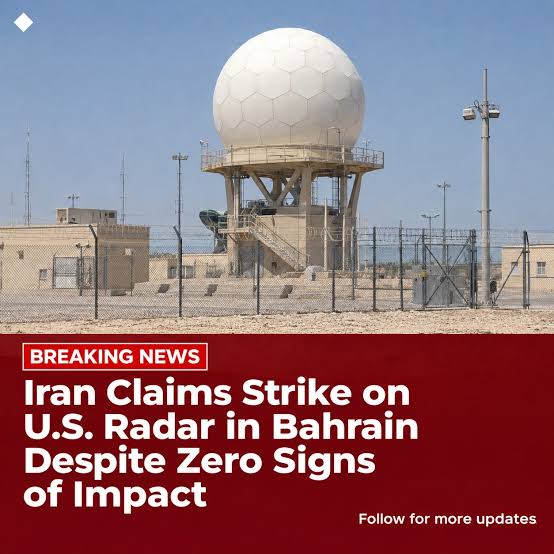
On Sunday, November 15, Iran’s Islamic Revolutionary Guard Corps (IRGC) claimed it launched six drones targeting a US air-defence radar system at Bahrain’s Al-Riffa helicopter base. Iranian officials described the operation as retaliation for what they called hostile American actions against Iranian territory.
Bahrain responded by announcing that its air-defence systems had intercepted several incoming aerial threats. Authorities also issued emergency warnings asking residents to remain calm and move to safe locations.
The incident is particularly significant because Bahrain hosts important American military facilities, including the US Navy’s Fifth Fleet headquarters. Any attack involving these installations carries the potential to draw additional countries into an already complicated regional conflict.
However, an important distinction remains: neither the United States nor Bahrain immediately confirmed that Iran successfully damaged the radar installation.
The latest confrontation follows another reported Iranian drone operation on November 13. Together, these incidents suggest that the fragile pause in regional hostilities could face renewed pressure.
According to reporting by Reuters, the Washington Post and Al Jazeera, the attacks have also complicated diplomatic efforts to reduce tensions between Iran and the United States.
Reuters+2
Iran Launches Six Drones Toward Bahrain Radar Installation

Iran’s latest military announcement has placed Bahrain at the centre of renewed regional security concerns.
The Islamic Revolutionary Guard Corps said its aerospace forces launched six drones targeting a US air-defence radar system at the Al-Riffa helicopter base.
The IRGC described the operation as part of a response to American military actions against Iran.
The announcement was carried by Iranian state-linked media. Tehran presented the operation as a warning that further attacks against Iranian interests would trigger additional retaliation.
However, the available information does not establish that all six drones reached their intended target.
Bahrain’s military reported intercepting several incoming aerial attacks before they reached their targets. Its air-defence systems played a central role in responding to the threat.
The incident also triggered emergency alerts across the kingdom.
Residents reported hearing explosions and warning sirens during the early morning hours. Bahrain’s Interior Ministry urged people to remain calm, follow official announcements and move to the nearest safe location.
The government did not immediately provide detailed information about possible damage to the targeted installation.
This uncertainty is important. Iran’s announcement describes an attempted strike, while Bahrain’s official response describes successful interceptions.
Until further evidence becomes available, claims of a destroyed or damaged radar system should be treated cautiously.
Al Jazeera+2
Bahrain Confirms Interception of Iranian Aerial Attacks
Bahrain’s military response highlighted the importance of its air-defence network.
The Bahrain Defence Force said its systems intercepted several Iranian aerial attacks targeting the kingdom.
The country’s Interior Ministry also issued two public alerts within approximately three hours on Sunday.
The first warning came at around 4:30 a.m. local time. Residents were advised to seek shelter and follow instructions from official authorities.
Another alert followed later as security concerns continued.
These warnings were significant because they represented a renewed period of public concern after a relative reduction in reported Iranian attacks on Bahrain.
Bahrain has previously faced missile and drone threats during the wider conflict involving Iran, the United States and Israel.
The country is strategically important because of its location in the Persian Gulf and its close military relationship with Washington.
Its territory hosts American naval facilities that support military operations across the Middle East.
Bahrain’s government strongly criticised the renewed attacks and rejected the idea that its territory should become a battlefield for disputes between other countries.
The government also held Tehran responsible for the consequences of the attacks.
The situation demonstrates how quickly regional military tensions can affect ordinary residents, even when the stated targets are military installations.
Emergency warnings, explosions and uncertainty can disrupt daily activities and create serious public-safety concerns.
RadioFreeEurope/RadioLiberty+2
Why the US Radar System in Bahrain Matters
The radar installation targeted by Iran is important because early-warning and air-defence systems help military forces identify incoming threats.
These systems can detect approaching aircraft, missiles and drones. They provide valuable information that allows military commanders to respond before an attack reaches its intended destination.
Radar networks are especially important in the Gulf because several countries face potential threats from missiles and unmanned aerial vehicles.
Bahrain’s military importance extends beyond its geographical size.
The kingdom hosts the headquarters of the US Navy’s Fifth Fleet. This naval command supports American maritime operations across the Persian Gulf, Red Sea, Arabian Sea and surrounding waters.
The American military presence also makes Bahrain an important location for regional surveillance, logistics and defence coordination.
An attack on a radar installation could therefore have consequences beyond the immediate military site.
If an important radar system becomes unavailable, military commanders may face challenges in detecting and tracking incoming threats. However, other radar systems and defence networks can provide overlapping coverage.
This means that even a successful attack on one installation would not necessarily disable the entire American air-defence network.
For Iran, targeting American military infrastructure sends a direct political and military message.
For Washington and its regional partners, protecting these facilities remains essential to maintaining their military capabilities.
The latest incident has therefore renewed attention on the security of American installations throughout the Gulf.
Iran’s Friday Attack Claim Adds To Bahrain Tensions
Sunday’s drone operation was not the first recent confrontation involving an Iranian claim against a radar installation in Bahrain.
On Friday, November 13, the IRGC announced that it had targeted and destroyed a US early-warning radar facility on the island.
Iran said that operation was retaliation for an American airstrike against a telecommunications tower in Sirik, located in Iran’s southern Hormozgan Province.
The Iranian military described the operation as a warning against further American military activity.
However, the US military rejected Tehran’s claim.
US Central Command (CENTCOM) said Iranian forces launched two one-way attack drones toward Bahrain and that American forces intercepted both aircraft.
CENTCOM also reported no injuries or damage.
The competing statements created uncertainty about what actually happened during Friday’s incident.
Iran claimed that it had destroyed the radar installation. Washington maintained that the drones had been intercepted without causing damage.
The November 15 incident added another layer to the disagreement.
Iran again claimed to have targeted American radar equipment, while Bahrain announced that its air-defence systems had intercepted several incoming threats.
The two incidents within three days suggest that military pressure on Bahrain has increased again.
They also demonstrate the difficulty of independently verifying battlefield claims during an active regional conflict.
Dawn+3
Tehran Describes Drone Strikes As Retaliation Against Washington
Iran has repeatedly presented its military operations as responses to American and Israeli actions.
Tehran argues that its military activities are intended to protect national security and discourage further attacks against Iranian territory.
The latest drone operation follows a period of heightened confrontation between Iran and the United States.
According to reports, American strikes against Iranian sites have remained a major source of disagreement.
Iran specifically linked its November 13 operation to an alleged attack on telecommunications infrastructure in Sirik.
The IRGC subsequently described Sunday’s operation as another phase of its response.
Iranian officials have also warned that future military aggression could produce stronger retaliation.
This messaging serves several purposes.
First, it communicates that Tehran intends to maintain its ability to respond militarily.
Second, it seeks to increase the costs of further American attacks.
Third, it sends a warning to regional countries hosting American military installations.
However, the strategy carries considerable risks.
Attacking facilities in Gulf countries could increase diplomatic isolation and damage relations with governments that have repeatedly called for regional stability.
It could also create pressure on Washington to respond militarily.
For this reason, Iran’s retaliation strategy may increase its negotiating leverage in the short term while making a wider diplomatic agreement more difficult.
US-Iran Relations Face Another Serious Test
The latest Bahrain attacks have created another challenge for relations between Washington and Tehran.
Both countries have competing security objectives, and their disagreements extend beyond the immediate drone incidents.
Washington wants to prevent Iran from developing nuclear weapons and reduce threats to American forces and regional partners.
Tehran, meanwhile, wants an end to military pressure, restrictions on its economy and what it describes as hostile American policies.
These competing objectives have made negotiations extremely difficult.
The conflict began on February 28, 2026, following US and Israeli strikes against Iran.
Iran responded with missile and drone operations targeting American military facilities and other locations across the region.
The conflict subsequently affected several Gulf countries and important maritime routes.
Although diplomatic efforts have continued, the two sides have struggled to agree on conditions for ending hostilities.
The latest attacks on Bahrain make the situation more complicated.
American officials must consider whether the incidents represent limited retaliation or a sign that Iran is preparing for another phase of military confrontation.
Tehran, meanwhile, must calculate how far it can escalate without triggering a much larger American response.
Neither side benefits automatically from a wider conflict.
A prolonged confrontation could increase military spending, disrupt energy supplies and create further economic pressure across the region.
Donald Trump Faces Difficult Decisions Over Iran
President Donald Trump faces another difficult decision as his administration considers how to respond to Iran’s latest military actions.
Washington must balance the need to protect American personnel and military facilities with the potential consequences of launching another major operation against Iran.
Trump has previously indicated that further military action may not be necessary if Tehran avoids additional provocations.
According to Reuters reporting, the president has also suggested that the United States could refrain from further attacks if Iran and Iran-backed Houthi forces avoid new escalation.
At the same time, Washington has maintained pressure through its naval blockade of Iranian ports.
This approach reflects an attempt to combine military deterrence with economic pressure.
However, the renewed attacks on Bahrain could test that strategy.
If American officials conclude that Iranian drones have successfully damaged important military equipment, pressure for a response could increase.
If the attacks were intercepted without causing damage, Washington may prefer to avoid an immediate escalation.
The administration must also consider the interests of its Gulf partners.
Bahrain hosts important American military infrastructure, while Saudi Arabia, Qatar and other regional countries remain concerned about the consequences of a prolonged conflict.
A major American response could potentially trigger additional Iranian attacks against military or energy infrastructure.
For now, the public evidence does not establish that Washington has decided to launch another major military operation in response to Sunday’s incident.
Bahrain’s Strategic Importance In The Gulf
Bahrain occupies a strategically important position in the Persian Gulf.
Although it is a relatively small island kingdom, its location gives it considerable importance in regional security arrangements.
The country sits close to Saudi Arabia and near important maritime routes connected to the Strait of Hormuz.
It also maintains close defence and security cooperation with the United States.
The US Navy’s Fifth Fleet is headquartered in Bahrain. Its responsibilities include supporting maritime security and American naval operations across a large part of the Middle East.
This military presence makes Bahrain an important partner for Washington.
However, it also exposes the kingdom to additional security risks during conflicts involving Iran.
Iran has previously launched missile and drone attacks against countries hosting American military facilities.
During the current conflict, Bahrain experienced significant security concerns before the relative reduction in reported attacks.
The renewed incidents on November 13 and November 15 have raised fears that the earlier pause may not last.
Bahrain’s government must now protect its population while maintaining the security of important military and economic facilities.
The challenge is particularly difficult because modern drone attacks can involve relatively inexpensive weapons capable of threatening valuable infrastructure.
Strait Of Hormuz Adds To Regional Security Concerns
The renewed military tension comes at a time when the Strait of Hormuz remains a major source of concern.
The waterway is one of the world’s most important energy transportation routes.
Large volumes of crude oil and other petroleum products pass through the strait before reaching international markets.
Any serious disruption could affect global energy prices, shipping costs and supply chains.
Iran has used its geographical position near the waterway as an important source of strategic influence.
During the conflict, Tehran has restricted shipping through the strait and warned that further American military action could produce a stronger response.
The IRGC has also claimed that the waterway remains under Iranian control.
These developments have increased concerns among shipping companies and energy producers.
The situation became more complicated after Iran reported that oil tankers had struck sea mines while attempting to pass through the waterway.
Those claims have not been independently verified in full.
Nevertheless, the possibility of further maritime incidents creates uncertainty for commercial shipping.
The Bahrain drone attacks and the Strait of Hormuz tensions are connected through the wider military confrontation.
Both developments increase the pressure on Washington and Tehran to avoid further escalation.
A major disruption to Gulf shipping could affect countries far beyond the Middle East, including major energy-importing economies in Asia and Europe.
Al Jazeera+2
Gulf Countries Express Concern Over Renewed Iranian Attacks
The renewed attacks have also raised concerns among Bahrain’s neighbouring countries.
Gulf governments have strong reasons to avoid another prolonged regional conflict.
Their economies depend heavily on energy exports, international trade, tourism and secure maritime transportation.
An extended confrontation could threaten all these sectors.
Following Sunday’s incident, Jordan, Egypt, Saudi Arabia and Qatar condemned the attacks and expressed solidarity with Bahrain, according to reporting by The Guardian.
Bahrain’s government also criticised Tehran for targeting its territory.
The kingdom argued that regional countries should not become battlegrounds for disputes between Washington and Tehran.
This position reflects a wider concern among Gulf governments.
Although several countries maintain close security partnerships with the United States, they also want to avoid becoming direct participants in a wider war.
Iran’s drone operations create a difficult situation for these governments.
They must protect their territories while avoiding decisions that could increase military confrontation.
Saudi Arabia faces additional concerns because of its proximity to Iran and its economic dependence on secure oil transportation.
Qatar also has important regional security interests and maintains diplomatic channels with several parties.
The latest developments could therefore encourage Gulf governments to increase diplomatic coordination.
However, whether regional diplomacy can prevent further attacks remains uncertain.
Could Iran Launch More Drone Attacks?
The possibility of additional Iranian drone operations is one of the biggest concerns following Sunday’s incident.
Iran has developed a substantial drone programme and has repeatedly used unmanned aerial vehicles as part of its military strategy.
Drones can be deployed for surveillance, reconnaissance and attacks against military infrastructure.
Their relatively low cost compared with some advanced missile systems makes them an important component of modern warfare.
However, drone operations are not without limitations.
Air-defence systems can detect and intercept many incoming threats. Electronic warfare systems can also interfere with navigation and communications.
The effectiveness of an attack depends on several factors, including the number of drones, their flight paths, the quality of air defences and the protection available around the target.
Iran’s latest operation demonstrates its willingness to continue applying military pressure.
However, it does not automatically mean that Tehran has decided to begin another large-scale offensive.
There is also a political dimension.
By announcing attacks against American military installations, Iran can demonstrate military activity to its domestic audience and communicate its position to Washington.
At the same time, the possibility of a miscalculation remains serious.
If an attack causes American casualties or significant damage, the response could be considerably stronger.
This is why both countries face pressure to maintain communication and avoid actions that could trigger an uncontrolled escalation.
American Military Bases Across The Gulf Face Security Challenges
The Bahrain incidents have renewed attention on the security of American military installations across the Gulf.
The United States maintains a network of military facilities and partnerships throughout the region.
These installations support naval operations, air missions, logistics, intelligence gathering and regional defence cooperation.
However, the growing use of drones and precision-guided weapons has created new challenges for military planners.
Traditional military bases were designed to withstand certain conventional threats.
Modern drone warfare requires additional layers of protection.
These may include:
Advanced radar and early-warning systems.
Short-range air-defence weapons.
Electronic warfare capabilities.
Protected aircraft shelters and command facilities.
Improved surveillance and intelligence sharing.
Emergency response and evacuation arrangements.
The Bahrain incidents demonstrate why these measures matter.
Even when incoming drones are intercepted, the attacks can force military commanders to activate emergency procedures.
They can also disrupt normal operations and increase security costs.
For Washington, protecting its regional military infrastructure is essential.
The United States must ensure that its forces can continue operating while reducing the risks faced by personnel stationed abroad.
The latest incidents could therefore lead to renewed reviews of air-defence arrangements at American facilities throughout the Gulf.
What The Latest Attacks Mean For Regional Diplomacy
The attacks on Bahrain have created another obstacle for diplomatic efforts to end the conflict.
Negotiations between Iran and the United States face several difficult issues.
These include military operations, economic sanctions, nuclear restrictions, maritime security and the future of American military deployments in the region.
Both countries want guarantees about their national security interests.
However, their demands remain far apart.
Washington wants Tehran to reduce threats to American forces and address concerns surrounding its nuclear programme.
Iran wants relief from American pressure and assurances against further attacks.
The two sides also disagree about the future of the Strait of Hormuz.
Sunday’s drone operation could make negotiations more difficult because it increases mistrust.
American officials may view the attacks as evidence that Iran is unwilling to reduce military pressure.
Iranian officials may argue that continued American operations justify further retaliation.
This creates a cycle in which each side presents its actions as defensive while describing the other side’s actions as aggressive.
Breaking this cycle will require more than military statements.
It will likely require diplomatic communication, practical security arrangements and agreement on how to prevent further incidents.
Regional governments could play an important role by encouraging both sides to avoid attacks that threaten neighbouring countries.
For now, the latest developments suggest that the path towards a lasting agreement remains uncertain.
Global Oil Markets Could Feel The Impact
The renewed confrontation also matters for the global economy.
The Middle East remains central to international energy supplies.
Any major threat to oil infrastructure or maritime transportation can affect energy markets.
The Strait of Hormuz is particularly important because of the volume of oil and petroleum products transported through it.
If military tensions disrupt shipping for an extended period, international buyers may face higher transportation costs and increased uncertainty.
Insurance premiums for commercial vessels could also rise.
Energy companies may need to reconsider shipping routes and delivery schedules.
For countries that depend heavily on imported energy, these developments could create additional economic pressure.
India, China, Japan and several European economies have significant interests in maintaining secure energy supplies.
A wider regional conflict could therefore have consequences well beyond the countries directly involved.
However, the Bahrain drone attacks have not, by themselves, established that oil exports will face another major disruption.
The larger concern is the possibility that further escalation could spread towards important maritime routes and energy facilities.
Markets will likely pay close attention to developments involving Iran, the United States and Gulf governments.
Any announcement of a new military operation or shipping restriction could influence market expectations.
What Happens Next After Iran’s Bahrain Drone Operation?
The next stage will depend on how Washington, Tehran and Manama respond.
Several important questions remain unanswered.
First, investigators and military officials will need to establish whether any drones caused damage to the radar installation.
Second, the United States may provide additional information about the interceptions and the condition of its military facilities.
Third, Bahrain will need to assess whether further public safety measures are necessary.
Iran may also issue additional statements explaining its military objectives and warning against future American operations.
The most important factor will be whether the latest confrontation remains limited.
If both sides avoid further attacks, the incident could become another episode in the wider conflict without immediately producing a major military escalation.
However, if another operation causes significant damage or casualties, pressure for retaliation could increase.
The Gulf region cannot afford an uncontrolled conflict.
Bahrain, Saudi Arabia, Qatar and other regional countries have important economic and security interests that depend on stability.
For the United States, the challenge is protecting its forces without triggering a wider war.
For Iran, the challenge is demonstrating its ability to retaliate while avoiding a response that could severely weaken its position.
The coming days will be important in determining whether the latest drone attacks represent limited military pressure or the beginning of another dangerous escalation.
Conclusion: Iran’s Drone Strikes Raise Fresh Fears Of A Wider Conflict
Iran’s latest drone attacks targeting a US radar installation in Bahrain have renewed fears of a wider Middle East confrontation.
The IRGC claims it launched six drones against the Al-Riffa helicopter base on November 15. Bahrain, meanwhile, says its air-defence systems intercepted several incoming aerial threats.
The incident follows another Iranian operation on November 13, when Tehran claimed to have destroyed an American early-warning radar facility. Washington rejected that claim and said its forces intercepted two drones without damage.
These competing accounts highlight the uncertainty surrounding the latest military developments.
Bahrain’s strategic importance, its relationship with Washington and its location near critical maritime routes make the situation particularly sensitive.
The biggest concern is that another military incident could trigger retaliation and undermine already fragile diplomatic efforts.
For now, the international community will be watching closely for further developments.
Whether the confrontation remains limited or develops into another phase of the wider conflict will depend largely on the decisions made by Washington and Tehran.
Frequently Asked Questions (FAQs)
1. Why did Iran launch drone strikes on Bahrain?
Iran’s Islamic Revolutionary Guard Corps described the November 15 operation as retaliation for what it called hostile American actions against Iran. Tehran said it targeted a US air-defence radar system at Bahrain’s Al-Riffa helicopter base.
2. How many drones did Iran launch toward Bahrain?
The IRGC claimed that it launched six drones targeting the US radar installation on November 15, 2026.
3. Did Iran destroy the US radar system in Bahrain?
There is no independently confirmed evidence that Iran destroyed the radar system during Sunday’s attack. Bahrain said its air defences intercepted several incoming threats. The United States and Bahrain had not immediately confirmed damage.
4. What is the Al-Riffa helicopter base?
Al-Riffa is a military installation in Bahrain that became the focus of Iran’s November 15 drone attack claim. The IRGC said a US air-defence radar system at the base was targeted.
5. Why is Bahrain important to the United States?
Bahrain hosts the headquarters of the US Navy’s Fifth Fleet. The facility supports American naval operations and maritime security across important parts of the Middle East.
6. What happened during Iran’s November 13 attack?
Iran claimed that it destroyed a US early-warning radar installation in Bahrain. However, US Central Command said American forces intercepted two Iranian drones and reported no injuries or damage.
7. Could the Iran-Bahrain attacks lead to a wider war?
Further attacks could increase tensions and create pressure for military retaliation. However, a wider war is not inevitable. Diplomatic communication and restraint could prevent another major escalation.
8. How could the attacks affect global oil supplies?
The attacks increase concerns about security across the Gulf, particularly near the Strait of Hormuz. Further military escalation or shipping disruptions could increase oil transportation costs and affect international energy markets.
9. Has the United States confirmed damage to its Bahrain radar facility?
No. The available public reporting does not establish that the November 15 attack damaged or destroyed the radar installation. The US previously denied Iran’s November 13 destruction claim.
10. When did the latest Iranian drone attacks occur?
The latest reported operation occurred on November 15, 2026. It followed another Iranian attack claim involving Bahrain on November 13.
About the Author