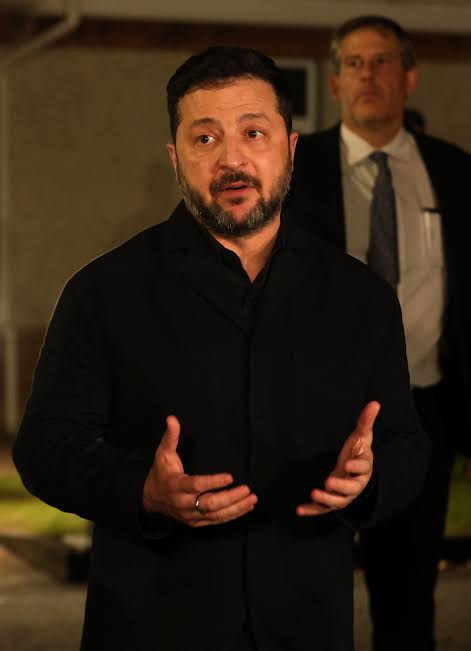
Ukrainian President Volodymyr Zelensky has urged the United States and billionaire entrepreneur Elon Musk to remove restrictions affecting Ukraine’s Starshield satellite communications system. He warned that the limitations are weakening Ukraine’s ability to intercept Russian drones and protect critical infrastructure.
The latest appeal comes as Russia continues targeting Ukrainian cities, military positions and energy facilities. With winter approaching, Kyiv is increasingly concerned about the security of electricity supplies, heating systems and other essential services.
Zelensky says Ukrainian interceptor drones are losing communication with their operators when travelling above approximately 161 kilometres per hour (100 mph). This creates a serious operational problem because Russian jet-powered Shahed drones can travel much faster.
The Ukrainian president has therefore called for immediate action from Washington and SpaceX. He argues that restoring reliable satellite connectivity is essential to protecting civilian lives and strengthening Ukraine’s air defences.
The dispute also highlights the growing importance of privately operated satellite technology in modern warfare. Ukraine relies heavily on satellite communications for battlefield coordination, drone operations and military information sharing.
According to recent reporting by the Associated Press, Reuters and other international outlets, the restrictions have remained a concern despite earlier efforts to restore normal service.
ABC News+2
Why Zelensky Is Demanding the Removal of Starshield Restrictions

Zelensky’s latest appeal focuses on a specific problem affecting Ukraine’s drone interception capabilities.
Ukrainian forces use interceptor drones to locate and destroy incoming Russian unmanned aircraft. These defensive drones need continuous communication with their operators to receive instructions and adjust their flight paths.
However, Kyiv says satellite connectivity becomes unreliable when interceptor drones travel faster than approximately 161 kilometres per hour.
This limitation is particularly serious when Ukrainian forces attempt to intercept fast-moving Russian drones.
Russian Shahed-type drones and their jet-powered variants can move considerably faster than many conventional unmanned aircraft. Therefore, Ukrainian interceptor drones need sufficient speed and dependable communication to catch their targets.
Without a stable connection, operators may lose control or the ability to guide their aircraft effectively.
Zelensky believes these restrictions are creating an unnecessary obstacle for Ukraine’s defensive operations.
In his public appeal, he said Ukraine was counting on the restrictions being lifted. He also stressed that protecting lives and the country’s energy infrastructure before winter depends on resolving the problem.
The president has instructed Ukrainian officials to coordinate closely with the American government and SpaceX.
His message is clear: Ukraine needs dependable satellite connectivity to defend its population against continuing Russian attacks.
ABC News+1
What Is Starshield and Why Does Ukraine Depend on It?


Starshield is a satellite communications service developed by SpaceX, the company founded by Elon Musk. It is designed primarily for government and national security applications.
The system is related to Starlink, SpaceX’s commercial satellite internet network. However, Starshield is designed to support more specialised government and defence requirements.
Its capabilities include secure communications, satellite connectivity and support for military operations.
Ukraine has become heavily dependent on satellite technology since Russia launched its full-scale invasion in February 2022.
Traditional communication infrastructure has faced repeated damage from missile attacks, drone strikes and military operations. Satellite networks provide an alternative when ground-based systems become unavailable.
For Ukrainian forces, reliable connectivity supports several important activities:
Coordinating military units across the front line.
Operating unmanned aerial vehicles.
Sharing battlefield information.
Maintaining communication between commanders and soldiers.
Supporting defensive operations against incoming Russian drones.
Protecting critical infrastructure through better surveillance and coordination.
Starlink and Starshield have therefore become important parts of Ukraine’s military communications environment.
However, the current controversy demonstrates the risks of depending on technology controlled by private companies and foreign governments.
When access changes or technical restrictions affect satellite services, the consequences can extend beyond ordinary internet connectivity.
They can directly affect military planning, drone operations and national security.
Russian Shahed Drones Create a Serious Challenge for Ukraine
Russia’s growing use of unmanned aerial vehicles has placed enormous pressure on Ukraine’s air defence network.
Shahed-type drones have become a regular feature of Russian attacks against Ukrainian territory. These aircraft can target energy infrastructure, industrial facilities, military installations and residential areas.
Their relatively low production costs also allow Russia to launch attacks in large numbers.
Ukraine must therefore find ways to destroy incoming drones without exhausting expensive missile supplies.
Interceptor drones have become an increasingly important part of this strategy.
Instead of relying entirely on costly air defence missiles, Ukrainian forces can deploy smaller unmanned aircraft designed to chase and destroy incoming threats.
However, successful interception requires more than simply launching a drone.
Operators need to maintain communication, identify targets and adjust flight paths during the operation.
This is where the reported Starshield restrictions become particularly important.
If an interceptor loses communication while travelling at high speed, it may struggle to complete its mission.
Russian jet-powered drones present an additional challenge because they can move considerably faster than slower propeller-driven models.
According to Zelensky, Ukrainian interceptor drones lose contact with their operators when their speed exceeds approximately 161 kilometres per hour.
This creates a difficult situation for Ukrainian defenders.
They need faster interceptor aircraft to catch Russian targets, but the reported connectivity restrictions interfere with their ability to operate at those speeds.
Consequently, Kyiv wants Washington and SpaceX to resolve the issue before Russian attacks intensify further.
Starshield Restrictions: What Happened Between Ukraine, SpaceX and Washington?
The controversy over satellite restrictions has developed over several weeks.
Ukraine first reported problems involving satellite connectivity in October 2026. The restrictions reportedly affected Starlink and its military-oriented Starshield services, particularly equipment operating at high speeds near the front line and over Russian-occupied Ukrainian territory.
The reported speed limitation became a major concern for Ukrainian military officials.
On October 24, service was reportedly restored following an earlier disruption. However, subsequent complaints suggested that the problem had not been completely resolved.
Ukrainian officials continued reporting difficulties with satellite connections during military operations.
The situation also produced conflicting explanations from American political and technology leaders.
Elon Musk indicated that responsibility for Starshield restrictions rested with the US government because the military service operates under government control.
President Donald Trump, meanwhile, denied responsibility for the restrictions and said he had told Musk to restore the service.
These conflicting explanations have complicated efforts to establish who controls the restrictions and who can authorise their removal.
Zelensky has questioned whether the problem is technical or the result of deliberate limitations imposed on the service.
He has also suggested that the restrictions create an uncomfortable strategic situation for Ukraine, particularly when military operations involve Russian-occupied territories.
The Ukrainian government now wants clearer answers from Washington and SpaceX.
The central issue is not simply whether satellite internet is available. It is whether Ukrainian military equipment can maintain reliable connectivity under the operating conditions required to intercept Russian drones.
BBC News+2
Zelensky Calls on Elon Musk and the Trump Administration to Act

Zelensky’s appeal places renewed attention on the relationship between Ukraine, the United States and Elon Musk.
The Ukrainian president has asked his government to work closely with American officials and SpaceX to resolve the restrictions.
His public message also carries a diplomatic dimension.
By asking the United States and Musk to be on the right side of history, Zelensky is presenting the issue as a matter of international security and humanitarian responsibility.
Ukraine argues that satellite connectivity is essential for defending civilians against Russian attacks.
The country also wants Washington to recognise that communication restrictions can have serious consequences for defensive operations.
For the Trump administration, the issue creates a difficult policy question.
The United States has provided Ukraine with extensive military and technological assistance. However, Starshield involves a combination of private technology, government oversight and national security considerations.
Any decision to change operational restrictions must account for these different responsibilities.
SpaceX also faces difficult questions about how its technology should be used during an active international conflict.
The company operates a global satellite network, but military applications introduce additional risks and political responsibilities.
Zelensky’s latest demand therefore involves more than a technical adjustment.
It raises questions about the reliability of foreign technology, American support for Ukraine and the influence of private companies on modern warfare.
Why Winter Makes the Starshield Dispute More Urgent
The timing of Zelensky’s appeal is particularly important because Ukraine is approaching another winter under continued Russian attacks.
Russia has repeatedly targeted Ukrainian energy infrastructure throughout the war.
Power stations, electricity networks, substations and other critical facilities have faced missile and drone attacks.
These strikes can create serious problems for millions of people.
Electricity is essential for heating homes, operating hospitals, maintaining water supplies and keeping businesses running.
Damage to the energy network can also affect military facilities and emergency services.
Ukraine’s government is therefore attempting to strengthen its air defence capabilities before temperatures fall further.
Reliable satellite communications could help Ukrainian forces coordinate responses to incoming threats.
Interceptor drones can provide an additional layer of protection around important facilities, especially when conventional air defence systems face ammunition shortages or operational pressure.
However, these systems require dependable communications.
A drone that cannot maintain contact with its operator may fail to intercept its target.
This is why Zelensky has linked the Starshield dispute directly to civilian safety and energy security.
His warning suggests that the consequences of unresolved connectivity problems could extend far beyond military operations.
Ukraine Faces Growing Pressure on Its Air Defence Systems
The Starshield controversy is emerging at a time when Ukraine faces several overlapping defence challenges.
Russian forces continue launching missile and drone attacks across the country.
Ukraine must protect large areas of territory while dealing with limited resources and an extensive front line.
Advanced air defence systems remain important for intercepting cruise missiles and ballistic threats.
However, expensive interceptor missiles cannot always provide a cost-effective response to large numbers of relatively inexpensive drones.
This has increased interest in alternative defensive technologies.
Interceptor drones offer one possible solution.
They can be deployed against incoming unmanned aircraft and may reduce the need to use expensive missile systems against every target.
But their effectiveness depends on several factors.
These include detection systems, communication links, trained operators, suitable aircraft and accurate targeting information.
Satellite communications can support these elements, particularly in areas where conventional networks have been damaged.
The reported Starshield restrictions therefore create an additional problem for Ukrainian military planners.
Even when interceptor drones are available, communication difficulties can reduce their operational value.
Kyiv wants the United States and SpaceX to address this weakness as quickly as possible.
Could the Starshield Dispute Affect US-Ukraine Relations?
The dispute could have broader consequences for relations between Washington and Kyiv.
Satellite technology has become an important part of Ukraine’s defence strategy. American support has helped the country maintain military communications and coordinate operations during the conflict.
However, restrictions on access could create uncertainty about the reliability of that support.
For Ukraine, predictable access to critical technology is essential.
Military commanders need to know whether their communication systems will work during important operations. Sudden changes can complicate planning and increase operational risks.
The issue also highlights the influence of private technology companies in international security.
SpaceX is not a traditional defence contractor operating only under direct military command. It is a private company with commercial responsibilities, government contracts and international customers.
This creates a complicated relationship between corporate decisions and national security priorities.
Washington must also consider the wider implications of its technology policies.
If restrictions remain in place, Ukraine could face additional challenges in defending its territory. If they are removed, American officials may need to consider the security and operational implications.
The situation therefore requires coordination rather than public disagreement.
Zelensky’s decision to involve Ukraine’s Defence Ministry, Foreign Ministry and presidential office reflects the importance Kyiv attaches to resolving the matter through diplomatic channels.
The outcome could influence future discussions about military technology, American assistance and the role of private satellite networks in international conflicts.
What Happens If the United States Lifts the Restrictions?
Removing the reported speed restrictions could help restore more reliable communications for Ukrainian interceptor drones.
However, lifting restrictions would not automatically solve every problem facing Ukraine’s air defence network.
Several factors would still determine how effectively the country could intercept Russian drones.
First, satellite connectivity must remain stable.
Interceptor drones need dependable connections with their operators. Restoring higher operating speeds would be useful only if communications remain reliable under battlefield conditions.
Second, Ukraine needs sufficient interceptor drones.
Satellite access cannot replace the aircraft themselves. Ukrainian forces must have enough suitable drones to respond to repeated Russian attacks.
Third, operators need accurate targeting information.
Successful interception depends on detecting incoming threats and directing defensive aircraft towards them.
Fourth, coordination between military systems remains essential.
Satellite communications must work alongside radar, surveillance equipment and other air defence capabilities.
Finally, Ukraine needs a clear understanding of the rules governing access to Starshield.
Predictable service would help military planners avoid uncertainty during critical operations.
For these reasons, Zelensky’s request is part of a wider effort to strengthen Ukraine’s technological and military resilience.
Russia’s Drone Strategy Adds Pressure to Ukraine’s Defences
Russia’s extensive use of drones has changed the nature of the war.
Unmanned aircraft provide military forces with relatively flexible tools for surveillance and attacks.
They can also be launched in large numbers, forcing defenders to divide their attention and resources.
Ukraine has responded by developing a layered approach to air defence.
This includes traditional missile systems, electronic warfare, mobile air defence units and interceptor drones.
The approach is intended to make Russian attacks more difficult and expensive.
However, Russia continues adapting its tactics.
Faster drones and changing flight patterns can create new challenges for Ukrainian defenders.
The reported Starshield restrictions add another layer of difficulty because they affect the communications needed to operate some defensive systems.
Ukraine’s concern is therefore understandable.
The country wants to maintain its ability to respond quickly when Russian aircraft approach important infrastructure or populated areas.
As the war continues, reliable satellite connectivity will remain an important part of its defensive strategy.
The Wider Importance of Satellite Technology in Modern Warfare
The Starshield controversy demonstrates how satellite communications have become strategically important.
In earlier conflicts, military communication systems depended heavily on ground-based infrastructure, radio networks and dedicated military equipment.
Modern warfare increasingly combines these traditional systems with satellite internet, drones and digital command networks.
This combination allows military units to share information across large distances.
It can also help commanders coordinate operations when traditional communication infrastructure is damaged.
However, greater dependence on satellite networks creates new vulnerabilities.
A government may have advanced aircraft and trained personnel but still face operational problems if communication services become unavailable.
The situation involving Ukraine raises several important questions.
Who controls military satellite services during wartime?
Can private companies impose restrictions on military users?
What responsibilities do governments have when they provide satellite technology?
How can countries maintain independent communication capabilities?
What happens when political disagreements affect access to critical technology?
These questions are becoming increasingly relevant as countries expand their use of commercial satellite networks.
Ukraine’s experience could influence how other governments approach military communications in the future.
What to Watch Next in the Starshield Dispute
The next stage will depend on discussions between Ukrainian officials, the US government and SpaceX.
Several developments will be particularly important.
1. An official explanation from Washington
Ukraine wants clarity about who is responsible for the reported speed limitations and whether the restrictions can be removed.
2. SpaceX’s response
The company could provide further information about the technical or policy reasons behind the reported connectivity problems.
3. Changes in satellite performance
Ukrainian military officials will need to determine whether interceptor drones can operate reliably at higher speeds.
4. Russian attacks on energy infrastructure
The scale and frequency of Russian strikes will influence how urgently Ukraine needs additional defensive capabilities.
5. US support for Ukraine
Washington’s position could shape the future of military technology cooperation between the two countries.
For now, Zelensky is seeking a solution before the reported connectivity problems cause further difficulties for Ukraine’s defences.
The issue remains important because it connects battlefield technology with international diplomacy and civilian protection.
International Reactions and Strategic Implications
The Starshield dispute has attracted attention because it demonstrates how technology companies can influence the balance of power during an international conflict.
Ukraine’s dependence on satellite communications has made the issue particularly sensitive.
For European governments, the situation also reinforces the importance of developing independent defence and communications capabilities.
European countries have increasingly discussed strengthening their military infrastructure and reducing dependence on external technology providers.
The dispute could encourage additional investment in satellite communications, drone interception systems and secure military networks.
For the United States, the situation highlights the importance of clear agreements with technology providers.
Military assistance becomes more effective when operational rules are predictable and responsibilities are clearly defined.
Russia, meanwhile, could benefit if Ukraine experiences difficulties maintaining its defensive communications.
However, the broader impact will depend on whether the restrictions are lifted and how effectively Ukraine adapts its systems.
Conclusion: Zelensky Wants Immediate Action on Starshield Restrictions
Volodymyr Zelensky’s demand to lift Starshield restrictions highlights a growing challenge for Ukraine as it prepares to defend against continued Russian drone attacks.
The reported speed limitations are particularly concerning because Ukrainian interceptor drones need reliable satellite connections to catch faster Russian aircraft.
With winter approaching and energy infrastructure facing continued threats, Kyiv considers the issue urgent.
Zelensky has called on the United States and Elon Musk to resolve the problem through direct cooperation with Ukrainian officials.
The dispute also raises important questions about private technology companies, government control and the future of military communications.
For Ukraine, the priority is straightforward: maintain reliable satellite connectivity, strengthen drone interception capabilities and protect civilians from Russian attacks.
Whether Washington and SpaceX will fully address Kyiv’s concerns remains an important development to watch.
Frequently Asked Questions (FAQs)
1. Why is Zelensky asking the US to lift Starshield restrictions?
Zelensky says the reported restrictions are affecting Ukraine’s ability to operate interceptor drones against Russian attacks. He wants reliable satellite connectivity restored to strengthen air defences and protect energy infrastructure.
2. What is Starshield?
Starshield is a satellite communications service developed by SpaceX for government and national security applications. It is related to Starlink but is designed for specialised government and defence requirements.
3. Who owns Starshield?
Starshield is developed and operated by SpaceX, the aerospace company founded by Elon Musk. Its military-oriented services are provided through government arrangements.
4. How are Starshield restrictions affecting Ukrainian drones?
Ukraine says interceptor drones lose communication with their operators when travelling faster than approximately 161 kilometres per hour. This can prevent them from effectively pursuing faster Russian drones.
5. What are Shahed drones?
Shahed drones are unmanned aircraft associated with Iranian-designed technology and used extensively by Russia against Ukrainian targets. They have been deployed against military positions, cities and energy infrastructure.
6. Has SpaceX restored Starshield services in Ukraine?
Service was reportedly restored after an earlier disruption in October 2026. However, Ukrainian officials have continued reporting connectivity restrictions affecting certain military operations.
7. What has Elon Musk said about the restrictions?
Musk indicated that responsibility for the restrictions rested with the US government because Starshield operates under American government control.
8. What has Donald Trump said about the Starshield dispute?
Trump denied responsibility for the restrictions and said he had instructed Musk to restore the service.
9. Why is Starshield important for Ukraine’s energy infrastructure?
Satellite connectivity helps Ukrainian forces coordinate defensive operations against incoming drones. Protecting power stations and electricity networks is especially important before winter.
10. Will lifting Starshield restrictions stop Russian drone attacks?
No. Removing restrictions could improve Ukraine’s ability to operate interceptor drones, but it would not eliminate Russian attacks. Ukraine would still need sufficient aircraft, operators and other air defence systems.
About the Author