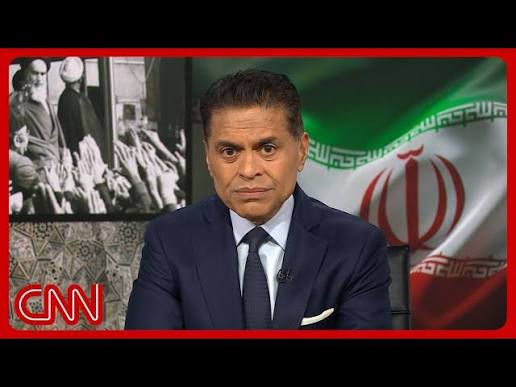
The future of the Iran nuclear deal remains one of the most important diplomatic challenges facing the United States and the Middle East. Washington and Tehran are exploring possible diplomatic solutions, but significant disagreements continue to threaten progress.
Political commentator Fareed Zakaria has examined the broader strategic questions surrounding Iran, American foreign policy and the future of negotiations. His perspective provides an important framework for understanding why reaching a lasting agreement with Tehran remains so difficult.
The diplomatic situation has become increasingly complicated following months of military confrontation, economic pressure and regional instability. Although both governments have shown some interest in avoiding another major conflict, neither side appears ready to abandon its central demands.
Recent diplomatic efforts involving Qatar have raised hopes that negotiations could regain momentum. However, disagreements over Iran’s nuclear programme, American sanctions and the Strait of Hormuz continue to create serious obstacles.
The central question is whether Washington and Tehran can turn indirect diplomatic contacts into a comprehensive agreement that reduces nuclear risks and prevents another regional war.
For now, the future of the Iran nuclear deal remains uncertain.
Fareed Zakaria Explores Iran’s Nuclear Ambitions

Titled Iran and the Bomb: A Fareed Zakaria Special, the documentary premiered on November 15, 2026, at 8 p.m. ET/PT. It examines more than seven decades of Iran’s nuclear ambitions and the political decisions that shaped the country’s relationship with the United States.
According to CNN’s announcement, Zakaria investigates the historical forces behind Tehran’s nuclear programme. These include foreign intervention, national security concerns, economic pressure and Iran’s desire for greater independence.
The documentary also revisits the 2015 nuclear agreement and examines why diplomatic efforts eventually collapsed.
One of its central questions is particularly important: Can military pressure prevent Iran from developing nuclear weapons, or does a lasting solution ultimately require diplomacy?
Zakaria’s examination places the current negotiations within a much longer historical context. It suggests that understanding Iran’s nuclear ambitions requires looking beyond the immediate confrontation between Washington and Tehran.
The programme also explores how Iranian leaders have interpreted international pressure and why nuclear capabilities have remained strategically important to the country.
CNN announced that the documentary would become available on demand beginning November 16 for eligible streaming and pay-TV subscribers.
cnnpressroom.blogs.cnn.com
How Iran’s Nuclear Programme Became An International Crisis
Iran’s nuclear programme did not begin with the Islamic Revolution.
Its origins date back to the reign of Shah Mohammad Reza Pahlavi, when Iran maintained close relations with Western governments, particularly the United States.
During that period, Tehran pursued nuclear technology as part of a broader modernisation programme. The government presented nuclear energy as an important component of economic development and technological progress.
The United States supported aspects of Iran’s civilian nuclear ambitions during the Shah’s rule.
However, the 1979 Islamic Revolution fundamentally changed the country’s political direction.
The new government initially rejected several programmes associated with the previous Western-backed leadership. Iran’s relationship with Washington also deteriorated dramatically.
The Iran-Iraq War later changed Tehran’s security calculations.
Iran faced chemical weapons attacks, international isolation and growing concerns about regional threats. These experiences contributed to the leadership’s decision to rebuild its nuclear capabilities.
Over time, the programme became a major source of tension between Iran and Western governments.
International concerns increased further in 2002, when previously undeclared Iranian nuclear facilities became publicly known.
The revelations raised questions about the programme’s transparency and whether Iran was complying with its international nuclear obligations.
The controversy eventually developed into one of the most significant diplomatic disputes involving the United States, Europe and the Middle East.
Zakaria’s documentary examines these historical developments to explain why the nuclear issue remains so difficult to resolve today.
cnnpressroom.blogs.cnn.com
The 2015 Iran Nuclear Deal And Its Collapse
The agreement was reached between Iran and six world powers: the United States, the United Kingdom, France, Germany, Russia and China, with the European Union also playing a central coordinating role.
The agreement attempted to address international concerns about Iran’s nuclear activities through restrictions, monitoring and inspections.
In exchange, Iran received sanctions relief.
The arrangement placed limits on uranium enrichment, nuclear material stockpiles and certain research activities. It also established an extensive international monitoring framework.
Supporters argued that the agreement offered a diplomatic alternative to military confrontation.
They believed inspections and restrictions could prevent Iran from rapidly developing nuclear weapons while allowing the country to receive economic benefits.
However, the agreement faced strong political opposition.
Critics argued that some restrictions were temporary and that the deal did not sufficiently address Iran’s ballistic missile programme or regional activities.
In 2018, President Donald Trump withdrew the United States from the agreement.
His administration argued that the arrangement failed to address important security concerns and placed insufficient long-term restrictions on Tehran.
The withdrawal represented a major turning point.
Iran subsequently expanded several nuclear activities beyond the original agreement’s limits. The diplomatic relationship deteriorated further as sanctions and political pressure intensified.
Zakaria’s documentary revisits this history and examines how the collapse of the agreement contributed to the current diplomatic crisis.
cnnpressroom.blogs.cnn.com+1
Why The Future Of Tehran Talks Remains Uncertain
The possibility of a new Iran nuclear deal has returned to international attention as Washington and Tehran explore diplomatic options.
However, the negotiations face a complicated political environment.
Both governments have different expectations about what a successful agreement should achieve.
Washington wants meaningful restrictions on Iran’s nuclear programme. It also wants greater confidence that Tehran cannot quickly develop the capability to produce nuclear weapons.
Iran, meanwhile, wants sanctions relief, economic recovery and recognition of its national interests.
The two sides also disagree about the order in which concessions should happen.
The Trump administration wants evidence of meaningful Iranian commitments before offering major economic benefits.
Tehran argues that Washington must first address its demands, including sanctions, the naval blockade and the wider conflict.
Qatar has emerged as an important intermediary.
Its diplomatic role has helped maintain communication between the two governments despite the absence of direct negotiations on several central issues.
According to reporting published in November, Iranian officials have considered proposals involving nuclear restrictions and the future of the country’s enriched uranium stockpile.
However, the discussions have not produced a comprehensive agreement.
A report published by Al Jazeera on November 9 explained that Iran had submitted a new proposal through Qatari mediators. Washington was examining the proposal, although American officials continued to express concerns about Tehran’s conditions.
The diplomatic process therefore remains active but fragile.
Al Jazeera+1
Uranium Enrichment Remains The Biggest Obstacle
The most difficult technical issue in the Iran nuclear negotiations is uranium enrichment.
Uranium enrichment is a process that increases the concentration of the uranium-235 isotope.
Low-enriched uranium can be used in civilian nuclear power programmes. Highly enriched uranium, however, can create serious proliferation concerns because it can be further processed toward weapons-grade material.
The United States wants strict limits on Iran’s enrichment activities.
Washington has also raised concerns about the amount of highly enriched uranium that Tehran possesses and the location of the material following military strikes.
Iran maintains that its nuclear programme serves peaceful purposes and rejects demands that it views as violations of its sovereignty.
The disagreement has become a major obstacle to diplomatic progress.
Recent reporting has highlighted the importance of Iran’s enriched uranium stockpile in negotiations.
The International Atomic Energy Agency has also faced difficulties verifying the status of certain nuclear materials and facilities following the military confrontation.
An Associated Press report published in November described Iran’s position that discussions about restoring inspections cannot proceed normally while the country faces threats of additional military attacks.
The agency has expressed concern about gaps in its ability to verify Iran’s nuclear material.
This verification problem matters because any future agreement will need reliable monitoring.
Without international inspections, Washington and other governments may struggle to determine whether Iran is complying with its commitments.
Similarly, Iran may resist accepting restrictions without receiving meaningful guarantees about sanctions relief and protection from further attacks.
AP News+1
Iran Rejects Transferring Its Enriched Uranium Abroad
Another major disagreement concerns the future location of Iran’s enriched uranium.
American officials have reportedly considered arrangements that would involve transferring highly enriched uranium outside Iran or otherwise reducing its proliferation risk.
Russia has previously been discussed as a possible destination for nuclear material under an international arrangement.
However, Tehran has resisted this approach.
On November 11, Radio Free Europe/Radio Liberty reported that Iran’s security chief, Mohsen Rezaei, had reiterated that the country would not transfer its enriched nuclear material abroad as part of a peace agreement.
His position highlights the difficulty of finding a compromise.
For Washington, securing or substantially reducing the stockpile could become an important measure of whether an agreement genuinely limits nuclear risks.
For Tehran, transferring the material could be viewed as surrendering an important strategic asset.
This creates a difficult negotiating challenge.
Possible alternatives could include monitored storage, dilution of enriched uranium, restrictions on further enrichment or a combination of technical safeguards.
However, these options would require agreement on inspection procedures, verification and enforcement.
Until both sides accept a workable arrangement, the uranium question will remain one of the biggest barriers to a new nuclear agreement.
RFE/RL+1
Qatar’s Mediation Offers A Possible Diplomatic Path
Qatar has become increasingly important in efforts to prevent another major confrontation between the United States and Iran.
The Gulf country maintains diplomatic relationships across the region and has previously helped facilitate communication between governments that do not maintain normal diplomatic relations.
In the latest negotiations, Qatari officials have helped deliver proposals and communicate positions between Washington and Tehran.
On November 9, Qatari Prime Minister Sheikh Mohammed bin Abdulrahman Al Thani was scheduled to meet President Trump in Washington.
The discussions came amid renewed diplomatic efforts to find a way forward.
Iran had reportedly submitted a proposal involving a phased approach to de-escalation.
Under the reported plan, initial measures would address the Strait of Hormuz and economic restrictions. Broader negotiations over the nuclear programme would follow.
However, the two governments continue to disagree over the conditions attached to such an arrangement.
Iran wants major American concessions before moving forward.
Washington, meanwhile, wants meaningful commitments on nuclear restrictions and regional security.
Qatar’s mediation may help narrow these differences, but it cannot guarantee an agreement.
The success of the diplomatic process will ultimately depend on whether both governments are willing to make compromises.
Al Jazeera+1
The Strait Of Hormuz Adds Another Layer To Nuclear Negotiations
The Strait of Hormuz has become another major issue in negotiations between Washington and Tehran.
The waterway is one of the world’s most important energy transportation routes. A significant share of internationally traded oil passes through the narrow passage connecting the Persian Gulf with the Gulf of Oman.
Any prolonged disruption could affect global energy supplies, shipping costs and international markets.
Iran has used its influence over the waterway as an important source of negotiating leverage.
Tehran wants Washington to lift restrictions on Iranian ports and address its demands concerning sanctions and frozen financial assets.
The United States, however, wants the waterway reopened and international shipping restored without restrictions.
This disagreement complicates the nuclear negotiations because both sides increasingly view regional security and economic pressure as connected to the nuclear issue.
According to Al Jazeera’s November 12 analysis, the two governments remain trapped in an unstable situation described as a state of no war and no peace.
The report highlighted how Washington is relying on economic pressure while Tehran is attempting to use its regional influence to obtain concessions.
This situation creates risks for both governments.
A prolonged standoff could damage international trade, increase energy costs and create additional pressure for military escalation.
Al Jazeera+1
Can Military Action Solve The Iran Nuclear Problem?
One of the most important questions raised by Zakaria’s documentary concerns the effectiveness of military force.
The United States and Israel have previously conducted military operations targeting Iranian military and nuclear-related infrastructure.
However, destroying facilities does not necessarily eliminate the knowledge, expertise or political motivation behind a nuclear programme.
Iran has developed nuclear technology over several decades.
Even if important facilities suffer damage, rebuilding technical capabilities may remain possible.
Military operations can also produce unintended consequences.
They may strengthen hardline political positions inside Iran and increase resistance to international demands.
Another concern is that military pressure could encourage Iranian leaders to view nuclear capabilities as even more important for national security.
This is one reason diplomacy continues to attract attention among international policymakers.
Zakaria’s documentary directly examines whether military force can prevent Iran from developing nuclear weapons or whether diplomatic engagement offers a more sustainable solution.
The question is particularly important because military escalation could spread beyond Iran.
Regional countries could face attacks, shipping disruptions and additional economic instability.
A negotiated agreement would not eliminate every disagreement between Washington and Tehran. However, it could establish restrictions and monitoring arrangements that reduce the immediate risk of nuclear escalation.
The challenge is finding an agreement that both governments consider politically acceptable.
cnnpressroom.blogs.cnn.com+1
What Could A New Iran Nuclear Deal Look Like?
A future agreement would probably need to address several interconnected issues.
The original 2015 agreement provides a possible starting point, but the political circumstances have changed considerably.
A new arrangement would need stronger verification mechanisms and clearer commitments from both sides.
Several issues could form the foundation of future negotiations.
1. Restrictions on uranium enrichment
Iran could accept limits on enrichment levels, quantities and future nuclear activities.
These restrictions would need clear monitoring arrangements.
2. International nuclear inspections
The International Atomic Energy Agency would need sufficient access to relevant facilities and nuclear material.
Reliable inspections would help establish whether Iran is complying with an agreement.
3. Management of enriched uranium
Negotiators would need to determine how Iran’s existing uranium stockpile should be monitored, reduced or stored.
This remains one of the most difficult questions.
4. Sanctions relief
Iran would likely demand economic benefits in exchange for nuclear restrictions.
Possible measures could include easing selected financial and energy restrictions.
5. Regional security arrangements
The agreement would also need to consider the Strait of Hormuz, military tensions and the wider regional conflict.
6. Long-term guarantees
Both governments would need confidence that the other side would honour its commitments.
These guarantees could include verification procedures, phased implementation and clearly defined consequences for violations.
A gradual agreement may be easier to negotiate than a comprehensive settlement covering every disagreement immediately.
An analysis published by the Financial Times in June 2026 also discussed the possibility of smaller reciprocal agreements that could gradually rebuild trust and restore international monitoring.
Financial Times+1
International Powers Could Influence The Outcome
The future of the Iran nuclear deal will not depend exclusively on Washington and Tehran.
Other international powers have important interests in the outcome.
Russia and China have maintained relationships with Iran and have repeatedly supported diplomatic approaches to regional disputes.
European governments also have a significant interest in preventing further nuclear proliferation.
The United Kingdom, France and Germany were involved in the original 2015 agreement.
Their diplomatic experience and technical expertise could become valuable if negotiations resume.
Russia could also play a role in discussions about nuclear material storage and technical arrangements.
However, international cooperation is not guaranteed.
Different governments have different strategic priorities.
Some may support economic engagement with Tehran, while others may favour maintaining pressure until Iran accepts stricter restrictions.
The challenge for international diplomacy will be building a common approach that encourages compliance without creating additional incentives for confrontation.
Zakaria’s historical examination is relevant here because it demonstrates how foreign intervention and international pressure have repeatedly influenced Iran’s nuclear decisions.
A successful agreement will require more than temporary political cooperation. It will need a framework that remains effective even when governments and regional circumstances change.
What Happens Next In The Iran Nuclear Talks?
The coming weeks could prove important for determining whether the current diplomatic opening develops into meaningful negotiations.
The November 15 documentary has brought renewed attention to the historical background of the dispute. Meanwhile, diplomatic contacts involving Qatar have kept the possibility of an agreement alive.
However, major differences remain.
Washington wants credible nuclear restrictions, international monitoring and a reduction in Iran’s ability to move towards weapons-grade uranium.
Tehran wants sanctions relief, an end to the wider conflict and recognition of its national interests.
The two governments must also resolve disagreements over the Strait of Hormuz and the future of the enriched uranium stockpile.
President Trump has indicated that diplomacy could prevent another major military confrontation.
Nevertheless, American officials have also expressed dissatisfaction with Iran’s demands.
Iranian officials, meanwhile, continue to insist that any agreement must address the country’s conditions.
There is therefore no guarantee that the current diplomatic efforts will succeed.
A temporary arrangement could provide an opportunity for further negotiations. However, a comprehensive nuclear agreement would require considerably more political commitment.
For now, the future of the Iran nuclear deal depends on whether both governments can move beyond threats and begin accepting practical compromises.
Conclusion: Fareed Zakaria Highlights The Importance Of Diplomacy
Fareed Zakaria’s Iran and the Bomb documentary offers a timely examination of one of the world’s most complicated foreign policy challenges.
By tracing Iran’s nuclear ambitions from the Shah’s government through the 1979 revolution, the Iran-Iraq War and the 2015 nuclear agreement, Zakaria explores why the dispute has survived decades of sanctions, negotiations and military pressure.
His central question remains relevant to today’s diplomatic situation: Can military force permanently prevent Iran from developing nuclear weapons, or will a lasting solution require diplomacy?
The latest negotiations suggest that neither Washington nor Tehran has found an easy answer.
Qatar’s mediation provides a possible channel for progress, but disagreements over uranium enrichment, sanctions and regional security remain significant.
The international community will be watching closely as diplomatic efforts continue.
A successful agreement could reduce nuclear risks and create greater stability across the Middle East. Failure, however, could prolong the confrontation and increase the possibility of another military crisis.
Ultimately, the future of the Iran nuclear deal will depend on whether diplomacy can achieve what years of confrontation have failed to deliver: a sustainable agreement that addresses the security concerns of all sides.
Frequently Asked Questions (FAQs)
1. What is the Iran nuclear deal?
The Iran nuclear deal refers primarily to the 2015 Joint Comprehensive Plan of Action (JCPOA). It was an international agreement that restricted Iran’s nuclear activities in exchange for sanctions relief.
2. What is Fareed Zakaria examining in his Iran documentary?
Fareed Zakaria examines Iran’s nuclear ambitions, their historical origins, the collapse of the 2015 agreement and the possibility of achieving a new diplomatic solution.
3. What is the title of Fareed Zakaria’s new CNN documentary?
The documentary is titled Iran and the Bomb: A Fareed Zakaria Special. It premiered on November 15, 2026, on CNN.
4. Why did the United States withdraw from the 2015 Iran nuclear deal?
President Donald Trump withdrew the United States in 2018, arguing that the agreement did not adequately address long-term nuclear restrictions, ballistic missiles and Iran’s regional activities.
5. Why are Iran and the United States negotiating again?
Both countries face significant risks from prolonged confrontation. Negotiations could help address nuclear concerns, sanctions, regional security and disruptions to international shipping.
6. What is the biggest obstacle to a new Iran nuclear deal?
The biggest obstacles include uranium enrichment, the future of Iran’s enriched uranium stockpile, international inspections, sanctions relief and disagreements over the wider regional conflict.
7. What role is Qatar playing in Iran nuclear negotiations?
Qatar is acting as an intermediary between Washington and Tehran. It has helped communicate proposals and facilitate diplomatic discussions.
8. Does Iran want to transfer its enriched uranium abroad?
Iran has resisted transferring its enriched uranium stockpile abroad. Iranian security officials reiterated this position in November 2026.
9. Can military action permanently stop Iran’s nuclear programme?
Military action can damage nuclear infrastructure, but it cannot necessarily eliminate technical knowledge or the motivation to rebuild. This is one of the central questions explored in Zakaria’s documentary.
10. Will the United States and Iran reach a new nuclear agreement?
A new agreement remains possible, but there is no confirmed comprehensive settlement. Progress will depend on compromises over nuclear restrictions, sanctions, inspections and regional security.
About the Author