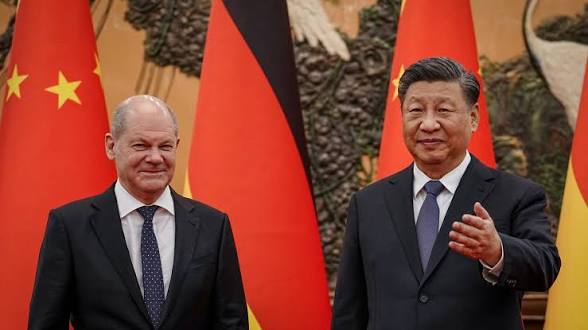
The global nuclear balance is becoming a major diplomatic challenge as US President Donald Trump prepares for an important meeting with Chinese President Xi Jinping and Russian President Vladimir Putin. The upcoming summit is expected to focus partly on nuclear weapons reductions. However, Beijing remains reluctant to participate in formal arms-control negotiations.
China’s resistance creates a significant obstacle for Trump’s efforts to establish a new agreement involving the world’s three largest nuclear powers. Washington argues that any meaningful nuclear arms agreement must include China because its weapons programme is expanding rapidly. Beijing, however, maintains that its nuclear arsenal remains considerably smaller than those of the United States and Russia.
The disagreement comes at a particularly sensitive moment. The New Strategic Arms Reduction Treaty (New START), which previously placed limits on American and Russian strategic nuclear weapons, expired in February 2026. Its expiration has removed an important framework for controlling the world’s two largest nuclear arsenals.
Now, Trump wants to bring China into the conversation. But Xi Jinping has little interest in accepting restrictions that Beijing believes could undermine its national security.
With the three leaders expected to meet in Shenzhen on November 19, the nuclear standoff could become one of the most important issues shaping international security discussions this year.
Trump Pushes for Nuclear Arms Reductions Before Summit
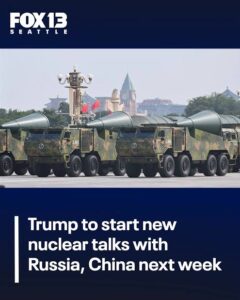
President Donald Trump has repeatedly expressed interest in reducing the number of nuclear weapons held by major global powers.
His administration believes that Washington, Moscow and Beijing must work together to prevent a dangerous expansion of nuclear arsenals.
According to the White House, Trump intends to raise nuclear arms reductions during his November 19 meeting with Xi Jinping and Vladimir Putin in China.
The proposed discussions come as concerns about nuclear competition continue to increase. The United States and Russia possess the world’s largest nuclear stockpiles, while China is rapidly expanding and modernising its own capabilities.
Washington believes that negotiating a new agreement without Beijing would leave a major gap in global arms-control efforts.
The Trump administration also wants future negotiations to address modern weapons systems that were not fully covered by previous agreements.
However, getting China to participate remains a difficult challenge.
Beijing has repeatedly argued that its nuclear capabilities are not comparable to those of Washington and Moscow. Therefore, Chinese officials believe that the three countries should not face identical obligations.
Reuters reported on November 16 that China had described the upcoming trilateral meeting as having groundbreaking significance for major-power relations. However, Beijing has not indicated that it is ready to accept nuclear arms limitations.
Why China Is Resisting Nuclear Arms Cuts
China’s resistance is largely connected to the difference between its nuclear arsenal and those maintained by the United States and Russia.
Beijing argues that its capabilities remain significantly smaller. Therefore, accepting the same restrictions as the two largest nuclear powers could place China at a strategic disadvantage.
According to estimates cited by the Stockholm International Peace Research Institute (SIPRI), China possessed approximately 620 nuclear warheads in January 2026.
By comparison, the United States and Russia each maintained nuclear inventories numbering more than 5,000 warheads when counting their broader stockpiles.
These differences are central to Beijing’s position.
Chinese officials believe that Washington and Moscow should first address their much larger arsenals before demanding restrictions from Beijing.
China also argues that its nuclear weapons serve a defensive purpose. Its declared nuclear policy includes a no-first-use commitment and a minimum-deterrence approach.
Under this strategy, Beijing seeks to maintain enough nuclear capability to deter an attack and ensure that it can retaliate if necessary.
However, China’s growing nuclear programme has attracted international attention.
SIPRI estimates that China has been adding approximately 100 nuclear warheads annually since 2023. This expansion has increased concerns about the future direction of its nuclear strategy.
The central disagreement is therefore clear.
Washington wants China included in a broader agreement, while Beijing believes that its smaller arsenal does not justify accepting the same restrictions as the United States and Russia.
New START Treaty Expiration Complicates Global Security
Another major factor behind the nuclear standoff is the expiration of the New START treaty.
Signed in 2010, the agreement established limits on the deployed strategic nuclear weapons of the United States and Russia.
It was designed to reduce nuclear competition while maintaining transparency between the two countries.
Under New START, each side was permitted to deploy no more than:
- 1,550 strategic nuclear warheads.
- 700 deployed intercontinental ballistic missiles, submarine-launched ballistic missiles and heavy bombers.
- 800 deployed and non-deployed launchers and heavy bombers combined.
The agreement also established verification arrangements and inspection procedures.
However, New START expired in February 2026 without a replacement agreement.
Its expiration marked an important moment in international security because the two largest nuclear powers no longer had the treaty’s previous restrictions in force.
The situation has increased pressure on Washington and Moscow to explore new arrangements.
Trump has also argued that any future agreement should include China.
For Beijing, however, the proposal creates another problem. China does not want to enter negotiations that could restrict its growing nuclear capabilities while leaving broader American and Russian advantages untouched.
As a result, the expiration of New START has made the diplomatic challenge more complicated rather than easier.
Xi Jinping Faces Pressure to Discuss China’s Nuclear Programme
Chinese President Xi Jinping enters the upcoming summit with a difficult diplomatic decision.
Participating in nuclear arms negotiations could improve Beijing’s international image and demonstrate its willingness to contribute to global security.
However, accepting restrictions could also limit China’s military modernisation programme.
Xi has overseen a significant expansion of China’s nuclear capabilities. Beijing considers a credible nuclear deterrent essential for protecting its national interests.
China is also concerned about American military capabilities in the Indo-Pacific region.
US missile defence systems, precision-strike weapons and advanced military technologies remain important considerations in Chinese security planning.
From Beijing’s perspective, nuclear weapons are connected to a wider military balance.
Chinese officials may therefore resist any agreement that limits their nuclear capabilities without addressing these broader concerns.
The upcoming summit offers Xi an opportunity to explain China’s position directly to Trump and Putin.
However, a major breakthrough remains uncertain.
China could agree to discuss nuclear risk reduction or strategic stability without accepting immediate limits on its nuclear arsenal.
Such an approach would allow Beijing to participate diplomatically while protecting its existing military strategy.
Why Trump Wants China Included in a New Nuclear Treaty
The Trump administration believes that traditional arms-control agreements must reflect the changing global nuclear balance.
For decades, nuclear arms negotiations focused primarily on the United States and Russia.
That approach reflected the enormous size of their respective arsenals.
However, China’s nuclear expansion has changed the strategic environment.
Washington argues that an agreement covering only American and Russian weapons would fail to address an increasingly important part of the global nuclear equation.
US officials have also expressed concern about the speed of China’s nuclear modernisation.
The administration wants future negotiations to cover more than simply reducing existing warheads.
Potential issues include:
- Nuclear warhead limitations.
- Missile and delivery-system restrictions.
- Transparency about nuclear stockpiles.
- Verification and inspection arrangements.
- Notifications about major military exercises.
- Measures to reduce accidental nuclear escalation.
Including China would make any future agreement more comprehensive.
However, the challenge is finding terms that all three governments consider fair.
The United States and Russia want Beijing to accept greater transparency. China wants Washington and Moscow to recognise the substantial differences between their nuclear capabilities.
Until these disagreements are addressed, negotiations are likely to remain difficult.
The Nuclear Balance Between China, Russia and the United States
The three countries occupy different positions in the global nuclear balance.
The United States and Russia continue to possess the largest nuclear stockpiles.
China has a smaller arsenal but is expanding its capabilities at a faster pace.
This difference influences how each government approaches arms-control negotiations.
For Washington and Moscow, maintaining limits on their existing weapons can help reduce the financial and strategic costs of an arms race.
For Beijing, however, accepting restrictions before reaching a more favourable strategic position could limit its future options.
The following differences explain why a trilateral agreement remains complicated:
United States: Washington wants to maintain strategic stability while preventing competitors from expanding their nuclear capabilities without restrictions.
Russia: Moscow remains interested in discussions that address its nuclear position alongside broader security concerns.
China: Beijing wants to preserve its strategic autonomy and argues that its smaller arsenal should be considered before introducing equal restrictions.
These different priorities create a complicated negotiating environment.
A successful agreement would need to recognise that all three countries have different military capabilities, security concerns and nuclear doctrines.
Identical restrictions may therefore be difficult to achieve.
Could the Trump-Xi-Putin Summit Produce a Nuclear Agreement?
Expectations for an immediate nuclear agreement should remain limited.
The November 19 meeting is important because it could bring the leaders of the world’s three largest nuclear powers together for direct discussions.
However, a meeting does not automatically mean that a treaty will follow.
Several obstacles remain.
First, China has not agreed to participate in formal nuclear disarmament negotiations with the United States and Russia.
Second, Washington and Moscow must determine how to approach the post-New START environment.
Third, all three countries have different views about military transparency, verification and strategic stability.
These disagreements cannot be resolved through a single meeting.
Nevertheless, the summit could establish a foundation for future diplomatic discussions.
The leaders might explore smaller agreements involving communication channels, nuclear risk reduction and advance notifications of military activities.
Such measures could help reduce misunderstandings without requiring immediate reductions in nuclear stockpiles.
Another possibility is a phased approach.
Under this model, the United States and Russia could begin discussions about their existing arsenals while China participates in separate strategic stability negotiations.
This could provide Beijing with greater flexibility.
However, any arrangement would require political trust and continued diplomatic engagement.
Taiwan Tensions Add Another Layer to the Nuclear Dispute
The nuclear disagreement cannot be separated entirely from wider tensions between Washington and Beijing.
Taiwan remains one of the most sensitive issues in US-China relations.
China considers Taiwan part of its territory, while the United States maintains its own security commitments and policies concerning the island.
Military activity around the Taiwan Strait has repeatedly increased tensions between the two governments.
These disagreements influence how both countries view their military capabilities.
For China, maintaining a credible nuclear deterrent is part of protecting its national security against larger military powers.
For the United States, China’s growing military strength raises concerns about regional stability and the security of American allies.
The nuclear arms discussion could therefore become connected to wider strategic issues.
Beijing may be unwilling to accept nuclear restrictions unless Washington addresses its concerns about missile defence, military deployments and advanced weapons systems.
Similarly, American officials may argue that transparency is essential because China’s nuclear capabilities are expanding.
This creates another obstacle for Trump.
He must balance the objective of nuclear arms reductions with the broader disagreements affecting US-China relations.
United Nations Warns About Growing Nuclear Risks
The United Nations has also expressed concern about the global nuclear environment.
UN Secretary-General Antonio Guterres said on November 16 that the organisation was ready to support any denuclearisation initiative emerging from discussions between Trump, Xi and Putin.
However, he also cautioned that progress was not guaranteed.
His comments highlight the importance of cooperation between major nuclear powers.
The expiration of New START, expanding military competition and geopolitical tensions have increased concerns about the future of international arms control.
The United Nations has consistently supported diplomatic measures that reduce nuclear risks.
These include stronger communication, transparency and international cooperation.
A successful agreement between Washington, Moscow and Beijing could therefore have consequences far beyond their bilateral relationships.
It could also influence the wider international security environment.
However, meaningful progress will require more than statements of commitment.
The countries must be prepared to discuss practical measures and establish mechanisms that can be verified.
What Happens If China Continues Rejecting Arms-Control Talks?
If Beijing continues to reject formal negotiations, the possibility of a comprehensive three-country nuclear agreement could remain limited.
The United States and Russia might continue pursuing separate arrangements.
However, such agreements would not address China’s expanding nuclear programme.
This could create a more complicated security environment.
Without common restrictions, each country may become increasingly focused on strengthening its own military capabilities.
That does not necessarily mean that a nuclear conflict is inevitable.
Nevertheless, weaker arms-control arrangements can increase uncertainty and make misunderstandings more dangerous.
A lack of transparency could also make it harder for governments to assess each other’s intentions.
For this reason, even limited diplomatic agreements could provide meaningful benefits.
Regular communication, advance notifications and discussions about nuclear doctrines could help reduce the risk of accidental escalation.
China’s participation in these efforts would be valuable, even if Beijing initially refuses to accept binding limits on its nuclear stockpile.
Global Leaders Watch the Trump-Xi-Putin Nuclear Discussions
The upcoming summit is attracting international attention because of the influence that the three leaders hold over global security.
The United States, China and Russia are major military powers with significant diplomatic and economic influence.
Their decisions can affect international markets, regional alliances and global security arrangements.
Smaller countries are also watching closely.
Some governments worry that major powers could make important security decisions without adequately considering the interests of other nations.
This concern has increased attention on the format and purpose of the Shenzhen meeting.
The summit could provide an opportunity for direct communication between leaders who have different views about the international order.
However, its success will depend on whether the discussions produce practical outcomes.
A joint statement supporting nuclear stability would be politically significant.
Yet a lasting agreement would require detailed negotiations, technical arrangements and verification procedures.
The world will therefore be watching not only what the leaders say but also whether they establish a clear path towards future negotiations.
Conclusion: China’s Resistance Creates a Major Test for Trump
The nuclear standoff between Washington and Beijing presents a major challenge for President Donald Trump ahead of his meeting with Xi Jinping and Vladimir Putin.
Trump wants all three countries involved in a new nuclear arms-control framework. China, however, believes that its smaller nuclear arsenal makes equal restrictions unfair.
The expiration of New START has increased the urgency of the issue. Meanwhile, China’s expanding nuclear capabilities have strengthened Washington’s argument that future agreements must include Beijing.
The November 19 summit in Shenzhen could create an important opportunity for diplomatic progress.
However, an immediate treaty remains uncertain.
The most realistic outcome may involve an agreement to continue discussions, improve communication and explore practical measures to reduce nuclear risks.
Ultimately, the future of global nuclear security will depend on whether the United States, China and Russia can find common ground despite their competing strategic interests.
About the Author