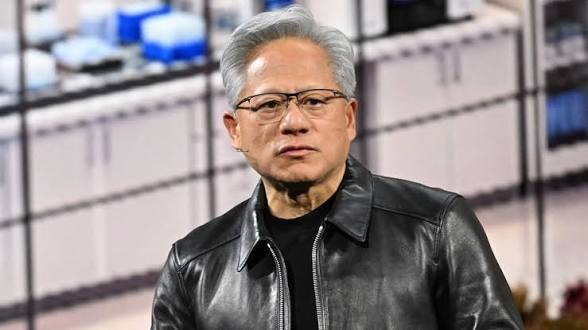
The possibility of a Jensen Huang comeback at Nvidia is rapidly becoming one of the biggest stories in the technology industry. Just days after leaving the company he co-founded, Huang is reportedly considering a return as chief executive officer. Meanwhile, influential Silicon Valley executives, investors, and technology leaders are urging Nvidia’s board to reconsider his departure.
One of the most prominent supporters is Elon Musk. The Tesla and SpaceX chief has publicly backed a campaign calling for Huang’s reinstatement. His support has added significant attention to an already complicated leadership crisis at the world’s leading artificial intelligence chipmaker.
According to recent reports, Huang has discussed the possibility of returning with people close to him. His supporters are also organizing an effort to persuade Nvidia’s board and seek backing from influential figures in Washington.
However, his potential return is far from guaranteed. The company is facing questions about corporate governance, leadership accountability, export controls, and the circumstances surrounding his resignation.
The situation raises an important question: Can Nvidia bring back the executive who helped build its global success while addressing the concerns that led to his departure?
Jensen Huang Comeback: Why His Return Is Being Discussed
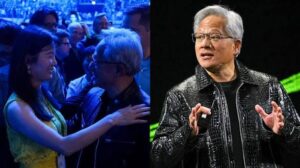
The discussion surrounding a Jensen Huang comeback began almost immediately after his departure from Nvidia.
Huang stepped down from his positions as president and CEO following a controversy involving reported extramarital relationships. One relationship reportedly involved a woman suspected by US intelligence officials of having connections to Chinese intelligence.
These allegations have not established that espionage occurred. They have nevertheless raised questions about potential conflicts of interest, corporate oversight, and the handling of sensitive business relationships.
Nvidia’s board accepted Huang’s resignation on November 11, 2026. The company appointed its longtime chief financial officer, Colette Kress, as interim CEO while it considers permanent leadership arrangements.
The sudden change shocked the technology industry.
For more than three decades, Huang had been closely associated with Nvidia’s growth. His leadership helped transform the company from a graphics-processing specialist into a central supplier of artificial intelligence computing infrastructure.
His departure therefore created uncertainty about the company’s future direction.
According to a November 15 report by the Financial Times, Huang has discussed a possible return with confidants. His allies are reportedly organizing a campaign to persuade Nvidia’s board to consider reinstating him.
The campaign reflects the belief among some technology executives that his experience and relationships remain extremely valuable to Nvidia.
However, the board must consider more than his previous achievements. It must also examine the circumstances surrounding his departure and the company’s long-term interests.
Elon Musk Supports Jensen Huang’s Return
Elon Musk has emerged as one of the most visible supporters of Huang’s potential return.
On November 13, Musk publicly announced that he was signing a petition calling for Nvidia to reinstate its former chief executive.
His statement attracted widespread attention across the technology and business communities.
Musk’s support is particularly significant because his companies depend heavily on advanced computing technology.
Tesla uses artificial intelligence for autonomous driving development and robotics. SpaceX also relies on advanced computing infrastructure for its growing technology operations.
Nvidia’s graphics processing units, commonly known as GPUs, are important components of modern AI development.
Musk has also praised Huang’s ability to manage complex supply chains and maintain important commercial relationships.
In another public exchange, Musk suggested that hiring Huang would be an honor. This comment indicated that he would welcome the opportunity to work with the former Nvidia chief if circumstances allowed.
However, Musk’s public support should not be confused with a formal employment offer.
His involvement is primarily part of the wider campaign supporting Huang’s return to Nvidia.
The support also highlights how closely connected major technology companies have become through their dependence on AI hardware, software, and computing infrastructure.
Silicon Valley Leaders Join the Campaign
Musk is not the only prominent technology figure supporting Huang.
Several influential executives and investors have joined the effort to encourage Nvidia’s board to reconsider its decision.
Among the supporters are Epic Games CEO Tim Sweeney and other prominent figures from the technology sector.
The online campaign, operating under the name Stand With Jensen, has attracted substantial attention.
Reports published on November 16 indicated that the petition had received more than 177,000 signatures. Some signatories identify themselves as current Nvidia employees, although those identities and affiliations have not been independently verified.
Supporters argue that Huang deserves a fair and deliberate process before the company makes a permanent leadership decision.
They believe his contributions to Nvidia should be considered alongside the allegations currently under investigation.
The campaign also argues that the board should avoid making an irreversible decision before all relevant facts are established.
However, public support does not automatically determine corporate leadership.
Nvidia’s board has a responsibility to consider shareholder interests, employee confidence, regulatory expectations, and the company’s reputation.
The final decision will depend on the board’s assessment rather than the number of signatures collected online.
Major Investors Want Nvidia to Keep the Door Open
Support for a Jensen Huang comeback is also coming from major investors.
Brad Gerstner of Altimeter Capital and Gavin Baker of Atreides Management have reportedly urged Nvidia’s board to keep the possibility of Huang’s return under consideration.
Their position is important because institutional investors have a direct interest in the company’s long-term performance.
They have emphasized Huang’s extraordinary contribution to Nvidia and the uncertainty created by his sudden departure.
Rather than demanding an immediate reinstatement, the investors have encouraged the board to consider all available options.
Their argument is straightforward: Nvidia should avoid rushing into a permanent leadership decision before understanding the full circumstances.
This approach could give the company additional time to assess the investigation and evaluate its leadership requirements.
It also reflects concerns about the potential consequences of losing an executive with extensive industry relationships.
Nevertheless, investors may have different priorities.
Some may value Huang’s experience and commercial influence. Others may believe that the company needs a completely new leadership structure to restore confidence.
The board must balance these competing interests.
Nvidia’s Leadership Crisis and Colette Kress’s Role
While discussions about Huang’s return continue, Nvidia needs stable leadership.
The company has appointed Colette Kress as interim CEO following his resignation.
Kress has served as Nvidia’s chief financial officer since 2013. Her experience with the company’s financial operations gives her considerable knowledge of its business structure.
Her immediate responsibility is to maintain operational stability while the board considers its next steps.
This includes overseeing financial planning, investor communications, business relationships, and preparations for upcoming earnings announcements.
The leadership transition is especially important because Nvidia operates in a highly competitive market.
Companies developing artificial intelligence systems depend on Nvidia’s chips and related computing platforms.
Any uncertainty about leadership could influence customer confidence and investor expectations.
Kress must therefore reassure employees, shareholders, and business partners that Nvidia’s operations remain stable.
At the same time, the board must decide whether to appoint a permanent replacement or consider bringing Huang back.
Reports have also identified Arm Holdings CEO Rene Haas as a potential successor under consideration.
However, a potential candidate being discussed does not mean that a final appointment has been made.
The company faces a difficult decision between maintaining continuity and introducing a new leadership direction.
Why Jensen Huang Is So Important to Nvidia
To understand the intensity of the comeback campaign, it is necessary to examine Huang’s contribution to Nvidia.
Huang co-founded Nvidia in 1993. Under his leadership, the company became one of the most influential businesses in the semiconductor industry.
Initially, Nvidia was widely associated with graphics cards used in personal computers and video games.
Over time, its GPUs became increasingly important for scientific research, data processing, machine learning, and artificial intelligence.
The growth of generative AI significantly increased demand for Nvidia’s computing products.
Major technology companies now use Nvidia hardware to train and operate sophisticated AI models.
The company’s influence extends across several industries, including:
- Artificial intelligence and machine learning.
- Cloud computing and data centers.
- Autonomous vehicle technology.
- Robotics and industrial automation.
- Scientific research and advanced simulations.
- Gaming and professional graphics.
Huang also helped develop Nvidia’s broader software ecosystem.
Its CUDA platform has become an important tool for developers working with GPU computing.
This combination of hardware, software, and industry relationships has helped establish Nvidia as a major force in the AI economy.
Supporters argue that replacing Huang will be difficult because his influence extends beyond traditional executive responsibilities.
He has played an important role in building relationships with customers, suppliers, developers, and investors.
That is one reason why some technology leaders believe his return could help restore confidence during the current crisis.
The China Controversy Creates Additional Challenges
One of the most sensitive issues surrounding Nvidia’s leadership crisis involves its business relationships connected to China.
The United States has imposed restrictions on exports of advanced semiconductor technology to China.
These controls are intended to limit Beijing’s access to computing capabilities that could have military or strategic applications.
Nvidia has faced significant challenges because China represents an important potential market for advanced computing products.
The company must navigate changing export regulations while competing against other semiconductor manufacturers.
Recent reports have raised questions about whether restricted Nvidia chips could have reached Chinese customers through intermediaries and overseas companies.
Singapore has also attracted attention in discussions about possible supply-chain routes.
US officials have called for answers about the effectiveness of Nvidia’s compliance procedures and whether the company properly addressed warning signs involving customers and intermediaries.
These questions are particularly important because Nvidia operates in a highly regulated international market.
A company of its size must maintain strong systems for customer verification, export compliance, and internal oversight.
Huang’s reported personal relationships have added another layer of scrutiny to the situation.
However, allegations involving individuals must be distinguished from proven corporate misconduct.
An investigation is necessary to establish the facts and determine whether any laws, policies, or compliance requirements were violated.
The outcome could have a major influence on whether Nvidia’s board considers Huang suitable for another leadership role.
Washington’s Reaction Could Complicate a Comeback
The potential return of Jensen Huang is not simply a corporate matter.
It also has implications for US technology policy and national security.
Nvidia plays an important role in America’s artificial intelligence ambitions.
Its products support research, data centers, commercial AI applications, and government-related technology programs.
The company’s position makes its leadership decisions relevant to policymakers.
US Treasury Secretary Scott Bessent has reportedly called for a significant leadership shake-up at Nvidia.
He has also argued that the company should consider an outside candidate for its next chief executive.
His comments suggest that some officials believe Nvidia needs a new leadership approach as questions about export controls and corporate oversight continue.
This creates a challenge for Huang’s supporters.
Even if technology executives and investors want him back, policymakers may have concerns about restoring the previous leadership structure.
President Donald Trump has also commented on the controversy, with reports indicating that he would not oppose Huang’s return.
However, political support alone cannot determine Nvidia’s leadership.
The board must make its own decision after reviewing the relevant facts and considering its responsibilities to shareholders.
What a Jensen Huang Return Could Mean for Nvidia
A successful comeback could provide Nvidia with a familiar leadership structure during an uncertain period.
Huang understands the company’s technology, business model, customers, and competitive position.
His return could potentially reduce uncertainty among employees and business partners who have worked with him for many years.
It might also help maintain relationships with major customers that depend on Nvidia’s hardware and software ecosystem.
However, a comeback would not automatically solve the company’s problems.
Nvidia would still need to address concerns about corporate governance, export compliance, internal controls, and public trust.
The board might also need to introduce stronger oversight arrangements.
A return could therefore involve new conditions rather than simply restoring the previous leadership structure.
For example, the company could strengthen independent oversight and establish clearer rules governing executive conduct and potential conflicts of interest.
Such measures might help reassure investors and regulators.
Nevertheless, Huang’s return could also create controversy among employees and stakeholders who believe the company needs a fresh start.
The board must determine whether his experience outweighs the risks associated with bringing him back.
Nvidia Stock and Investor Confidence
The leadership controversy has also attracted considerable attention from financial markets.
Nvidia is one of the most important companies in the global AI investment boom.
Its shares are closely watched by institutional investors, technology funds, and individual traders.
Consequently, unexpected leadership changes can influence market expectations.
Reports about Huang’s possible return have created another source of uncertainty.
Some investors may welcome the possibility of restoring an experienced founder to the top position.
Others may prefer a new CEO who can rebuild the company’s reputation and introduce stronger governance practices.
The market must also consider Nvidia’s underlying financial performance.
Demand for AI infrastructure, competition from other chipmakers, export restrictions, and customer spending will continue to influence its future.
The company’s upcoming financial announcements are particularly important because investors will want reassurance that its operations remain strong despite the leadership crisis.
It is important to remember that a petition or public endorsement does not guarantee an improvement in Nvidia’s share price.
Investors should distinguish between speculation about leadership and confirmed developments affecting the company’s business.
Three Possible Scenarios for Nvidia’s Future
Nvidia now faces several possible leadership outcomes.
1. Huang Returns as CEO
The first possibility is that the board agrees to reinstate Huang after reviewing the circumstances surrounding his resignation.
This outcome would satisfy many of his supporters.
It could also restore continuity in Nvidia’s executive leadership.
However, the company might need additional governance safeguards to address concerns about accountability and compliance.
2. Nvidia Appoints an External CEO
The second possibility is that the board chooses a new executive from outside Nvidia.
Arm CEO Rene Haas has been mentioned in reports as a potential candidate.
An external appointment could help the company signal a fresh start.
It could also demonstrate that the board is taking governance and leadership concerns seriously.
However, a new executive would need time to understand Nvidia’s complex business and maintain its relationships with major technology customers.
3. Nvidia Keeps Huang Out of the Top Position
A third possibility is that Huang remains involved in some capacity without returning as CEO, although no such arrangement has been confirmed.
The board could decide that his experience remains valuable but that another executive should lead the company.
Such an outcome would depend on the findings of the investigation and discussions between the relevant parties.
For now, none of these scenarios has been confirmed.
The Biggest Questions Nvidia Must Answer
The Jensen Huang comeback discussion highlights several important questions.
First, what exactly led to his resignation, and what will the board’s investigation establish?
Second, can Nvidia restore investor and employee confidence without returning to its previous leadership structure?
Third, will policymakers accept Huang’s return given the continuing scrutiny surrounding semiconductor exports to China?
Finally, can Nvidia maintain its competitive position while dealing with a major corporate leadership crisis?
These questions are likely to shape the company’s next chapter.
The answers will matter not only to Nvidia but also to the wider artificial intelligence industry.
Conclusion: Will Jensen Huang Return to Nvidia?
The possibility of a Jensen Huang comeback has become a major development in the technology industry.
Elon Musk’s public support, backing from Silicon Valley executives, and pressure from major investors have increased attention on Nvidia’s leadership decision.
Huang has reportedly discussed returning with confidants, while supporters are encouraging the board to keep the option open.
However, his reinstatement is far from certain.
The company must consider the circumstances surrounding his resignation, the ongoing investigation, regulatory concerns, and the expectations of shareholders.
Colette Kress remains interim CEO as Nvidia evaluates its leadership future.
Ultimately, the decision belongs to Nvidia’s board.
Huang’s achievements make him an important figure in the company’s history. Yet the board must decide whether bringing him back is the best way to protect Nvidia’s future.
For now, the technology industry is watching closely as one of the most consequential leadership stories in the AI sector continues to develop.
The next few days could provide important clues about Nvidia’s direction, but a final decision should not be assumed until the company makes an official announcement.
About the Author