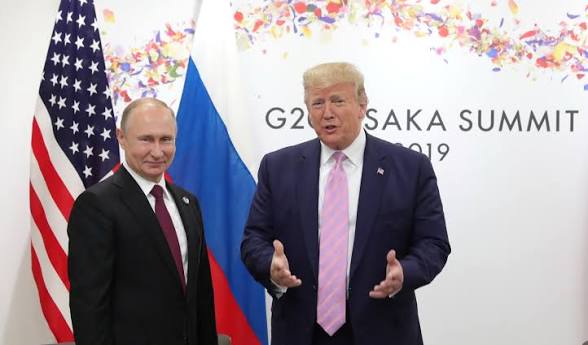
The world is approaching a critical moment in nuclear diplomacy as US President Donald Trump prepares for an unprecedented meeting with Chinese President Xi Jinping and Russian President Vladimir Putin. The three leaders are expected to discuss nuclear weapons, arms reduction and international security during their planned November 19 meeting in Shenzhen, China.
The gathering comes at a particularly sensitive time. The last major nuclear arms control agreement between Washington and Moscow, known as the New Strategic Arms Reduction Treaty (New START), expired in February 2026. Consequently, the world’s two largest nuclear powers no longer have an active treaty imposing legally binding limits on their strategic nuclear arsenals.
Trump wants China included in a new nuclear agreement. However, Beijing has repeatedly resisted joining negotiations, arguing that its nuclear stockpile remains considerably smaller than those of the United States and Russia.
The upcoming summit therefore presents a major diplomatic challenge. Trump must persuade Xi and Putin that reducing nuclear dangers serves their national interests. At the same time, he must protect American security and avoid making concessions that could weaken Washington’s position.
The stakes extend far beyond the three leaders. Their decisions could influence international security, military competition and the future of nuclear arms control for years.
Trump Prepares for Historic Nuclear Arms Showdown
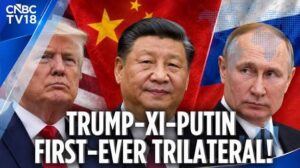
Trump’s planned meeting with Xi and Putin represents an unusual diplomatic opportunity. The three countries possess enormous military capabilities and occupy central positions in global security discussions.
According to recent reports, the leaders are scheduled to meet on November 19 during the Asia-Pacific Economic Cooperation (APEC) summit in Shenzhen.
The White House has indicated that Trump intends to raise nuclear weapons reduction during the discussions. His administration considers the growing global nuclear threat a major international security concern.
China has also described the planned gathering as historically significant. On November 16, Chinese Foreign Ministry spokesperson Mao Ning said the meeting would carry groundbreaking significance.
Beijing emphasized the importance of communication, managing differences and maintaining strategic stability.
However, diplomatic language does not guarantee meaningful progress. The three governments have different military priorities, security concerns and expectations about nuclear negotiations.
Trump therefore faces a difficult task. He must turn a high-profile diplomatic meeting into the beginning of a practical arms control process.
The meeting is also expected to address other international concerns, including the conflict involving Iran. Nevertheless, nuclear weapons remain a central issue for Washington.
Why Trump Wants Xi and Putin to Discuss Nuclear Weapons
The United States, Russia and China are central to the global nuclear balance.
Russia and the United States possess the world’s largest nuclear arsenals. China has a smaller stockpile, but its nuclear capabilities have expanded significantly in recent years.
Washington believes that any serious effort to reduce global nuclear dangers must eventually include Beijing.
A new agreement involving all three countries could establish greater transparency and reduce uncertainty about future military developments.
It could also create mechanisms for discussing nuclear deployments, weapons modernization and emerging military technologies.
However, the three governments do not share identical objectives.
The United States wants meaningful restrictions on Russian and Chinese nuclear capabilities. Russia wants its strategic security concerns addressed, including American missile defense systems. China wants recognition that its arsenal remains substantially smaller than those of Washington and Moscow.
These differences make negotiations complicated.
Trump must convince both leaders that an agreement would provide practical security benefits rather than simply impose restrictions on their military capabilities.
New START Expiration Creates a Dangerous Nuclear Gap
One of the biggest challenges facing Trump is the expiration of the New START treaty.
Signed in 2010, the agreement established limits on deployed strategic nuclear weapons held by the United States and Russia.
Under its central restrictions, each country could deploy no more than 1,550 strategic nuclear warheads and 700 deployed strategic delivery vehicles.
The treaty also established verification arrangements designed to improve transparency and reduce uncertainty.
However, relations between Washington and Moscow deteriorated significantly following Russia’s invasion of Ukraine in 2022.
Russia suspended its participation in the treaty’s verification framework in 2023. Although Moscow indicated that it would continue observing the central numerical limits, inspections and important information exchanges were disrupted.
The treaty ultimately expired on February 5, 2026.
Trump rejected the idea of simply extending the previous agreement. Instead, he called for a new, improved and modernized framework that would include China.
That decision created a significant diplomatic challenge.
Without a replacement agreement, the United States and Russia no longer have legally binding New START limits governing their strategic nuclear forces.
The expiration does not automatically mean that either country will immediately increase its deployed weapons. Nevertheless, the absence of enforceable limits creates uncertainty.
Both governments must now consider how the other might develop its nuclear capabilities.
This environment increases the importance of negotiations, transparency and reliable communication.
Why China Is Resisting a Three-Way Nuclear Agreement
China’s participation could be essential to a comprehensive nuclear arms control framework. However, Beijing has consistently questioned the fairness of negotiations involving all three countries.
The central issue is the difference in nuclear stockpile sizes.
American and Russian nuclear arsenals are substantially larger than China’s. Pentagon estimates cited in recent reporting place China’s stockpile above 600 warheads, while the United States and Russia each possess inventories exceeding 5,000.
China argues that Washington and Moscow should take the lead in reducing their much larger arsenals.
Chinese officials have also rejected the idea that Beijing should accept identical restrictions without considering the existing imbalance.
In October 2026, China’s Foreign Ministry said it was neither fair nor realistic to expect China to participate in trilateral nuclear disarmament negotiations at this stage.
This position presents a serious obstacle for Trump.
Washington wants a comprehensive agreement that prevents China from expanding its nuclear capabilities without limits. Beijing, meanwhile, does not want to accept restrictions that could preserve the existing military advantage of its competitors.
A possible solution would involve different commitments for each country.
For example, the United States and Russia could agree to deeper reductions, while China could accept transparency measures, limits on certain deployments or confidence-building arrangements.
Such an approach would recognize the differences between the three arsenals.
However, reaching agreement would require substantial diplomatic preparation.
Putin’s Nuclear Strategy Adds Another Challenge
Putin’s participation is equally important because Russia maintains one of the world’s largest nuclear arsenals.
Moscow views nuclear deterrence as a central part of its national security strategy.
Russian officials have repeatedly raised concerns about American military capabilities, missile defense projects and NATO’s security arrangements.
The Kremlin also wants its strategic concerns considered in negotiations.
Putin previously proposed that Russia and the United States continue observing New START’s central limits after the treaty expired while negotiations continued.
However, Trump did not accept a straightforward extension, preferring a broader agreement involving China.
The two countries consequently entered a new period without legally binding limits under New START.
For Putin, the Shenzhen meeting offers an opportunity to discuss the future of nuclear relations directly with the American president.
Russia could seek guarantees concerning missile defense, strategic stability and the balance between offensive and defensive military capabilities.
Trump, on the other hand, wants Moscow to support a broader reduction in nuclear weapons.
The challenge will be finding common ground without allowing disagreements over Ukraine, NATO or other security issues to derail the nuclear discussions.
What Trump Should Demand From Xi and Putin
The upcoming nuclear showdown requires more than political statements.
If Trump wants meaningful results, he must focus on practical proposals that both China and Russia can seriously consider.
Several issues deserve immediate attention.
1. A Commitment to Nuclear Arms Control
Trump should seek a public commitment from Xi and Putin to begin sustained nuclear arms control negotiations.
A single summit cannot resolve decades of strategic competition.
However, an agreement to establish regular diplomatic meetings could provide an important starting point.
The three governments should appoint experienced negotiators and establish a timetable for technical discussions.
2. Greater Transparency About Nuclear Arsenals
Transparency is another important priority.
The United States, Russia and China should explore ways to exchange reliable information about their nuclear capabilities.
Such arrangements could help reduce uncertainty and prevent governments from making decisions based on exaggerated threat assessments.
Transparency does not necessarily require countries to disclose every sensitive military detail.
Instead, carefully designed information-sharing arrangements could improve confidence while protecting legitimate security interests.
3. Preventing a New Nuclear Arms Race
The expiration of New START has increased concerns about a potential nuclear arms race.
Trump should encourage all three countries to avoid unnecessary increases in deployed strategic nuclear weapons while negotiations continue.
A temporary deployment freeze could provide valuable time for diplomats to develop a longer-term agreement.
The Arms Control Association has also discussed a broader proposal involving a freeze on additional strategic launchers among the five nuclear-armed states recognized under the Nuclear Non-Proliferation Treaty.
Such a proposal could help establish a foundation for further negotiations.
4. Addressing Emerging Military Technologies
Nuclear security is no longer limited to traditional missiles, submarines and bombers.
Artificial intelligence, cyber operations, advanced surveillance systems and missile defense technologies are changing military planning.
AI-assisted military systems create additional concerns about decision-making speed and human control.
The three leaders should discuss safeguards that ensure humans retain meaningful control over decisions involving nuclear weapons.
They should also strengthen communication systems that can prevent technical failures or misunderstandings from escalating into international crises.
The Risk of a New Global Nuclear Arms Race
The collapse of the previous arms control framework has raised serious questions about the future of international security.
For decades, nuclear agreements helped establish limits, verification mechanisms and diplomatic channels between competing powers.
Although these agreements did not eliminate nuclear weapons, they provided a degree of predictability.
The current situation is more complicated.
Russia continues modernizing its nuclear forces. China is expanding its capabilities. The United States is also pursuing nuclear modernization and advanced missile defense programs.
These developments are taking place alongside rising geopolitical tensions.
If the three governments fail to establish new restrictions, military planners could increasingly rely on worst-case assumptions.
For example, one country might expand its nuclear capabilities because it fears that another country is preparing to do the same.
The other government could then respond with additional military investments.
This cycle could increase costs and make international crises more dangerous.
The greatest concern is not necessarily an immediate nuclear conflict. It is the gradual weakening of safeguards that previously helped prevent misunderstandings and uncontrolled escalation.
A new diplomatic framework could reduce these dangers.
Can Trump Convince Xi to Change China’s Nuclear Policy?
Persuading Xi may prove more difficult than securing another discussion with Putin.
China has traditionally preferred maintaining strategic ambiguity rather than accepting extensive restrictions on its nuclear arsenal.
Beijing believes its nuclear capabilities must remain sufficient to deter potential attacks.
Chinese officials also argue that the United States and Russia have a greater responsibility to reduce their much larger stockpiles.
Trump will therefore need to offer an approach that recognizes China’s concerns.
One possibility would be a phased agreement.
China could initially participate in discussions about nuclear transparency, crisis communication and safeguards against accidental escalation.
More restrictive commitments could follow if the United States and Russia make meaningful progress on their own arsenals.
This would not immediately solve the problem, but it could bring Beijing into a sustained diplomatic process.
The United States should also avoid treating every Chinese military development as proof that negotiations are impossible.
Diplomacy requires acknowledging disagreements while identifying areas where cooperation remains possible.
Xi may not accept Washington’s preferred agreement. Nevertheless, establishing regular communication could represent an important first step.
Will Putin Agree to Nuclear Weapons Reductions?
Putin’s willingness to participate in discussions does not necessarily mean Russia will accept American proposals.
Moscow has its own strategic priorities.
Russian officials have repeatedly argued that nuclear arms control cannot be separated from wider security concerns.
These include American missile defense systems, NATO military capabilities and the security environment surrounding Russia.
Washington, meanwhile, wants restrictions that cover Russian nuclear capabilities and address the changing military balance.
The two countries also face a difficult political relationship because of the war in Ukraine.
Although American officials have indicated that Ukraine is unlikely to dominate the trilateral meeting, the wider conflict will continue influencing relations between Washington and Moscow.
Trump should therefore pursue a focused nuclear agenda while keeping separate diplomatic channels open for other disputes.
A successful nuclear agreement does not require the United States and Russia to resolve every international disagreement.
It does require both governments to recognize that avoiding nuclear escalation is a shared interest.
Why the Shenzhen Summit Matters for Global Security
The planned summit is significant because it brings together the leaders of the world’s three most influential nuclear powers.
Even without a formal agreement, the meeting could establish a new diplomatic process.
It could also demonstrate whether Washington, Beijing and Moscow are prepared to discuss nuclear risks despite their wider disagreements.
The international community will closely watch the outcome.
European countries have important security interests in negotiations involving Washington and Moscow. Meanwhile, Asian countries are concerned about China’s growing military capabilities and regional tensions.
Other nuclear-armed states will also examine whether the three major powers are prepared to demonstrate greater restraint.
The United Nations has welcomed efforts to advance denuclearization and indicated that it is ready to support initiatives emerging from the discussions.
However, expectations should remain realistic.
American officials have indicated that the meeting is intended to begin a conversation rather than produce an immediate agreement.
That distinction matters.
Nuclear arms control requires technical negotiations, verification arrangements and political commitments that can survive changes in international relations.
A single meeting cannot accomplish all of this.
The United States Must Balance Deterrence and Diplomacy
Trump faces an important strategic decision.
He must maintain a credible American nuclear deterrent while pursuing meaningful reductions in nuclear risks.
These objectives are not necessarily contradictory.
A strong defense policy can provide the security and confidence needed to negotiate arms control agreements.
However, excessive military competition can undermine the trust required for diplomacy.
The United States must therefore combine modernization with realistic diplomatic engagement.
It should also consult its allies.
European and Asian partners depend on American security commitments. Any agreement that changes the strategic balance could affect their defense planning.
Congress will also have an important role in overseeing future arms control arrangements, funding implementation and considering treaty commitments.
A durable agreement will require more than presidential announcements.
It will need technical expertise, verification mechanisms and political support.
What Happens If the Three Leaders Fail to Reach an Agreement?
The absence of an immediate breakthrough would not necessarily make the summit unsuccessful.
Establishing communication between the three governments could still produce meaningful benefits.
However, failure to continue negotiations would leave the nuclear arms control situation increasingly uncertain.
Without agreed limits, each country could become more concerned about the intentions of its competitors.
Military modernization could accelerate, while opportunities for transparency and cooperation could decline.
The consequences would extend beyond Washington, Beijing and Moscow.
A more competitive nuclear environment could increase regional tensions and weaken international efforts to prevent the spread of nuclear weapons.
It could also damage confidence in the global non-proliferation system.
For this reason, Trump should treat the Shenzhen meeting as the beginning of a longer diplomatic effort rather than a one-time political event.
Conclusion: Trump Faces a Defining Nuclear Diplomacy Test
The nuclear arms showdown involving Donald Trump, Xi Jinping and Vladimir Putin could become one of the most important diplomatic developments of 2026.
The expiration of New START has created a serious gap in the international arms control system. Meanwhile, China’s expanding nuclear capabilities and Russia’s strategic military priorities complicate efforts to establish new restrictions.
Trump has an opportunity to bring the three governments into a serious discussion about nuclear security.
However, success will depend on realistic proposals, mutual trust and sustained negotiations.
He must confront the difficult questions surrounding nuclear expansion without turning the summit into another display of political rivalry.
Xi and Putin must also recognize that nuclear competition carries enormous risks for their own countries and the wider international community.
The November 19 meeting may not deliver a historic treaty. Nevertheless, it could establish the foundations for a more stable nuclear order.
Ultimately, the real test will not be what the three leaders say in front of cameras. It will be whether they are willing to turn their promises into verifiable commitments that reduce the danger of nuclear conflict.
About the Author