MOSCOW REFINERY BLITZ: Ukraine drones hit Russian capital, massive explosions
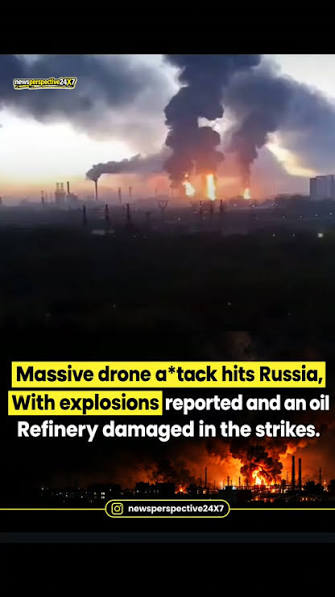
Ukraine’s long-range drone campaign against Russian energy infrastructure has reached another major flashpoint after a large-scale attack struck targets around Moscow on September 20, 2026.
One of the most significant developments was damage to the Moscow Oil Refinery, a major Gazprom Neft facility in the Russian capital. Fires broke out at key processing units after drones reached the refinery site. Reuters later reported that crude processing at the facility had been halted, with industry sources warning that repairs could take weeks.
The attack also came during the final day of Russia’s parliamentary elections, adding a significant political backdrop to an already intense military operation. Russian officials said hundreds of drones were directed toward Moscow, while Ukrainian officials confirmed that the refinery was among the targets.
The result was a dramatic escalation in Ukraine’s campaign to strike Russian oil infrastructure far behind the front lines.
What Happened at the Moscow Refinery?
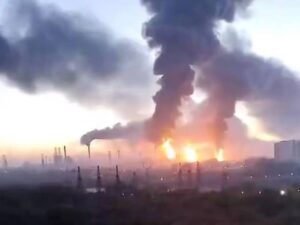
The Moscow refinery is located in the Kapotnya district of the Russian capital. It is one of Russia’s important refining facilities and supplies petroleum products to the Moscow region.
According to Reuters, fires broke out at the refinery’s primary crude distillation units after the September 20 drone attack. Industry sources subsequently said crude processing had stopped.
Russian authorities initially confirmed that an industrial facility at the refinery had been damaged.
Witnesses in Moscow reported hearing explosions and seeing smoke rising from the refinery area. Reuters also reported that several drones reached the refinery premises.
The scale of the damage became clearer the following day.
Reuters reported that both major crude distillation units had caught fire. Sources estimated that repairs could take several weeks, although the precise restoration timeline remained uncertain.
That distinction is important.
A refinery being hit does not automatically mean its entire facility has been destroyed. However, damage to major crude-processing units can substantially reduce production even when other parts of a refinery remain operational.
How Important Is the Moscow Oil Refinery?
The facility is strategically important because of its size and location.
Reuters reported that the refinery processed approximately 11.6 million metric tons of crude oil in 2024, equivalent to roughly 230,000 barrels per day. It produced about 2.9 million tons of gasoline, 3.2 million tons of diesel and 1.3 million tons of bitumen that year.
The facility therefore plays a major role in supplying refined petroleum products to the Moscow area.
The refinery’s primary processing system includes two major units.
According to Reuters, the AVT-6 unit accounts for about 53% of total capacity, while the EURO+ crude-processing facility accounts for the remaining 47%.
Damage to those systems can have consequences beyond the refinery itself.
If repairs take an extended period, Russia may have to adjust crude flows, increase production elsewhere, use inventories or modify fuel distribution.
Ukraine’s Expanding Long-Range Drone Campaign
The Moscow refinery attack is part of a much wider Ukrainian campaign against Russian energy infrastructure.
Ukraine has increasingly used long-range drones to reach targets hundreds of kilometres from the front line.
The Institute for the Study of War reported that the September 19–20 operation represented one of Ukraine’s largest combined missile and drone strike packages against Moscow and the surrounding region since the beginning of the full-scale war.
The same assessment said Ukrainian forces targeted the Gazprom Neft Moscow Oil Refinery and that fires damaged several refinery components.
Ukraine has increasingly focused on Russian oil infrastructure because refineries are critical to the war economy.
Crude oil must be processed into usable products such as gasoline, diesel and other fuels. Disrupting refining capacity can therefore create logistical and economic pressure even when crude production itself continues.
Russia Reported Hundreds of Drones
The Russian side described the attack as exceptionally large.
Moscow Mayor Sergei Sobyanin said Russian air defenses intercepted more than 1,600 Ukrainian drones over a broader period, including approximately 450 approaching Moscow, according to Reuters.
Those figures are Russian government claims and should therefore be treated as such.
The number of drones launched, intercepted or reaching their intended targets can be difficult to independently verify during an ongoing military operation.
Nevertheless, multiple sources confirmed that the September 20 attack was large and that several drones reached targets around Moscow.
The refinery damage was independently reported by Reuters, while satellite and geolocated footage was assessed by the Institute for the Study of War.
Massive Explosions and Fires Reported
Videos circulated online showing fires and smoke rising from areas around Moscow.
However, individual social-media videos can be difficult to authenticate. They may also show different locations or footage recorded at different times.
The more reliable evidence comes from official statements, eyewitness accounts, satellite imagery and reporting from established news organizations.
Reuters reported witnesses hearing blasts in Moscow and seeing smoke coming from the refinery site.
The fires at the refinery were significant enough to damage important processing equipment.
That makes the incident more consequential than a minor drone impact.
Were Civilians Also Affected?
The September 20 attack was not limited to the refinery.
Russian officials reported damage to residential infrastructure in the wider Moscow region.
Reuters reported that three people were killed in the broader attack, while hundreds of residents were evacuated from a damaged apartment building in the Ramenskoye district.
Both Russia and Ukraine have repeatedly denied deliberately targeting civilians.
The presence of civilian casualties highlights the risks associated with increasingly deep drone strikes, particularly when operations take place around densely populated areas.
Why Did Ukraine Target the Refinery?
Ukraine has not publicly described every operational detail behind the attack.
However, the refinery fits a broader pattern.
Ukrainian forces have repeatedly targeted Russian oil refineries, fuel depots and other energy infrastructure.
The strategic logic is straightforward: reducing Russia’s ability to refine crude oil can place pressure on fuel availability, military logistics and government finances.
The International Energy Agency reported on September 17 that Ukraine’s refinery campaign had intensified significantly over the preceding 18 months. The IEA said Russian refinery throughput had fallen to approximately 3.8 million barrels per day in June, around 30% below the level a year earlier.
The agency also reported that Russian gasoline output was down by about 20% from 2025 levels, while diesel production was estimated to have fallen by nearly 30%.
Those figures demonstrate why refinery attacks have become an important part of the wider conflict.
Russia’s Refining Sector Faces Pressure
Russia remains one of the world’s major oil producers.
However, producing crude oil and refining crude oil are different parts of the petroleum system.
A country can continue pumping crude while facing problems producing enough gasoline or diesel.
That is why refinery outages matter.
The IEA said Russia has 32 major refineries with approximately 6.5 million barrels per day of installed refining capacity.
Repeated attacks can create cumulative disruption.
One refinery outage might be manageable.
Several simultaneous outages can be more difficult to absorb.
Russia can redirect crude to other facilities, increase imports of certain products, draw on inventories or prioritize domestic supply. But each response carries logistical and economic costs.
Fuel Prices and Domestic Supply
The consequences of refinery attacks can eventually reach ordinary consumers.
When refining capacity declines, fuel markets can tighten.
That can contribute to higher gasoline and diesel prices, regional shortages or longer queues at filling stations.
Reuters reported that Ukrainian strikes have already contributed to disruptions in Russian refined-product markets, including fuel shortages and higher prices in some areas.
The Moscow refinery is particularly significant because it supplies a major population and economic center.
Any prolonged outage could therefore require Russia to compensate through other refineries and alternative supply arrangements.
However, it would be premature to conclude that the attack alone will cause a nationwide fuel crisis.
The actual effect will depend on the duration of the outage, Russia’s stockpiles, refinery availability elsewhere and government intervention.
Moscow Attack Comes Amid Energy Truce Discussions
The refinery strike also occurred during renewed diplomatic discussion about attacks on energy infrastructure.
The United States had proposed an energy-related ceasefire between Russia and Ukraine.
Reuters reported that Ukrainian President Volodymyr Zelenskyy was scheduled to discuss an energy truce with U.S. President Donald Trump during meetings in New York.
The situation illustrates the difficulty of stopping attacks on energy targets.
Both Russia and Ukraine have significant incentives to pressure the other side’s infrastructure.
Ukraine argues that attacks on Russian oil facilities can impose costs on Moscow.
Russia, meanwhile, has continued attacking Ukrainian energy and civilian infrastructure.
The result is a cycle in which energy facilities remain deeply connected to the broader military campaign.
Russia’s Response
Russia has continued to conduct drone and missile attacks against Ukraine.
The Institute for the Study of War reported that Russian forces launched hundreds of drones against Ukrainian targets around the same period, striking residential, commercial, transport and energy-related infrastructure.
This reciprocal pattern has transformed energy infrastructure into an important battlefield.
Instead of being limited to trenches and front-line positions, the conflict increasingly involves targets hundreds of kilometres behind the front.
That means refineries, fuel depots, warehouses, ports and power facilities can become strategic targets.
Why the Moscow Location Matters
The geographic location of the refinery makes the September 20 attack especially notable.
The Moscow refinery is located deep inside Russian territory and roughly 450 kilometres from Ukraine, according to the Institute for the Study of War.
Reaching such a target demonstrates the increasing range of Ukraine’s domestic drone industry.
The technology involved in these strikes has evolved considerably since the early stages of the war.
Ukraine has developed multiple long-range systems capable of striking targets deep inside Russia.
The exact weapons used in the September operation remain subject to competing claims. ISW noted Ukrainian claims involving several drone systems and other strike vehicles, while also cautioning that it could not independently verify some of the reported weapons.
What Happens Next?
The immediate question is how quickly the Moscow refinery can return to normal operations.
Reuters sources estimated that repairs to damaged crude-processing units could take several weeks.
That timeline is not necessarily final.
Industrial repairs can take longer when specialized equipment is damaged, especially if replacement components are difficult to obtain.
Russia also has options for reducing the impact.
Other refineries can potentially increase output. Existing stocks can be redirected. Fuel distribution can also be adjusted.
Still, repeated attacks make the problem more complicated.
The longer Ukraine continues striking refinery infrastructure, the greater the possibility of cumulative disruption across Russia’s refining network.
A Wider Battle for Russia’s Oil Industry
The Moscow refinery attack should therefore be viewed as part of a broader economic and military campaign.
The objective is not simply to create dramatic explosions.
The larger strategic issue is refining capacity.
Russia depends heavily on petroleum products for transportation, industry and military logistics. Refineries transform crude oil into the fuels required by those systems.
The IEA’s recent assessment shows that Russia’s refining sector was already under pressure before the Moscow incident.
Additional outages could increase that pressure.
At the same time, Russia remains a major energy producer with substantial infrastructure and the ability to adapt.
Therefore, the long-term impact cannot be measured from one attack alone.
The Bigger Meaning of the Moscow Refinery Strike
The September 20 attack demonstrates how far the Russia-Ukraine conflict has expanded beyond the conventional battlefield.
The Moscow refinery is not near the front.
Yet it became one of the most important targets in a massive overnight drone operation.
The strike also shows how energy infrastructure has become central to the conflict.
For Ukraine, Russian refineries represent strategic economic targets.
For Russia, Ukrainian power plants, energy facilities and transportation infrastructure serve similar strategic purposes.
That creates a dangerous cycle of attacks and retaliation.
The September 20 Moscow attack therefore matters not only because of the fires seen over the Russian capital, but because it highlights the growing importance of long-range weapons and energy infrastructure in the war.
Final Takeaway
The Moscow refinery drone attack caused confirmed damage to a major Russian oil-processing facility during a large Ukrainian drone operation on September 20, 2026.
Reuters reported that crude processing subsequently stopped after fires damaged primary crude distillation units, while industry sources estimated repairs could take several weeks.
The attack came as Ukraine continued a broader campaign against Russian energy infrastructure.
It also occurred amid diplomatic efforts to establish an energy truce between Moscow and Kyiv.
Whether the refinery outage becomes a short-term disruption or a longer-term problem will depend on repair times, Russia’s ability to shift production elsewhere and the pace of future Ukrainian strikes.
For now, the incident represents another major example of how Ukraine’s long-range drone campaign is bringing the economic costs of the war deep into Russian territory.
FAQs
1. When was the Moscow refinery attacked?
The Moscow Oil Refinery was damaged during a large Ukrainian drone attack on September 20, 2026. Russian authorities confirmed damage at the facility, while Reuters later reported that fires affected major crude-processing units.
2. Was the Moscow refinery completely destroyed?
No. Available reporting indicates that important refinery equipment was damaged and crude processing was halted. There is no reliable evidence that the entire refinery was destroyed.
3. How long could the refinery remain offline?
Industry sources cited by Reuters estimated that repairs could take several weeks, although the final restoration timeline remains uncertain.
4. How much oil does the Moscow refinery process?
Reuters reported that the refinery processed approximately 11.6 million metric tons of crude oil in 2024, or about 230,000 barrels per day.
5. Why does Ukraine target Russian oil refineries?
Refineries produce gasoline, diesel and other petroleum products needed for civilian and military logistics. Disrupting refining capacity can therefore create economic and logistical pressure on Russia.
6. Were there casualties in the Moscow attack?
Russian authorities reported three deaths in the broader Moscow-region attack. Residential buildings were also damaged and hundreds of people were evacuated, according to Reuters.
7. How many drones were involved?
Moscow Mayor Sergei Sobyanin said more than 1,600 drones had been intercepted over a broader period, including about 450 approaching Moscow. These figures are Russian official claims and have not been independently verified in full.
8. Is Russia facing a refinery crisis?
Russia’s refining sector has experienced significant pressure. The IEA reported falling refinery throughput, gasoline production and diesel production before the latest Moscow strike.
9. Did Ukraine officially claim responsibility?
Ukrainian officials and the Ukrainian General Staff reported that the Moscow refinery was targeted. However, details about the weapons used and the full extent of damage remain subject to verification.
10. Could the attack affect fuel prices?
It could contribute to tighter fuel supplies if the refinery remains offline for an extended period. However, the overall effect will depend on Russia’s fuel inventories, alternative refinery capacity and government measures.
How useful was this post?
Click on a star to rate it!
Average rating 0 / 5. Vote count: 0
No votes so far! Be the first to rate this post.
About the Author

usa5911.com
Administrator
Hi, I’m Gurdeep Singh, a professional content writer from India with over 3 years of experience in the field. I specialize in covering U.S. politics, delivering timely and engaging content tailored specifically for an American audience. Along with my dedicated team, we track and report on all the latest political trends, news, and in-depth analysis shaping the United States today. Our goal is to provide clear, factual, and compelling content that keeps readers informed and engaged with the ever-changing political landscape.