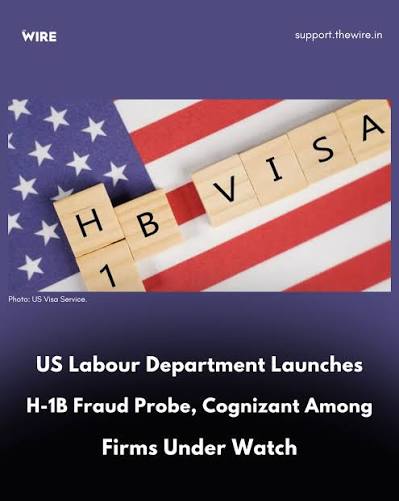
The United States is intensifying its investigation into alleged H-1B visa fraud, sending a strong warning to employers, recruitment agencies and businesses accused of abusing the foreign worker immigration system.
Labor Department Inspector General Anthony D’Esposito has indicated that the government will continue pursuing companies and individuals suspected of violating federal labor and immigration rules. His warning signals that additional investigations, enforcement actions and possible suspensions could follow as federal authorities examine suspicious employment arrangements.
The crackdown focuses on allegations involving fraudulent visa applications, wage manipulation, worker exploitation and schemes that may disadvantage American employees. Investigators are also examining whether certain employers used employment-based immigration programs to obtain cheaper labor through practices that violate federal requirements.
The message from the Labor Inspector General is clear: companies cannot use temporary work visas as an unrestricted business model.
The investigation has become an important issue for the American technology industry, international recruitment companies and thousands of foreign professionals who depend on employment-based immigration programs.
Labor Inspector General Issues Strong Warning Over H-1B Visa Fraud
Anthony D’Esposito, the Inspector General of the US Department of Labor, has become one of the leading voices behind the administration’s expanding foreign labor fraud investigations.
His recent comments reinforce the government’s determination to investigate suspected wrongdoing involving H-1B and other employment-based visa programs.
D’Esposito has warned businesses against treating temporary work visas as a permanent business strategy. He has emphasized that employers must follow federal requirements and demonstrate legitimate reasons for hiring foreign professionals.
In a November 15, 2026, interview reported by Hindustan Times, D’Esposito said that H-1B visas are temporary and should not become a business model. He also argued that employers should use the program when they cannot find an available and qualified American worker for the position.
The remarks highlight the administration’s focus on protecting domestic employment opportunities.
However, the investigation is not simply about the number of foreign workers entering the country. Authorities are examining whether employers have followed the rules governing recruitment, wages, job responsibilities and working conditions.
Companies found violating the law could face serious consequences, depending on the evidence and the applicable regulations.
What Triggered the H-1B Visa Fraud Crackdown?
The Department of Labor’s Office of Inspector General announced a major investigation into alleged H-1B visa fraud and human trafficking on July 8, 2026.
According to the agency, investigators were examining suspected schemes involving employers and labor brokers who allegedly submitted fraudulent applications.
The investigation also focuses on allegations that some foreign workers were subjected to coercive wage-kickback arrangements.
Under such arrangements, workers may be pressured to return part of their salaries to employers or intermediaries. These practices can undermine wage protections and leave vulnerable employees with less money than legally required.
The OIG also raised concerns about below-wage labor and potential exploitation of foreign workers.
These allegations are particularly serious because employment-based visa programs are designed to meet legitimate labor needs while protecting workers.
The investigation seeks to identify individuals and organizations that may have manipulated the system for financial gain.
The Labor Department has encouraged workers and members of the public to report suspected violations.
Federal Investigators Target Suspicious Employers
The investigation expanded beyond Washington in August.
On August 13, 2026, the Department of Labor Inspector General announced an on-the-ground enforcement effort in Dallas, Texas.
During the visit, investigators conducted field checks at business locations connected to companies that had received hundreds of approved H-1B petitions.
One building contained numerous businesses linked to more than 500 approved H-1B applications.
According to the OIG, several offices appeared inactive. Investigators encountered locked doors, lights that were switched off and limited evidence of normal business operations.
These observations raised questions about whether certain businesses were operating as represented in their immigration-related applications.
However, an inactive office or locked door does not automatically establish visa fraud. Investigators must examine the available evidence before determining whether violations occurred.
The Dallas operation demonstrated that federal authorities are examining real-world business activity rather than relying exclusively on application documents.
The investigation could also encourage companies to review their records, employment arrangements and compliance procedures.
What Types of H-1B Visa Fraud Are Investigators Examining?
The H-1B program allows qualifying American employers to hire foreign professionals for specialty occupations.
However, employers must meet specific legal requirements.
The Labor Department’s investigation highlights several potential areas of abuse.
1. Fraudulent Visa Applications
One major concern involves applications containing inaccurate or misleading information.
Employers must provide truthful information about job opportunities, employment conditions and the positions offered to foreign professionals.
Submitting fabricated documents or deliberately misrepresenting employment arrangements can trigger serious legal consequences.
2. Wage Kickback Schemes
Wage manipulation is another important focus.
Employers must follow applicable wage requirements. They cannot use illegal arrangements to make workers return part of their compensation.
Investigators are examining allegations involving coercive payment arrangements that could exploit foreign employees.
3. Fake or Inactive Business Operations
Authorities are also examining businesses that may exist primarily to support questionable visa applications.
A company must have genuine operations and legitimate employment opportunities.
Investigators may examine office locations, business records, payroll information and actual employment activities to determine whether an employer is operating lawfully.
4. Misrepresentation of Job Responsibilities
H-1B positions must qualify under the program’s specialty occupation requirements.
Employers cannot knowingly misrepresent job duties or qualifications to make an otherwise ineligible position appear eligible.
5. Worker Exploitation and Human Trafficking
The investigation also includes allegations involving coercion, fraudulent recruitment and labor trafficking.
Foreign workers can become vulnerable when employers control their immigration sponsorship, employment and financial arrangements.
Federal investigators are therefore examining whether visa-related fraud has been connected to forced labor or other criminal conduct.
Visa Fraud Strike Team Expands Federal Enforcement
The Labor Department has also announced a coordinated enforcement strategy involving several federal agencies.
On October 9, 2026, the OIG announced the Visa Fraud Strike Team, a multi-agency initiative designed to investigate suspected visa fraud and strengthen enforcement.
The initiative involves investigative expertise from multiple federal departments and agencies, including:
US Department of Labor.
Department of Justice.
Department of Homeland Security.
US Citizenship and Immigration Services.
Homeland Security Investigations.
Department of State’s Diplomatic Security Service.
The cooperation is significant because employment-based immigration cases can involve several different areas of federal law.
For example, an investigation may begin with questionable labor certification documents but later reveal possible financial crimes, fraudulent recruitment or worker exploitation.
By coordinating their efforts, federal agencies can examine different parts of a suspected scheme.
The initiative focuses on identifying wrongdoing, following financial evidence and working with prosecutors when criminal violations are suspected.
This approach could make it more difficult for individuals and companies to exploit gaps between government agencies.
Labor Inspector General’s Most Wanted List Puts Suspects on Notice
Another major development came on October 28, 2026, when the Department of Labor OIG announced its first-ever Most Wanted List.
The list identified 16 fugitives accused of stealing more than $55 million from American taxpayers.
The cases involve several alleged offenses, including foreign labor visa fraud, unemployment insurance fraud, labor trafficking, identity theft and money laundering.
The announcement demonstrates that the department’s enforcement efforts extend beyond administrative investigations.
The OIG also reported that Leslie Kaciban had been arrested in Hungary in connection with an alleged labor racketeering scheme involving approximately $4 million in illegal kickbacks.
Kaciban was awaiting extradition to the United States, according to the agency’s announcement.
This arrest illustrates how investigations involving labor-related fraud can extend across international borders.
It is important to distinguish between individuals accused of specific offenses and people who have been convicted. Inclusion on a wanted list does not establish guilt.
Nevertheless, the department’s announcement sends a strong warning to individuals suspected of exploiting federal labor programs.
Major Technology Companies Face Greater Immigration Scrutiny
The investigation has attracted considerable attention because of its potential impact on the technology industry.
Major outsourcing companies and technology businesses depend on employment-based immigration programs to recruit skilled professionals.
In October 2026, the Trump administration suspended PERM processing involving Microsoft, Adobe and several major technology outsourcing companies, according to reporting by Hindustan Times.
The companies named in the report included:
Microsoft
Adobe
Cognizant
Infosys
Tata Consultancy Services
Wipro
HCL Technologies
Capgemini
PERM is the labor certification process generally used by employers sponsoring foreign workers for employment-based green cards.
It is important to understand that PERM and H-1B are separate immigration processes. A suspension involving PERM applications does not automatically mean that every H-1B visa held by an employee has been cancelled.
The reported actions have nevertheless raised concerns across the technology sector.
Employers may need to review their recruitment practices, immigration documentation and compliance procedures as the investigations continue.
Foreign professionals working for affected businesses may also seek clarification about how any suspension applies to their individual immigration cases.
Trump Administration Seeks Stronger H-1B Program Oversight
The crackdown also follows a wider effort to strengthen oversight of the H-1B system.
On September 18, 2026, President Donald Trump signed Executive Order 14431, titled Enhancing Program Integrity and Interagency Coordination in the Administration of the H-1B Nonimmigrant Visa Program.
The order focuses on improving coordination between federal agencies and addressing suspected abuses of the employment-based immigration system.
It identifies concerns involving questionable job descriptions, wage requirements, recruitment practices and the qualifications submitted in support of visa applications.
The administration argues that stronger enforcement is necessary to protect American workers and preserve the program’s original purpose.
The order also reflects growing federal scrutiny of outsourcing business models that rely heavily on temporary foreign labor.
However, the H-1B program has not been abolished.
American employers can continue to use the program when they meet the applicable legal requirements.
The central issue is whether companies are using the system lawfully.
What Does the Crackdown Mean for Foreign H-1B Workers?
The investigation has created uncertainty for some foreign professionals, particularly employees working in the technology and consulting industries.
However, foreign workers should understand that the crackdown targets suspected fraud and violations, not every person holding an H-1B visa.
A worker who obtained a visa through a legitimate employer and follows immigration rules should not automatically assume that an investigation involving another company affects their status.
There are several important considerations.
First, employees should maintain copies of their employment documents, pay records and immigration paperwork.
Second, workers should carefully review any changes to their employment conditions.
Third, employees who experience wage kickbacks, coercion or fraudulent recruitment should consider reporting the conduct to the appropriate authorities.
Foreign workers should also seek advice from a qualified immigration attorney if their employer becomes subject to an investigation or suspension.
The government’s stated objective is to identify wrongdoing and protect workers from exploitation.
Therefore, the crackdown could also benefit legitimate foreign professionals by making the employment system more transparent.
Can Companies Lose Their Ability to Hire Foreign Workers?
Yes. Employers that violate H-1B program requirements can face significant consequences.
Depending on the nature of the violation, the Department of Labor may seek back wages, impose civil monetary penalties or restrict an employer’s participation in certain immigration programs.
The department’s Project Firewall initiative focuses on enforcement involving suspected displacement of American workers, inadequate recruitment and other H-1B program violations.
Possible consequences include:
Payment of unpaid wages.
Civil monetary penalties.
Investigations into company records.
Restrictions on future immigration applications.
Debarment from certain visa programs.
Criminal investigations and prosecution where evidence supports criminal charges.
Not every violation results in criminal prosecution.
Some cases involve administrative or civil penalties, while serious allegations may be referred for criminal investigation.
The outcome depends on the facts, applicable law and evidence.
What Happens Next in the H-1B Visa Fraud Investigation?
The investigation is likely to remain an important issue for American employers and foreign professionals.
The Labor Inspector General has indicated that enforcement efforts will continue and that additional companies or institutions could face scrutiny.
Investigators may examine employer records, recruitment arrangements, office operations, wage payments and immigration documents.
Federal agencies may also coordinate investigations involving suspected financial misconduct or labor trafficking.
The Visa Fraud Strike Team could play an important role in identifying cases that require cooperation between multiple government departments.
Meanwhile, employers that rely on foreign labor may face greater pressure to demonstrate that their hiring practices comply with federal law.
For workers, the most important issue will be understanding the difference between legitimate immigration sponsorship and arrangements involving fraud or exploitation.
The government has not announced an end to the H-1B program. Instead, officials are emphasizing stronger oversight and enforcement against suspected abuse.
Conclusion: Labor IG Sends a Strong Message to H-1B Fraudsters
The expanding H-1B visa fraud crackdown represents a significant enforcement development for the United States employment-based immigration system.
Labor Inspector General Anthony D’Esposito has warned that companies cannot treat temporary work visas as an unrestricted business strategy.
The Department of Labor is investigating alleged fraudulent applications, wage kickbacks, suspicious business operations and worker exploitation.
The creation of the Visa Fraud Strike Team and the launch of the Most Wanted List demonstrate the government’s intention to pursue suspected wrongdoing through coordinated enforcement.
The reported arrest of a fugitive in Hungary also highlights the international reach of certain labor fraud investigations.
For legitimate employers and foreign professionals, the key message is that compliance matters. The H-1B program remains available, but employers must follow the law and provide genuine employment opportunities.
As federal investigations continue, additional enforcement actions could reshape how companies recruit and sponsor foreign workers.
The Labor Inspector General’s warning leaves little doubt about the administration’s position: suspected visa fraud will face serious scrutiny, and criminal conduct can lead to prosecution.
Frequently Asked Questions (FAQs)
1. What is the H-1B visa fraud crackdown?
The H-1B visa fraud crackdown is a federal enforcement effort led by the Department of Labor and supported by other agencies. It investigates suspected fraudulent applications, wage manipulation, worker exploitation and other violations involving employment-based immigration programs.
2. Who is Anthony D’Esposito?
Anthony D’Esposito is the Inspector General of the US Department of Labor. He is overseeing investigations into suspected foreign labor fraud, including alleged abuses involving H-1B and PERM programs.
3. Why is the US investigating H-1B visa fraud?
The government says it wants to protect American workers, prevent wage violations and stop employers or labor brokers from exploiting foreign workers through fraudulent immigration arrangements.
4. Can H-1B visa holders lose their jobs because of the crackdown?
An investigation does not automatically cancel an employee’s visa or employment authorization. However, company-specific enforcement actions may affect workers. Employees should obtain advice about their individual circumstances.
5. Which companies have faced PERM restrictions?
October 2026 reporting identified Microsoft, Adobe, Cognizant, Infosys, Tata Consultancy Services, Wipro, HCL Technologies and Capgemini among the companies affected by reported PERM processing suspensions.
6. What is the Visa Fraud Strike Team?
It is a multi-agency enforcement initiative announced by the Department of Labor OIG in October 2026. It brings together federal investigative agencies to pursue suspected employment-based visa fraud.
7. What types of H-1B violations can employers face investigations for?
Potential violations include fraudulent applications, wage kickbacks, misrepresented job duties, inadequate recruitment and worker exploitation.
8. Can an employer be banned from hiring H-1B workers?
Employers that violate applicable requirements can face penalties and restrictions, including possible debarment from certain immigration programs. The consequences depend on the specific violation.
9. Is the H-1B visa program ending?
No. The H-1B program has not been abolished. The current enforcement effort focuses on investigating suspected abuses and improving program integrity.
10. How can workers report suspected H-1B visa fraud?
Workers can contact the US Department of Labor Office of Inspector General through its official hotline at 1-800-347-3756 or visit the OIG website at .
About the Author