President Donald Trump has renewed his tough stance on immigration, threatening to double tariffs on Mexico unless the Mexican government stops a new migrant caravan traveling north toward the United States. The warning has created fresh uncertainty in US-Mexico relations, particularly as both countries face difficult trade negotiations following the November 2026 midterm elections.
Trump’s latest announcement connects two major issues at the center of his political agenda: border security and international trade. His message also comes after Democrats achieved significant victories in the midterm elections, increasing political pressure on the Republican administration.
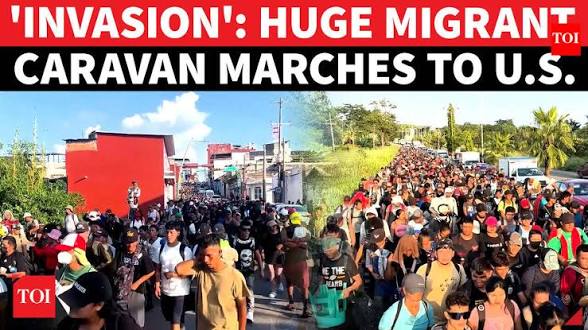
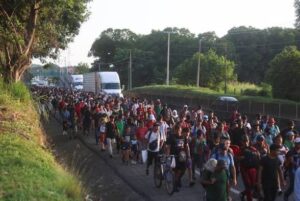
The developing situation involves approximately 1,500 migrants who began traveling north from Tapachula, a city in southern Mexico near the Guatemalan border. Many members of the group reportedly come from Central American countries and hope to reach the United States.
However, Mexican President Claudia Sheinbaum has pushed back against Trump’s characterization of the situation. She says no migrant caravan has reached Mexico’s northern border since Trump returned to office in January 2025.
The disagreement raises important questions about immigration enforcement, economic pressure, diplomatic cooperation, and the future of North American trade.
Trump Threatens to Double Tariffs on Mexico
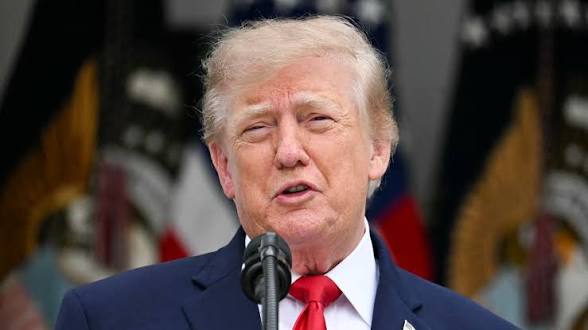
On November 12, Trump issued a strong warning through his Truth Social platform, demanding that Mexico take immediate action against migrant caravans traveling through its territory.
The president described the situation as an attempted invasion and argued that large groups of migrants were organizing to enter the United States illegally.
Trump warned that Mexico would face an immediate doubling of tariffs if it failed to stop the migrants.
His statement was particularly significant because Mexico remains one of America’s largest trading partners. Any substantial increase in import duties could affect businesses, manufacturers, transportation companies, and consumers in both countries.
Trump also mentioned Texas Governor-elect Gina Hinojosa, federal border authorities, and Immigration and Customs Enforcement in his warning.
The announcement demonstrated that the administration intends to maintain pressure on Mexico over immigration, even after the Republican Party suffered major political setbacks in the midterms.
Importantly, Trump’s statement was a threat rather than confirmation that tariffs had already doubled. The legal authority and specific implementation details remained unclear.
Why Trump Issued the Warning After the Midterm Elections
The timing of Trump’s announcement has attracted considerable attention.
The November 3, 2026, midterm elections produced major victories for Democrats, who gained control of both chambers of Congress. The results represented a significant political challenge for the Republican administration.
Following the election, Trump returned to familiar arguments about immigration and border security.
In his social media statement, he connected the emergence of migrant caravans with the Republican Party’s electoral losses. He suggested that political developments had encouraged migrants to believe that immigration restrictions could eventually become less strict.
Some migrants reportedly expressed hope that Democratic victories could create new opportunities to live and work in the United States.
However, the election results have not immediately changed federal immigration laws or border enforcement policies.
Democrats will take control of Congress in January 2027. Until then, existing immigration restrictions remain in place.
Trump’s warning therefore appears to be both a border security message and a political response to the changing congressional landscape.
The president is signaling that his administration will continue enforcing its immigration agenda regardless of the election outcome.
Around 1,500 Migrants Form a Caravan in Southern Mexico
The latest controversy began when approximately 1,500 migrants started traveling north from Tapachula, located in Mexico’s southern state of Chiapas.
The group reportedly includes people from Honduras, Nicaragua, Guatemala, Haiti, Venezuela, Cuba, Ecuador, and other countries.
Many migrants are seeking better economic opportunities, improved living conditions, and greater security.
Some have traveled considerable distances before reaching southern Mexico. Their journeys often involve difficult transportation conditions, limited financial resources, and concerns about criminal organizations operating along migration routes.
According to reports, the group initially intended to travel toward Mexico City.
However, reaching the United States remains difficult because Mexican authorities have increased migration enforcement and US border restrictions remain strict.
The caravan has therefore become an important test of cooperation between Washington and Mexico City.
For the migrants involved, the journey represents an attempt to find better opportunities. For the governments, it raises complicated questions about border management, immigration laws, and humanitarian responsibilities.
Mexico’s President Claudia Sheinbaum Responds to Trump
Mexican President Claudia Sheinbaum responded to Trump’s tariff threat by emphasizing her government’s existing efforts to manage migration.
She explained that no migrant caravan had reached the United States border since Trump began his second presidential term.
Sheinbaum also rejected the idea that Mexico should automatically respond to the situation through aggressive enforcement.
Instead, her administration has focused on discouraging migrants from continuing dangerous journeys and offering options for returning to their countries of origin.
Mexican authorities have also attempted to reduce the size of migrant groups through transportation assistance, information campaigns, and other administrative measures.
Sheinbaum has maintained that Mexico supports orderly migration while respecting human dignity.
Her response is important because Mexico faces competing responsibilities.
On one side, it wants to maintain a stable relationship with Washington and prevent additional tariffs.
On the other, it must address the humanitarian needs of migrants traveling through Mexican territory.
A direct confrontation with the United States could create serious economic consequences. However, aggressive action against migrants could also generate domestic and international criticism.
Mexico must therefore balance diplomatic cooperation, economic interests, and humanitarian concerns.
Why Mexico Is So Important to the United States
Mexico is one of America’s most important economic partners.
The two countries share a long border and maintain extensive commercial relationships across manufacturing, agriculture, transportation, energy, and technology.
American companies depend on Mexican factories and suppliers for many products. Likewise, Mexican businesses rely heavily on access to American consumers.
The United States-Mexico-Canada Agreement, commonly known as USMCA, provides the framework for much of this trade.
Automobiles, vehicle components, electronics, agricultural products, machinery, and industrial materials regularly cross the border.
Consequently, a major increase in tariffs could create problems throughout North American supply chains.
For example, an American automobile manufacturer may depend on components produced in Mexico. If those components become more expensive because of higher tariffs, production costs could rise.
Companies may eventually pass those additional expenses to consumers through higher prices.
The effects could extend beyond the automobile industry.
Agriculture, construction, retail, and manufacturing businesses could also experience increased costs.
This explains why Trump’s latest threat has generated concern among businesses and trade analysts.
Immigration disagreements are no longer limited to border enforcement. They are increasingly connected to the economic relationship between two neighboring countries.
How Double Tariffs Could Affect Mexico’s Economy
If Trump follows through on his threat, Mexican exporters could face additional financial pressure.
Tariffs increase the cost of importing goods into a country. When the United States places higher duties on Mexican products, American importers must account for those additional expenses.
Some businesses may absorb the costs, while others may pass them along to customers.
Mexican manufacturers could face reduced competitiveness if American buyers decide to purchase products from alternative markets.
Industries particularly exposed to trade disputes include:
- Automotive manufacturing and vehicle components.
- Steel and aluminum production.
- Electronics and machinery.
- Agricultural exports.
- Industrial equipment and manufactured goods.
The Mexican economy is closely connected to American demand. Therefore, uncertainty surrounding trade policy could affect investment decisions and business confidence.
Companies planning new factories or expanding existing operations may delay decisions until they understand the future tariff environment.
However, the actual economic impact would depend on which products become subject to higher duties, the legal mechanism used, and the duration of any new restrictions.
A threat alone can create uncertainty, but an implemented tariff increase would represent a more direct economic challenge.
Could American Consumers Also Pay the Price?
Mexico is not the only country that could experience economic consequences.
American consumers may also face higher prices if tariffs increase the cost of imported goods.
Businesses importing Mexican products could respond in several ways.
Some may accept lower profit margins. Others could negotiate different supply arrangements or increase retail prices.
The automobile industry offers a clear example.
Modern vehicles often contain components manufactured in several countries. A single vehicle may involve complicated supply chains that cross the US-Mexico border multiple times.
Additional tariffs could therefore increase manufacturing expenses.
Food products, household goods, construction materials, and industrial supplies could also become more expensive.
Small businesses may face particular difficulties because they often have fewer resources to absorb sudden increases in operating costs.
The issue could become politically important if higher import costs contribute to inflation.
Trump has repeatedly promoted tariffs as a way to protect American industries and encourage domestic manufacturing.
However, the economic consequences depend on how businesses respond and whether domestic alternatives are available at competitive prices.
The Legal Questions Surrounding Trump’s Tariff Threat
Another major issue concerns the legal authority behind Trump’s proposed tariff increase.
The president has previously used tariffs as a negotiating tool in disputes involving trade, immigration, and national security.
However, the legal situation became more complicated following a Supreme Court decision in February 2026 that restricted the administration’s use of emergency economic powers for certain tariff measures.
This has raised questions about which legal authority Trump could use to double tariffs on Mexican products.
Different tariff mechanisms operate under different legal requirements.
Some allow the government to impose duties following investigations into national security or unfair trade practices. Others involve specific congressional authority and procedural requirements.
The November 12 announcement did not provide a detailed legal explanation of how the proposed increase would be implemented.
That uncertainty matters.
Even if the president wants to impose additional tariffs immediately, the administration may need to identify a legally available mechanism and satisfy the relevant requirements.
Businesses and investors will therefore be watching for official documents, executive actions, and announcements from the US Trade Representative and Commerce Department.
Until those details emerge, Trump’s statement should be understood as a serious warning rather than a completed trade policy change.
US-Mexico Trade Negotiations Face New Pressure
The tariff controversy comes at a difficult moment for bilateral trade relations.
Washington and Mexico City have been discussing possible trade arrangements involving automobiles, steel, aluminum, and other industrial sectors.
Mexico has been seeking reductions in certain American tariffs, particularly those affecting important manufacturing industries.
The United States, meanwhile, wants to address concerns involving automotive content, supply chains, and Chinese investment.
The existing USMCA framework remains important, but uncertainty surrounding its future has complicated business planning.
Trump previously declined to extend the agreement for another 16 years during its July 2026 review, leaving the arrangement subject to annual reviews and further negotiations.
The latest migrant caravan controversy could make those discussions more difficult.
Mexico may face pressure to demonstrate stronger migration enforcement in exchange for avoiding additional economic penalties.
However, Mexican officials also have their own negotiating priorities.
They want predictable trade conditions, improved market access, and protection for important export industries.
The challenge for both governments will be preventing immigration disagreements from damaging the broader economic relationship.
The Role of Texas in the Growing Immigration Dispute
Texas occupies a central position in the US-Mexico immigration and trade relationship.
The state shares the longest border with Mexico and handles a substantial amount of cross-border commercial activity.
It is also home to major transportation routes, distribution centers, agricultural businesses, and manufacturing operations.
Trump specifically mentioned Texas in his November 12 warning.
The political situation in the state has also changed following Democrat Gina Hinojosa’s victory in the 2026 gubernatorial election.
Her victory could eventually influence how Texas approaches cooperation with federal immigration authorities.
During the campaign, Hinojosa criticized several existing border enforcement measures and questioned their effectiveness.
However, major policy changes are not automatic.
The new administration will need to consider state laws, federal responsibilities, available funding, and the political environment.
Governor-elect Hinojosa’s victory also does not mean that federal immigration restrictions have immediately changed.
Trump’s decision to mention Texas alongside Mexico and federal border agencies highlights how immigration policy could become a major source of political disagreement in the coming months.
Why Migrants Are Watching American Political Changes
The latest migrant caravan also highlights the connection between American political developments and migration decisions.
Some migrants reportedly said they were encouraged by Democratic victories because they hoped the incoming Congress might support more flexible immigration policies.
However, political expectations should not be confused with actual policy changes.
The Democrats’ electoral victories do not automatically create new legal pathways for migrants.
Federal immigration restrictions remain in effect, and any major legislative changes would require political negotiations and the necessary approval processes.
For people traveling through Mexico, this distinction is extremely important.
Many migrants face dangerous conditions during their journeys. They may encounter criminal organizations, exploitation, financial difficulties, and uncertain legal outcomes.
Some eventually decide to return home or remain in Mexico rather than continue north.
The Mexican government has said it is informing migrants about the difficulty of reaching the United States and offering alternatives.
The latest caravan demonstrates how political expectations, economic hardship, and migration policies can influence individual decisions.
Could Trump and Sheinbaum Reach Another Agreement?
Despite the strong public statements, both governments have reasons to avoid a major confrontation.
The United States needs stable trade relationships with Mexico.
Mexico, meanwhile, wants to protect its access to the American market and avoid economic disruption.
Both countries also benefit from cooperation on organized crime, border security, drug trafficking, and regional migration.
Previous disagreements have shown that negotiations can sometimes produce practical arrangements even when public rhetoric becomes confrontational.
Sheinbaum may attempt to demonstrate that Mexico is already taking meaningful steps to manage migration.
Trump could use the threat of higher tariffs to demand additional cooperation.
A possible agreement could involve stronger enforcement against unauthorized migration, improved information sharing, and continued diplomatic coordination.
However, no confirmed agreement resolving the November 12 threat had been announced in the reports available as of November 14, 2026.
The next few weeks could therefore prove important for both governments.
What Happens Next in the Trump Migrant Caravan Dispute?
Several developments will determine whether the controversy becomes a larger diplomatic and economic crisis.
First, Mexico’s migration response will remain important. Mexican authorities will need to decide how to manage the current caravan while balancing border enforcement and humanitarian responsibilities.
Second, Washington must clarify its tariff position. Businesses will want to know whether Trump intends to issue a formal order and which products could be affected.
Third, trade negotiations will need attention. Both countries have important economic interests at stake, making a prolonged dispute potentially damaging.
Fourth, the political situation in the United States will continue to influence immigration discussions. Democrats are preparing to take control of Congress in January 2027, creating the possibility of new legislative battles over border policy.
Finally, the future of the USMCA framework will remain an important consideration for manufacturers and investors.
The migrant caravan may be the immediate trigger, but the underlying issues involve much more than immigration.
They include international trade, presidential authority, economic security, and the future of North American cooperation.
Conclusion: Trump’s Tariff Warning Opens a New Chapter in US-Mexico Tensions
Trump’s threat to double tariffs on Mexico marks another escalation in his administration’s efforts to connect border enforcement with international trade policy.
The latest migrant caravan, involving approximately 1,500 people traveling north from southern Mexico, has become the center of a growing disagreement between Washington and Mexico City.
However, Sheinbaum maintains that Mexico has prevented migrant caravans from reaching the northern border and continues to pursue an approach focused on managing migration.
The timing of Trump’s warning is also significant. It follows major Democratic victories in the November 2026 midterm elections and comes as the administration faces new political challenges.
For Mexico, the priority will be avoiding additional economic pressure while maintaining control over migration through its territory.
For the United States, the challenge will be enforcing immigration policies without creating unnecessary disruption to trade and supply chains.
Whether the latest threat results in actual tariff increases or another round of negotiations remains uncertain.
One thing is clear: immigration and trade are becoming increasingly connected in the relationship between the two neighboring countries.
The coming weeks could determine whether Trump’s warning produces stronger cooperation or opens another major economic dispute between the United States and Mexico.
Frequently Asked Questions (FAQs)
1. Why did Trump threaten to double tariffs on Mexico?
Trump threatened to double tariffs because he wants Mexico to stop migrant caravans traveling north toward the United States. He issued the warning on November 12, 2026.
2. How many migrants are part of the latest caravan?
Approximately 1,500 migrants reportedly began traveling north from Tapachula in southern Mexico. Estimates can change as people join or leave the group.
3. What did Trump say about the migrant caravan?
Trump described the migration situation as an invasion and warned that tariffs on Mexican imports would immediately double if Mexico failed to stop the caravans.
4. How did Claudia Sheinbaum respond?
Mexican President Claudia Sheinbaum said no migrant caravan had reached Mexico’s northern border since Trump returned to office. She emphasized Mexico’s efforts to manage migration through cooperation and humanitarian measures.
5. Did Trump officially double tariffs on Mexico?
Trump threatened to double tariffs, but his November 12 statement did not itself confirm that the increase had been implemented.
6. Why are the 2026 midterm elections important?
Democrats won control of both chambers of Congress in the November 3 elections. Trump connected the political results with renewed migrant activity, although the election did not immediately change immigration laws.
7. Could higher tariffs affect American consumers?
Yes. Higher tariffs could increase the cost of imported products and components. Businesses may pass some of those additional costs to American consumers.
8. What is the USMCA trade agreement?
The United States-Mexico-Canada Agreement is a trade framework connecting the economies of the three North American countries. It supports cross-border trade and establishes rules for several important industries.
9. Will Democrats immediately change US immigration policies?
No. Their midterm victories do not automatically change existing immigration laws. Any major legislative changes would require further political and legal processes.
10. What happens next in the Trump-Mexico tariff dispute?
The next developments will depend on Mexico’s migration response, Trump’s decisions on tariffs, and ongoing trade negotiations between the two governments.
President Donald Trump has renewed his tough stance on immigration, threatening to double tariffs on Mexico unless the Mexican government stops a new migrant caravan traveling north toward the United States. The warning has created fresh uncertainty in US-Mexico relations, particularly as both countries face difficult trade negotiations following the November 2026 midterm elections.
Trump’s latest announcement connects two major issues at the center of his political agenda: border security and international trade. His message also comes after Democrats achieved significant victories in the midterm elections, increasing political pressure on the Republican administration.
The developing situation involves approximately 1,500 migrants who began traveling north from Tapachula, a city in southern Mexico near the Guatemalan border. Many members of the group reportedly come from Central American countries and hope to reach the United States.
However, Mexican President Claudia Sheinbaum has pushed back against Trump’s characterization of the situation. She says no migrant caravan has reached Mexico’s northern border since Trump returned to office in January 2025.
The disagreement raises important questions about immigration enforcement, economic pressure, diplomatic cooperation, and the future of North American trade.
Trump Threatens to Double Tariffs on Mexico
On November 12, Trump issued a strong warning through his Truth Social platform, demanding that Mexico take immediate action against migrant caravans traveling through its territory.
The president described the situation as an attempted invasion and argued that large groups of migrants were organizing to enter the United States illegally.
Trump warned that Mexico would face an immediate doubling of tariffs if it failed to stop the migrants.
His statement was particularly significant because Mexico remains one of America’s largest trading partners. Any substantial increase in import duties could affect businesses, manufacturers, transportation companies, and consumers in both countries.
Trump also mentioned Texas Governor-elect Gina Hinojosa, federal border authorities, and Immigration and Customs Enforcement in his warning.
The announcement demonstrated that the administration intends to maintain pressure on Mexico over immigration, even after the Republican Party suffered major political setbacks in the midterms.
Importantly, Trump’s statement was a threat rather than confirmation that tariffs had already doubled. The legal authority and specific implementation details remained unclear.
Why Trump Issued the Warning After the Midterm Elections
The timing of Trump’s announcement has attracted considerable attention.
The November 3, 2026, midterm elections produced major victories for Democrats, who gained control of both chambers of Congress. The results represented a significant political challenge for the Republican administration.
Following the election, Trump returned to familiar arguments about immigration and border security.
In his social media statement, he connected the emergence of migrant caravans with the Republican Party’s electoral losses. He suggested that political developments had encouraged migrants to believe that immigration restrictions could eventually become less strict.
Some migrants reportedly expressed hope that Democratic victories could create new opportunities to live and work in the United States.
However, the election results have not immediately changed federal immigration laws or border enforcement policies.
Democrats will take control of Congress in January 2027. Until then, existing immigration restrictions remain in place.
Trump’s warning therefore appears to be both a border security message and a political response to the changing congressional landscape.
The president is signaling that his administration will continue enforcing its immigration agenda regardless of the election outcome.
Around 1,500 Migrants Form a Caravan in Southern Mexico
The latest controversy began when approximately 1,500 migrants started traveling north from Tapachula, located in Mexico’s southern state of Chiapas.
The group reportedly includes people from Honduras, Nicaragua, Guatemala, Haiti, Venezuela, Cuba, Ecuador, and other countries.
Many migrants are seeking better economic opportunities, improved living conditions, and greater security.
Some have traveled considerable distances before reaching southern Mexico. Their journeys often involve difficult transportation conditions, limited financial resources, and concerns about criminal organizations operating along migration routes.
According to reports, the group initially intended to travel toward Mexico City.
However, reaching the United States remains difficult because Mexican authorities have increased migration enforcement and US border restrictions remain strict.
The caravan has therefore become an important test of cooperation between Washington and Mexico City.
For the migrants involved, the journey represents an attempt to find better opportunities. For the governments, it raises complicated questions about border management, immigration laws, and humanitarian responsibilities.
Mexico’s President Claudia Sheinbaum Responds to Trump
Mexican President Claudia Sheinbaum responded to Trump’s tariff threat by emphasizing her government’s existing efforts to manage migration.
She explained that no migrant caravan had reached the United States border since Trump began his second presidential term.
Sheinbaum also rejected the idea that Mexico should automatically respond to the situation through aggressive enforcement.
Instead, her administration has focused on discouraging migrants from continuing dangerous journeys and offering options for returning to their countries of origin.
Mexican authorities have also attempted to reduce the size of migrant groups through transportation assistance, information campaigns, and other administrative measures.
Sheinbaum has maintained that Mexico supports orderly migration while respecting human dignity.
Her response is important because Mexico faces competing responsibilities.
On one side, it wants to maintain a stable relationship with Washington and prevent additional tariffs.
On the other, it must address the humanitarian needs of migrants traveling through Mexican territory.
A direct confrontation with the United States could create serious economic consequences. However, aggressive action against migrants could also generate domestic and international criticism.
Mexico must therefore balance diplomatic cooperation, economic interests, and humanitarian concerns.
Why Mexico Is So Important to the United States
Mexico is one of America’s most important economic partners.
The two countries share a long border and maintain extensive commercial relationships across manufacturing, agriculture, transportation, energy, and technology.
American companies depend on Mexican factories and suppliers for many products. Likewise, Mexican businesses rely heavily on access to American consumers.
The United States-Mexico-Canada Agreement, commonly known as USMCA, provides the framework for much of this trade.
Automobiles, vehicle components, electronics, agricultural products, machinery, and industrial materials regularly cross the border.
Consequently, a major increase in tariffs could create problems throughout North American supply chains.
For example, an American automobile manufacturer may depend on components produced in Mexico. If those components become more expensive because of higher tariffs, production costs could rise.
Companies may eventually pass those additional expenses to consumers through higher prices.
The effects could extend beyond the automobile industry.
Agriculture, construction, retail, and manufacturing businesses could also experience increased costs.
This explains why Trump’s latest threat has generated concern among businesses and trade analysts.
Immigration disagreements are no longer limited to border enforcement. They are increasingly connected to the economic relationship between two neighboring countries.
How Double Tariffs Could Affect Mexico’s Economy
If Trump follows through on his threat, Mexican exporters could face additional financial pressure.
Tariffs increase the cost of importing goods into a country. When the United States places higher duties on Mexican products, American importers must account for those additional expenses.
Some businesses may absorb the costs, while others may pass them along to customers.
Mexican manufacturers could face reduced competitiveness if American buyers decide to purchase products from alternative markets.
Industries particularly exposed to trade disputes include:
- Automotive manufacturing and vehicle components.
- Steel and aluminum production.
- Electronics and machinery.
- Agricultural exports.
- Industrial equipment and manufactured goods.
The Mexican economy is closely connected to American demand. Therefore, uncertainty surrounding trade policy could affect investment decisions and business confidence.
Companies planning new factories or expanding existing operations may delay decisions until they understand the future tariff environment.
However, the actual economic impact would depend on which products become subject to higher duties, the legal mechanism used, and the duration of any new restrictions.
A threat alone can create uncertainty, but an implemented tariff increase would represent a more direct economic challenge.
Could American Consumers Also Pay the Price?
Mexico is not the only country that could experience economic consequences.
American consumers may also face higher prices if tariffs increase the cost of imported goods.
Businesses importing Mexican products could respond in several ways.
Some may accept lower profit margins. Others could negotiate different supply arrangements or increase retail prices.
The automobile industry offers a clear example.
Modern vehicles often contain components manufactured in several countries. A single vehicle may involve complicated supply chains that cross the US-Mexico border multiple times.
Additional tariffs could therefore increase manufacturing expenses.
Food products, household goods, construction materials, and industrial supplies could also become more expensive.
Small businesses may face particular difficulties because they often have fewer resources to absorb sudden increases in operating costs.
The issue could become politically important if higher import costs contribute to inflation.
Trump has repeatedly promoted tariffs as a way to protect American industries and encourage domestic manufacturing.
However, the economic consequences depend on how businesses respond and whether domestic alternatives are available at competitive prices.
The Legal Questions Surrounding Trump’s Tariff Threat
Another major issue concerns the legal authority behind Trump’s proposed tariff increase.
The president has previously used tariffs as a negotiating tool in disputes involving trade, immigration, and national security.
However, the legal situation became more complicated following a Supreme Court decision in February 2026 that restricted the administration’s use of emergency economic powers for certain tariff measures.
This has raised questions about which legal authority Trump could use to double tariffs on Mexican products.
Different tariff mechanisms operate under different legal requirements.
Some allow the government to impose duties following investigations into national security or unfair trade practices. Others involve specific congressional authority and procedural requirements.
The November 12 announcement did not provide a detailed legal explanation of how the proposed increase would be implemented.
That uncertainty matters.
Even if the president wants to impose additional tariffs immediately, the administration may need to identify a legally available mechanism and satisfy the relevant requirements.
Businesses and investors will therefore be watching for official documents, executive actions, and announcements from the US Trade Representative and Commerce Department.
Until those details emerge, Trump’s statement should be understood as a serious warning rather than a completed trade policy change.
US-Mexico Trade Negotiations Face New Pressure
The tariff controversy comes at a difficult moment for bilateral trade relations.
Washington and Mexico City have been discussing possible trade arrangements involving automobiles, steel, aluminum, and other industrial sectors.
Mexico has been seeking reductions in certain American tariffs, particularly those affecting important manufacturing industries.
The United States, meanwhile, wants to address concerns involving automotive content, supply chains, and Chinese investment.
The existing USMCA framework remains important, but uncertainty surrounding its future has complicated business planning.
Trump previously declined to extend the agreement for another 16 years during its July 2026 review, leaving the arrangement subject to annual reviews and further negotiations.
The latest migrant caravan controversy could make those discussions more difficult.
Mexico may face pressure to demonstrate stronger migration enforcement in exchange for avoiding additional economic penalties.
However, Mexican officials also have their own negotiating priorities.
They want predictable trade conditions, improved market access, and protection for important export industries.
The challenge for both governments will be preventing immigration disagreements from damaging the broader economic relationship.
The Role of Texas in the Growing Immigration Dispute
Texas occupies a central position in the US-Mexico immigration and trade relationship.
The state shares the longest border with Mexico and handles a substantial amount of cross-border commercial activity.
It is also home to major transportation routes, distribution centers, agricultural businesses, and manufacturing operations.
Trump specifically mentioned Texas in his November 12 warning.
The political situation in the state has also changed following Democrat Gina Hinojosa’s victory in the 2026 gubernatorial election.
Her victory could eventually influence how Texas approaches cooperation with federal immigration authorities.
During the campaign, Hinojosa criticized several existing border enforcement measures and questioned their effectiveness.
However, major policy changes are not automatic.
The new administration will need to consider state laws, federal responsibilities, available funding, and the political environment.
Governor-elect Hinojosa’s victory also does not mean that federal immigration restrictions have immediately changed.
Trump’s decision to mention Texas alongside Mexico and federal border agencies highlights how immigration policy could become a major source of political disagreement in the coming months.
Why Migrants Are Watching American Political Changes
The latest migrant caravan also highlights the connection between American political developments and migration decisions.
Some migrants reportedly said they were encouraged by Democratic victories because they hoped the incoming Congress might support more flexible immigration policies.
However, political expectations should not be confused with actual policy changes.
The Democrats’ electoral victories do not automatically create new legal pathways for migrants.
Federal immigration restrictions remain in effect, and any major legislative changes would require political negotiations and the necessary approval processes.
For people traveling through Mexico, this distinction is extremely important.
Many migrants face dangerous conditions during their journeys. They may encounter criminal organizations, exploitation, financial difficulties, and uncertain legal outcomes.
Some eventually decide to return home or remain in Mexico rather than continue north.
The Mexican government has said it is informing migrants about the difficulty of reaching the United States and offering alternatives.
The latest caravan demonstrates how political expectations, economic hardship, and migration policies can influence individual decisions.
Could Trump and Sheinbaum Reach Another Agreement?
Despite the strong public statements, both governments have reasons to avoid a major confrontation.
The United States needs stable trade relationships with Mexico.
Mexico, meanwhile, wants to protect its access to the American market and avoid economic disruption.
Both countries also benefit from cooperation on organized crime, border security, drug trafficking, and regional migration.
Previous disagreements have shown that negotiations can sometimes produce practical arrangements even when public rhetoric becomes confrontational.
Sheinbaum may attempt to demonstrate that Mexico is already taking meaningful steps to manage migration.
Trump could use the threat of higher tariffs to demand additional cooperation.
A possible agreement could involve stronger enforcement against unauthorized migration, improved information sharing, and continued diplomatic coordination.
However, no confirmed agreement resolving the November 12 threat had been announced in the reports available as of November 14, 2026.
The next few weeks could therefore prove important for both governments.
What Happens Next in the Trump Migrant Caravan Dispute?
Several developments will determine whether the controversy becomes a larger diplomatic and economic crisis.
First, Mexico’s migration response will remain important. Mexican authorities will need to decide how to manage the current caravan while balancing border enforcement and humanitarian responsibilities.
Second, Washington must clarify its tariff position. Businesses will want to know whether Trump intends to issue a formal order and which products could be affected.
Third, trade negotiations will need attention. Both countries have important economic interests at stake, making a prolonged dispute potentially damaging.
Fourth, the political situation in the United States will continue to influence immigration discussions. Democrats are preparing to take control of Congress in January 2027, creating the possibility of new legislative battles over border policy.
Finally, the future of the USMCA framework will remain an important consideration for manufacturers and investors.
The migrant caravan may be the immediate trigger, but the underlying issues involve much more than immigration.
They include international trade, presidential authority, economic security, and the future of North American cooperation.
Conclusion: Trump’s Tariff Warning Opens a New Chapter in US-Mexico Tensions
Trump’s threat to double tariffs on Mexico marks another escalation in his administration’s efforts to connect border enforcement with international trade policy.
The latest migrant caravan, involving approximately 1,500 people traveling north from southern Mexico, has become the center of a growing disagreement between Washington and Mexico City.
However, Sheinbaum maintains that Mexico has prevented migrant caravans from reaching the northern border and continues to pursue an approach focused on managing migration.
The timing of Trump’s warning is also significant. It follows major Democratic victories in the November 2026 midterm elections and comes as the administration faces new political challenges.
For Mexico, the priority will be avoiding additional economic pressure while maintaining control over migration through its territory.
For the United States, the challenge will be enforcing immigration policies without creating unnecessary disruption to trade and supply chains.
Whether the latest threat results in actual tariff increases or another round of negotiations remains uncertain.
One thing is clear: immigration and trade are becoming increasingly connected in the relationship between the two neighboring countries.
The coming weeks could determine whether Trump’s warning produces stronger cooperation or opens another major economic dispute between the United States and Mexico.
Frequently Asked Questions (FAQs)
1. Why did Trump threaten to double tariffs on Mexico?
Trump threatened to double tariffs because he wants Mexico to stop migrant caravans traveling north toward the United States. He issued the warning on November 12, 2026.
2. How many migrants are part of the latest caravan?
Approximately 1,500 migrants reportedly began traveling north from Tapachula in southern Mexico. Estimates can change as people join or leave the group.
3. What did Trump say about the migrant caravan?
Trump described the migration situation as an invasion and warned that tariffs on Mexican imports would immediately double if Mexico failed to stop the caravans.
4. How did Claudia Sheinbaum respond?
Mexican President Claudia Sheinbaum said no migrant caravan had reached Mexico’s northern border since Trump returned to office. She emphasized Mexico’s efforts to manage migration through cooperation and humanitarian measures.
5. Did Trump officially double tariffs on Mexico?
Trump threatened to double tariffs, but his November 12 statement did not itself confirm that the increase had been implemented.
6. Why are the 2026 midterm elections important?
Democrats won control of both chambers of Congress in the November 3 elections. Trump connected the political results with renewed migrant activity, although the election did not immediately change immigration laws.
7. Could higher tariffs affect American consumers?
Yes. Higher tariffs could increase the cost of imported products and components. Businesses may pass some of those additional costs to American consumers.
8. What is the USMCA trade agreement?
The United States-Mexico-Canada Agreement is a trade framework connecting the economies of the three North American countries. It supports cross-border trade and establishes rules for several important industries.
9. Will Democrats immediately change US immigration policies?
No. Their midterm victories do not automatically change existing immigration laws. Any major legislative changes would require further political and legal processes.
10. What happens next in the Trump-Mexico tariff dispute?
The next developments will depend on Mexico’s migration response, Trump’s decisions on tariffs, and ongoing trade negotiations between the two governments.
About the Author