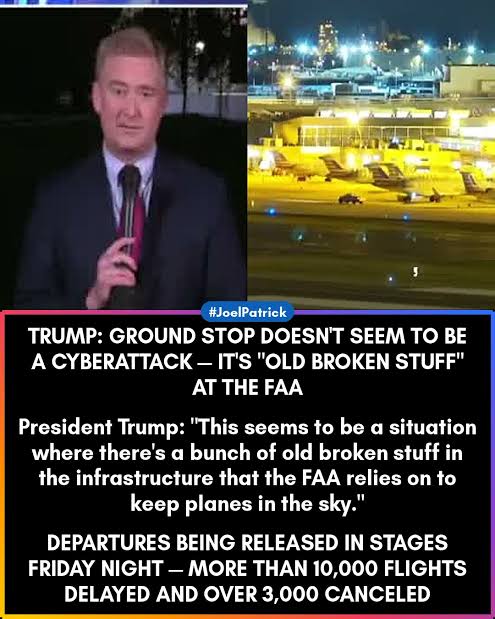
The Federal Aviation Administration (FAA) has lifted its nationwide ground stop after a major communications failure disrupted air travel across the United States. However, the decision to reopen American airspace has not immediately restored normal operations. Thousands of passengers remain stranded, airlines are struggling to reorganise their schedules, and flight delays could continue for several days.
The unprecedented disruption began on Friday, November 13, 2026, when technical problems affected multiple air traffic control communications centres. The FAA responded by ordering a nationwide ground stop, preventing most departing flights from taking off.
Although officials eventually lifted the restriction, the consequences have continued across major airports. Aircraft and airline crews are out of position, passengers need alternative bookings, and airlines must rebuild their operating schedules.
The incident has also raised serious questions about the reliability of America’s ageing air traffic control infrastructure. With Thanksgiving approaching, the timing of the disruption has created additional concerns for millions of travellers.
FAA Lifts Nationwide Ground Stop After Major Communications Failure
The FAA issued its nationwide ground stop shortly before 4 p.m. Eastern Time on November 13. The agency cited extraordinary circumstances and safety concerns after communications problems affected multiple Air Route Traffic Control Centers.
These centres play an essential role in managing aircraft travelling between airports. Controllers use communications systems to coordinate aircraft movements, maintain safe distances and guide pilots through different sections of American airspace.
When those systems experienced problems, aviation officials decided that restricting departures was the safest option.
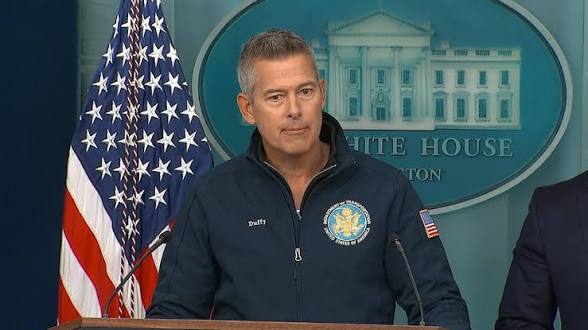
The ground stop lasted more than four hours. Transportation Secretary Sean Duffy announced that the restriction had been lifted at approximately 8:15 p.m. Eastern Time.
However, reopening the airspace did not mean every flight could immediately resume.
Airlines needed time to confirm aircraft availability, locate flight crews and coordinate new departure schedules. Airports also faced congestion as delayed aircraft waited for departure clearance.
Officials warned passengers that the recovery process would take time.
Thousands of Flights Cancelled and Delayed Across America
The nationwide ground stop created widespread disruption throughout the American aviation network.
Flight-tracking data showed thousands of cancellations and delays on Friday. The disruption continued into Saturday, with additional flights cancelled as airlines struggled to restore normal operations.
According to FlightRadar24 figures reported by Reuters, more than 4,700 flights were cancelled and approximately 10,000 were delayed on Friday. Another 700 cancellations had already been recorded for Saturday at the time of the initial report.
Other tracking services reported different totals as the disruption developed and additional flights were removed from schedules.
The figures demonstrate the enormous scale of the problem.
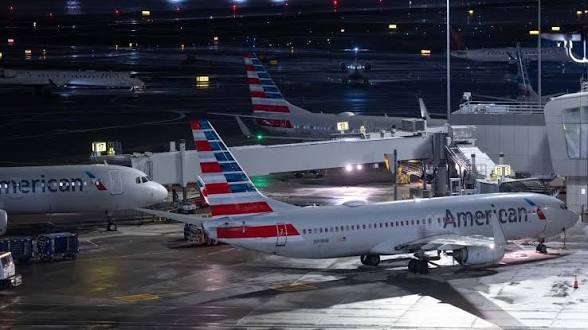
Major airports experienced crowded terminals, lengthy queues and changing departure information. Passengers faced missed connections, unexpected hotel expenses and uncertainty about when they could reach their destinations.
Some travellers remained inside aircraft for extended periods. Others had to leave airports and arrange alternative accommodation.
The effects were not limited to passengers travelling within the United States. International services also experienced disruption because American airports serve as important connecting points for global aviation.
Flights arriving from overseas were handled on a case-by-case basis during the ground stop.
What Caused the FAA Ground Stop?
The immediate problem involved communications failures affecting air traffic control facilities.
Transportation Secretary Sean Duffy said overloaded switches and routers in the existing network contributed to the outage. These components help transmit information between air traffic control facilities and support communications needed for safe aircraft operations.
Officials described the failure as a problem involving older infrastructure and the pressure created during technology upgrades.
The FAA has been working to modernise America’s air traffic control network. However, the latest incident highlighted the challenges of operating older and newer technologies during a major transition.
Homeland Security Secretary Markwayne Mullin also discussed concerns about compatibility between existing equipment and newer systems.
Authorities have not established every technical detail behind the initial failure. Investigators still need to determine precisely how the network became overloaded and why the available systems could not prevent a nationwide disruption.
The incident demonstrates how a technical problem involving communications equipment can quickly affect an entire transportation network.
Why Did the FAA Ground Flights Nationwide?
The FAA’s primary responsibility is to protect passengers, pilots and other people involved in aviation operations.
Air traffic controllers rely on dependable communication systems to issue instructions and coordinate aircraft movements. When communications become unreliable, controllers may struggle to maintain normal traffic flows.
Even a temporary communications problem can create significant operational risks.
For example, aircraft travelling across the country regularly move between different control centres. Each centre must coordinate with pilots and neighbouring facilities to ensure safe transitions.
If communication becomes inconsistent, managing additional departures becomes more difficult.
A nationwide ground stop reduces the number of new aircraft entering the system. It also gives technicians and controllers time to assess the problem.
Importantly, the FAA’s order primarily restricted departing traffic. Aircraft already airborne were allowed to continue towards their destinations and land safely.
This distinction is important because a ground stop does not necessarily mean every aircraft in the sky must immediately land.
Officials described the decision as a precautionary safety measure.
Airlines Face Days of Disruption Even After Flights Resume
One of the biggest challenges following the FAA ground stop is restoring airline schedules.
Airlines operate complex networks involving aircraft, pilots, flight attendants, airport gates and connecting passengers.
A single delayed flight can affect several other services throughout the day.
For example, an aircraft scheduled to travel from New York to Chicago may be needed later for a flight from Chicago to Los Angeles. If the first service is delayed, the second may also be affected.
Crew availability creates another challenge.
Pilots and flight attendants have legally required rest periods and working-time limitations. When flights are delayed for several hours, crews may no longer be available for their original assignments.
Airlines must then locate replacement crews or adjust their schedules.
Aircraft positioning is equally important.
Some planes may be stranded at airports where they were never scheduled to remain overnight. Meanwhile, other airports may experience shortages of available aircraft.
Airlines must reposition planes and organise replacement services before returning to normal operations.
These interconnected problems explain why the disruption could continue for several days, even though the original communications failure has been addressed.
America’s Ageing Air Traffic Control System Faces Fresh Questions
The nationwide ground stop has renewed concerns about the condition of America’s air traffic control infrastructure.
The United States operates one of the world’s busiest aviation networks. Its air traffic control system manages thousands of commercial, cargo and private aircraft movements.
However, maintaining this network requires reliable communications equipment, modern software and sufficient staffing.
Aviation officials have repeatedly discussed problems involving ageing technology and controller shortages.
The latest outage has increased pressure on the government to accelerate modernisation.
Transportation Secretary Sean Duffy has argued that additional investment is necessary to replace outdated equipment and improve the reliability of the national system.
The administration has called for substantial additional funding for aviation infrastructure.
Congress previously approved $12.5 billion for air traffic control modernisation. Officials have also discussed the need for billions of dollars more to complete the wider upgrade.
The challenge is not simply purchasing new equipment.
Modernisation must happen without compromising the existing systems that controllers depend on every day.
The latest incident shows why a carefully managed transition is essential.
Was the Outage Connected to Artificial Intelligence?
Questions also emerged about whether the FAA’s newer artificial intelligence technology contributed to the disruption.
The agency has been expanding its Strategic Management of Airspace, Routes and Trajectories system, known as SMART.
The technology is designed to help aviation officials identify congestion, assess flight schedules and improve airspace management.
Its purpose is to help controllers and planners make better decisions about aircraft movements.
However, officials did not establish that SMART caused the November 13 outage.
Air Space Intelligence, the company behind the system, said its technology was not responsible for the ground stop.
Transportation officials instead pointed towards problems involving legacy communications equipment.
This distinction matters because the outage should not automatically be attributed to artificial intelligence.
Investigators must establish the technical cause before assigning responsibility.
The incident nevertheless highlights the importance of ensuring that new aviation technologies work reliably alongside older infrastructure.
Officials Say There Is No Evidence of a Cyberattack
The nationwide disruption also raised questions about possible cybersecurity threats.
Air traffic control systems are critical infrastructure. A successful attack against these networks could potentially affect communications, airport operations and national transportation services.
However, officials said there was no evidence that a cyberattack caused the November 13 outage.
Homeland Security Secretary Markwayne Mullin said investigators had not found signs of malicious activity.
Authorities also discussed the possibility of other technical explanations while continuing their investigation.
It is important to distinguish between a confirmed technical failure and speculation about its cause.
At this stage, the available official explanations point towards overloaded communications equipment and problems involving older network infrastructure.
Further investigation will be necessary to establish the full sequence of events.
Passengers Face Missed Connections, Refund Questions and Extra Costs
For travellers, the most immediate concern is reaching their destinations.
The FAA may have lifted the ground stop, but passengers can still face cancellations, rescheduled departures and missed connections.
People travelling through major connecting airports may experience additional difficulties.
For instance, someone flying from Europe to a smaller American city might depend on a connecting flight through New York, Chicago or Atlanta.
If the first flight is delayed, the passenger could miss the onward connection.
Airlines must then determine whether another service is available and whether the passenger needs an overnight stay.
Travellers should contact their airlines directly to understand their options.
When a flight is cancelled, passengers should ask about alternative bookings and applicable refund policies.
For flights covered by US Department of Transportation rules, passengers are generally entitled to a refund if the airline cancels or significantly changes a flight and they choose not to travel.
Airlines may also offer free rebooking, depending on the circumstances and their policies.
However, compensation for additional expenses can depend on the cause of the disruption and the airline’s specific commitments.
Passengers should retain receipts for reasonable expenses and review the airline’s official disruption policy.
Thanksgiving Travel Could Face Additional Pressure
The timing of the FAA ground stop has created concerns ahead of the Thanksgiving holiday.
Thanksgiving is traditionally one of the busiest travel periods in the United States. Millions of Americans travel to visit relatives, attend celebrations and take holiday trips.
Airlines must manage increased passenger demand while ensuring enough aircraft and crews are available.
The November 13 outage has added another challenge.
If aircraft and crews remain out of position, airlines could face difficulties operating their normal schedules.
However, officials have expressed confidence that the aviation system can recover in time for the Thanksgiving travel rush.
The coming days will be important.
Airlines must clear the existing backlog, restore aircraft positioning and ensure that staffing levels support normal operations.
Passengers planning holiday journeys should monitor their bookings regularly and allow additional time for airport procedures.
What Should Passengers Do If Their Flight Is Delayed?
Travellers affected by the nationwide ground stop can take several practical steps to reduce uncertainty.
First, check the flight status through the airline’s official website or mobile application. Airport departure boards may not always display the latest information immediately.
Second, keep airline notifications enabled. Airlines often send important updates through text messages, email and mobile applications.
Third, avoid travelling to the airport without confirming the latest departure information, especially if the airline has already notified passengers about a cancellation.
Fourth, contact the airline if a connecting flight has been missed. Passengers should ask about alternative routes and available rebooking arrangements.
Fifth, keep boarding passes, booking confirmations and receipts for additional expenses.
Travellers should also avoid booking expensive replacement tickets without first checking whether the original airline can provide an alternative.
For international passengers, it is particularly important to confirm onward connections and any visa or transit requirements before changing routes.
Could Another Nationwide Ground Stop Happen?
The latest incident has raised concerns about whether similar problems could occur again.
Transportation officials have acknowledged that the existing system needs further improvements.
However, the available information does not establish that another nationwide shutdown is inevitable.
The risk of future disruption depends on several factors, including the reliability of existing equipment, the effectiveness of technology upgrades and the ability of authorities to identify problems before they affect operations.
Aviation safety depends on multiple layers of protection.
Communications equipment, radar systems, trained controllers and backup procedures must work together.
Modernisation could improve reliability, but upgrades must be carefully tested and implemented.
The government will also face questions about funding, project timelines and accountability.
The latest outage has made these issues more urgent.
What Happens Next for US Air Travel?
The immediate priority is restoring normal flight operations.
Airlines must clear passenger backlogs, reposition aircraft and organise crews. Airport authorities must also manage congestion while delayed services return to their schedules.
The FAA and other government agencies will need to examine the communications failure and identify measures to prevent a similar incident.
The investigation could also influence future decisions about technology upgrades and infrastructure funding.
For passengers, the most important message is that the lifting of the ground stop does not guarantee an immediate return to normal schedules.
Disruptions may continue throughout the weekend and into the following days.
Airlines will need time to rebuild their networks after the nationwide interruption.
Conclusion: FAA Ground Stop Leaves a Nationwide Aviation Challenge
The FAA’s decision to lift the nationwide ground stop ended the immediate restriction on departing flights, but it did not resolve the wider disruption.
Thousands of cancellations and delays have created a difficult recovery process for airlines and passengers.
The communications failure has also exposed concerns about ageing air traffic control equipment and the challenges of modernising critical infrastructure.
Officials have said there is no evidence that a cyberattack caused the incident. They have instead pointed towards overloaded communications equipment and problems involving the legacy network.
As airlines work to restore normal schedules, passengers should continue checking flight updates and contacting their carriers before travelling.
The coming days will reveal how quickly the aviation industry can recover from one of the most significant nationwide flight disruptions in recent years.
About the Author