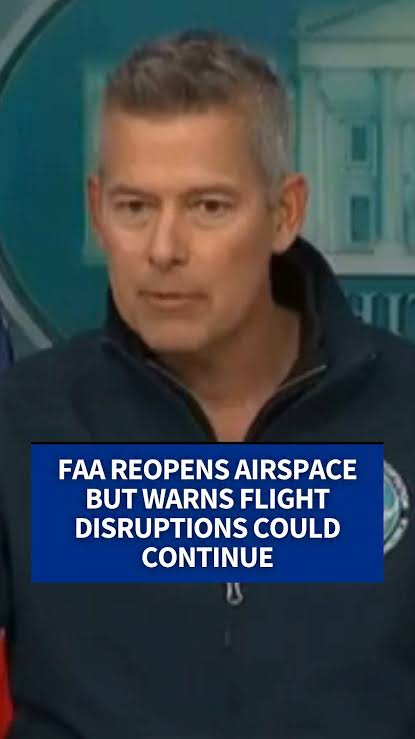
The FAA ground stop has been lifted, bringing relief to thousands of travellers affected by widespread flight disruptions across the United States. Following an aviation system outage, US Transportation Secretary Sean Duffy announced that restrictions on aircraft operations had been removed, allowing airlines to resume normal flight operations.
The disruption created uncertainty for passengers, airlines, airport employees and the wider aviation industry. Flights faced delays, cancellations and operational challenges as authorities worked to restore normal conditions. Meanwhile, travellers waited for updates about departures, arrivals and connecting flights.
The decision to reopen US airspace represents an important step towards stabilising the country’s aviation network. However, lifting a ground stop does not mean that every airport immediately returns to normal. Airlines must still reposition aircraft, manage delayed passengers and adjust flight schedules.
The FAA ground stop also highlights the importance of reliable aviation technology. Modern air travel depends on interconnected computer systems, communication networks and safety procedures. When one important system experiences an outage, the effects can spread across the country.
With restrictions lifted, attention is now shifting towards recovery, passenger safety and the steps needed to prevent similar disruptions.
What Happened During the Nationwide FAA Ground Stop?
The disruption began on Friday, November 13, 2026, when the Federal Aviation Administration experienced problems involving communications and radar systems used by air traffic controllers.
According to Transportation Secretary Sean Duffy, the problems began at approximately 3:36 p.m. Eastern Time. The agency then issued a nationwide ground stop at approximately 3:54 p.m.
The order prevented aircraft from departing airports across the United States.
At the time, approximately 3,500 aircraft were in the air. Controllers and pilots followed established safety procedures to manage the situation. Officials worked to ensure that aircraft already flying could land safely.
The FAA eventually lifted the ground stop at approximately 8:15 p.m. Eastern Time, ending more than four hours of nationwide departure restrictions.
US Department of Transportation+2
However, the immediate lifting of restrictions did not solve every problem.
Thousands of passengers were still waiting at airports. Airlines faced disrupted schedules, missing aircraft and crew availability issues. Some passengers also missed connecting flights, creating additional pressure on airport operations.
The incident demonstrated how quickly a technical problem within the aviation system can affect millions of travel plans.
Sean Duffy Announces the Reopening of US Airspace
Transportation Secretary Sean Duffy played a central role in communicating the government’s response.
After the outage, Duffy explained that the FAA had experienced instability across its radar and communications infrastructure. These systems are essential because controllers rely on accurate information to communicate with pilots and maintain safe separation between aircraft.
Duffy stressed that officials chose to stop departures because passenger safety had to remain the priority.
He also praised air traffic controllers and commercial pilots for following established procedures during the emergency.
According to the Department of Transportation, more than 3,500 aircraft were safely brought to the ground during the disruption.
The department subsequently confirmed that more than 8,000 flight operations resumed on Friday night after the ground stop was lifted.
In an update published on November 14, Duffy and FAA Administrator Bryan Bedford explained that the airspace was open again. However, they warned passengers that delays and cancellations could continue as airlines restored their schedules.
US Department of Transportation+1
The announcement offered reassurance to travellers, but it also made clear that the recovery process would take time.
Why Did the FAA Air Traffic Control System Fail?
One of the biggest questions following the FAA ground stop was what caused the nationwide outage.
Initial reports described the incident as a telecommunications problem affecting air traffic control facilities.
However, further information from Duffy on Saturday provided more details about the possible technical cause.
According to the Department of Transportation, a contractor was performing routine maintenance at a remote FAA location. The work involved transferring telecommunications connections from older copper lines to modern fibre technology.
The process was part of a broader effort to modernise the aviation network.
Officials said a router involved in the work may have malfunctioned or been incorrectly installed. Investigators were examining whether contractor error or faulty equipment caused the problem.
The router reportedly generated more than 1,000 connection attempts every four to five seconds.
That activity flooded other routers across the FAA telecommunications network. As a result, communications with aircraft and some radar feeds experienced disruption.
The department had not established the final cause when it issued its November 14 update.
US Department of Transportation
The Problem With Older Aviation Technology
The incident also exposed the challenges of operating an air traffic control network that still relies on ageing infrastructure.
Duffy explained that parts of the system use older time-division multiplexing telecommunications technology, commonly associated with traditional analog networks.
Meanwhile, the government has been introducing newer internet protocol technology.
This transition is important because modern digital networks can provide improved communication capabilities and support more advanced aviation systems.
However, modernisation must happen carefully.
Air traffic control infrastructure cannot simply be switched off and replaced without considering the thousands of connections that support daily operations.
A failure in one part of the network can affect other connected systems.
That is why the FAA must test upgrades, monitor performance and maintain reliable backup procedures.
Was the FAA Ground Stop Caused by a Cyberattack?
Another major concern involved the possibility of a cyberattack.
When an aviation network experiences a nationwide communications failure, questions about hacking and national security naturally emerge.
The United States government examined the possibility of malicious activity.
However, Homeland Security Secretary Markwayne Mullin said officials had not found evidence of a cyberattack at the time of the initial briefing.
The administration described the incident as appearing to involve a telecommunications failure rather than a deliberate attack.
Nevertheless, officials did not immediately rule out every possibility while the investigation continued.
The distinction matters because aviation infrastructure is considered critical national infrastructure.
Air traffic control systems support commercial flights, emergency operations, military movements and international travel.
A deliberate attack against these networks could create serious consequences.
For now, the available government statements point towards a technical failure involving legacy telecommunications equipment and a maintenance operation. They do not establish that hackers caused the incident.
The Washington Post+2
Thousands of Flights Affected Across the United States
The FAA ground stop created significant disruption at airports throughout the country.
Passengers experienced long waiting times, confusing announcements and sudden changes to departure schedules.
Major airports, including Chicago O’Hare International Airport, Hartsfield-Jackson Atlanta International Airport and Dallas Fort Worth International Airport, reported substantial disruption.
According to reporting published during the incident, Chicago O’Hare recorded hundreds of cancellations, while Atlanta and Dallas-Fort Worth also experienced serious operational problems.
Airlines had to manage several interconnected problems:
Aircraft were not always positioned where they were scheduled to operate.
Flight crews faced scheduling and duty-time limitations.
Passengers missed connecting flights.
Airport gates became crowded as delayed aircraft remained on the ground.
Airline customer service teams faced increased demand.
International travel schedules also experienced disruption.
These problems can continue even after the FAA removes restrictions.
For example, an aircraft scheduled to fly from New York to Chicago may be delayed for several hours. That same aircraft might then be unavailable for its next scheduled journey.
Consequently, one delayed flight can affect several later departures.
This explains why the FAA ground stop lifted announcement did not immediately restore normal conditions across the country.
Airlines Begin Restoring Normal Flight Operations
Following the reopening of US airspace, airlines began working to restore their schedules.
Some carriers resumed operations on Friday evening, while others planned to restart or expand services on Saturday.
However, the recovery process depended on aircraft availability, crew schedules, airport capacity and the number of passengers waiting to travel.
Airlines also needed to make decisions about which flights could operate safely and efficiently.
The Department of Transportation warned that delays and cancellations could continue after the ground stop ended.
By November 15, expectations were that US air travel would return towards normal conditions on Sunday. Nevertheless, individual passengers could still experience disruption depending on their airline and route.
Barron’s+1
Why Delays Can Continue After a Ground Stop
Many travellers assume that once an FAA restriction is lifted, flights should immediately return to their original schedules.
In reality, airline operations involve complicated planning.
A single aircraft may operate several flights in one day. Each journey depends on the previous flight arriving on time.
When a nationwide disruption occurs, airlines may need to reorganise entire schedules.
Crew members also have legally regulated working hours. If a flight is delayed for too long, the original crew may no longer be available to operate it.
Airports must also manage gate availability, baggage handling and passenger transfers.
These factors explain why recovery can take hours or even days after the original technical problem has been resolved.
What Should Passengers Do After the FAA Ground Stop?
Although US airspace has reopened, passengers should continue checking their flight information before travelling to the airport.
The FAA ground stop lifted announcement does not guarantee that every scheduled flight will depart on time.
Travellers should take several precautions.
1. Check flight status regularly
Use the airline’s official website or mobile application to check departure times, cancellation notices and gate information.
2. Confirm connecting flights
Passengers travelling through major US airports should check whether their connecting flights remain available.
A delayed first flight can affect the entire journey.
3. Contact the airline about cancellations
If an airline cancels a flight, passengers should ask about alternative travel arrangements and available rebooking options.
4. Keep important travel documents accessible
Boarding passes, identification and booking confirmations should remain available throughout the journey.
5. Allow additional time at airports
Even when flights resume, crowded terminals and longer customer service queues can create additional delays.
Passengers travelling internationally should also check whether their departure and arrival schedules have changed.
FAA Modernisation Becomes a Major Political Issue
The nationwide outage has renewed attention on the long-running effort to modernise America’s air traffic control infrastructure.
Duffy has argued that the United States needs a more advanced system rather than continuing to rely on ageing equipment.
The transportation secretary also called on Congress to provide additional funding for modernisation.
The administration has previously discussed substantial investments in new air traffic control technology. The Department of Transportation has highlighted an initial $12.5 billion investment included in legislation, while Duffy has argued that further resources are necessary to complete the wider upgrade.
US Department of Transportation+1
The debate is not simply about replacing old computers.
A modern air traffic control network requires:
Reliable telecommunications infrastructure.
Updated radar and surveillance equipment.
Secure digital communication systems.
Modern data-processing capabilities.
Improved backup and recovery arrangements.
Stronger cybersecurity protections.
Proper training for controllers and technical staff.
The FAA must also ensure that new systems work with existing infrastructure during the transition.
The November 13 incident has increased pressure on officials to explain how the government will prevent similar failures.
Why Modernising America’s Air Traffic Control System Matters
The United States operates one of the world’s largest and busiest aviation networks.
Millions of passengers depend on commercial flights for business, tourism, family visits and international connections.
Airlines also depend on predictable operations to manage fuel costs, staffing and aircraft utilisation.
When air traffic control infrastructure fails, the consequences extend beyond airports.
Businesses may experience travel interruptions. Tourism operators can lose bookings. Cargo shipments may face delays. International passengers may miss connections.
Furthermore, widespread disruption can create additional costs for airlines and airport operators.
Modernisation could reduce some of these risks by replacing vulnerable legacy components and improving system reliability.
However, technology alone cannot guarantee that outages will never happen again.
Even advanced digital infrastructure can experience equipment failures, software problems, human errors or external interference.
The real objective should be to build a system that can identify problems quickly, isolate affected components and maintain safe operations wherever possible.
FAA Investigation: What Happens Next?
The investigation into the outage remains an important part of the recovery process.
Officials must determine exactly why the telecommunications network became unstable and whether the maintenance work caused the router failure.
They must also examine whether the contractor followed the correct procedures.
Several questions remain important:
Was the router defective?
Was the equipment installed incorrectly?
Did the maintenance operation overload connected network components?
Could improved monitoring have detected the problem earlier?
Were existing backup systems sufficient?
What additional safeguards are needed?
The Department of Transportation’s November 14 briefing indicated that officials were still investigating whether the problem resulted from user error, installation error or faulty equipment.
US Department of Transportation
The findings could influence future contractor oversight, equipment testing and telecommunications upgrades.
They could also help the FAA develop stronger procedures for managing similar emergencies.
For passengers, the most important outcome will be greater confidence that the aviation network can continue operating safely during unexpected technical problems.
Could Another Nationwide FAA Ground Stop Happen?
The incident has raised concerns about whether similar disruptions could occur again.
Duffy acknowledged the limitations of the existing aviation infrastructure and argued that the country needs to accelerate its modernisation programme.
However, the government has not suggested that another nationwide shutdown is inevitable.
The FAA has established procedures for responding to communications and radar failures. These procedures allow controllers and pilots to prioritise safety when critical information becomes unreliable.
Future upgrades should focus on preventing isolated equipment problems from spreading across the wider network.
Better testing, stronger monitoring and more reliable backup systems could help reduce the risk of another nationwide disruption.
The investigation will be important in identifying which improvements are necessary.
What the FAA Ground Stop Lifted Announcement Means for US Aviation
The reopening of US airspace marks an important development after one of the country’s most disruptive aviation incidents in recent years.
Sean Duffy’s announcement confirmed that the immediate technical problem had been addressed sufficiently for flights to resume.
However, the incident exposed weaknesses in the telecommunications infrastructure supporting American air traffic control.
The government now faces two important responsibilities: completing the investigation and accelerating the modernisation of ageing aviation equipment.
For passengers, the priority remains straightforward. They want reliable flights, accurate departure information and confidence that the aviation system can operate safely.
Although the FAA ground stop has ended, the wider recovery will depend on airlines restoring their schedules and officials addressing the underlying infrastructure concerns.
The coming days will provide a clearer picture of how quickly US aviation returns to normal.
Frequently Asked Questions (FAQs)
1. Has the FAA ground stop been lifted?
Yes. The FAA lifted its nationwide ground stop on November 13, 2026, at approximately 8:15 p.m. Eastern Time. Flights were gradually allowed to resume across the United States.
2. Why did the FAA issue a nationwide ground stop?
The FAA issued the ground stop after telecommunications problems affected the stability of radar and communications systems used by air traffic controllers.
3. What did Sean Duffy say about the FAA outage?
Transportation Secretary Sean Duffy explained that ageing telecommunications equipment experienced instability during a maintenance operation. He also said that passenger safety was the reason for stopping departures.
4. Was the FAA outage caused by a cyberattack?
Officials said they had not found evidence of a cyberattack during their initial assessment. The investigation focused on telecommunications equipment, maintenance work and possible technical failures.
5. How many aircraft were affected by the ground stop?
Approximately 3,500 aircraft were in the air when the nationwide disruption occurred. Controllers and pilots worked together to bring them safely to the ground.
6. Are US flights operating normally again?
US airspace has reopened, and flights have resumed. However, passengers may still experience delays and cancellations while airlines restore their schedules.
7. Which airports experienced major disruptions?
Major airports affected included Chicago O’Hare, Hartsfield-Jackson Atlanta and Dallas-Fort Worth International Airport.
8. What caused the telecommunications failure?
According to the Department of Transportation, a contractor was performing maintenance to transition telecommunications connections from copper lines to fibre. A router problem reportedly caused excessive connection attempts and disrupted other network equipment. The final cause remained under investigation.
9. Will passengers receive compensation for cancelled flights?
Compensation depends on the circumstances, applicable regulations and airline policies. Passengers should contact their airlines about refunds, rebooking and other available assistance.
10. What happens next after the FAA ground stop?
The FAA and transportation officials will continue investigating the technical failure, restoring normal operations and evaluating improvements to America’s ageing air traffic control infrastructure.
About the Author