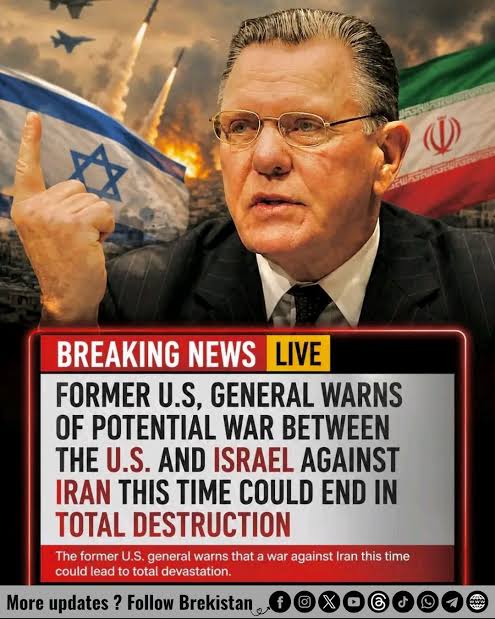
Retired US Army General Jack Keane has issued a fresh warning about the effectiveness of American economic pressure against Iran. He argues that sanctions alone may not be enough to bring down the country’s ruling regime.
His comments highlight a major challenge facing Washington as it seeks to weaken Tehran’s financial resources and limit its regional influence.
In a November 15, 2026, Fox News appearance on Life, Liberty & Levin, Keane drew attention to continued support reaching Iran from Russia and China despite the US blockade. His warning raises important questions about whether economic restrictions can achieve their intended political and strategic objectives without additional pressure.
Fox News Video+1
The central issue is not simply whether sanctions can damage Iran’s economy. They can. The bigger question is whether economic damage will force the country’s leadership to surrender power or fundamentally change its policies.
Keane’s assessment suggests that Washington should not underestimate the Iranian government’s ability to survive difficult economic conditions.
The warning also comes amid continuing tensions involving the United States, Iran and other major international powers.
Why Jack Keane Believes Sanctions May Not Be Enough
Economic sanctions have remained one of Washington’s most important tools for confronting Tehran.
The United States has used financial restrictions, oil-related penalties and measures targeting international business networks to reduce the Iranian government’s access to money.
However, Keane’s warning highlights the difference between weakening a government and causing its collapse.
A country can experience serious financial difficulties without its political leadership immediately losing control.
Iran’s government has spent years developing ways to manage international restrictions. These include alternative trading relationships, unofficial financial networks and arrangements that allow certain exports to continue.
Such mechanisms can help the government maintain some financial resources even when traditional international markets become difficult to access.
Keane has previously argued that economic pressure must form part of a wider strategy.
In a November 3 interview on Fox Business’s Kudlow, he discussed three broad approaches facing Washington: diplomacy, economic pressure and military action.
He warned that the administration could underestimate the Iranian regime’s determination to survive if it relied only on economic restrictions.
His comments also emphasized the importance of combining economic pressure with other measures rather than assuming that financial hardship would automatically produce political change.
Yahoo Finance+1
Russia and China Complicate America’s Iran Strategy
Russia and China have become significant factors in the debate over how effectively Washington can isolate Tehran.
Both countries have maintained important relationships with Iran despite American pressure. These relationships create challenges for US policymakers seeking to restrict the Iranian government’s access to international markets and financial resources.
Russia’s Strategic Relationship With Tehran
Russia and Iran have developed cooperation across several areas, including military affairs, regional security and economic relations.
For Moscow, maintaining relations with Tehran can support its broader strategic interests.
For Iran, cooperation with Russia provides another international relationship at a time when Western governments continue imposing restrictions.
This does not mean Russia can completely protect Iran from American sanctions. However, continued cooperation can make Washington’s isolation strategy more difficult.
It also creates a broader geopolitical problem.
If Iran can maintain important relationships with countries willing to continue trading or cooperating with it, American economic pressure may produce less immediate political impact than Washington expects.
China’s Role in Iran’s Economic Survival
China represents another important challenge for American policymakers.
As a major international economy, China has considerable influence over global energy markets, trade networks and financial relationships.
Iran has historically relied on China as an important destination for its oil exports.
The US Congressional Research Service has identified China as the main purchaser of Iranian oil. Its November 3, 2026, report also discusses how Iran has developed economic relationships and methods to reduce the impact of Western restrictions.
Every CRS Report+1
This relationship matters because oil revenue remains an important source of income for Tehran.
If Iranian oil continues reaching buyers through alternative arrangements, sanctions may reduce government revenue without eliminating it entirely.
That is precisely the kind of challenge Keane’s warning brings into focus.
Washington may be able to restrict Iran’s financial activities, but completely isolating the country requires cooperation from international partners.
Iran’s Sanctions Evasion Networks Create Another Challenge
Sanctions are designed to make it difficult for governments, companies and individuals to access international financial systems.
However, restrictions do not always prevent economic activity completely.
Countries facing long-term sanctions often develop alternative methods of conducting business.
Iran is no exception.
According to reporting by Iran International in August 2026, former US Treasury official Kerri Bitsoff described Iran’s sanctions-evasion system as an established network involving intermediaries, shadow banking and alternative financial arrangements.
She explained that sanctions can increase the cost of obtaining weapons components and selling oil, even when they do not completely stop those activities.
Iran International
Several methods can help Iran reduce the impact of restrictions.
1. Alternative Oil Trading Networks
Iran can attempt to sell oil through intermediaries and complicated shipping arrangements.
These transactions may involve companies operating in different jurisdictions.
Such arrangements can make it harder for authorities to identify the ultimate buyers and sellers.
However, these methods often involve additional costs and financial risks.
2. Shadow Banking and Financial Intermediaries
International sanctions can restrict access to traditional banking services.
In response, businesses may rely on intermediaries and alternative financial channels.
These arrangements can make transactions more complicated and expensive.
They can also expose companies and individuals involved to additional sanctions risks.
3. Regional Trade Relationships
Iran shares land borders with several countries.
These geographical connections provide opportunities for regional trade, although political pressure and border restrictions can limit such activities.
Keane highlighted this challenge during his November 3 interview.
He argued that Iran could continue finding revenue through alternative routes even when major shipping and trading channels faced restrictions.
Yahoo Finance
The larger lesson is that economic isolation requires continuous enforcement.
Simply announcing new restrictions does not guarantee that every financial or commercial channel will disappear.
Economic Pressure Can Weaken Iran Without Toppling Its Leadership
A major distinction in the Iran debate is the difference between economic damage and political collapse.
Sanctions can reduce government revenue, increase inflationary pressure, discourage investment and make international trade more expensive.
They can also create difficulties for military procurement and government spending.
However, these effects do not automatically produce a change in leadership.
Iran’s government has demonstrated a willingness to operate under prolonged international restrictions.
Its political leadership can prioritize security institutions and government survival even when ordinary citizens face economic hardship.
This creates a difficult situation for Washington.
The United States may succeed in reducing Iran’s economic resources without achieving its broader political objectives.
A report published by Reuters in August 2026 examined this problem in the context of the continuing conflict.
The analysis described Iran as facing economic pressure while its government continued to hold power. It also highlighted Tehran’s reliance on alternative economic arrangements and its ability to withstand restrictions.
a costly stalemate By Reuters
Why Economic Hardship Does Not Guarantee Political Change
There are several reasons why economic pressure may fail to produce immediate political transformation.
First, governments can shift the economic burden onto ordinary citizens.
Second, powerful security institutions may remain loyal to the existing leadership.
Third, international partners can provide alternative economic opportunities.
Finally, political leaders may consider maintaining power more important than improving economic conditions quickly.
These factors help explain why sanctions can have significant economic consequences without producing regime change.
Keane’s warning reflects this strategic reality.
Washington must distinguish between making Iran weaker and creating conditions that could fundamentally change its political direction.
Jack Keane’s Three-Part Approach to Iran
During his appearance on Kudlow, he discussed three broad approaches to dealing with Tehran.
These included diplomatic negotiations, economic pressure and military options.
His argument was that economic restrictions could be important but might not achieve the desired outcome independently.
1. Maintaining Economic Pressure
Keane considers economic pressure an important part of the American strategy.
Restrictions on oil exports, financial institutions and international trading networks can reduce the resources available to Iran’s government.
The objective is to make it increasingly difficult for Tehran to finance its priorities.
However, the effectiveness of this approach depends heavily on enforcement.
If international companies and countries continue helping Iran bypass restrictions, the financial pressure may become less effective.
2. Strengthening International Isolation
Another important element is limiting Iran’s ability to rely on international partners.
This is particularly challenging because Russia and China have their own strategic interests.
Washington must consider how other countries respond to American restrictions.
If important trading partners continue cooperating with Tehran, economic isolation becomes more complicated.
The United States may therefore need stronger diplomatic engagement with countries involved in Iran’s trade networks.
3. Considering Military Options
Keane has also discussed military pressure as part of a broader strategy.
During his November 3 appearance, he argued that military operations combined with economic restrictions could create greater pressure on Iran.
He also discussed the importance of improving regional defensive capabilities and supporting the Iranian people.
These comments represent Keane’s strategic assessment, not an announcement that the US government has adopted every measure he proposed.
Yahoo Finance
Military action, however, carries significant risks.
A new conflict could trigger retaliation, threaten regional security and disrupt international energy supplies.
It could also create consequences for American forces and US allies.
Therefore, any decision involving military force would require careful consideration of its potential costs and objectives.
The Impact of US Sanctions on Ordinary Iranians
Economic restrictions can affect several areas of daily life.
These include employment, household spending, access to imported products and the cost of essential goods.
Rising Costs and Economic Uncertainty
Restrictions on international trade can make imported products more expensive.
Businesses may struggle to obtain foreign currency, equipment and essential components.
These difficulties can affect production and employment.
For households, economic uncertainty can make it harder to plan expenses and maintain purchasing power.
The effects may become particularly serious when restrictions combine with domestic economic problems.
However, the impact is not distributed equally.
Government-connected organizations and powerful economic institutions may have different resources and opportunities from ordinary households.
Can Public Dissatisfaction Weaken the Regime?
Economic difficulties can increase public dissatisfaction.
Citizens experiencing rising prices, unemployment and declining living standards may become increasingly frustrated with government policies.
Nevertheless, dissatisfaction does not automatically translate into political change.
Organized opposition requires leadership, communication, coordination and the ability to sustain public participation.
Government security institutions also play an important role in determining whether protests can develop into a larger political movement.
Iran’s experience demonstrates that economic hardship and political instability are related but different issues.
This is another reason why Keane’s warning deserves attention.
Sanctions may increase pressure on the government, but the political outcome remains uncertain.
Could Iran’s Regime Survive Stronger American Sanctions?
The possibility of Iran surviving additional economic pressure remains an important concern for US policymakers.
The country’s leadership has repeatedly presented economic independence and resistance to foreign pressure as central elements of its political strategy.
This approach has encouraged the development of alternative trading relationships and domestic production capabilities.
However, these measures cannot completely eliminate the economic consequences of sanctions.
The Importance of Oil Revenue
Oil remains central to Iran’s economy.
Restrictions on oil exports can reduce foreign currency earnings and make it harder for the government to finance public services and other priorities.
The United States has therefore focused considerable attention on oil-related restrictions and shipping networks.
However, enforcement remains complicated when buyers, intermediaries and transportation companies operate across several countries.
The November 2026 Congressional Research Service report describes how American restrictions target Iran’s oil trade, financial institutions and networks involved in sanctions evasion.
Every CRS Report
The Challenge of International Enforcement
Sanctions are more effective when multiple countries cooperate.
If major economies enforce similar restrictions, the targeted government has fewer opportunities to find alternative buyers and financial channels.
However, international cooperation is not always guaranteed.
Countries may disagree with Washington’s approach or prioritize their own economic and strategic interests.
Russia and China are particularly important in this discussion because their relationships with Tehran complicate efforts to achieve complete international isolation.
This means the effectiveness of American sanctions depends not only on Washington’s decisions but also on the actions of other governments.
Why Military Pressure Remains a Controversial Option
Keane’s comments have also brought attention to the debate over military pressure.
Some supporters of a tougher approach argue that economic restrictions need additional pressure to produce meaningful results.
They believe that military capabilities can influence Tehran’s calculations and make continued resistance more costly.
However, critics warn that military action could create consequences far beyond the original objectives.
The Risk of Regional Escalation
Iran’s geographical position makes any military confrontation particularly sensitive.
The country is located near important shipping routes and energy infrastructure.
A wider conflict could affect neighboring countries and threaten international trade.
The Strait of Hormuz is especially important because it connects the Persian Gulf with international shipping routes.
Disruption in this area could affect oil transportation and increase uncertainty in global energy markets.
The Reuters analysis published in August 2026 highlighted the risks surrounding the Strait of Hormuz and the economic consequences of the continuing confrontation.
a costly stalemate By Reuters
The Cost of a Prolonged Conflict
Military operations can require substantial financial resources.
They can also expose American personnel and regional allies to retaliation.
A conflict that continues for months could create pressure on military resources and international relationships.
Furthermore, military action does not necessarily guarantee political change.
Even if a government loses military capabilities, its political institutions may remain operational.
This makes the question of long-term objectives especially important.
Washington would need to consider what happens after any military operation and whether the resulting situation would improve regional stability.
What Does Keane’s Warning Mean for President Trump?
Keane’s assessment presents an important strategic challenge for President Donald Trump’s administration.
The administration must decide how to balance economic restrictions, diplomacy and military pressure.
Each option offers different advantages and risks.
Economic sanctions can weaken government finances without immediately requiring military action.
Diplomacy can provide opportunities to reduce tensions, but negotiations may involve difficult compromises.
Military action can create direct pressure, but it also carries the possibility of a wider confrontation.
The challenge is finding a strategy that advances American security interests without creating additional instability.
The Question of Negotiations With Tehran
Diplomatic negotiations remain another important part of the discussion.
Keane expressed skepticism about agreements that could provide Iran with financial relief without addressing broader security concerns.
In his November 3 interview, he argued that sanctions relief could restore financial resources to the Iranian government.
He also questioned whether an agreement would prevent Tehran from rebuilding its capabilities.
These are Keane’s assessments of the diplomatic options available to Washington.
Yahoo Finance
Supporters of diplomacy, however, argue that negotiations can establish verifiable limits and reduce the risk of further conflict.
The central question is whether both sides can reach an agreement that addresses their main security concerns.
For the Trump administration, any agreement would involve difficult decisions about sanctions, monitoring and enforcement.
International Reactions Could Shape the Next Phase
The future of American pressure on Iran will depend partly on international reactions.
European governments, Gulf countries and major Asian economies all have interests in regional stability.
Many countries want to avoid a prolonged conflict that could threaten energy supplies and international trade.
At the same time, they have different views about how Washington should approach Tehran.
Gulf Countries Face Difficult Choices
Countries in the Gulf have strong reasons to monitor the situation carefully.
They want regional security and reliable shipping routes.
They also face the possibility that further military escalation could affect their economies and infrastructure.
The Reuters analysis of the conflict highlighted concerns among Gulf governments about the possibility of a prolonged stalemate.
a costly stalemate By Reuters
Global Energy Markets Remain Vulnerable
Iran’s position near the Strait of Hormuz gives the country significant geographical importance.
Any disruption to shipping could affect international oil markets.
Higher energy prices could increase costs for businesses and consumers worldwide.
This means the Iran dispute is not simply a disagreement between Washington and Tehran.
Its consequences could extend across international markets.
For this reason, many governments have an interest in preventing further escalation while seeking a sustainable resolution.
What Happens Next in the US-Iran Standoff?
The coming months could prove important for determining whether American economic pressure can achieve its objectives.
Several developments will deserve attention.
Sanctions enforcement: Washington may increase efforts to identify companies and financial networks helping Iran bypass restrictions.
Russian and Chinese cooperation: Continued support from Moscow and Beijing could make economic isolation more difficult.
Diplomatic negotiations: Any progress toward an agreement could change the direction of American policy.
Military developments: Further military pressure could increase risks across the Middle East.
Domestic conditions: Economic difficulties and public dissatisfaction could influence Iran’s internal political environment.
The most important question is whether the Iranian government can continue surviving under increasing international pressure.
Keane’s warning suggests that Washington should not assume economic restrictions will automatically produce regime change.
His assessment also highlights the importance of understanding Iran’s international relationships and its ability to adapt to sanctions.
For President Trump, the challenge is finding a strategy that weakens Tehran’s capabilities while protecting American interests and regional stability.
Ultimately, sanctions can impose serious economic costs. However, bringing down a political system requires much more than restricting its access to money.
That is the central message behind the latest Jack Keane Iran warning.
Frequently Asked Questions (FAQs)
1. What did Jack Keane say about Iran?
Retired General Jack Keane warned that sanctions alone might not collapse Iran’s ruling regime. He highlighted the importance of Russia and China’s continued support for Tehran despite American economic pressure.
2. Why does Jack Keane believe sanctions are insufficient?
Keane believes Iran has developed ways to survive economic restrictions. Alternative trading networks, sanctions evasion and international relationships can help the government maintain some financial resources.
3. How do Russia and China help Iran?
Russia and China maintain important economic and strategic relationships with Iran. Their continued cooperation can make Washington’s efforts to isolate Tehran more difficult.
4. Can US sanctions bring down Iran’s government?
Sanctions can weaken Iran’s economy and reduce government revenue. However, economic pressure does not guarantee political collapse. Other domestic and international factors influence regime survival.
5. What strategy does Jack Keane support against Iran?
In his November 3 interview, Keane discussed combining economic pressure, military options and assistance to the Iranian people. He argued that sanctions should not be the only instrument used.
6. Why is Iran difficult to isolate economically?
Iran has established alternative trading relationships and financial networks. These arrangements allow some economic activity to continue despite international restrictions.
7. What role does China play in Iran’s oil trade?
China has historically been the main purchaser of Iranian oil. Continued demand and trading relationships can help Tehran maintain access to export revenue.
8. Could additional US military action weaken Iran?
Military action could damage military infrastructure and increase pressure on Tehran. However, it could also trigger retaliation, regional instability and a prolonged conflict. Its political consequences are uncertain.
9. What is the main message of Keane’s Iran warning?
His main message is that economic sanctions alone may not achieve regime change. A broader strategy may be necessary to address Iran’s financial, military and political capabilities.
10. What happens next in US-Iran relations?
Future developments will depend on sanctions enforcement, diplomatic negotiations, international cooperation and military decisions. The balance between economic pressure and diplomacy will remain important.
About the Author