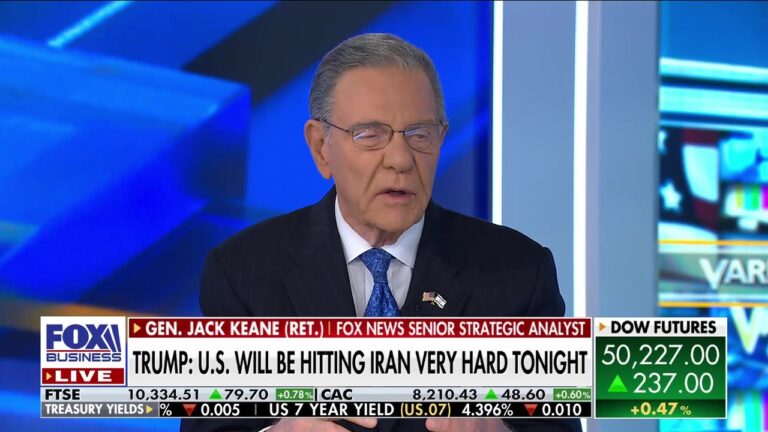
GEN JACK KEANE IRAN ALERT: Strategic Analyst Warns Threat Escalation Is Happening ‘Right Before Our Eyes’
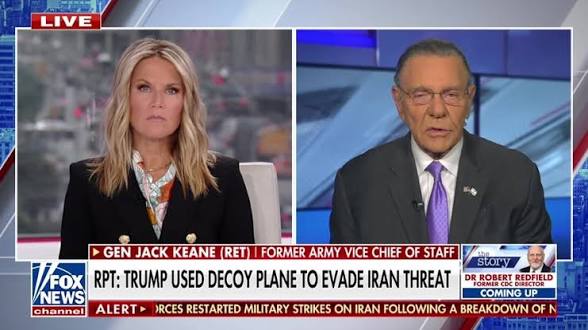
Tensions between the United States and Iran are drawing renewed attention as intelligence warnings, nuclear concerns and regional security risks raise questions about what could happen next. Retired four-star General Jack Keane has repeatedly warned that Iran remains a significant strategic threat and that Washington must prepare for possible escalation.
The latest developments have added urgency to those concerns. On October 26, 2026, Keane appeared on Fox News to discuss an unclassified intelligence memo warning of increased Iranian efforts to target American citizens and government personnel. The report comes amid continuing regional conflict and attacks by Iran-aligned Houthi forces.
Fox News Video+1
The headline, GEN JACK KEANE IRAN ALERT: Strategic Analyst Warns Threat Escalation Is Happening ‘Right Before Our Eyes’, captures the growing concern surrounding Iran’s military capabilities, alleged targeting activities and the possibility of renewed confrontation.
However, rising tensions do not automatically mean a wider war is inevitable. Intelligence assessments, public statements and military preparations must be examined carefully to distinguish confirmed developments from predictions.
For American policymakers, regional allies and international observers, the central question is whether diplomatic pressure can contain the crisis or whether further military action could become more likely.
1. Gen. Jack Keane Highlights Growing Iranian Threats
Retired Gen. Jack Keane has become a prominent voice in the debate over how the United States should respond to Iran. As a senior strategic analyst for Fox News, he regularly discusses military planning, intelligence assessments and the broader consequences of the conflict.
In recent appearances, Keane has argued that Iran’s military ambitions and its regional partnerships remain major security concerns. He has also questioned whether negotiations alone can prevent Tehran from rebuilding its military capabilities.
On October 26, Keane addressed a US intelligence warning about alleged Iranian efforts to target American personnel. The discussion focused on the seriousness of the reported threat and the potential responses available to Washington.
Fox News Video+1
The warning matters because it shifts attention beyond Iran’s nuclear programme. It also raises concerns about the safety of American diplomats, government officials and other citizens overseas.
Nevertheless, it is important to separate Keane’s strategic assessments from independently verified intelligence findings. His comments provide an expert perspective, but they do not establish that every reported threat will result in an attack.
2. US Intelligence Warning Raises Security Concerns

One of the most significant recent developments is an intelligence memorandum warning that Iran has increased efforts to target US personnel.
According to a Reuters report published on October 24, Director of National Intelligence Jay Clayton sent a warning dated October 23 to Secretary of State Marco Rubio. The memorandum described alleged Iranian efforts against American personnel and said some potentially lethal plots had reached advanced stages.
Reuters+1
The report has raised concerns about the possible exposure of American officials in the Middle East and other locations.
However, publicly available reporting does not identify every alleged target or disclose the full intelligence behind the assessment. Readers should therefore avoid treating every detail circulating online as independently confirmed.
Why the intelligence warning matters
Intelligence warnings can influence government decisions before an attack occurs. Authorities may increase security, restrict travel, adjust embassy staffing or share information with personnel who could face a threat.
In this case, reporting has linked the heightened security concerns to reductions in staffing at some US diplomatic facilities in Saudi Arabia. These measures illustrate how governments respond when intelligence suggests a possible danger.
Reuters+1
The warning also creates a difficult policy question. Washington must protect its citizens without making decisions based on assumptions that have not been fully established in public.
For Keane and other security analysts, the issue is not simply whether a specific attack occurs. It is whether Iran’s activities indicate a broader strategy that requires sustained attention.
3. Iran’s Nuclear Programme Remains a Major Concern
Iran’s nuclear ambitions remain central to the dispute between Tehran and Washington.
On October 14, Keane discussed the possibility of renewed military action against Iran on Fox Business. During the interview, he argued that Iran had not abandoned its nuclear ambitions and discussed potential targets that could feature in a future military campaign.
Fox Business Video+1
His comments reflect a wider disagreement over whether diplomatic negotiations can reliably limit Iran’s nuclear capabilities.
US officials and critics of Tehran’s nuclear policy have long argued that international agreements must include effective monitoring and enforceable restrictions. Iranian officials, meanwhile, have rejected demands they regard as unacceptable and have defended their right to pursue peaceful nuclear activities.
Why nuclear monitoring matters
Nuclear monitoring helps establish what activities are taking place at declared facilities and whether countries are complying with their international obligations.
However, monitoring can become more difficult when access is restricted, diplomatic cooperation breaks down or military operations damage facilities.
Reports of construction or reconstruction at suspected nuclear-related sites can therefore attract considerable attention. Such reports may raise legitimate questions, but construction activity alone does not prove that a country has decided to build a nuclear weapon.
The distinction is essential when evaluating the latest Iran alert.
Keane’s concerns should be understood as part of the broader security debate rather than proof that Iran has made a final decision to develop nuclear weapons.
4. Reports of Nuclear Site Reconstruction Add to the Tension
Recent reporting has also focused on claims that Iran is rebuilding parts of its nuclear and missile infrastructure.
A report published by the New York Post on October 26 cited Keane’s concerns about Iran restoring capabilities despite continuing diplomatic discussions. It highlighted reported construction activity near the Natanz nuclear complex, including attention surrounding the underground Pickaxe Mountain facility.
New York Post
These developments have fuelled debate about whether economic pressure and diplomatic negotiations can prevent Iran from restoring damaged facilities.
For US planners, the challenge involves determining what Iran can rebuild, how quickly it can do so and whether the restored infrastructure would create new military risks.
For diplomats, the same developments create pressure to establish a workable agreement before mistrust deepens further.
Yet several questions remain unanswered. Public reporting does not establish the full purpose of every construction project, the precise capabilities of every facility or the extent to which rebuilding efforts have changed Iran’s nuclear status.
The role of verification
Any future agreement would likely depend on credible verification measures.
These could include inspections, monitoring arrangements and clear procedures for resolving disputes over suspected violations. Without reliable verification, each side may interpret the other’s actions as evidence of hostile intentions.
That creates a dangerous cycle: one side expands its security preparations, the other interprets those preparations as a threat, and diplomatic space becomes increasingly limited.
This is one reason nuclear monitoring remains important even when political relations deteriorate.
5. Missile Capabilities and Regional Military Pressure
Iran’s ballistic missile capabilities are another important element of the current security debate.
Missiles and drones can threaten military installations, shipping routes and critical infrastructure. Their relatively flexible deployment also complicates defensive planning for the United States and its regional partners.
Keane has repeatedly discussed the importance of limiting Iran’s missile capabilities alongside its nuclear ambitions. In an October 14 interview, he outlined how a potential US military campaign could extend beyond nuclear facilities to include missile systems and other strategic targets.
Yahoo Finance
These comments describe possible military options, not confirmation that a new operation has been authorised.
Why missile threats complicate US planning
Military planners must consider several factors when evaluating a potential threat:
Range: Whether missiles can reach US forces, allied territory or strategically important locations.
Defensive capacity: Whether air defence systems can intercept incoming weapons.
Stockpiles: How many defensive interceptors are available during a prolonged confrontation.
Regional partnerships: Whether Iran-aligned groups could open additional fronts.
Civilian protection: How governments can reduce casualties and protect critical services.
The challenge becomes more complicated when several threats emerge simultaneously.
A country may have strong air defences but still face pressure if it must protect multiple military bases, cities, ports and energy facilities.
As a result, the Iran alert is not only about Iran’s weapons. It also concerns the ability of the United States and its partners to manage a crisis without allowing it to spread.
6. The Strait of Hormuz Could Become a Critical Flashpoint
The Strait of Hormuz remains one of the world’s most strategically important maritime passages.
The narrow waterway connects the Persian Gulf with the Gulf of Oman and the wider Indian Ocean. Its location makes it essential for international energy shipments and commercial shipping.
Recent reporting has highlighted threats to maritime traffic and the possibility that further military escalation could disrupt the route.
Reuters reported on October 8 that Iran had warned regional countries about unauthorised oil-export routes, while tanker operators faced heightened security concerns. The report described how missile threats, drones and potential attacks on vessels could increase risks for commercial shipping.
Reuters
Why the waterway matters globally
A prolonged disruption could affect more than the countries directly involved in the conflict.
Energy-importing economies could face higher costs if oil supplies become harder to transport. Shipping companies could pay more for insurance, while businesses could experience delays and increased freight expenses.
These effects could also influence inflation and financial markets.
For India and other major energy-importing countries, instability in the Gulf is especially important because changes in international oil prices can affect transport costs, industrial production and household expenses.
However, the scale of any economic impact would depend on the duration of the disruption, the availability of alternative supplies and the response of energy markets.
The Strait of Hormuz therefore represents both a military vulnerability and an economic pressure point.
7. Iran-Aligned Groups Widen the Regional Security Challenge
Another major concern is the role of groups aligned with Iran.
The Houthi movement in Yemen has become an important part of the wider regional security picture. Attacks involving the Houthis can threaten shipping, military positions and infrastructure beyond Iran’s borders.
An October 24 Reuters report linked the latest US intelligence concerns to a broader regional environment that includes attacks by Iran-aligned Houthi forces.
Reuters
The consequences extend beyond the immediate location of any single attack.
If violence increases in Yemen, the Gulf or nearby maritime routes, regional governments may face pressure to strengthen military cooperation and protect their infrastructure.
Could the conflict spread further?
There is a risk that a confrontation involving Iran could draw in additional actors.
For example, an attack on US personnel could trigger a military response. That response could then prompt retaliation from Iran or groups aligned with Tehran.
Each stage could increase the pressure on governments to respond forcefully.
However, escalation is not automatic. Regional governments have their own interests, and some may prefer to prevent further fighting rather than participate in it.
The relationship between Iran and aligned groups is also complex. Their interests can overlap without every action necessarily being directed by Tehran.
A careful assessment must therefore consider both the connections between these groups and their independent decisions.
8. Regional Diplomacy Offers a Possible Alternative
Despite the rising tensions, diplomatic efforts have continued.
On October 26, senior delegations from Saudi Arabia, Pakistan and Turkey met Iranian officials in Tehran. The talks aimed to prevent renewed fighting and explore ways to reduce regional tensions. Qatar was also involved in efforts to facilitate communication.
ABC News+1
These discussions are significant because they show that regional governments continue to seek alternatives to a wider conflict.
Saudi Arabia has direct security concerns linked to attacks in the region. Pakistan and Turkey also have interests in regional stability, while Qatar has played a role in facilitating diplomatic contacts.
Nevertheless, meetings alone do not guarantee progress.
The main obstacle is the gap between the objectives of Washington and Tehran. Negotiations concerning nuclear restrictions, sanctions, maritime access and security guarantees require both sides to accept compromises.
What would a meaningful agreement require?
A durable settlement could require several elements:
Clear limits on nuclear activities and reliable verification.
Arrangements addressing missile-related security concerns.
Measures to protect shipping and keep maritime routes open.
Commitments to reduce attacks against military and civilian targets.
A framework for handling disputes without immediately returning to force.
The exact terms would depend on negotiations between the parties.
Still, diplomacy offers a way to reduce uncertainty and establish boundaries that military threats alone cannot provide.
9. Could the United States Resume Military Action?
The possibility of renewed US military action remains a central question.
Keane has previously expressed pessimism about the prospects for a lasting agreement. In September, he argued that a return to combat operations was likely because he believed Iran’s leadership was determined to withstand pressure from Washington.
AOL+1
His assessment reflects his interpretation of Iran’s strategic objectives. It should not be treated as a confirmed prediction of a specific military decision.
US policymakers face several competing considerations.
Military action could aim to damage Iran’s capabilities or deter further attacks. At the same time, it could trigger retaliation against US forces, allied countries, energy infrastructure or commercial shipping.
A prolonged confrontation could also impose financial and political costs.
The risks of escalation
A new military campaign could produce consequences beyond its initial targets.
Iran might respond through missile or drone attacks, while regional groups could intensify their own operations. Commercial shipping could become less secure, and diplomatic efforts could lose momentum.
There is also a risk of miscalculation. An action intended to send a limited warning could be interpreted as the beginning of a broader campaign.
For these reasons, military readiness and political authorisation must be distinguished. The presence of military options does not mean leaders have decided to use them.
The immediate direction of US policy will depend on intelligence assessments, diplomatic progress, security incidents and decisions made by the administration.
10. What the Iran Alert Means for American Security
The latest intelligence reporting has renewed questions about how the United States should protect its citizens and personnel abroad.
The reported increase in Iranian targeting efforts has placed additional attention on diplomatic security and the risks facing American officials.
Reuters+1
In practical terms, authorities may need to review protective measures, improve information sharing and coordinate with partner governments.
They must also assess threats carefully to avoid unnecessary disruption while ensuring that credible warnings receive an appropriate response.
Intelligence and public communication
Intelligence assessments often contain information that cannot be released publicly without exposing sources or methods.
As a result, citizens may receive only a summary of the available evidence. This can make it difficult to independently evaluate the full scope of a warning.
Responsible reporting should explain what officials have said, identify what remains unknown and avoid presenting allegations as established facts.
That approach is particularly important during an international crisis, when unverified claims can spread rapidly.
Keane’s commentary contributes to the public discussion by explaining how a military strategist interprets these developments. The underlying intelligence and subsequent events, however, remain essential to evaluating the actual level of danger.
11. What Happens Next in the US-Iran Standoff?
Several developments will help determine whether tensions rise further or begin to ease.
First, intelligence agencies will continue assessing the nature and credibility of reported threats against American personnel.
Second, Washington and Tehran will face pressure to clarify their positions on nuclear restrictions, regional security and the conditions required for a diplomatic settlement.
Third, developments involving the Houthis and maritime traffic could influence decisions made by the United States and regional governments.
Finally, the success or failure of diplomatic contacts could determine whether further negotiations remain possible.
The November 3 US midterm elections are also part of the political backdrop. Analysts have discussed the possibility that military decisions could change after the election, but the timing and nature of any future action remain uncertain.
The Soufan Center+1
No single warning can establish what will happen next.
Instead, the situation will depend on the interaction between intelligence findings, military calculations, political decisions and diplomatic opportunities.
For now, the most important development is the combination of heightened security concerns and continuing efforts to prevent renewed fighting.
Conclusion
The Gen Jack Keane Iran alert highlights a growing concern about Iran’s activities and the risks facing the United States and its regional partners.
Recent intelligence reporting has raised questions about alleged efforts to target American personnel. Meanwhile, concerns about nuclear reconstruction, missile capabilities, maritime security and Iran-aligned groups continue to shape the strategic debate.
Keane has consistently argued that Iran’s military ambitions require a serious response. His latest comments add to a wider discussion about whether diplomatic pressure can achieve lasting security or whether further confrontation remains possible.
Yet the future is not predetermined. Intelligence warnings do not guarantee an attack, and military preparations do not prove that a new campaign has been authorised.
The October 26 diplomatic meetings in Tehran demonstrate that regional governments are still looking for ways to reduce tensions. Whether those efforts succeed will depend on the willingness of the parties to address their disagreements and establish credible security arrangements.
For the United States, the immediate challenge is to protect its personnel, assess intelligence carefully and preserve options that can prevent a dangerous escalation.
The coming weeks will be important. The balance between deterrence and diplomacy could shape not only US-Iran relations but also regional stability, international shipping and global energy markets.
Frequently Asked Questions (FAQs)
1. What is the Gen Jack Keane Iran alert about?
The alert concerns growing security concerns involving Iran, including intelligence warnings about alleged efforts to target American personnel, nuclear programme questions and the risk of further regional escalation. Keane discussed the latest intelligence warning on Fox News on October 26, 2026.
Fox News Video
2. Who is General Jack Keane?
Jack Keane is a retired four-star US Army general and a senior strategic analyst for Fox News. He regularly comments on US national security, military strategy and international conflicts.
3. What did US intelligence warn about Iran?
A memorandum dated October 23, 2026, warned that Iran had increased efforts to target US personnel. Reuters reported that the assessment described some potentially lethal plots as being at advanced stages. The full details have not been publicly disclosed.
Reuters
4. Is Iran rebuilding its nuclear facilities?
Recent media reports have described construction activity at sites associated with Iran’s nuclear infrastructure. However, individual construction reports do not establish that Iran has decided to build a nuclear weapon. The purpose and capabilities of specific facilities require careful verification.
5. Could the United States launch another attack on Iran?
Renewed military action remains a possibility discussed by analysts, but no prediction should be treated as confirmation of a decision. Any future operation would depend on political authorisation, intelligence assessments and developments in diplomacy and regional security.
6. Why is the Strait of Hormuz important?
The Strait of Hormuz is a critical route for international oil and gas shipments. A prolonged disruption could increase shipping costs, affect energy supplies and put pressure on global markets.
7. Are diplomatic talks between Iran and regional countries continuing?
Yes. Senior officials from Saudi Arabia, Pakistan and Turkey met Iranian officials in Tehran on October 26, 2026, in an effort to prevent renewed fighting. Qatar has also participated in diplomatic efforts.
ABC News+1
8. Could Iran’s regional allies expand the conflict?
Groups aligned with Iran, including the Houthis in Yemen, create additional security challenges. Their activities could increase regional instability, although their decisions should not automatically be attributed to direct orders from Tehran.
9. How could rising US-Iran tensions affect the global economy?
Escalation could disrupt oil shipments, increase maritime insurance costs and raise energy prices. The actual impact would depend on the severity and duration of any disruption and the availability of alternative supplies.
10. What should readers watch for next?
Key developments include new intelligence assessments, changes in diplomatic negotiations, maritime security incidents, official statements from Washington and Tehran, and any confirmed decisions concerning military action.
How useful was this post?
Click on a star to rate it!
Average rating 0 / 5. Vote count: 0
No votes so far! Be the first to rate this post.
About the Author

usa5911.com
Administrator
Hi, I’m Gurdeep Singh, a professional content writer from India with over 3 years of experience in the field. I specialize in covering U.S. politics, delivering timely and engaging content tailored specifically for an American audience. Along with my dedicated team, we track and report on all the latest political trends, news, and in-depth analysis shaping the United States today. Our goal is to provide clear, factual, and compelling content that keeps readers informed and engaged with the ever-changing political landscape.