ISRAEL WARNS IRAN ELECTION SECURITY: Prime Minister Issues Direct ‘Don’t Test Us’ Threat Over Strike Intelligence
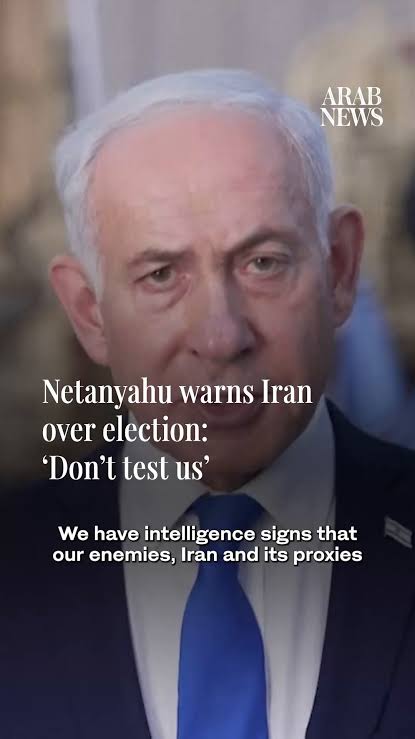
Tensions between Israel and Iran have intensified ahead of Israel’s October 27, 2026, election. Israeli Prime Minister Benjamin Netanyahu has warned Tehran against attempting to disrupt the vote, delivering a direct message that any hostile action could trigger a severe Israeli response.
The warning comes amid heightened security concerns, intelligence assessments and continuing uncertainty over the future of the conflict between the two countries. Netanyahu says Israel has identified indications that Iran and its regional allies could attempt attacks intended to interfere with the election.
“Don’t test us,” the Israeli leader warned, threatening what he described as disproportionate blows if Israel came under attack. His remarks have placed national security at the center of an already heated political contest.
The Times of Israel+1
The situation raises important questions about election security, the reliability of intelligence assessments, the risk of renewed military action and the potential consequences for the wider Middle East.
Netanyahu Warns Iran Against Election-Day Attacks

Netanyahu issued his warning on Sunday, October 25, while Israel prepared for the national election scheduled for Tuesday, October 27. He said Israeli intelligence had identified indications that Iran and its regional partners might attempt attacks designed to disrupt the democratic process.
The prime minister also stressed that the Israel Defense Forces (IDF) were prepared to respond through defensive and offensive operations. His message was intended to make clear that Israel would not treat an attack during the election period as a minor incident.
The Times of Israel+1
The timing is significant. Elections require public confidence, safe polling locations and the ability of voters to participate without intimidation. A security incident could affect all three.
However, Netanyahu’s warning does not establish that an attack is imminent. Israeli officials have publicly raised concerns about possible hostile activity, but the specific intelligence behind the warning has not been fully disclosed.
That distinction matters because governments often keep intelligence sources and operational assessments confidential. Without additional public evidence, it is not possible to independently determine the likelihood, scale or timing of any potential Iranian operation.
For now, the warning signals heightened vigilance rather than confirmation that an election-day attack will occur.
What Does the “Don’t Test Us” Threat Mean?
The phrase “Don’t test us” has become the central message of Netanyahu’s latest warning to Tehran.
His threat of disproportionate retaliation suggests that Israel could respond with force beyond the immediate scale of an attack if Iranian forces or aligned groups target Israeli territory, security personnel or election-related infrastructure.
In military and diplomatic language, such statements serve several purposes.
First, they attempt to deter an opponent by raising the expected cost of hostile action. Second, they reassure domestic audiences that the government is prepared to protect the country. Third, they communicate to regional governments that any escalation could have consequences beyond the immediate battlefield.
Netanyahu’s warning also reflects Israel’s broader approach to Iran. Israeli leaders have repeatedly described Tehran’s military capabilities, nuclear ambitions and support for armed regional groups as major national security concerns.
Nevertheless, a threat is not the same as a formal announcement of military action. Netanyahu’s remarks do not, by themselves, confirm that Israel has decided to launch another strike against Iran.
The distinction is especially important during an election. A government must prepare for possible threats while avoiding decisions that could unnecessarily increase the danger to civilians.
The coming days will therefore test whether the warning remains a deterrent message or becomes part of a wider military escalation.
Why Israel’s Election Has Become a Security Concern
Israel’s October 27 election is taking place against a backdrop of conflict, political division and concerns about the country’s long-term security.
National security has featured prominently in the campaign. Netanyahu has presented himself as an experienced leader capable of confronting Iran, while political opponents have questioned his handling of the conflict and the timing of his warnings.
According to ABC News, the final days of the campaign have been dominated by increasingly forceful security rhetoric. The election is also taking place amid public debate over Netanyahu’s leadership, Israel’s international position and the consequences of prolonged regional conflict.
ABC News
Protecting voters and polling stations
Election security involves more than guarding political leaders. Authorities must also protect polling locations, transportation routes, public gatherings and essential services.
A credible threat could prompt additional security checks or the deployment of more personnel. Authorities may also increase surveillance around sensitive facilities and review emergency response procedures.
However, such precautions do not necessarily indicate that an attack is expected. Governments frequently strengthen security when intelligence suggests an elevated risk.
Preventing intimidation and disruption
An attack or credible threat could discourage people from voting, create uncertainty and undermine public confidence in election procedures.
The same concerns apply to cyberattacks, disinformation campaigns and attempts to disrupt essential communications. These methods can create confusion without requiring a conventional military strike.
There is no publicly established evidence in the cited reporting that Iran has carried out an operation to disrupt this particular election. Netanyahu’s warning concerns a possible threat, not a confirmed act of interference.
Keeping the election process functioning
A central challenge for Israeli authorities is to maintain normal democratic procedures while preparing for possible emergencies.
Security measures must protect voters without unnecessarily restricting their ability to participate. Clear public communication can help prevent rumours from spreading and reduce confusion if authorities change local arrangements.
Ultimately, a secure election depends on both effective protection and public confidence in the process.
What Israeli Intelligence Has Revealed—and What Remains Unknown
The intelligence aspect is central to the developing story.
Netanyahu said Israel had indications that Iran and its allies could attempt attacks intended to interfere with the election. Yet the government has not publicly provided a complete account of the intelligence supporting that assessment.
Intelligence warnings can draw on several sources, including intercepted communications, surveillance, information from allied governments and assessments of the activities of armed groups. However, the specific sources behind Netanyahu’s statement have not been established by the publicly available reporting.
It would therefore be premature to claim that officials have confirmed a particular Iranian attack plan, target or operational timetable.
There is another important consideration: intelligence assessments describe risks and possibilities. They do not always predict events with certainty.
Security agencies must often make decisions before they possess complete information. Waiting for absolute certainty could leave authorities unprepared, while treating every warning as proof of an imminent attack could create unnecessary escalation.
Israel’s leadership must balance these competing risks.
The public will also be watching for evidence that supports or challenges the warning. Further official statements, independently verified security incidents and credible reporting could help clarify the situation.
Until then, the most accurate description is that Israel has raised concerns about possible election-related attacks, while the details remain limited.
Israel’s Military Readiness and the Possibility of Retaliation
Netanyahu’s warning has placed the readiness of Israel’s military at the center of the story.
The prime minister has said that the IDF is prepared for both defensive and offensive operations. This signals that Israel wants to preserve the ability to intercept an attack while retaining options for a response.
Defensive preparations may include air-defence systems, intelligence monitoring, protection of sensitive installations and coordination among security agencies. Offensive capabilities, meanwhile, could allow Israel to target military assets if the government concludes that retaliation is necessary.
However, Israel’s military readiness should not be confused with a confirmed decision to strike Iran.
Reporting published by Reuters on October 14 stated that Netanyahu was not seeking a preemptive strike before the election. At the same time, he warned that Israel would respond forcefully if Iran or its regional partners attacked.
Reuters
This distinction highlights the uncertainty surrounding Israel’s next move.
A government can prepare for military action without deciding to initiate it. It can also issue deterrent warnings in an effort to prevent an opponent from taking action in the first place.
The key question is whether the current preparations will help contain tensions or increase the risk of miscalculation.
If an attack occurs, Israeli leaders could face pressure to respond quickly. Yet the scale and timing of any response would depend on the circumstances, the available intelligence and the government’s assessment of the consequences.
Iran and Its Regional Allies: The Wider Security Challenge
Israel’s warning refers not only to Iran but also to its regional allies and aligned armed groups.
For years, Israel and Iran have competed for influence across the Middle East. Their confrontation has involved direct military action, threats, intelligence operations and conflicts involving regional partners.
This wider network makes the current situation more complicated than a simple dispute between two governments.
An attack could involve state forces, an allied armed group or an operation whose responsibility is initially unclear. Each possibility could create different challenges for Israeli intelligence and decision-makers.
Attribution is especially important. If an incident occurs, investigators may need to establish who carried it out, whether the operation was directed by Tehran and what evidence supports that conclusion.
A mistaken attribution could increase the danger of retaliation against the wrong target or trigger a wider conflict.
At the same time, Israel has repeatedly stated that it considers threats from Iran and Iran-aligned groups a serious national security concern.
The current warning therefore reflects a broader struggle over deterrence and regional influence. It does not, however, establish that every group aligned with Tehran would participate in a possible election-related operation.
How the United States Could Influence the Crisis
The United States remains an important factor in the Israel-Iran confrontation.
Washington has close security ties with Israel and has been directly involved in the conflict with Iran. Reuters reported that the United States and Israel attacked Iran on February 28, 2026, after which Tehran launched strikes against Israel and Gulf states. Reuters also reported that Israel and Iran had not exchanged fire since June, according to its October 14 account.
Reuters
That background makes American diplomacy and military coordination particularly significant.
Washington could influence events through intelligence sharing, consultations with Israeli officials, defensive assistance and diplomatic communication with regional partners.
American officials would also have reasons to avoid an escalation that threatens regional stability, energy supplies or the safety of US personnel.
However, the extent of any current American involvement in Israel’s election-security preparations has not been established by the reporting cited here.
It is also unclear whether Washington would support a new Israeli strike if the government decided to launch one. That question would depend on the circumstances, the evidence available and the diplomatic calculations of both countries.
For now, the United States remains an important part of the strategic background, but its next steps should not be assumed.
Political Opposition Questions Netanyahu’s Approach
Netanyahu’s warnings have also generated political controversy inside Israel.
Opposition figures have questioned whether the prime minister’s emphasis on the Iranian threat is justified at this particular moment. Some have argued that escalating security rhetoric so close to an election risks creating unnecessary tension.
According to The Jerusalem Post, opposition leader Yair Lapid said the available information did not justify attacking Iran before the vote. He also argued that military action should not be rushed while the country was preparing for an election.
The Jerusalem Post
These criticisms highlight a difficult issue for democratic governments: how to respond to security threats without allowing national security concerns to overwhelm political debate.
Supporters of Netanyahu’s approach argue that a government cannot ignore intelligence warnings simply because an election is approaching. From this perspective, a strong public warning could discourage hostile action and demonstrate that the country remains prepared.
Critics, however, question whether aggressive rhetoric could increase the risk of confrontation or influence how voters assess the government’s performance.
Neither position automatically establishes the prime minister’s motives or the accuracy of the intelligence assessment.
The central issue is whether the government can provide sufficient information to explain its decisions while protecting sensitive intelligence.
Why the election timing matters
The election gives the security warning an additional political dimension.
Voters are deciding which leaders they trust to manage military threats, protect civilians and guide Israel through a period of uncertainty.
Consequently, statements about Iran may influence public debate even if no attack occurs.
At the same time, it would be misleading to assume that every security warning is motivated by electoral considerations. Governments have genuine responsibilities to protect citizens, and intelligence assessments can require immediate attention.
The most reliable assessment will depend on evidence, official decisions and developments beyond campaign rhetoric.
Could Israel Launch Another Strike Against Iran?
The possibility of another Israeli strike remains a major question, but Netanyahu’s latest warning does not confirm that an attack has been authorised.
Israel has previously used military force against Iranian targets, and the two countries remain adversaries. Nevertheless, military action involves substantial risks, including retaliation, civilian casualties, economic disruption and the possibility of a wider regional conflict.
Israeli decision-makers would need to consider several factors before launching another operation.
These include the credibility and immediacy of the threat, the expected military outcome, the risk to Israeli civilians, the response from Iran and the likely reaction of the United States and other regional governments.
The political timing would also matter. A strike immediately before or during an election could create controversy about the relationship between national security decisions and democratic processes.
A report published by The Jerusalem Post on October 22 described concerns among Israeli security officials that striking Iran before the election could be perceived as political interference. The report also noted questions about the operational readiness and strategic value of a new campaign.
The Jerusalem Post
This does not mean military action is impossible. It means that the decision involves considerations beyond the ability to carry out a strike.
A limited operation might damage selected military facilities without achieving a lasting strategic objective. A larger campaign could produce more extensive consequences and provoke retaliation.
For these reasons, the strongest public warning should not be interpreted as proof that another attack is imminent.
Potential Consequences for the Middle East
The outcome of the current confrontation could affect countries well beyond Israel and Iran.
Regional military escalation
If Iran or an aligned group attacks Israel and Israel responds forcefully, the confrontation could spread to additional locations.
Other armed groups might become involved, while neighbouring governments could face pressure to strengthen their own security arrangements.
Even a limited incident could create uncertainty if either side misjudges the other’s intentions.
Energy markets and shipping
The Middle East is important to global energy production and transportation. A wider conflict could affect shipping routes, insurance costs and expectations about oil supplies.
Markets often react to the risk of disruption before a physical shortage occurs. However, the extent of any price movement would depend on the location, duration and severity of the conflict.
There is no basis to conclude from Netanyahu’s warning alone that energy supplies will be interrupted.
Civilian safety and displacement
Military escalation can place civilians at risk, particularly in densely populated areas or near strategic infrastructure.
Previous fighting across the region has caused displacement and damaged essential services. A renewed confrontation could place additional pressure on emergency services, hospitals and humanitarian organisations.
Preventing escalation is therefore important not only for military stability but also for civilian protection.
International diplomacy
Governments seeking to contain the crisis may encourage restraint, communicate with both sides or support diplomatic initiatives.
Such efforts can become more difficult when leaders make public threats because backing down may carry domestic political costs.
Nevertheless, communication channels can help prevent misunderstandings and reduce the risk of unintended escalation.
What to Watch After Netanyahu’s Warning
Several developments could clarify whether the current tensions are easing or becoming more dangerous.
Official intelligence updates: New statements may provide more detail about the nature of the alleged threat, although sensitive information may remain confidential.
Military movements: Credible reporting on unusual deployments or operational changes could help explain Israel’s preparations.
Statements from Tehran: Iranian officials’ responses may indicate whether the warning leads to further confrontation or renewed diplomatic messaging.
Election security measures: Additional precautions could show how seriously Israeli authorities are treating the possibility of disruption.
US diplomatic activity: Public statements or confirmed diplomatic meetings could reveal efforts to prevent a wider conflict.
Verified security incidents: Independently confirmed attacks or attempted disruptions would provide stronger evidence than speculation or anonymous online claims.
These indicators should be assessed together. A single statement or military movement does not necessarily prove that a new conflict is about to begin.
Readers should also distinguish between official claims, independently verified reporting and unconfirmed commentary. This is particularly important during periods of heightened military tension, when misinformation can spread quickly.
Conclusion: Israel Warns Iran as Election Security Takes Centre Stage
Israel’s warning to Iran has added another layer of uncertainty to an already tense election period. Benjamin Netanyahu has said that Israeli intelligence points to the possibility of attacks intended to disrupt the vote and has warned Tehran against testing Israel’s resolve.
His message is clear: Israel says it is prepared to defend itself and could retaliate forcefully if attacked.
Yet several questions remain unanswered. The specific intelligence has not been fully disclosed, an election-related Iranian attack has not been established by the cited reporting, and Netanyahu’s warning does not confirm that another Israeli strike has been authorised.
The political debate inside Israel also remains significant. Supporters emphasise deterrence and national security, while critics question the timing and possible consequences of the government’s rhetoric.
As Israel’s October 27 election proceeds, the most important developments will be verified security information, official decisions and any confirmed incidents.
For now, Israel warns Iran over election security, but the risk of further escalation remains uncertain. The coming days will show whether the warning helps deter hostile action or adds to the pressure on an already fragile regional situation.
Frequently Asked Questions (FAQs)
1. Why did Israel warn Iran over election security?
Benjamin Netanyahu warned that Iran and its regional allies might attempt attacks intended to disrupt Israel’s October 27, 2026, election. He said Israel was prepared to respond to hostile action.
The Times of Israel+1
2. What did Netanyahu mean by “Don’t test us”?
The phrase was a warning that Israel could respond forcefully if Iran or aligned groups attacked. Netanyahu threatened disproportionate retaliation, but he did not confirm that a new strike against Iran had been authorised.
3. Is Iran planning to attack Israel during the election?
Netanyahu said Israeli intelligence indicated a possible threat. However, the publicly available reporting cited here does not independently establish that Iran has finalised an attack plan or that an attack is imminent.
4. When is Israel’s 2026 election?
Israel’s election is scheduled for October 27, 2026, according to reporting published ahead of the vote.
Reuters+1
5. Could Israel launch another strike against Iran?
Another strike is possible, but the warning does not confirm a decision to launch one. Any action would depend on the threat assessment, military objectives, diplomatic considerations and potential consequences.
6. Why are Israeli opposition leaders questioning Netanyahu’s warning?
Some opposition figures have questioned whether the available information justifies military escalation before the election. They have raised concerns about the timing and the potential political and security consequences.
The Jerusalem Post
7. What role could the United States play in the crisis?
The United States could influence events through diplomacy, intelligence cooperation, security assistance and communication with regional governments. Its specific response to any new incident remains uncertain.
8. Could the Israel-Iran tensions affect oil prices?
Yes. A wider conflict could disrupt energy production or shipping routes and increase market uncertainty. However, Netanyahu’s warning alone does not establish that an energy disruption or a particular price increase will occur.
9. Does Netanyahu’s warning mean war will resume immediately?
No. A warning signals concern and may be intended to deter an attack. It does not prove that fighting will resume or that either side has decided to launch a new military operation.
10. What should readers watch for next?
Readers should monitor verified official statements, credible reports of security incidents, developments in election security and confirmed diplomatic efforts. These developments will provide a clearer picture of whether tensions are easing or escalating.
How useful was this post?
Click on a star to rate it!
Average rating 0 / 5. Vote count: 0
No votes so far! Be the first to rate this post.
About the Author

usa5911.com
Administrator
Hi, I’m Gurdeep Singh, a professional content writer from India with over 3 years of experience in the field. I specialize in covering U.S. politics, delivering timely and engaging content tailored specifically for an American audience. Along with my dedicated team, we track and report on all the latest political trends, news, and in-depth analysis shaping the United States today. Our goal is to provide clear, factual, and compelling content that keeps readers informed and engaged with the ever-changing political landscape.