ILHAN OMAR HASAN PIKER EVENT: Democratic Backlash Grows Over Controversial Streamer’s Minneapolis Rally
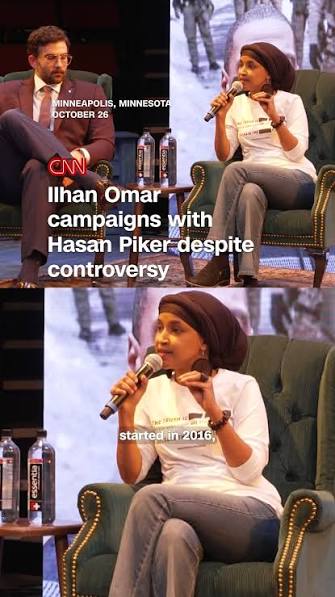
The Ilhan Omar Hasan Piker event in Minneapolis has intensified divisions within the Democratic Party, putting progressive political organizing, controversial online commentary and the battle for young voters under the spotlight.
U.S. Representative Ilhan Omar joined popular political livestreamer Hasan Piker and Minnesota State Senator Omar Fateh at a Minneapolis event on October 26, 2026. The gathering, titled I’m the Host Now: Election Edition, attracted attention not only because of its prominent guests but also because of the criticism surrounding Piker’s previous statements about Israel, Hamas and Jewish Americans.
Several Democratic politicians and community organizations objected to the event. They argued that sharing a platform with Piker could undermine the party’s efforts to build a broad electoral coalition. Others defended the appearance as an opportunity to reach younger voters who feel disconnected from traditional political institutions.
According to reporting by Minnesota Public Radio and the Minnesota Star Tribune, the discussion ultimately focused on progressive politics, immigration enforcement, economic inequality and voter participation rather than the controversy surrounding Piker himself.
MPR News+1
The dispute raises an important question: can Democratic leaders harness the influence of online political personalities without alienating voters who strongly disagree with their rhetoric?
1. What Happened at the Minneapolis Rally?
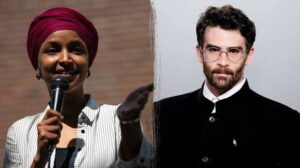
The event took place on Monday, October 26, at Theatre in the Round in Minneapolis. State Senator Omar Fateh hosted the gathering, which featured Piker and Representative Ilhan Omar.
Organizers promoted the event as I’m the Host Now: Election Edition. It was presented as a conversation about politics and voter engagement, rather than a conventional campaign rally.
The venue had approximately 245 seats, and organizers said tickets sold out within minutes. That rapid demand highlighted Piker’s ability to attract an audience, particularly among younger progressive voters.
However, the event faced criticism before it began. Several Democratic politicians questioned the decision to feature Piker so close to the November 3 midterm elections. Jewish community organizations also called on party leaders to oppose his appearance.
MPR News+1
The controversy continued even after the event concluded. Rather than focusing exclusively on the guests’ policy positions, public discussion increasingly centered on what their appearance together might signal about the Democratic Party’s political priorities.
For Omar and Fateh, the gathering offered a chance to engage politically active progressives. For their critics, it raised questions about judgment, accountability and the standards elected officials should apply when choosing public allies.
2. Why Is Hasan Piker a Controversial Figure?
Hasan Piker is a political commentator and livestreamer with a large online audience. He is known for his left-wing views, criticism of President Donald Trump, opposition to many US foreign policies and commentary on Israel’s war in Gaza.
Piker has become influential among younger progressives who prefer online discussions and independent political creators to traditional television news. His supporters often view him as a direct, outspoken voice challenging established political power.
Nevertheless, several of his past statements have prompted substantial criticism.
One major controversy involved his 2019 comment that America deserved the September 11 terrorist attacks. Piker later expressed regret for his wording and apologized.
He has also faced condemnation for remarks concerning Hamas, Israel and Jewish Americans. Critics argue that some statements cross the line between criticizing a government and using language that reinforces hostility toward Jewish people.
Piker has disputed accusations that he is antisemitic. He maintains that opposition to Zionism and the Israeli government’s policies should not automatically be interpreted as hatred of Jews.
That distinction is central to the dispute surrounding his Minneapolis appearance. Political criticism of Israel is not inherently antisemitic. However, statements targeting Jewish people as a group, using stereotypes or suggesting collective responsibility for violence can raise serious concerns.
The disagreement is therefore about more than ideology. It concerns the language used in political debate and the responsibility that comes with reaching a large audience.
Star Tribune+1
3. Democratic Leaders Push Back Against the Event
The strongest criticism came from Democrats who believe that political leaders should not overlook inflammatory rhetoric simply because a commentator attracts young voters.
Representative Angie Craig criticized Piker’s rhetoric as polarizing and dangerous. Senator Amy Klobuchar’s campaign also described several of his past statements as reckless and unacceptable.
Minneapolis Mayor Jacob Frey expressed concern that efforts to mobilize voters should not come at the expense of confronting antisemitism.
These reactions revealed a growing disagreement within Minnesota’s Democratic-Farmer-Labor Party, commonly known as the DFL. Some officials fear that appearing alongside Piker could undermine the party’s message of inclusion and weaken its appeal among moderate voters.
Other concerns involve the timing. With the November 3 midterms approaching, Democratic candidates are trying to maintain attention on issues such as affordability, healthcare, immigration and the direction of the federal government.
Critics argue that the controversy surrounding Piker could distract from those priorities.
The party’s internal debate is especially significant because the criticism has not come exclusively from Republicans. Democratic politicians and community groups have also questioned the decision to give Piker a prominent platform.
That makes it more difficult to dismiss the objections as ordinary partisan attacks.
Star Tribune+2
4. Why Ilhan Omar Decided to Participate
Omar’s office defended her participation by emphasizing the need to engage younger voters.
According to statements reported by the Minnesota Star Tribune, her team argued that early voting among people under 40 was down and that Democrats needed to do more to encourage participation.
The office also described the Democratic Party as a big-tent coalition. In practical terms, this means the party seeks support from people with different backgrounds, priorities and ideological positions.
Piker’s online audience offers an opportunity to reach voters who may not follow conventional campaign events. His commentary attracts people interested in progressive economic policies, immigration, US foreign policy and criticism of the political establishment.
Omar’s participation can therefore be understood as part of a broader effort to connect electoral politics with online political communities.
However, the strategy comes with risks.
Some voters may appreciate the outreach but disagree with Piker’s rhetoric. Others may interpret Omar’s appearance as an endorsement of his broader record, even if the event’s main purpose was voter engagement.
The central challenge for Omar is whether the potential benefits of reaching younger voters outweigh the reputational costs of appearing with a controversial personality.
Her supporters argue that engaging people politically is essential. Her critics counter that outreach should not require elected officials to overlook remarks they consider harmful.
Both arguments reflect a wider debate about how political coalitions should balance electoral strategy with consistent standards of public conduct.
5. Omar Fateh’s Role in the Minneapolis Event
State Senator Omar Fateh hosted the gathering and helped bring Piker’s online following into a local political setting.
The event was organized by Baddies 4 Progress and communications firm Haus of C. Its format allowed the participants to discuss political issues in a conversational setting, with the program streamed online.
Fateh’s decision to host Piker placed him at the center of the controversy. Supporters viewed the event as an opportunity to energize younger progressives. Opponents questioned whether it was appropriate to give a platform to someone whose comments had attracted criticism from members of the Jewish community.
The dispute also comes against the backdrop of existing divisions within Minnesota’s progressive movement.
Different factions of the party disagree over the best way to win elections, address economic inequality and respond to the Trump administration. They also disagree about how much emphasis candidates should place on ideological purity compared with building a wider coalition.
Fateh’s event became a visible example of those tensions.
It also demonstrated how local political decisions can attract national attention when a speaker has a substantial digital audience. A relatively small gathering can become a major political story when prominent elected officials and influential online personalities share a stage.
6. Jewish Organizations Raise Concerns About Piker’s Rhetoric
Jewish community organizations were among the most vocal opponents of the Minneapolis event.
The Jewish Community Relations Council of Minnesota and the Dakotas (JCRC) issued a statement on October 19 criticizing Omar and Fateh for agreeing to share a stage with Piker. The organization argued that his previous remarks about Jewish people and Israel should not be overlooked because of his political popularity.
The JCRC also called on Minnesota Democratic leaders and candidates to publicly reject rhetoric it considers antisemitic.
Its concerns extended beyond disagreement over Israeli government policy. The organization argued that language directed at Jewish people collectively can contribute to prejudice and undermine the sense of belonging that minority communities should expect from public institutions.
JCRC+1
These objections highlight an important distinction in the wider debate.
Criticism of Israeli military actions, government policy or Zionism is part of political discourse. At the same time, criticism can become discriminatory when it relies on stereotypes about Jewish people, assigns collective blame or appears to justify violence against civilians.
The controversy surrounding Piker reflects disagreement over how his statements should be interpreted and whether his explanations adequately address the concerns raised by Jewish organizations.
For Democratic officials, the issue presents a difficult test of consistency. Leaders who oppose prejudice must decide how to respond when controversial statements come from people whose broader political goals they may support.
The debate also demonstrates why community organizations can play an important role in public accountability. Their concerns deserve consideration alongside the electoral calculations of political campaigns.
7. Progressive Supporters Defend the Rally
Despite the criticism, Piker’s appearance attracted strong support from progressive activists.
For these supporters, the event represented an opportunity to bring politically engaged young people into the democratic process. They argued that public figures with substantial online followings can reach audiences that traditional political campaigns struggle to engage.
Some progressive voices also criticized the backlash itself. They suggested that Democrats risk turning a voter-mobilization event into an unnecessary internal conflict.
Minnesota Public Radio reported that attendee Erik Tanner viewed democratic socialism as an important direction for the party. Another attendee, Democratic Socialists of America member Janette Corcelius, argued that criticism of the event was a mistake because it could undermine efforts to mobilize voters.
MPR News+1
These reactions illustrate the appeal of Piker’s political approach.
His supporters are often drawn to direct criticism of established institutions, economic inequality and the influence of wealthy interests. They may also believe that Democratic leaders have not sufficiently addressed the concerns of younger voters.
However, support for his political message does not necessarily mean every supporter agrees with every statement he has made.
That distinction matters when assessing the event’s potential political impact. The audience may have attended to hear discussions about immigration, economic policy and political organizing rather than to endorse every aspect of Piker’s public record.
Still, the controversy presents a challenge for the organizers. They must explain why they believe the benefits of engaging his audience justify the criticism surrounding his appearance.
8. What Was Discussed During the Event?
Although the debate before the gathering focused heavily on Piker’s past statements, the event itself largely concentrated on broader political issues.
Reporting by the Minnesota Star Tribune and CBS Minnesota indicates that the conversation included criticism of the Trump administration, immigration enforcement, local political organizing and the direction of progressive politics.
Omar discussed how community organizations had prepared for intensified federal immigration enforcement in Minnesota. She described networks established to help communities respond to the operation and its effects.
Piker praised the solidarity shown by Minneapolis residents during the immigration enforcement campaign. He also discussed the city’s political culture and the role that local organizing could play in shaping national debates.
Omar encouraged attendees to participate in the election and persuade others to vote. The emphasis on voter engagement was consistent with her office’s stated reason for participating.
Star Tribune+1
The relatively restrained tone of the discussion did not end the controversy. Critics had objected to the decision to give Piker a platform in the first place, rather than simply predicting that he would make inflammatory remarks during the program.
Supporters, meanwhile, could point to the event’s focus on political participation and public policy as evidence that the gathering had a purpose beyond generating controversy.
The distinction between the pre-event criticism and the actual discussion is important. A fair assessment should consider both the reasons opponents objected to Piker’s presence and what the participants discussed once they appeared together.
9. Could the Controversy Affect the Midterm Elections?
The timing of the Ilhan Omar Hasan Piker event makes the controversy particularly significant.
The November 3, 2026, midterms are approaching, and Minnesota has several closely watched political contests. These include a US Senate race, a gubernatorial election and races for seats in the state legislature.
Political strategists have warned that associations with controversial public figures can complicate campaign messages. Opponents may use such appearances to question a candidate’s judgment or portray a political party as disconnected from moderate voters.
The Piker event gives Republicans an opportunity to criticize Democrats over ideological divisions. It also creates a challenge for Democrats who want to focus attention on the economy, healthcare and opposition to the Trump administration.
However, the event’s actual electoral effect remains uncertain.
A sold-out venue demonstrates interest, but it does not prove that the gathering will increase turnout or change voting intentions. Likewise, criticism from prominent politicians does not automatically mean that voters will punish the candidates involved.
The consequences may vary across different groups.
Young progressive voters: Some may appreciate the outreach and view Piker as a relatable political voice.
Moderate Democrats: Some may worry that the event distracts from practical policy priorities.
Jewish voters: Some may view the decision to feature Piker as a failure to address concerns about antisemitism.
Republican voters: Some may use the controversy to reinforce existing criticisms of progressive Democrats.
The election results and subsequent voter analysis will provide a clearer picture of whether the event influenced political participation or candidate support.
Until then, claims that the gathering has already helped or damaged either party should be treated cautiously.
10. The Bigger Debate Over Online Political Influencers
The Minneapolis gathering reflects a wider transformation in American politics.
Political campaigns once relied heavily on television interviews, newspaper coverage, traditional rallies and party organizations. Today, livestreamers, podcasters and social media personalities can reach millions of people without relying on conventional media outlets.
This change offers opportunities as well as risks.
Online commentators can explain complex issues in accessible language, engage audiences directly and encourage political participation. They can also shape public debate through provocative statements that spread rapidly across platforms.
For elected officials, collaborating with such personalities can provide access to audiences that conventional campaign events may not reach.
However, these collaborations also create reputational risks. A politician’s appearance alongside an influencer can be interpreted as an endorsement, even when the participants do not agree on every issue.
The Minneapolis controversy demonstrates the difficulty of separating audience outreach from public accountability.
Political leaders must consider more than the number of followers a potential guest has. They must also weigh the person’s record, the concerns of affected communities and the message the appearance may communicate.
At the same time, political debate should leave room for disagreement about policies, ideology and the appropriate boundaries of public speech.
The challenge is to encourage participation without dismissing legitimate concerns about discriminatory language or the treatment of vulnerable communities.
For the Democratic Party, this debate is unlikely to end with one event. It reflects a continuing struggle over how to combine progressive activism, electoral pragmatism and a consistent commitment to inclusion.
11. What Happens Next?
The immediate controversy surrounding the Minneapolis event may fade as attention turns toward Election Day. Nevertheless, the disagreements it exposed could remain important within Minnesota politics.
Democratic leaders will have to decide whether to continue engaging online political personalities with large progressive audiences. They will also need to consider how to respond when those personalities have made statements that community organizations regard as harmful.
For Omar, the event underscores the challenge of mobilizing younger voters while maintaining support among a diverse electorate. For Fateh, it highlights both the opportunities and the risks of bringing influential online figures into local political discussions.
Piker’s role in electoral politics may also continue to grow. His substantial audience gives him influence, but his ability to translate that influence into votes for candidates is a separate question.
The response from Jewish organizations will remain part of the debate as well. Their concerns about antisemitism are not resolved simply because a political gathering concludes without a major confrontation.
Ultimately, the consequences will depend on how voters respond, whether Democratic leaders address the concerns raised and how political campaigns handle the divisions within their coalition.
The Minneapolis event has made one thing clear: online influence is increasingly important in modern elections, but popularity alone does not settle questions about political judgment or public responsibility.
Conclusion
The Ilhan Omar Hasan Piker event has become a prominent example of the tensions facing Minnesota Democrats ahead of the November 2026 midterm elections.
Omar and Fateh defended the gathering’s potential to engage younger voters, while critics questioned the decision to share a platform with a commentator whose past remarks have generated accusations of antisemitism and other forms of inflammatory rhetoric.
The event itself focused mainly on immigration enforcement, progressive politics and voter participation. Yet the controversy surrounding Piker continued to dominate the wider political discussion.
Both sides face important questions. Democrats must determine how to reach younger voters without alienating other parts of their coalition. Critics must also distinguish between legitimate concerns about rhetoric and attempts to use controversy for partisan advantage.
Whether the gathering ultimately affects election results remains unknown. What is clear is that the relationship between political influencers, elected officials and voters has become an increasingly important issue in American democracy.
The Minneapolis dispute is therefore about more than one appearance. It is about the standards politicians should uphold, the audiences they want to reach and the difficult choices involved in building a broad political coalition.
Frequently Asked Questions (FAQs)
1. What was the Ilhan Omar Hasan Piker event?
It was a political discussion titled I’m the Host Now: Election Edition, held in Minneapolis on October 26, 2026. Representative Ilhan Omar and streamer Hasan Piker appeared at the event hosted by Minnesota State Senator Omar Fateh.
2. Why did the Hasan Piker event spark Democratic backlash?
Several Democratic politicians criticized Piker’s past remarks about Israel, Hamas and Jewish Americans. They argued that appearing alongside him could undermine efforts to build a broad coalition of voters ahead of the midterm elections.
3. What did Ilhan Omar say about attending the event?
Omar’s office defended her participation as an opportunity to mobilize younger voters. It emphasized the need to increase political participation among people under 40 and described the Democratic Party as a broad coalition.
4. Why is Hasan Piker controversial?
Piker has faced criticism for statements concerning the September 11 attacks, Hamas, Israel and Jewish people. He later apologized for his comment that America deserved 9/11 and has rejected accusations that he is antisemitic.
5. Did the Minneapolis event take place?
Yes. The event took place on October 26, 2026, at Theatre in the Round in Minneapolis. News reports described a discussion focused on politics, immigration enforcement and voter engagement.
6. Which Democratic politicians criticized Hasan Piker’s appearance?
Representative Angie Craig and Senator Amy Klobuchar were among the Democrats who criticized Piker’s rhetoric or the decision to appear with him. Minneapolis Mayor Jacob Frey also raised concerns about the approach.
7. Why did Jewish organizations oppose the event?
The Jewish Community Relations Council of Minnesota and the Dakotas criticized the decision to feature Piker, citing statements it considers antisemitic and harmful. The organization called on Democratic leaders to address those concerns publicly.
8. Could the event affect the 2026 midterm elections?
It could influence political messaging and voter perceptions, but its actual effect is not yet known. The gathering may appeal to younger progressives while creating concerns among some moderate voters and Jewish community members.
9. What topics did Omar and Piker discuss?
Reports indicate that the conversation covered the Trump administration, immigration enforcement, community organizing, progressive politics and the importance of voting.
10. What does the controversy mean for the Democratic Party?
The dispute highlights tensions between progressive activists and more moderate Democrats. It also raises questions about how the party can reach younger voters while maintaining consistent standards against antisemitism and other forms of prejudice.
How useful was this post?
Click on a star to rate it!
Average rating 0 / 5. Vote count: 0
No votes so far! Be the first to rate this post.
About the Author

usa5911.com
Administrator
Hi, I’m Gurdeep Singh, a professional content writer from India with over 3 years of experience in the field. I specialize in covering U.S. politics, delivering timely and engaging content tailored specifically for an American audience. Along with my dedicated team, we track and report on all the latest political trends, news, and in-depth analysis shaping the United States today. Our goal is to provide clear, factual, and compelling content that keeps readers informed and engaged with the ever-changing political landscape.