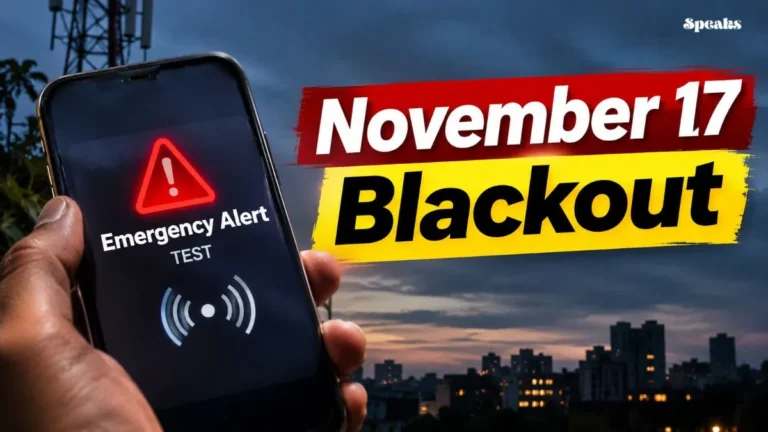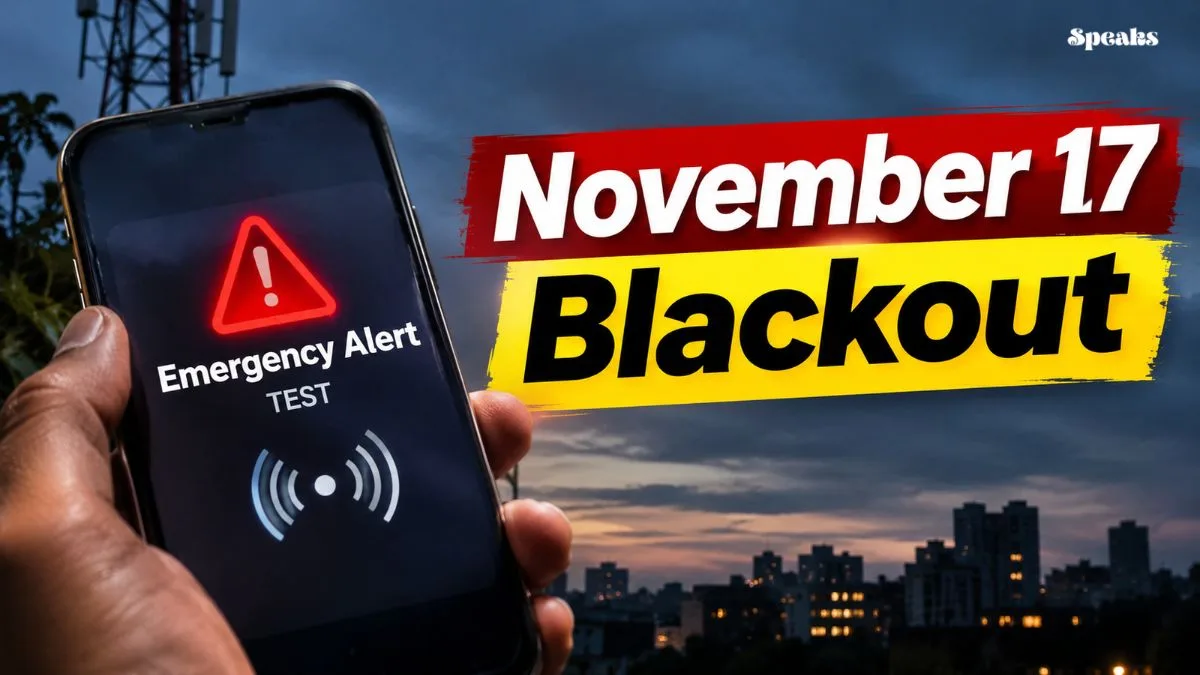
The Federal Emergency Management Agency (FEMA) is pushing back against widespread blackout rumors ahead of its nationwide emergency alert test scheduled for November 17, 2026.
The announcement has attracted significant attention across the United States. Social media posts have linked the planned alert test to claims of a possible nationwide power outage, cyberattack and disruption of essential services.
These rumors have gained momentum following several major technology and infrastructure disruptions. Recent problems affecting Microsoft services, airline operations and online banking have added to public concerns about the reliability of critical systems.
However, FEMA says there is no secret emergency behind the scheduled alert. The agency has described the exercise as a routine, legally required test designed to ensure that the national warning system works properly.
The test will briefly interrupt television and radio programming. It is expected to last approximately one minute, and officials say the public does not need to take any action.
The agency’s clarification comes at a time when misinformation about infrastructure disruptions is spreading rapidly online.
Why Is FEMA Conducting a Nationwide Alert Test?
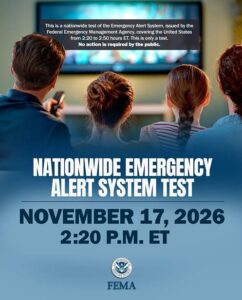
FEMA is conducting the nationwide test in coordination with the Federal Communications Commission (FCC).
The exercise will evaluate the Emergency Alert System (EAS), which allows authorized officials to distribute important emergency information through radio and television broadcasters.
The system plays an important role in national preparedness. It can help authorities communicate with the public during major emergencies, including natural disasters, national security threats and other dangerous situations.
The test is not a response to a newly announced national emergency.
Federal law requires FEMA to conduct nationwide tests of its public warning capabilities at least once every three years. These exercises help identify technical problems before an actual emergency occurs.
The previous nationwide test took place on October 4, 2023.
According to the FCC’s September 16 public notice, the November 17 exercise was scheduled in advance. The notice also established December 3, 2026, as the backup date if circumstances require postponement.
FCC Docs+1
The timing is important because the announcement was made well before the recent blackout rumors became widespread.
That fact directly challenges claims that the exercise was secretly organized in response to an imminent nationwide disaster.
FEMA Rejects Blackout and Secret Emergency Claims
FEMA has directly addressed speculation surrounding the nationwide alert test.
In a social media statement published on November 16, the agency said it had heard numerous rumors about the upcoming exercise.
Its message emphasized three important points:
The alert is a routine test.
It will last approximately one minute.
No action is required from the public.
FEMA also rejected claims of blackouts and secret emergencies.
The clarification was intended to prevent unnecessary panic and help Americans understand the purpose of the exercise.
Some online posts have suggested that the alert could signal the beginning of a nationwide power shutdown. Others have connected it to alleged government preparations for a major cyberattack.
However, there is no verified evidence supporting those claims.
FEMA’s announcement makes clear that the scheduled test concerns the national public warning system, not a planned interruption of electricity or internet access.
The agency’s response also highlights the importance of checking official information before sharing alarming claims online.
Yahoo+1
Recent Technology Outages Add to Public Concerns
The FEMA alert controversy comes after several technology disruptions affected major services across the United States.
Although these incidents involved different companies and systems, their close timing has encouraged speculation about a possible connection.
However, separate technical failures do not automatically indicate a coordinated attack.
1. Microsoft Outage Disrupts Online Services
Microsoft recently experienced a major service disruption that affected users of several widely used products.
Services including Outlook and Microsoft Teams experienced access problems, leaving some customers unable to use important communication and productivity tools.
The disruption raised concerns among businesses and individuals who depend on cloud-based platforms for daily operations.
Email services, workplace communication and online collaboration are essential to many organizations. Even a temporary interruption can create significant operational problems.
The incident also renewed discussions about the risks of relying heavily on centralized technology infrastructure.
However, there is no established evidence that the Microsoft outage was connected to FEMA’s emergency alert test.
2. FAA Ground Stop Creates Airline Disruptions
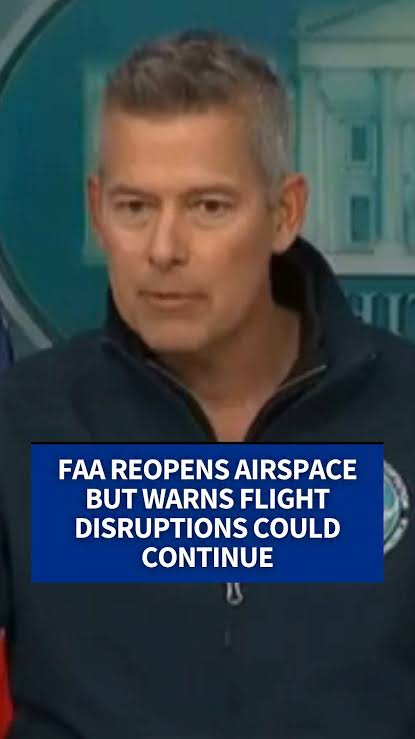
The Federal Aviation Administration also faced a significant operational disruption.
A nationwide ground stop temporarily affected flight operations, creating problems for airlines and passengers.
The incident attracted considerable attention because air travel depends on interconnected systems involving communications, scheduling and operational coordination.
Passengers experienced delays while airlines worked to manage the disruption.
The timing of the incident contributed to online speculation that several unrelated infrastructure problems might be part of a larger event.
Nevertheless, the existence of an airline disruption does not establish that a nationwide cyberattack is underway.
3. Banking Problems Raise Financial Concerns
Online banking disruptions have also contributed to public anxiety.
JPMorgan Chase reportedly experienced problems linked to a software bug, affecting access to certain banking services.
Financial technology systems are essential to everyday activities. Customers use them to check balances, transfer money, pay bills and manage accounts.
When banking platforms become unavailable, even temporarily, customers may worry about the safety of their money.
However, a service outage is not the same as a financial system collapse.
There is no verified evidence that these banking problems are connected to FEMA’s scheduled test or a planned nationwide blackout.
The incidents demonstrate why businesses must maintain reliable backup systems and strong technology safeguards.
NBC Chicago+2
What Will Happen During the November 17 FEMA Alert Test?
The nationwide test is scheduled for Tuesday, November 17, 2026, at approximately 2:20 p.m. Eastern Time.
The exercise will interrupt normal radio and television programming.
Viewers and listeners may hear familiar emergency alert tones followed by a recorded announcement explaining that the broadcast is only a test.
The message is designed to be clear and recognizable.
According to the FCC notice, the test message will identify FEMA and explain that the exercise is part of a nationwide Emergency Alert System test.
The announcement will also state that no action is required from the public.
The test is expected to last approximately one minute.
After the message finishes, broadcasters will return to their regular programming.
Here is a breakdown of the expected schedule:
| Detail | Information |
|---|---|
| Test date | November 17, 2026 |
| Scheduled time | 2:20 p.m. ET |
| Responsible agencies | FEMA and FCC |
| System being tested | Emergency Alert System |
| Expected duration | Approximately one minute |
| Main platforms | Television and radio |
| Public action | None required |
| Backup date | December 3, 2026 |
The FCC’s official notice confirms the scheduled time and technical arrangements for the nationwide exercise.
FCC Docs+1
Will FEMA Send the Alert to Mobile Phones?
One important detail is that this year’s exercise will not include Wireless Emergency Alerts (WEA).
That means mobile phones are not expected to receive the nationwide test notification.
The distinction matters because many Americans remember the previous nationwide test in October 2023, when wireless phones were included.
This year’s exercise has a different scope.
FEMA and the FCC are focusing on the Emergency Alert System, which distributes alerts through television, radio, cable, satellite and other participating broadcast services.
The two systems serve related but different purposes.
The Wireless Emergency Alerts system delivers warnings directly to compatible mobile devices. It can be used to communicate urgent information about severe weather, missing children and other threats.
The Emergency Alert System provides a separate way to distribute important information through broadcasters.
Testing these systems helps officials evaluate their reliability and identify potential weaknesses.
According to FEMA’s published frequently asked questions, wireless alerts were tested in 2023 but are not part of the November 17, 2026, exercise.
EBS Public Now+1
Why Are Blackout Rumors Spreading Online?
The blackout rumors appear to have developed through a combination of viral social media posts, real technology disruptions and misunderstandings about government preparedness programs.
Some posts have claimed that the United States could experience a 90-day blackout beginning November 17.
Others have suggested that the government is preparing to shut down the internet, banking services or the national electricity grid.
These claims have attracted attention because they refer to essential services that millions of people depend on.
The scheduled FEMA alert test has become a central part of the speculation.
However, the existence of an official emergency exercise does not prove that a major emergency is about to happen.
Several factors help explain why the rumors have gained traction.
Social Media Amplifies Unverified Claims
Social media platforms allow information to spread quickly.
A dramatic video or misleading headline can reach thousands of people before its claims are independently checked.
Some posts also use official government announcements without providing their original context.
For example, a routine emergency alert announcement may be presented as evidence of an impending disaster.
This can create confusion among people who see the post without reading the official notice.
Recent Outages Create Suspicion
The timing of recent technology failures has also contributed to uncertainty.
When several important services experience problems within a short period, people naturally begin asking whether the incidents are connected.
However, technical problems can have different causes.
A software bug, network failure, equipment malfunction and cybersecurity incident are not interchangeable explanations.
Investigators must examine evidence before determining whether an incident resulted from a cyberattack or another technical problem.
Misinterpretation of Emergency Preparedness
Government agencies regularly prepare for emergencies.
They conduct exercises, maintain communication networks and develop plans for possible disruptions.
These activities are part of normal disaster preparedness.
They do not necessarily indicate that officials expect a specific disaster to happen on a particular date.
The same principle applies to FEMA’s November 17 test.
Its purpose is to check whether the warning system works, not to announce a planned blackout.
PolitiFact+2
Is a Nationwide Blackout Really Expected on November 17?
There is no verified evidence that a nationwide blackout is scheduled for November 17, 2026.
FEMA has rejected the rumors, and the official FCC announcement describes the event as a routine test of the Emergency Alert System.
No verified federal announcement establishes that the United States will shut down its electricity grid for 90 days.
It is also important to distinguish between legitimate infrastructure risks and unsupported predictions.
Power grids, communication networks and financial systems can experience disruptions. Severe weather, equipment failures, cyber threats and other emergencies can affect essential services.
That does not mean a nationwide shutdown is planned.
A claim about a specific disaster requires credible evidence.
So far, the available official information supports a much simpler explanation: FEMA is conducting a scheduled public warning system exercise.
Americans should therefore avoid treating viral blackout predictions as confirmed news.
The most reliable information comes from official FEMA, FCC and emergency management announcements.
What Is the Emergency Alert System and Why Does It Matter?
The Emergency Alert System is one of the United States’ most important public warning networks.
It allows authorized government officials to communicate urgent information through participating broadcasters and service providers.
The system is designed to support public safety during emergencies.
These may include:
Hurricanes and severe storms.
Major flooding events.
National security emergencies.
Public safety threats.
Other situations requiring urgent public communication.
The system connects thousands of independently operated radio, television, cable, satellite and wireline video providers.
Because so many organizations participate, testing is important.
A problem at one point in the communication chain could affect how an alert reaches the public.
A nationwide exercise allows officials and broadcasters to evaluate their equipment, procedures and ability to distribute emergency messages.
The goal is to identify weaknesses before an actual crisis occurs.
This is particularly important during major disasters, when reliable information can help people make decisions that protect their lives.
Could the FEMA Test Be Postponed?
Yes. FEMA and the FCC have established a backup date if an actual emergency or significant weather event affects the scheduled exercise.
The alternative date is December 3, 2026.
This provision helps ensure that the test does not interfere with real emergency communications.
For example, if severe weather creates an immediate public safety concern, authorities may decide that postponing the exercise is the better option.
The decision would depend on conditions at the time.
The backup date also demonstrates that the test is part of an organized preparedness process.
It is not an unpredictable alert designed to surprise the public.
FEMA’s published guidance explains that the agencies may postpone the exercise when necessary.
EBS Public Now+1
What Should Americans Do During the FEMA Alert Test?
Officials say the public does not need to take any special action.
The most important thing is to recognize that the broadcast is a test.
People watching television or listening to the radio may temporarily hear loud alert tones.
These sounds are designed to attract attention during emergencies, so they may seem alarming.
However, the November 17 announcement will identify itself as a test.
Here are some simple recommendations:
1. Do Not Panic
The scheduled alert is not a warning that a blackout or national emergency is beginning.
2. Continue Normal Activities
People can continue their regular activities during the brief interruption.
3. Do Not Call 911 Because of the Test
Emergency telephone lines should remain available for genuine emergencies.
4. Follow Official Information
If an actual emergency occurs, follow instructions from local emergency management authorities.
5. Avoid Sharing Unverified Predictions
Check the original source before forwarding messages about blackouts, cyberattacks or government shutdowns.
These simple steps can help prevent unnecessary confusion.
Why Reliable Emergency Communication Is Important
Recent technology outages have highlighted how dependent modern society is on digital infrastructure.
Businesses rely on cloud services, airlines depend on complex computer networks, and financial institutions process millions of transactions electronically.
When one of these systems experiences a disruption, the effects can spread beyond the original service.
This is why reliable emergency communication is so important.
During a natural disaster, for example, people may need immediate information about evacuation routes, shelter locations and dangerous weather conditions.
During a national security emergency, authorities may need to communicate important instructions quickly.
A dependable public warning network can help reduce confusion and improve public preparedness.
FEMA’s nationwide test provides an opportunity to evaluate the system under controlled conditions.
It also reminds the public that emergency alerts are an important part of national safety planning.
However, the test cannot guarantee that every communication system will work perfectly during every future emergency.
Continuous maintenance, coordination and improvements remain necessary.
The Bigger Issue: America’s Dependence on Technology
Although FEMA has rejected the blackout rumors, recent outages raise legitimate questions about America’s dependence on technology.
Many essential services now rely on interconnected digital platforms.
A disruption can affect businesses, government operations and ordinary consumers.
For example, an email outage may prevent employees from communicating. A banking interruption may delay payments. An airline system failure may disrupt thousands of travel plans.
These events demonstrate the importance of backup systems and operational resilience.
Government agencies and private companies must continue investing in cybersecurity, disaster recovery and reliable infrastructure.
The incidents also highlight the need for clear public communication.
When organizations fail to explain disruptions quickly, speculation can fill the information gap.
That is one reason FEMA’s direct response to the blackout rumors is significant.
By explaining the purpose and duration of its test, the agency is attempting to separate an ordinary preparedness exercise from unsupported predictions.
The public should remain aware of genuine infrastructure risks without assuming that every technical failure is connected to a larger conspiracy.
Conclusion: FEMA Says the Alert Is Only a Routine Test
FEMA’s November 17 emergency alert test has become the subject of widespread online speculation following several technology and infrastructure disruptions.
However, the agency has firmly rejected claims that the exercise is connected to a nationwide blackout, secret emergency or planned cyberattack.
The scheduled test is part of a legally required process conducted with the Federal Communications Commission.
It will briefly interrupt television and radio programming at approximately 2:20 p.m. Eastern Time and is expected to last about one minute.
Mobile phones will not receive the nationwide test alert.
No action is required from the public.
Although recent outages have raised important questions about infrastructure reliability, there is no verified evidence that a 90-day nationwide blackout is planned for November 17.
For now, Americans should rely on official announcements rather than viral predictions.
The central message from FEMA is straightforward: the alert is a routine test designed to help ensure emergency communication systems are ready when people need them most.
Frequently Asked Questions (FAQs)
1. Why is FEMA conducting an alert test on November 17, 2026?
FEMA is testing the national Emergency Alert System in coordination with the FCC. The exercise helps identify technical and operational problems before a real emergency occurs.
2. Is the FEMA alert test connected to a nationwide blackout?
No. FEMA has rejected claims connecting the test to a nationwide blackout. There is no verified evidence that a nationwide power shutdown is planned for November 17.
3. What time will the FEMA alert test happen?
The test is scheduled for approximately 2:20 p.m. Eastern Time on November 17, 2026.
4. How long will the emergency alert test last?
The broadcast interruption is expected to last approximately one minute.
5. Will mobile phones receive the FEMA alert?
No. The November 17 exercise focuses on the Emergency Alert System. Wireless Emergency Alerts sent to mobile phones are not included.
6. Will the FEMA test interrupt television and radio?
Yes. Participating television and radio broadcasters will briefly interrupt normal programming to transmit the test message.
7. Why are people discussing a 90-day blackout?
Social media posts have circulated unsupported predictions about a nationwide blackout. Recent Microsoft, airline and banking disruptions have contributed to speculation.
8. Is the United States preparing for a major cyberattack?
Government agencies routinely prepare for cybersecurity threats and infrastructure emergencies. However, there is no verified evidence connecting the November 17 FEMA test to an imminent nationwide cyberattack.
9. What happens if FEMA postpones the test?
If an actual emergency or significant weather event requires postponement, FEMA and the FCC may use December 3, 2026, as the backup date.
10. Should Americans prepare for an emergency because of the alert?
No special preparation is required because of this particular test. However, maintaining ordinary emergency supplies and following official safety guidance are sensible preparedness practices.
About the Author