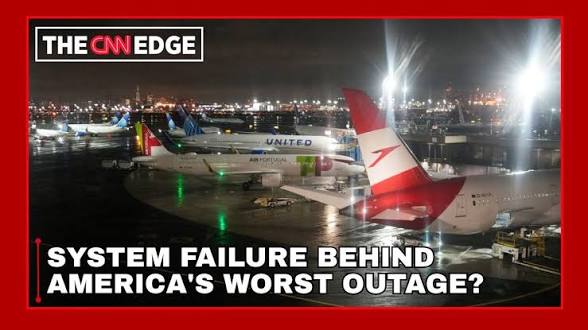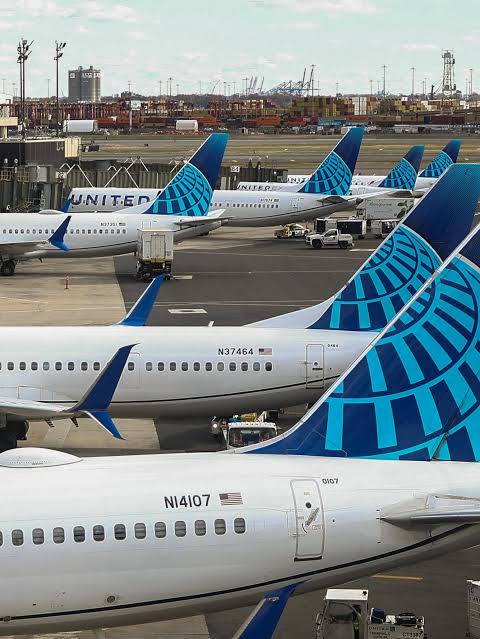
A widespread technology outage at United Airlines disrupted flight departures across the United States on November 16, 2026. The unexpected system failure delayed passengers, affected airline operations and created fresh concerns about the reliability of critical aviation technology.
The disruption came just days after a major Federal Aviation Administration (FAA) communications failure triggered a nationwide ground stop. That earlier incident had already caused significant travel problems, leaving airlines struggling to restore normal schedules.
United Airlines confirmed that it was experiencing a technology issue affecting departing flights. The company later announced that the problem had been resolved. However, the incident highlighted how quickly a technical failure can disrupt air travel, even when aircraft, airport facilities and flight crews are ready.
According to reports, the outage affected systems used by pilots and airline personnel. One particularly important issue involved the availability of final aircraft weight information required before takeoff.
The airline also clarified that flights already in the air were not affected. United Express regional flights continued operating without disruption.
The incident raises important questions about airline technology, passenger safety and the growing dependence on digital systems throughout the aviation industry.
United Airlines Confirms Widespread System Outage
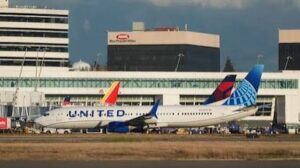
United Airlines acknowledged the technology disruption on Monday afternoon, November 16. The airline initially said its teams were investigating a system problem affecting departing flights.
The company also apologized to passengers who experienced delays.
In its public communication, United described the situation as a widespread system outage. It asked customers to monitor flight information through the airline’s official website and mobile application.
The airline later confirmed that its technical teams had resolved the issue.
According to the company’s statement, some flights experienced delays, but there was no impact on aircraft already in flight or services operated by United Express.
The distinction was important because the disruption primarily affected aircraft preparing to depart.
Passengers at several airports reported waiting longer than expected. Some aircraft remained at gates while crews waited for essential operational information.
The outage lasted approximately 90 minutes to 100 minutes, according to reports from the Associated Press and other news organisations.
AP News+2
Although the technical problem was relatively short-lived, its timing made the situation particularly difficult for travellers.
United was still managing operational challenges following the separate FAA disruption earlier in the week.
What Caused the United Airlines Technology Failure?
The exact technical cause of the United Airlines outage has not been publicly established.
However, information from the airline’s pilots’ union and air traffic control communications provided important details about the disruption.
An internal memo from the Air Line Pilots Association (ALPA), which represents United pilots, indicated that the outage affected several company applications.
These applications supported important operational activities, including:
Pilot communications and messaging.
Flight planning and operational information.
Crew coordination.
Aircraft weight calculations.
Information required before departure.
One of the most significant problems involved the airline’s ability to provide final aircraft weight information.
This information is essential because pilots must know the aircraft’s weight and balance before takeoff.
Without reliable figures, flight crews cannot complete all the necessary performance calculations.
United did not immediately identify the specific system responsible for the failure. It also did not confirm whether the outage involved its previously troubled Unimatic system.
Therefore, the precise technical explanation remains uncertain.
The airline’s decision to delay affected departures demonstrated the importance of maintaining accurate operational information before an aircraft takes off.
The Straits Times+2
Why Aircraft Weight Information Is Critical for Flight Safety
The United Airlines outage attracted attention because it affected information that pilots need before departure.
Aircraft weight is not simply a routine administrative detail. It directly influences how an aircraft performs during takeoff, flight and landing.
Before every flight, airline personnel calculate the aircraft’s expected weight.
These calculations consider several factors, including:
The weight of passengers.
Checked baggage and cargo.
The amount of fuel onboard.
The aircraft’s empty operating weight.
Weight distribution throughout the aircraft.
The information helps pilots determine whether the aircraft can operate safely under the current conditions.
For example, weather conditions, runway length and temperature can influence takeoff performance.
An aircraft carrying more weight generally requires different performance calculations than a lighter aircraft.
Similarly, the distribution of weight affects the aircraft’s balance and handling characteristics.
Modern airlines use computer systems to process these calculations. The resulting information is delivered to flight crews through digital tools.
If these systems become unavailable, pilots may not receive the figures required to complete their preflight procedures.
That is why a technology outage can delay departures even when the aircraft itself is fully operational.
Aviation safety expert Steve Arroyo told the Associated Press that accurate weight and balance figures are extremely important for flight performance. He supported delaying departures until the necessary information became available.
ABC News+1
Were All United Airlines Flights Affected?
No. The outage did not affect every United Airlines flight.
The airline specifically confirmed that aircraft already in the air continued operating normally.
United Express regional services were also unaffected, according to the company’s statement.
The primary disruption involved departing flights that required access to the affected technology systems.
This distinction matters because airline operations involve several separate processes.
An aircraft already airborne has completed its departure procedures and is operating under established flight plans and instructions.
However, an aircraft preparing to leave the gate must complete multiple checks before takeoff.
If essential information is unavailable, the departure may need to wait.
The outage therefore created delays for some passengers without forcing every United aircraft to stop operating.
Reports also indicated that pilots experienced difficulties receiving important takeoff information from airline dispatch systems.
Air traffic control communications provided additional insight into the situation.
Pilots reported waiting for final weight information, while controllers were informed that the problem involved a broader company-wide technical disruption.
NBC Chicago+2
Hundreds of United Flights Experienced Delays
The outage created additional pressure on United’s already busy flight schedule.
Flight-tracking figures reported by different news organisations showed hundreds of delayed flights on November 16.
According to the Straits Times, FlightAware recorded approximately 645 delayed United flights and 25 cancellations by the evening.
However, these figures should not be interpreted as the number of flights directly affected by the outage.
Some delays and cancellations had already occurred before United publicly acknowledged the technology problem.
Other disruptions were connected to the wider recovery challenges affecting US aviation following the November 13 FAA ground stop.
The distinction is important when assessing the actual impact of the airline’s computer failure.
Even a short outage can create operational difficulties because flights operate according to interconnected schedules.
When one aircraft leaves late, its next scheduled departure may also be delayed.
Crew availability, airport gates and aircraft positioning can all influence how quickly an airline returns to normal operations.
As a result, the consequences of a technical failure can continue after the original problem has been fixed.
The Straits Times+2
United Outage Comes After Major FAA Ground Stop
The timing of the United Airlines outage made the incident particularly concerning.
Just three days earlier, the FAA had ordered a nationwide ground stop following a communications network failure.
The November 13 disruption affected commercial aviation across the United States.
The ground stop lasted nearly five hours, creating widespread delays and cancellations.
Transportation officials said a problem involving telecommunications equipment disrupted important communications and data flows used by air traffic control centres.
The failure was connected to a technology upgrade involving the replacement of older copper connections with fibre infrastructure.
A newly installed router reportedly generated excessive data traffic, contributing to instability in the FAA’s network.
According to Reuters, the disruption affected 17 of the FAA’s 22 en route air traffic control centres.
The incident resulted in more than 18,000 flight cancellations or significant delays over the affected three-day period, according to figures cited in aviation reporting.
Officials have continued investigating the underlying cause.
Reuters+2
For passengers, the United outage was another frustrating development after several days of travel uncertainty.
Airlines had been working to reposition aircraft, restore crew schedules and clear passenger backlogs.
The latest technology failure demonstrated that individual airline systems can create additional disruption even when the national air traffic control network is operating.
Is the United Airlines Outage Connected to the FAA Failure?
There is no confirmed evidence that the two incidents were directly connected.
The FAA disruption involved the federal agency’s telecommunications infrastructure.
In contrast, the United Airlines outage involved the carrier’s internal technology systems.
US Transportation Secretary Sean Duffy said the United incident was not an FAA system-wide problem.
United also stated that there was no indication its outage was related to a cybersecurity incident.
These statements suggest that the two events should be treated as separate technical disruptions.
However, their close timing raises broader questions about the resilience of aviation technology.
Air travel depends on cooperation between airlines, airports, air traffic controllers and technology providers.
Each organisation operates different systems, but their work is closely connected.
A failure in one part of the aviation network can create operational pressure elsewhere.
For example, an FAA disruption can prevent departures or disrupt aircraft movements.
An airline-specific outage can prevent pilots from receiving the information needed to complete departure procedures.
Both situations can produce delays, even though their technical causes are different.
The incidents also demonstrate why aviation authorities and airlines must maintain reliable backup procedures.
News Channel 3-12+2
United Airlines Says There Is No Indication of a Cyberattack
Another major concern following the outage was whether a cyberattack had targeted the airline.
Modern airlines depend on interconnected computer systems to manage bookings, flight planning, passenger information and operational communications.
This dependence makes cybersecurity an important issue for the aviation industry.
However, United Airlines said there was no indication that the November 16 disruption was cybersecurity-related.
The airline did not publicly identify evidence of malicious activity.
It is important to distinguish between a technology failure and a cyberattack.
A technology failure may result from software bugs, infrastructure problems, server issues or communication errors.
A cyberattack involves unauthorised activity intended to access, disrupt or damage computer systems.
Both can interrupt services, but they require different investigations and responses.
At present, the available reporting does not establish that hackers were responsible for the United Airlines outage.
The airline has also not publicly provided a complete technical explanation of the failure.
Passengers should therefore avoid treating online speculation about a cyberattack as confirmed information.
CBS News+2
United Airlines Has Experienced Technology Problems Before
The November 2026 outage was not the first major technology disruption involving United Airlines.
In August 2025, the carrier temporarily grounded aircraft at major US airports following an outage involving its Unimatic system.
That incident delayed more than 1,000 flights.
Unimatic stores important flight information that feeds other operational systems, including tools used for weight and balance calculations and flight-time tracking.
The earlier incident demonstrated how a problem with one central system can affect several connected airline operations.
The November 2026 outage has raised questions about whether similar infrastructure weaknesses could be involved.
However, United has not confirmed that the same system caused both disruptions.
It would be premature to conclude that the two outages had an identical technical cause.
Still, repeated technology problems highlight the importance of reviewing airline infrastructure.
Airlines need reliable systems, effective monitoring and tested recovery procedures.
They must also ensure that essential operational information remains available when primary technology platforms experience difficulties.
ABC News+2
How the Outage Affected Passengers at US Airports
For passengers, even a short technology outage can create considerable inconvenience.
Travellers may arrive at airports expecting to board on time, only to discover that their aircraft cannot depart as scheduled.
Some passengers may experience longer waiting periods at departure gates. Others may face missed connections or changes to their travel arrangements.
The impact can be particularly difficult for people travelling for business, attending important events or connecting to international flights.
Several factors can make the situation worse:
1. Missed connecting flights
Passengers travelling through major hubs may miss connecting flights when their first departure is delayed.
2. Longer airport waiting times
Passengers may need to remain at departure gates while airline teams resolve operational problems.
3. Aircraft scheduling problems
A delayed aircraft may affect its next scheduled journey.
4. Crew scheduling difficulties
Flight crews must follow working-time regulations. Extended delays can sometimes require airlines to arrange replacement crews.
5. Additional travel expenses
Passengers may face unexpected expenses when delays affect hotel bookings, ground transportation or other arrangements.
Although United resolved the technology issue, passengers were advised to monitor their individual flight information.
What Should United Airlines Passengers Do During a System Outage?
Passengers travelling with United Airlines should take a few practical steps when the airline experiences a technology disruption.
First, check the latest flight status through the official United Airlines website or mobile application.
Do not rely entirely on the original departure time printed on a boarding pass.
Flight information can change as airline operations recover.
Second, pay attention to airport announcements and messages from airline staff.
Gate changes and revised boarding times may occur during operational disruptions.
Third, passengers with connecting flights should contact United if their revised arrival time creates a risk of missing the next flight.
They should also retain receipts for reasonable expenses if they need to request assistance or reimbursement under applicable policies.
Finally, travellers should avoid leaving the airport without confirming their flight arrangements.
A short technology outage does not automatically mean that a flight will be cancelled.
United’s November 16 disruption was resolved, and the airline confirmed that the issue did not affect flights already in progress.
Growing Dependence on Technology Raises Aviation Concerns
The United Airlines outage highlights a broader challenge facing modern aviation.
Airlines increasingly depend on digital infrastructure to manage almost every stage of a journey.
Technology supports flight planning, aircraft performance calculations, crew communications, passenger check-in and airport operations.
These systems help airlines operate efficiently and manage large numbers of flights.
However, their growing importance also creates new risks.
A technical problem can affect multiple departments simultaneously when systems share information or depend on common infrastructure.
The aviation industry must therefore focus on more than improving software speed and operational efficiency.
Reliability and resilience are equally important.
Airlines need backup systems that allow essential operations to continue during technology failures.
They also need regular testing, security monitoring and effective communication between operational teams.
The United outage demonstrates that even a relatively brief interruption can affect hundreds of flights and thousands of passengers.
The wider FAA incident provides another example of how technology problems can spread across the aviation network.
What Happens Next for United Airlines?
United Airlines has confirmed that the November 16 technology issue was resolved.
However, questions remain about the exact technical cause and the measures the airline may take to prevent similar disruptions.
Passengers and aviation observers will likely pay attention to whether United provides additional information about the affected systems.
The airline may also review its operational procedures and technology infrastructure.
One important question is whether alternative processes can provide essential aircraft information when digital systems become unavailable.
Another is how quickly airline teams can identify failures and communicate accurate information to pilots and passengers.
These issues matter because aviation operations require reliable information at every stage.
The airline’s immediate priority was restoring normal departures while maintaining safety standards.
For passengers, the most important development is that the reported outage has been resolved.
Nevertheless, the incident adds to a difficult period for US air travel following the FAA’s nationwide disruption.
Conclusion: United Airlines Outage Highlights Aviation Technology Risks
The United Airlines outage on November 16, 2026, exposed the challenges created by the aviation industry’s dependence on digital systems.
A relatively short technology failure disrupted departing flights and left passengers facing additional delays.
The problem reportedly affected several operational applications, including systems responsible for providing pilots with essential aircraft weight information.
United confirmed that it had resolved the issue and stressed that flights already airborne and United Express services were unaffected.
The airline also said there was no indication of a cybersecurity-related incident.
Although the disruption was temporary, its timing was particularly concerning.
US airlines were still recovering from the major FAA communications failure that had disrupted flights across the country.
Together, these incidents highlight the importance of reliable aviation infrastructure, effective backup systems and strong operational planning.
For United Airlines, restoring passenger confidence will depend not only on resolving the immediate problem but also on ensuring that similar failures do not disrupt operations again.
Frequently Asked Questions (FAQs)
1. What happened during the United Airlines outage?
United Airlines experienced a widespread technology outage on November 16, 2026. The disruption affected departing flights and delayed passengers while the airline investigated the problem.
2. When did the United Airlines system outage occur?
The outage occurred on Monday, November 16, 2026. United acknowledged the issue during the afternoon and announced that it had been resolved approximately 90 to 100 minutes after pilots began reporting problems.
3. What caused the United Airlines flight delays?
The disruption involved airline technology systems used for operational activities. Reports indicated that pilots experienced problems receiving final aircraft weight information and accessing other operational applications. The exact technical cause has not been confirmed.
4. Were all United Airlines flights grounded?
No. United confirmed that flights already in progress were unaffected. United Express regional services also continued operating without disruption.
5. Was the United Airlines outage caused by a cyberattack?
United Airlines said there was no indication that the outage was related to a cybersecurity incident. No confirmed evidence has established that hackers caused the disruption.
6. How many United Airlines flights were delayed?
FlightAware figures reported by the Straits Times showed approximately 645 delayed flights and 25 cancellations on November 16. However, not all these disruptions were necessarily caused by the technology outage.
7. Was the United Airlines outage connected to the FAA ground stop?
There is no confirmed connection between the two incidents. The FAA disruption involved federal aviation communications infrastructure, while the United outage involved the airline’s own technology systems.
8. Has United Airlines fixed the system outage?
Yes. United announced that it had resolved the technology issue on November 16, 2026. The airline said some flights had been delayed but that flights already airborne were unaffected.
9. What should passengers do if their United flight is delayed?
Passengers should check their flight status through the official United Airlines website or mobile application. They should also follow airport announcements and contact airline staff if they have connecting flights or need rebooking assistance.
10. Could another United Airlines outage happen?
Any airline technology system can experience technical problems. However, there is currently no confirmed indication that another similar outage is imminent. Reliable backup systems and regular infrastructure testing can help reduce future disruptions.
About the Author