President Donald Trump has launched a major diplomatic journey across Asia, arriving in Manila, Philippines, on November 17, 2026, before heading to China for high-stakes meetings with Chinese President Xi Jinping and Russian President Vladimir Putin.
The Trump Asia Tour comes at an important moment for international relations. Washington is attempting to strengthen its influence across the Indo-Pacific while managing complicated trade disputes, security concerns and growing competition with Beijing.
Trump’s visit to Manila represents the first major stop of his three-day Asian journey. His schedule includes meetings with regional leaders, discussions about trade and technology, and efforts to strengthen security partnerships.
However, the biggest international attention is focused on his next destination: Shenzhen, China. There, Trump is expected to participate in the Asia-Pacific Economic Cooperation (APEC) summit and hold discussions with Xi and Putin.
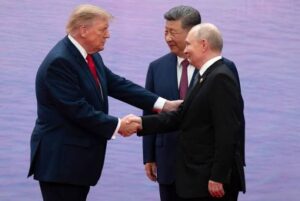
The possibility of a three-way meeting between the American, Chinese and Russian presidents has attracted significant global attention. The discussions could cover Ukraine, nuclear security, international trade and broader geopolitical tensions.
Trump Arrives In Manila To Begin Major Asia Tour
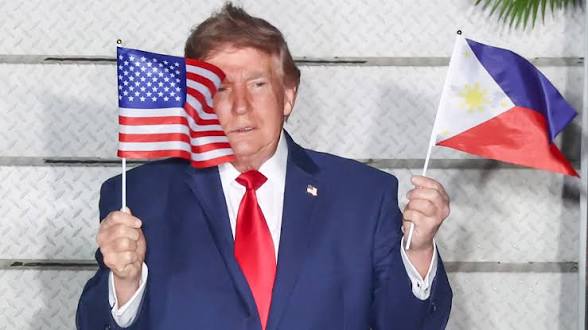
President Donald Trump arrived in Manila on Tuesday, November 17, marking the beginning of an important diplomatic trip to Asia.
His arrival was accompanied by an official welcome, music and a reception involving Philippine officials. The visit also included engagements with regional leaders attending the ASEAN-related meetings.
Manila was selected as the opening destination because of its importance to American interests in Southeast Asia.
The Philippines is one of Washington’s longstanding treaty allies in the Indo-Pacific. Both countries have maintained close defense cooperation, particularly as tensions in the South China Sea continue to affect regional security.
Trump’s visit also provided an opportunity to discuss economic cooperation and possible commercial agreements.
According to reporting by the Associated Press, the American president was expected to meet Philippine President Ferdinand Marcos Jr. and discuss opportunities involving aviation, defense, energy and technology.
The trip comes after political challenges for Trump at home, including Republican losses in the midterm elections and disruptions affecting important American industries.
His international engagements therefore offer an opportunity to demonstrate diplomatic leadership and maintain America’s position among its Asian partners.
Trump Meets Quad Leaders In Manila
One of the major events during the Trump Asia Tour was his meeting with leaders of the Quad.
The Quadrilateral Security Dialogue, commonly known as the Quad, brings together four countries:
- United States
- India
- Japan
- Australia
The partnership focuses on regional security, maritime cooperation, technology and maintaining a stable Indo-Pacific region.
Trump met Indian Prime Minister Narendra Modi, Japanese Prime Minister Sanae Takaichi and Australian Prime Minister Anthony Albanese in Manila.
The meeting was particularly important because the four countries share concerns about maritime security and China’s growing influence.
Trump announced that the Quad would conduct a joint exercise involving maritime patrol aircraft.
Such cooperation could strengthen surveillance capabilities and improve coordination among the participating countries.
The leaders also discussed artificial intelligence and future technological cooperation.
Trump described plans to advance work on superintelligence, highlighting Washington’s interest in strengthening cooperation with its regional partners in emerging technologies.
The Quad meeting demonstrated that the United States continues to view its relationships with India, Japan and Australia as important elements of its Indo-Pacific strategy.
South China Sea Security Remains A Major Issue
The South China Sea is one of the most sensitive geopolitical issues surrounding Trump’s visit to the Philippines.
China claims extensive areas of the waterway, while several Southeast Asian countries maintain competing territorial claims.
The Philippines has repeatedly raised concerns about encounters involving Chinese vessels in disputed waters.
These tensions have made the American-Philippine defense relationship increasingly important.
Washington and Manila maintain a mutual defense treaty. The agreement provides a foundation for cooperation in responding to armed attacks against either country.
During his meeting with Marcos, Trump was expected to reaffirm the importance of the alliance.
Defense cooperation, military equipment and regional security were among the subjects attracting attention.
The South China Sea also matters economically. It is a major international shipping route connecting important markets across Asia, Europe and the Middle East.
Any serious confrontation could affect international trade, energy transportation and supply chains.
For Washington, supporting regional stability is therefore both a security priority and an economic interest.
Trump And Philippine President Ferdinand Marcos Discuss Trade
Economic cooperation was another important part of Trump’s Manila visit.
Trump met Philippine President Ferdinand Marcos Jr. at Malacañang Palace on November 18.
The leaders discussed opportunities to expand cooperation in several sectors, including energy, defense and technology.
Following their bilateral meeting, Trump announced a new trade agreement with the Philippines.
He described the arrangement as a major deal but did not immediately provide detailed information about its terms.
The announcement attracted attention because trade agreements have remained central to Trump’s foreign economic policy.
The administration has repeatedly emphasized market access, American exports and more favorable commercial arrangements with international partners.
For the Philippines, closer economic cooperation with Washington could create opportunities for investment and improved access to American markets.
Technology and artificial intelligence are also becoming important areas of bilateral cooperation.
The two governments have reasons to strengthen their economic relationship as competition over advanced technologies becomes more intense.
However, the full economic impact of the announced agreement will depend on its final terms and implementation.
Thailand Trade Agreement Adds Economic Momentum
Trump’s Manila visit also included a trade agreement involving Thailand.
The American president signed a trade statement with Thailand during the regional meetings.
Trump said Thailand would purchase approximately $2.6 billion in American agricultural products.
The arrangement reflects the administration’s broader strategy of using trade negotiations to increase American exports.
Agriculture remains an important component of US international trade, and access to Asian markets is valuable for American producers.
The agreement also highlights how Trump’s Asia tour extends beyond traditional security discussions.
Trade, investment, technology and supply-chain cooperation are major priorities.
Nevertheless, trade statements and preliminary frameworks do not always produce immediate economic changes.
Their effectiveness depends on the final agreements, regulatory requirements and commitments made by participating governments.
Why Trump’s Meeting With Xi Jinping Matters
After completing his engagements in Manila, Trump travelled to Shenzhen, China, for the APEC summit.
His expected meeting with Chinese President Xi Jinping is one of the most important diplomatic events of the journey.
The United States and China remain the world’s two largest economies and have significant influence over international trade, technology and security.
Their relationship has experienced repeated tensions involving tariffs, advanced computer chips, critical minerals and Taiwan.
Although both governments have taken steps to maintain a trade truce, several disagreements remain unresolved.
Trump is expected to discuss the implementation of existing trade commitments with Xi.
American officials have also expressed concerns about China’s role in supplying critical minerals and other materials essential to modern manufacturing.
China, meanwhile, wants greater access to international markets and opposes restrictions affecting its technology industry.
The two leaders will have to balance economic competition with the need to prevent further deterioration in bilateral relations.
A successful meeting could help preserve the existing trade understanding and reduce uncertainty for international businesses.
However, expectations for a major breakthrough remain limited.
The immediate objective may be to maintain diplomatic communication and prevent existing disagreements from escalating.
Vladimir Putin Arrives In China Ahead Of High-Stakes Talks
Russian President Vladimir Putin arrived in China on November 18, adding another important dimension to the diplomatic gathering.
His presence has increased attention surrounding the possibility of a meeting involving Trump, Xi and Putin.
The three leaders represent countries with significant military, economic and diplomatic influence.
A joint meeting would provide an unusual opportunity to discuss several major international challenges.
Putin’s participation is particularly significant because relations between Russia and Western countries remain strained over the war in Ukraine and international sanctions.
Moscow has also sought closer economic and diplomatic cooperation with Beijing.
For Putin, appearing alongside Trump and Xi offers an opportunity to demonstrate that Russia remains an important international power.
For Trump, direct engagement with both leaders could create opportunities to discuss conflicts and international security.
However, a meeting between the three presidents does not automatically guarantee agreement.
Their governments have different priorities, particularly regarding Ukraine, trade restrictions and nuclear weapons.
The outcome will depend on whether the leaders can identify areas of common interest.
What Could Trump, Xi And Putin Discuss?
Several major issues could dominate the expected discussions in Shenzhen.
1. The Ukraine War
The war in Ukraine remains one of the most important international issues involving Russia and the United States.
Washington has repeatedly explored diplomatic possibilities for ending the conflict.
Trump has indicated that Ukraine could be part of the discussions with Putin.
Russia, however, continues to pursue its own political and military objectives.
China has maintained relations with Moscow while presenting itself as a potential diplomatic participant in discussions about international stability.
A three-way conversation could provide an opportunity to exchange positions.
However, Ukraine’s future cannot be decided without considering the interests and participation of the Ukrainian government.
European governments are also concerned that major decisions about European security could be discussed without their direct involvement.
2. Nuclear Security
Nuclear weapons are another major issue likely to attract attention.
The United States and Russia possess the world’s largest nuclear arsenals, while China is continuing to expand its nuclear capabilities.
The expiration of the New START agreement in February 2026 has increased concerns about the future of nuclear arms control.
Washington has expressed interest in involving China in wider nuclear discussions.
Beijing has resisted participating in negotiations on the same terms as the United States and Russia, arguing that its nuclear arsenal is considerably smaller.
A conversation between the three presidents could help establish whether future negotiations are possible.
Nevertheless, serious progress would require detailed discussions involving military officials and diplomatic experts.
3. US-China Trade Relations
Trade remains another major priority.
The United States and China have maintained a fragile understanding after earlier tariff disputes.
Both countries have reasons to avoid another major trade confrontation.
American businesses depend on international supply chains, while Chinese manufacturers rely heavily on access to overseas markets.
Critical minerals, agricultural purchases, semiconductor technology and export restrictions could feature in the discussions.
Any agreement could influence global markets and international manufacturing.
4. Taiwan And Regional Security
Taiwan remains one of the most sensitive subjects in US-China relations.
Beijing considers Taiwan part of its territory, while Washington maintains unofficial relations with the island and provides defensive assistance.
China opposes American arms sales to Taiwan.
The issue could create difficulties during Trump’s discussions with Xi.
Both governments have strong positions, making compromise challenging.
Preventing military escalation in the Taiwan Strait will remain an important objective for regional stability.
ASEAN Countries Watch Trump’s Asia Tour Closely
The Trump Asia Tour is also important for Southeast Asian countries beyond the Philippines.
ASEAN members are seeking stronger economic opportunities while managing complicated relationships with major global powers.
The region wants access to international investment, technology and reliable supply chains.
At the same time, countries such as Vietnam, Malaysia, Indonesia and Thailand must navigate tensions between Washington and Beijing.
Many governments prefer not to choose one side in the growing strategic competition.
Trump’s meetings provide an opportunity to strengthen American engagement with the region.
The ASEAN discussions also cover wider regional challenges, including Myanmar’s continuing violence, trade cooperation and maritime disputes.
Regional governments will closely examine whether Washington offers practical economic and security commitments.
Diplomatic visits can create opportunities, but long-term partnerships depend on consistent policies and follow-through.
Protests And Security Measures In Manila
Trump’s arrival also generated political reactions inside the Philippines.
Approximately 1,500 protesters gathered in Manila ahead of his visit, criticizing American influence and calling for an independent Philippine foreign policy.
The demonstrations highlighted the domestic debate surrounding the country’s relationship with Washington.
Some Filipinos view the American alliance as essential for national security.
Others believe the Philippines should avoid becoming too closely involved in competition between major powers.
Security arrangements were extensive during the presidential visit.
According to Associated Press reporting, nearly 23,000 security personnel were deployed for the wider summit-related events.
The arrangements reflected the importance of the diplomatic gathering and the need to protect visiting international leaders.
The protests also demonstrated that international partnerships can generate political disagreements within host countries.
What Happens After The Manila Visit?
Following his meetings in the Philippines, Trump travelled to Shenzhen for the APEC summit.
The summit provides an important platform for leaders to discuss economic cooperation across the Asia-Pacific region.
Trump’s schedule in China includes discussions with Xi Jinping and a planned meeting involving Vladimir Putin.
The possibility of meeting North Korean leader Kim Jong Un has also attracted attention, although such an encounter should not be treated as confirmed without an official announcement.
The China visit is especially important because it brings together several issues that have shaped Trump’s foreign policy.
These include trade, nuclear security, regional stability and the war in Ukraine.
The leaders’ discussions could influence diplomatic relations well beyond Asia.
Global Significance Of The Trump Asia Tour
The Trump Asia Tour is more than a series of presidential meetings.
It reflects the growing importance of the Indo-Pacific in global economic and security affairs.
The region contains major manufacturing economies, important shipping routes and some of the world’s most strategically sensitive territorial disputes.
For the United States, maintaining strong relationships with Asian partners is essential to its long-term international position.
For China, the APEC gathering provides an opportunity to strengthen its regional influence and present itself as an important economic partner.
Russia also has an interest in maintaining diplomatic engagement with both Washington and Beijing.
The presence of all three leaders creates an opportunity for high-level communication at a time of significant international uncertainty.
However, diplomatic photographs and public statements should not be confused with lasting agreements.
The real test will be whether the meetings produce measurable progress on trade, security and conflict resolution.
Conclusion
President Donald Trump’s arrival in Manila marked the opening of an important diplomatic journey across Asia.
His meetings with Quad leaders, Philippine President Ferdinand Marcos Jr. and other regional partners highlighted Washington’s interest in strengthening trade, technology and security cooperation.
The journey then moved to Shenzhen, where discussions with Xi Jinping and Vladimir Putin became the central focus of international attention.
The planned three-way meeting could address the Ukraine war, nuclear security and broader geopolitical tensions.
However, major disagreements remain between the three countries.
The Trump Asia Tour could help maintain diplomatic communication and create opportunities for cooperation, but its long-term significance will depend on concrete results.
For the United States, China, Russia and their international partners, the discussions represent an important moment in an increasingly complicated global political environment.
The world will be watching closely to see whether the meetings produce meaningful diplomatic progress or simply another round of high-profile international discussions.
Frequently Asked Questions (FAQs)
1. Why did Donald Trump travel to Manila?
Donald Trump travelled to Manila to participate in regional diplomatic meetings, meet Quad leaders and strengthen American economic and security relationships with Southeast Asian countries.
2. When did Trump arrive in the Philippines?
Trump arrived in Manila on November 17, 2026, beginning his three-day Asian diplomatic journey.
3. Who did Trump meet in Manila?
Trump met Indian Prime Minister Narendra Modi, Japanese Prime Minister Sanae Takaichi, Australian Prime Minister Anthony Albanese and Philippine President Ferdinand Marcos Jr.
4. Why is the Trump-Xi-Putin meeting important?
The planned meeting is significant because it could bring together the leaders of three major global powers to discuss Ukraine, nuclear security, trade and international relations.
5. Where will Trump meet Xi Jinping and Vladimir Putin?
The leaders are expected to meet in Shenzhen, China, on the sidelines of the Asia-Pacific Economic Cooperation summit.
6. What is the main purpose of Trump’s Asia tour?
The main objectives include strengthening regional partnerships, discussing trade agreements, improving security cooperation and addressing important international challenges.
7. What is the Quad?
The Quad is a strategic partnership involving the United States, India, Japan and Australia. It focuses on Indo-Pacific security, maritime cooperation and technology.
8. Why is the South China Sea important during Trump’s visit?
The South China Sea is a major shipping route and an area of competing territorial claims. Its security is particularly important to the Philippines and its American defense partnership.
9. Will Trump discuss the Ukraine war with Putin?
Trump has indicated that Ukraine could be among the subjects discussed during his engagement with Putin. However, any diplomatic progress remains uncertain.
10. Could the Trump Asia Tour affect global markets?
Yes. Discussions involving tariffs, critical minerals, agricultural trade, technology and international investment could influence financial markets and global supply chains.
About the Author