The debate surrounding Hasan Piker political extremism has become part of a much larger conversation about online influence, political rhetoric and the growing power of internet personalities in American public life.
Hasan Piker, one of the most prominent left-wing political streamers in the United States, has built a massive audience by discussing elections, capitalism, foreign policy and social issues. His influence has also made him a deeply polarizing figure.
In recent weeks, controversy surrounding Piker’s comments about Israel and Jewish Americans has generated significant backlash from politicians, advocacy organizations and members of the Democratic Party. The dispute has also renewed attention on politicians connected to Piker’s online platform and on candidates who appear with controversial digital personalities.
For New York Republican Rep. Mike Lawler, the controversy is particularly relevant because Hasan Piker has already become a recognizable figure in political debates connected to Lawler’s congressional district.
The larger question is no longer simply whether a streamer made a controversial statement. The debate is now about political responsibility, online extremism, antisemitism allegations, influencer culture and whether traditional politicians should treat major internet personalities as serious political actors.
Who Is Hasan Piker?
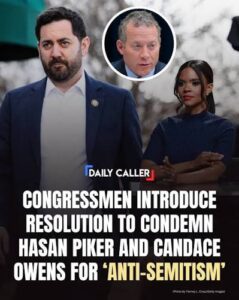
Hasan Piker, widely known online as HasanAbi, is a political commentator and streamer with millions of followers across several social-media platforms.
He initially gained recognition through political media before becoming one of the internet’s most influential left-wing livestream personalities. His broadcasts frequently cover American politics, international conflicts, economic inequality and progressive political movements.
Piker has become particularly influential among younger audiences who consume political news through Twitch, YouTube and social media rather than traditional television networks.
That influence has created both opportunities and problems for politicians.
For progressive candidates, appearing with major online personalities can provide direct access to younger voters. A popular streamer can introduce a candidate to millions of potential supporters without the traditional barriers of television advertising or newspaper coverage.
However, the same relationship can become politically dangerous when the influencer becomes involved in controversy.
Recent reporting has shown that Piker’s comments and political associations have created significant tension among Democrats, particularly as candidates attempt to appeal simultaneously to progressive activists, mainstream voters and politically diverse communities.
The Recent Hasan Piker Backlash
The latest controversy surrounding Piker emerged after comments he made during an August livestream.
According to recent reporting, Piker discussed narratives suggesting that Jewish Americans are collectively or uniformly connected to Israel. His comments generated strong criticism because opponents argued that his language could be interpreted as placing responsibility for antisemitic violence on Jewish Americans.
Several Democratic figures publicly criticized the remarks, while Jewish organizations and political commentators described the rhetoric as dangerous. The controversy quickly moved beyond social media and became part of a broader national political debate.
Piker, however, defended his position and argued that his comments were intended as a warning about the dangers of portraying Jewish people as a political monolith rather than as an endorsement of violence.
This disagreement over interpretation is central to the controversy.
Critics argue that political commentators must be especially careful when discussing minority communities and threats of violence. Supporters argue that controversial statements should be understood in their full context rather than through isolated clips.
Regardless of interpretation, the reaction demonstrates the enormous political consequences that can now follow comments made during livestreams.
Rep. Mike Lawler and the Political Context
Rep. Mike Lawler represents a politically competitive New York congressional district where issues involving Israel, antisemitism and political extremism carry significant importance.
Lawler has positioned himself as a strong supporter of Israel and has frequently spoken about antisemitism and political extremism.
Earlier in 2026, controversy developed when Democratic congressional candidate Effie Phillips-Staley appeared on Hasan Piker’s platform. Democratic organizations in several New York counties criticized the appearance and described Piker’s rhetoric as unacceptable in mainstream political discourse.
The situation was particularly significant because Phillips-Staley is seeking to challenge Lawler in a district with a substantial Jewish population.
The controversy illustrates how online personalities can become unexpectedly important in local elections.
A congressional candidate may appear on a livestream to reach younger voters. Yet the political consequences of that appearance can extend far beyond the original interview.
Opponents can question the candidate’s judgment. Party organizations can distance themselves. Community groups can demand clarification.
This is one reason why the Hasan Piker political extremism debate has attracted attention beyond Piker’s own audience.
Why Streamers Now Matter in American Politics
Political streamers were once considered part of internet culture rather than serious political institutions.
That distinction is rapidly disappearing.
Millions of Americans now consume political information through livestreams, podcasts, YouTube videos and social-media personalities. Influencers can shape public conversations immediately and reach audiences that traditional political campaigns sometimes struggle to engage.
This gives streamers enormous power.
Unlike traditional journalists, many political influencers operate without the same editorial structures or institutional standards. Livestreaming also creates an environment where commentators can speak for hours, react instantly to breaking news and make statements without the preparation associated with traditional interviews.
This can create an atmosphere where provocative language receives more attention than careful analysis.
The controversy involving Piker demonstrates this problem.
A single statement can be clipped, shared and debated across multiple platforms within minutes. Politicians then face pressure to respond, particularly if they have appeared with or received support from the influencer.
As a result, digital relationships have become part of political accountability.
The Debate Over Political Extremism
The phrase political extremism is often used broadly and sometimes inconsistently.
Different political groups frequently accuse one another of extremism. Progressives may use the term to describe far-right movements, while conservatives may apply it to radical elements of the political left.
The important question is whether political rhetoric promotes hatred, violence, discrimination or the rejection of democratic norms.
This is where the Hasan Piker controversy has become especially sensitive.
Critics have accused him of repeatedly using inflammatory rhetoric involving Israel, Jewish people and international conflicts. The Anti-Defamation League has also documented concerns about Piker’s past statements and rhetoric, while supporters argue that criticism of Israel and Zionism should not automatically be treated as antisemitism.
The distinction matters.
Criticism of a government is part of democratic political debate. However, critics argue that language becomes dangerous when political criticism shifts toward generalizations about an entire ethnic or religious community.
This remains one of the central arguments in the current backlash.
Streamer Backlash and the Power of Online Communities
The Hasan Piker controversy also demonstrates how modern political backlash works.
In the past, a controversial television appearance might generate criticism for several days before disappearing from public discussion.
Today, the process is much faster.
A livestream can produce viral clips. Those clips can be reposted on social media. Political opponents can use them in campaign messaging. Advocacy organizations can release statements. Journalists can investigate previous comments.
The controversy then develops through a combination of traditional reporting and online reaction.
Piker’s large audience also means that criticism generates a counterreaction.
His supporters frequently defend him and argue that opponents misrepresent his statements. Critics respond that his enormous influence makes careful language even more important.
This creates a cycle of political polarization.
Each controversy can strengthen loyalty among supporters while increasing opposition among critics.
The Problem for Political Candidates
Politicians increasingly face a difficult decision when working with major online personalities.
A controversial influencer may provide access to millions of voters. But that access comes with reputational risks.
The recent Michigan Senate controversy involving Democratic candidate Abdul El-Sayed provides an important example. El-Sayed faced scrutiny over his association with Piker after Piker’s controversial remarks generated backlash.
El-Sayed subsequently emphasized that his campaign represented his own views and condemned antisemitism while attempting to distance his campaign from Piker’s statements.
The situation demonstrates a new reality for campaigns.
A candidate can benefit from an influencer’s support while later being asked to explain every controversial statement made by that influencer.
For politicians such as Rep. Mike Lawler, this creates an opportunity to question opponents about their associations with controversial political figures.
For candidates appearing on platforms such as Piker’s, the challenge is demonstrating that an interview does not necessarily represent an endorsement of everything the host has ever said.
Mike Lawler and the Fight Over Mainstream Politics
Rep. Mike Lawler operates in one of the most politically competitive environments in the country.
In competitive districts, candidates cannot simply focus on their strongest supporters. They must also appeal to independents, moderates and voters who may disagree with them on major issues.
This makes the debate over political extremism especially important.
Lawler and other Republicans have argued that Democrats must clearly reject extreme rhetoric within their broader political coalition.
Democrats, meanwhile, argue that Republicans also face responsibility for extremist voices associated with conservative politics.
The result is a political environment in which both parties increasingly use association as a campaign weapon.
Who did a candidate appear with?
Who endorsed them?
Which influencer supports them?
Did they condemn a controversial statement quickly enough?
These questions are becoming standard features of modern political campaigns.
Can Political Influencers Be Held Accountable?
The Hasan Piker controversy raises another important question: what accountability should apply to political influencers?
Traditional politicians can face elections, congressional oversight and institutional pressure.
Television networks operate under corporate standards and editorial policies.
Independent streamers operate differently.
Their audiences may be highly loyal. Their platforms reward engagement. Controversial statements can attract enormous attention.
This does not mean that streamers should be prevented from expressing controversial opinions. Political speech remains a fundamental part of democratic debate.
However, influence brings responsibility.
A commentator with millions of followers has a greater ability to shape public attitudes than an ordinary social-media user.
That means audiences should carefully evaluate political claims, controversial statements and emotionally charged rhetoric.
It also means political candidates should understand the risks involved when associating with influential online figures.
The Future of the Hasan Piker Political Extremism Debate
The controversy surrounding Hasan Piker is unlikely to be the last major conflict involving a political streamer.
Internet personalities are becoming increasingly important during election campaigns.
Younger voters often discover candidates through podcasts and livestreams. Political movements use influencers to mobilize supporters. Campaigns increasingly compete for attention in online spaces.
This trend will continue.
The challenge will be determining where political influence ends and political accountability begins.
A streamer is not an elected official. Yet a major influencer may reach more people than many members of Congress.
That creates a new political reality.
The debate involving Rep. Mike Lawler, Hasan Piker and controversial political rhetoric demonstrates how quickly online culture can influence traditional elections.
A comment made during a livestream can become a campaign issue.
An interview can create controversy in a congressional district.
An influencer can become a symbol in a larger ideological battle.
Conclusion
The controversy surrounding Hasan Piker political extremism reflects a major transformation in American political communication.
Political streamers are no longer operating outside mainstream politics. They are increasingly connected to candidates, campaigns and ideological movements.
Rep. Mike Lawler’s political environment demonstrates why these connections matter, particularly in competitive districts where issues involving antisemitism, Israel and political extremism can strongly influence voters.
The recent backlash against Hasan Piker also shows the risks of inflammatory rhetoric in the digital age.
Supporters and critics may strongly disagree about the meaning of his statements. However, the broader lesson is clear: people with massive political audiences face enormous scrutiny.
As livestreaming becomes more influential, political candidates will need to think carefully about the platforms they choose and the personalities they associate with.
The future of American politics will not be shaped only by television debates, campaign rallies and newspaper endorsements.
It will increasingly be shaped by livestreams, viral clips and the powerful personalities behind them.
And that means the debate over political extremism, responsibility and online influence is only beginning.
FAQs
1. Who is Hasan Piker?
Hasan Piker, also known as HasanAbi, is a prominent American political streamer and commentator known for his progressive and left-wing political views.
2. Why is Hasan Piker facing backlash?
Piker recently faced criticism over controversial comments involving Jewish Americans and Israel. Critics argued that the remarks were dangerous, while Piker defended his comments and disputed accusations that they promoted violence or antisemitism.
3. What is Rep. Mike Lawler’s connection to the Hasan Piker controversy?
Rep. Mike Lawler represents a New York district where political debates involving Israel and antisemitism are particularly significant. Piker has also become relevant in Lawler’s political environment because a Democratic candidate seeking to challenge Lawler appeared on Piker’s platform, generating backlash from local Democratic organizations.
4. What does the Hasan Piker political extremism debate mean?
The debate concerns whether influential online commentators should be held accountable for inflammatory political rhetoric and how politicians should respond when controversial influencers become involved in electoral politics.
5. Why are political streamers becoming so influential?
Political streamers can reach millions of viewers directly through platforms such as Twitch and YouTube. They are especially influential among younger audiences who increasingly consume news and political commentary online.
6. Can appearing on a streamer’s show hurt a political candidate?
Yes. Candidates may gain access to new audiences, but they can also face criticism if the streamer has a history of controversial statements or extremist rhetoric.
7. Is criticism of Israel automatically antisemitic?
No. Criticism of the policies of the Israeli government is not automatically antisemitic. However, the debate becomes more serious when criticism uses broad generalizations about Jewish people or targets Jewish communities as a whole.
8. Why does online political rhetoric matter in elections?
Online statements can quickly become viral clips, campaign issues and subjects of national media coverage. As a result, digital personalities increasingly influence traditional political campaigns.
About the Author