PARIS RIOTS WARNING TO AMERICA: Experts Alert US Over Organized Transnational Extremist Networks
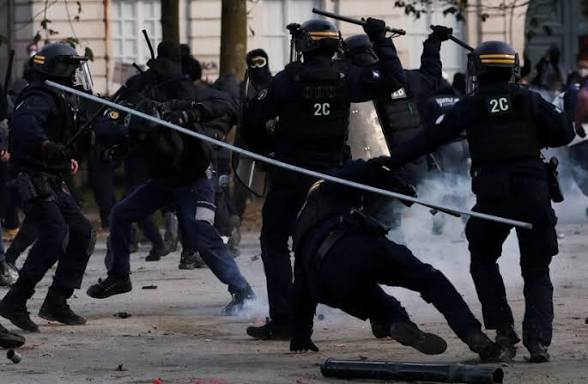
The latest unrest in France has intensified debate over political extremism, organized protest movements and the potential for violence to spread across national borders. The developments have also attracted attention in the United States, where officials are warning about what they describe as transnational extremist networks capable of sharing propaganda, coordinating activities and supporting political violence.
The Paris riots warning to America has become a wider discussion about national security, public safety and the challenges governments face when extremist messaging spreads rapidly online. American officials argue that international cooperation is necessary to identify violent networks and disrupt their financing. However, security researchers and civil liberties advocates emphasize the importance of distinguishing organized violence from peaceful demonstrations and legitimate political activism.
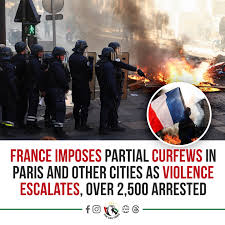
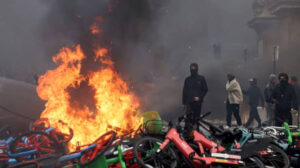
Recent reporting from France describes clashes between protesters and police, fires, looting and damage to public buildings and businesses. Associated Press reported on October 19 that approximately 2,400 people had been arrested during a period of serious unrest, while demonstrations were initially linked to concerns about living costs and school conditions.
Against this backdrop, the central question is whether the violence represents a domestic crisis, a wider international extremist threat or a combination of different factors. Understanding that distinction is essential for American policymakers, European governments and communities concerned about public order.
US Officials Warn About Organized Transnational Extremist Networks
The debate gained momentum after US Under Secretary of State Jacob S. Helberg issued a warning on October 18, arguing that violent extremist networks can operate across borders, share resources and coordinate activities. His remarks were reported on October 19 amid the unrest in France.
Helberg’s statement reflects the Trump administration’s broader argument that political violence should be treated as a national security concern when it involves organized networks rather than isolated criminal acts.
The administration has called for greater international cooperation to identify violent actors, investigate suspicious financing and improve information-sharing between law enforcement agencies. Secretary of State Marco Rubio had already convened an international ministerial meeting in July to discuss what the administration described as the resurgence of transnational far-left political terrorism.
However, an important distinction remains. An official warning about extremist networks does not automatically prove that those networks organized every violent incident in France. Investigators must establish connections between specific individuals, organizations, funding sources and criminal acts.
That distinction is especially important when a large demonstration includes students, workers, trade unions, political activists and people who later engage in looting or violence. These groups may share a protest location without sharing the same objectives or responsibility for criminal behavior.
For American policymakers, the challenge is to investigate credible threats without treating every international activist connection as evidence of terrorism.
What Is Happening in Paris and Across France?
According to the Associated Press, hundreds of thousands of people participated in demonstrations, many of which were peaceful. Violence by some participants and opportunistic looters nevertheless caused substantial damage. Reports published on October 19 described approximately 2,400 arrests over the weekend and damage to thousands of businesses.
French President Emmanuel Macron condemned the violence and pledged a firm response. Authorities also considered localized curfews, additional policing and investigations into whether intelligence agencies had adequately anticipated the scale of the unrest.
These developments have raised concerns about how quickly a protest movement can become difficult to manage when large crowds converge with smaller groups prepared to use violence.
Yet the underlying grievances cannot be ignored. Rising household expenses, concerns about public services and dissatisfaction with government decisions have contributed to the demonstrations. These issues affect ordinary families and workers, many of whom have no connection to extremist organizations.
Consequently, the Paris riots should not be understood as proof that an entire protest movement is extremist. A responsible assessment must separate peaceful demonstrators, people committing ordinary crimes and individuals suspected of deliberately organizing political violence.
Why Is the Situation Raising Concerns in America?
The unrest in France has become part of a wider American debate about political polarization, public demonstrations and the security risks posed by violent groups.
President Donald Trump warned at a Kansas rally on October 20 that the United States could experience unrest similar to France if Democrats won upcoming elections. His remarks turned the French crisis into a domestic political argument about economic conditions, immigration and public safety.
Supporters of a tougher security approach argue that the United States should study international unrest before similar tactics spread or are adopted by violent domestic actors. They point to the speed at which footage, slogans and calls for demonstrations can travel between countries.
However, predicting American unrest from events in France is difficult. The two countries have different political institutions, law enforcement structures, protest traditions and social conditions.
The fact that political groups in America discuss French demonstrations does not establish that they intend to reproduce the violence. Nor does criticism of a government automatically indicate extremist intent.
A useful warning for American authorities is therefore narrower: they should monitor credible evidence of threats, organized violence and cross-border support while avoiding assumptions based solely on political ideology.
The distinction matters because an exaggerated threat assessment can undermine public trust just as an inadequate response can leave communities vulnerable.
How Transnational Extremist Networks Can Operate
Transnational extremist networks do not always resemble traditional organizations with a central leader, a formal membership list and a single headquarters.
Some operate through informal relationships, online communities and loosely connected individuals. Others maintain clearer structures, financial arrangements or direct links between people in different countries.
Researchers have identified several ways these networks can influence political violence.
1. Online propaganda and recruitment
Social media and messaging platforms allow political content to travel internationally within minutes. Extremist actors can circulate videos of clashes, promote ideological narratives and encourage followers to view violence as justified.
Algorithms and recommendation systems may also expose users to increasingly provocative material, although the effects vary by platform and individual circumstances.
Online communication can amplify anger, but the existence of radical content does not prove that a coordinated operation is underway. Investigators need additional evidence to establish intent and organization.
2. Sharing tactics and narratives
Individuals involved in extremist movements may learn from incidents in other countries. They can imitate protest tactics, repeat slogans or adopt methods previously used by violent groups.
A 2025 study published in Applied Network Science examined online communities preceding the 2024 UK riots. Researchers identified a cross-platform network of influence that connected local, national and international communities.
Importantly, the study did not claim that online connections directly caused the riots. Instead, it highlighted how digital networks can provide an environment for mobilization and the circulation of inflammatory narratives.
This distinction is central to understanding the Paris riots warning to America. Connections between online communities deserve examination, but researchers must distinguish influence, encouragement and direct operational coordination.
3. Financial and material support
Authorities investigating serious political violence may examine whether individuals or organizations provided money, equipment or other assistance to people committing crimes.
Financial investigations can help establish whether violent acts were independently committed or supported by a wider structure.
Nevertheless, funding a legal protest, donating to a political organization or supporting a campaign is not automatically evidence of financing terrorism. Investigators must establish the purpose of the funds and any connection to unlawful conduct.
4. International contacts
People who share political beliefs often communicate across national borders. Activists may attend conferences, participate in demonstrations, share research or support international campaigns.
Such contacts can be entirely lawful.
The security concern arises when reliable evidence indicates that individuals use those relationships to plan attacks, obtain resources for violence, recruit participants for criminal activity or evade law enforcement.
Authorities must therefore assess the nature of the relationship rather than simply count international connections.
What Evidence Exists of Cross-Border Organization?
The question of organized extremist activity has attracted renewed attention following American officials’ statements and media investigations into networks associated with the French protest movement.
A Fox News Digital investigation published on October 9 identified 50 organizations associated with France’s student protests and their wider circle of supporters. The report described a mixture of student groups, labor unions, political parties, advocacy organizations and media outlets, and alleged that the network had international connections.
That reporting raises questions about how organizations communicate, promote demonstrations and coordinate political messaging.
However, several qualifications are necessary.
First, an organization can support a demonstration without endorsing violence. Second, political messaging shared between groups does not necessarily establish operational coordination. Third, evidence that a network exists is not the same as evidence that it planned a particular crime.
In its reporting on the latest unrest, the Associated Press also cited policing expert Sebastian Roché, who questioned whether the relatively small and loosely organized far-left fringe could account for the scale of the violence by itself. The reporting distinguished politically motivated destruction from looting carried out for personal gain.
These differing assessments show why claims about organized transnational extremist networks require careful examination.
The strongest conclusions will come from verifiable evidence, such as documented communications linked to specific criminal acts, financial records, court findings and corroborated intelligence. Broad political affiliations or social media activity alone cannot establish responsibility.
The Role of Social Media in Spreading Unrest
Social media has become an important factor in how demonstrations develop and how governments respond to them.
Videos of police confrontations, burning vehicles and damaged buildings can reach international audiences before authorities have established what happened. Such footage can inform the public, but it can also be presented without context or used to encourage retaliation.
For extremist actors, digital platforms may provide opportunities to spread propaganda, identify sympathetic audiences and celebrate violence committed elsewhere.
However, social media also serves legitimate purposes. Students can organize peaceful demonstrations, journalists can document police conduct, and citizens can criticize government policies. These activities are protected forms of expression in democratic societies, subject to applicable law.
The challenge for American authorities is to distinguish threatening conduct from lawful communication.
Effective monitoring should focus on credible threats, incitement to imminent violence where legally applicable, and evidence of criminal coordination. Broad restrictions on political speech could undermine civil liberties without necessarily improving public safety.
International cooperation between law enforcement agencies and technology companies may help identify serious threats. Such cooperation should also include safeguards for privacy, transparency and due process.
What Security Experts Say About the Wider Terrorism Threat
The broader terrorism landscape is more complicated than a single ideological movement or one wave of unrest.
A 2026 assessment by the Center for Strategic and International Studies describes the US threat environment as a mixture of formal organizations, loose networks and individuals motivated by different extremist ideologies. It emphasizes that there is no single threat that explains every security concern.
Similarly, research published by the National Counterterrorism Innovation, Technology, and Education Center in 2023 found that connections between selected US-based violent extremist actors and foreign groups were often informal, fluid and episodic rather than part of systematic international cooperation. The report nevertheless noted that cross-border relationships could help spread dangerous ideas and tactics.
These findings suggest that the threat is real but varied.
Some extremist organizations maintain established command structures. Others depend on online inspiration, informal personal relationships or individuals who act independently. Each situation requires a different investigative approach.
It would therefore be inaccurate to assume that every violent protest is directed by an international organization. It would also be unwise to dismiss credible evidence of cross-border support when investigators uncover it.
The key is to base security decisions on the specific threat, the available evidence and the seriousness of the suspected conduct.
Could Similar Unrest Spread to Other Countries?
France’s experience has renewed questions about whether unrest can spread to other countries facing economic pressure, political polarization or dissatisfaction with public services.
International developments can influence domestic debates. Demonstrators may draw inspiration from events abroad, while political leaders may use foreign unrest to support their own arguments.
Reuters reported on October 19 that France was facing the economic and political consequences of the unrest, including damage to businesses, additional security measures and the possibility of further protests. Other European countries with similar economic pressures could face their own demonstrations, although the circumstances would differ.
Nevertheless, the international spread of protest movements should not be confused with the international spread of organized violence.
A peaceful demonstration inspired by events abroad is not equivalent to a coordinated extremist campaign. Governments must evaluate local conditions, including public trust, economic pressures, police preparedness and the conduct of specific groups.
For the United States, France offers an opportunity to review emergency planning and intelligence-sharing arrangements. It does not provide a reliable basis for predicting that American cities will experience the same events.
What Measures Could Help the United States Prevent Political Violence?
American authorities can take several practical steps to address credible extremist threats while protecting democratic freedoms.
Improve intelligence-sharing
Federal, state and local agencies should exchange relevant information about credible threats, suspected criminal networks and planned acts of violence.
International cooperation can also help authorities investigate crimes that cross borders. However, intelligence must be verified before it is used to justify arrests, surveillance or other intrusive measures.
Investigate financial links lawfully
Where evidence suggests that money is being used to support violence, authorities can examine transactions and financial relationships through lawful investigative procedures.
These investigations should distinguish illicit financing from legitimate donations, charitable activity and political organizing.
Strengthen protection for public spaces
Police and emergency services can improve crowd management, protect vulnerable buildings and develop plans to respond quickly when demonstrations turn violent.
Authorities should also investigate allegations of excessive force. Public confidence depends on protecting both demonstrators and the wider community.
Counter misinformation
Governments can publish verified information about incidents, explain emergency measures and correct demonstrably false claims.
Independent journalists and civil society organizations also play an important role in establishing facts. Officials should avoid labeling criticism or unverified claims as extremist activity without supporting evidence.
Address the causes of public frustration
Security measures alone cannot resolve disputes over living costs, education, employment or public services.
Governments should engage with communities, explain policy decisions and address legitimate grievances wherever possible. Preventing violence requires both effective law enforcement and credible political responses.
The Risks of Overstating the Extremist Threat
The debate over the Paris riots warning to America also raises concerns about how governments define extremism.
When officials describe an entire political movement as a terrorist threat without establishing the conduct of specific individuals, they risk weakening public trust and discouraging lawful participation in democracy.
Civil liberties organizations and independent analysts have questioned aspects of the US administration’s campaign against what it calls transnational far-left terrorism. A July 2026 report by The Washington Post described concerns among some officials and analysts that applying foreign-terrorism frameworks to loosely organized activist movements could expand government powers in ways that threaten civil liberties.
This debate does not mean authorities should ignore political violence. Arson, assault, threats and deliberate attacks on civilians or public infrastructure can warrant serious criminal investigations.
Instead, it highlights the importance of clear legal standards and evidence-based decisions.
The same standards should apply regardless of whether suspected offenders belong to left-wing, right-wing, religious, nationalist or other ideological movements.
A credible security strategy must protect communities from violence while ensuring that peaceful political disagreement remains lawful.
What Happens Next in France and the United States?
France faces the immediate task of restoring public order, supporting affected businesses and determining why the violence reached such a serious scale.
Authorities are expected to examine intelligence assessments, police deployment and the handling of demonstrations. The possibility of further protests means that officials must prepare for renewed tensions while preserving the ability of peaceful demonstrators to assemble.
In the United States, the debate is likely to continue around international security cooperation, extremist financing and the limits of government action against political movements.
American officials may seek stronger coordination with European partners to investigate credible cross-border threats. At the same time, the effectiveness of these efforts will depend on whether authorities can demonstrate concrete links between suspected networks and criminal activity.
For both countries, the central challenge is balancing public safety, political freedom and public confidence.
The unrest in France is a reminder that large demonstrations can become dangerous when violence escalates and public institutions struggle to respond. It is not, by itself, proof that a single international network controls events across Europe or poses an identical threat to the United States.
The evidence gathered by investigators over the coming weeks will be important in determining which incidents involved organized activity, which resulted from opportunistic crime and which reflected wider failures in protest management.
Conclusion
The Paris riots warning to America has intensified a significant debate about transnational extremist networks, political violence and the role of international cooperation in protecting public safety.
US officials have warned that violent groups can use cross-border relationships, online platforms and financial connections to support their activities. Research also shows that extremist influence can spread internationally, although the structure and strength of these connections vary considerably.
Meanwhile, France’s latest unrest demonstrates the difficulty of separating peaceful demonstrations from violent acts when large crowds gather around shared grievances.
The appropriate response requires credible intelligence, effective policing, lawful financial investigations and cooperation between countries. It also requires governments to avoid treating peaceful protest, political opposition and violent extremism as interchangeable.
Ultimately, the warning for America is not that French unrest will inevitably be repeated on US streets. It is that governments should prepare for credible threats, investigate evidence carefully and protect the democratic freedoms that distinguish lawful protest from political violence.
Frequently Asked Questions (FAQs)
1. What is the Paris riots warning to America about?
The warning concerns the possibility that violent extremist networks may operate across national borders, share resources and spread political propaganda. US officials have called for international cooperation to address credible threats, although claims linking specific networks to particular acts of violence require supporting evidence.
2. Why are US officials concerned about extremist networks?
Officials are concerned that online communication, international contacts and financial connections could help violent actors coordinate activities or inspire others. Their focus is on identifying criminal conduct and preventing attacks rather than treating every political activist as an extremist.
3. What caused the latest unrest in France?
Recent demonstrations were linked to concerns about rising living costs and poor conditions in schools. Although many people participated peacefully, some incidents involved clashes with police, fires, looting and damage to public buildings and businesses.
4. Have authorities proved that international extremist networks organized the Paris riots?
Public reporting describes allegations of cross-border networks and investigations into violent activity. However, the existence of international political connections does not, by itself, prove that a particular network planned or directed the riots. Specific claims require independently verifiable evidence.
5. Can extremist networks use social media to spread violence?
Yes. Online platforms can allow violent propaganda, inflammatory narratives and calls for action to spread quickly. However, social media also supports lawful protest and journalism, so investigators must distinguish legitimate expression from credible threats and criminal coordination.
6. Could similar riots happen in the United States?
Large demonstrations and episodes of political violence are possible in many countries. However, events in France do not establish that the same unrest will occur in the United States. Local conditions, institutions and the actions of specific individuals will influence the outcome.
7. How can governments counter transnational extremist networks?
Governments can improve intelligence-sharing, investigate credible threats, follow lawful procedures when examining financial links, protect public spaces and cooperate with international partners. They should also safeguard civil liberties and distinguish violent conduct from peaceful political activism.
8. Why is it important to distinguish protests from extremism?
Peaceful protest is an important part of democratic life. Treating ordinary demonstrations as extremist activity can undermine civil liberties and public trust. Investigations should focus on evidence of threats, violence and criminal organization rather than political beliefs alone.
9. What role does international cooperation play in preventing political violence?
International cooperation can help law enforcement agencies verify information, investigate cross-border crimes and identify individuals or organizations suspected of supporting violence. Effective cooperation requires reliable evidence, clear legal authority and appropriate safeguards for individual rights.
10. What should readers watch for in the coming days?
Readers should watch for verified updates from French authorities, court proceedings, confirmed arrests, evidence disclosed during investigations and changes to public-safety measures. They should also distinguish established facts from political claims and unverified social media reports.
How useful was this post?
Click on a star to rate it!
Average rating 0 / 5. Vote count: 0
No votes so far! Be the first to rate this post.
About the Author

usa5911.com
Administrator
Hi, I’m Gurdeep Singh, a professional content writer from India with over 3 years of experience in the field. I specialize in covering U.S. politics, delivering timely and engaging content tailored specifically for an American audience. Along with my dedicated team, we track and report on all the latest political trends, news, and in-depth analysis shaping the United States today. Our goal is to provide clear, factual, and compelling content that keeps readers informed and engaged with the ever-changing political landscape.