Paris riots curfew orders have become a major focus of France’s response to widespread unrest that swept through several cities over the weekend of October 17, 2026. The French government has introduced targeted restrictions, increased security preparations, and promised stronger action against those responsible for violence and looting.
The unrest followed demonstrations linked to rising living costs, concerns about public services, and dissatisfaction with conditions in schools. Although many people joined protests to express legitimate concerns, some gatherings escalated into serious violence, property damage, and clashes with police.
Prime Minister Sébastien Lecornu has defended the use of localised curfews as a way to protect residents, shops, and public buildings. Meanwhile, President Emmanuel Macron’s government faces growing questions about its preparation for the violence and its ability to maintain public order.
As authorities prepare for further demonstrations, the situation remains politically sensitive. Officials must now balance public safety with the right to peaceful protest.
Paris Riots Curfew Orders: What Has the French Government Announced?
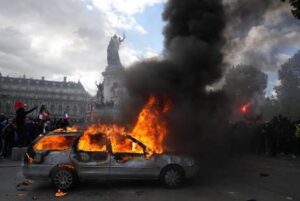
The French government has chosen targeted restrictions rather than imposing a blanket curfew across the entire capital. Authorities say local measures are more appropriate because the violence has affected particular streets, shopping districts, and urban centres.
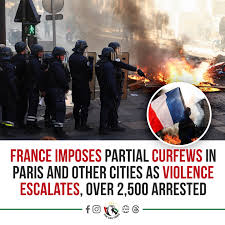
On October 19, Paris police announced an overnight curfew covering two designated areas: Place de la République and the Les Halles shopping district. The initial order ran from 11 p.m. until 6 a.m. the following morning. Authorities also restricted demonstrations and gatherings in Paris from 8 p.m.
By October 20, officials reported that targeted curfews had helped restore calm overnight. However, the government indicated that additional restrictions could be introduced wherever local conditions required them.
According to reporting by the Associated Press and Reuters, the restrictions are part of a wider security response following extensive rioting and looting across France.
The important point is that these measures are localised. Residents and visitors should not assume that every district of Paris is automatically subject to the same restrictions.
Authorities may also introduce different rules in other cities, depending on the level of risk and decisions made by local officials.
Why Did Riots Break Out Across France?
The unrest developed from demonstrations over several connected issues, including the cost of living, public services, and school conditions.
Rising Living Costs Fuel Public Anger
The cost of everyday essentials remains a major concern for many households. When families face pressure from food, transport, energy, and housing expenses, dissatisfaction can grow into broader opposition to government policies.
In France, economic concerns have become closely linked to debates about public spending, taxation, and the quality of public services.
Many demonstrators have used protests to demand greater government accountability and practical measures to improve living standards. However, the violence that followed has shifted attention towards public safety and the protection of businesses.
Student Protests and School Conditions
Student demonstrations were another important part of the unrest. Participants raised concerns about conditions in schools and wider questions about the future of public education.
These demonstrations attracted support from people who believe public institutions need greater attention and investment.
Nevertheless, peaceful demonstrations and violent attacks are different matters. The destruction of property and attacks on public buildings have created a separate security challenge for the authorities.
Looting and Property Destruction Escalate Tensions
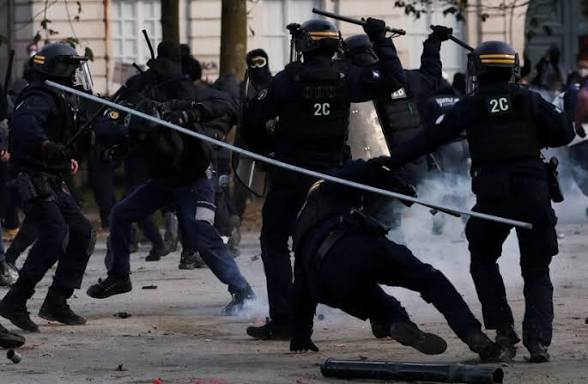
Some demonstrations developed into serious disorder, with reports of looting, arson, damaged storefronts, and attacks on public buildings.
Businesses in several cities suffered damage, while emergency services and police faced pressure to control crowds.
The violence also affected historic and commercial locations. In Limoges, a historic town hall was set on fire, prompting an investigation into those responsible.
These incidents increased pressure on the French government to prevent further attacks and reassure residents that their communities would remain safe.
Which Areas Are Affected by Curfew Orders?
Paris is not the only city affected by the government’s security response. Authorities have introduced or renewed local restrictions in several parts of France.
Paris
The initial restrictions focused on Place de la République and the Les Halles shopping district. Both areas experienced disorder during the weekend violence.
The curfew was introduced to prevent further looting and protect people and property. Authorities also imposed restrictions on gatherings during the evening.
Because orders can change, visitors should check the latest announcements from the Paris police before travelling through affected areas at night.
Lyon
Lyon has also experienced unrest, including damage to public and commercial property.
Authorities introduced restrictions in the city centre, with reporting on October 20 indicating an overnight curfew from 9 p.m. to 6 a.m. in the designated area.
Local rules may differ from those in Paris. Anyone living in or travelling to Lyon should therefore confirm the precise boundaries and times of the applicable order.
Lille and Nearby Communes
Local authorities in Lille and nearby communities introduced overnight curfews for people under 18 in response to the unrest.
The restrictions were reported to run from 8 p.m. to 6 a.m. on specified nights. Their scope and duration depend on the relevant local orders.
Parents and guardians should check official municipal announcements rather than rely on general national headlines.
Nice and Other French Cities
Nice and other municipalities have also adopted targeted restrictions or additional measures to prevent disorder.
In some locations, the measures focus on minors. Elsewhere, officials have restricted gatherings or demonstrations.
Marseille, for example, announced restrictions on public gatherings during the response to the unrest.
These different approaches demonstrate that France is relying on local authorities to respond to specific security concerns rather than applying one identical rule nationwide.
French Government Deploys Additional Security Forces
Prime Minister Sébastien Lecornu has announced a major security operation ahead of further planned protests.
The government intends to reinforce police operations and use military personnel to guard sensitive locations. This arrangement would allow police officers to concentrate on crowd control, investigations, and other immediate public-safety duties.
The planned security operation follows criticism that authorities were not adequately prepared for the scale of the weekend violence.
Officials have also discussed improvements to intelligence gathering, police deployment, and coordination between different agencies.
Why Is a Larger Police Presence Necessary?
A larger security presence can help authorities protect important buildings, prevent looting, and respond more quickly when violence develops.
However, the effectiveness of such a deployment depends on careful planning. Officers must identify potential flashpoints, maintain communication, and respond proportionately to changing circumstances.
Police must also distinguish between peaceful demonstrators and individuals who commit crimes.
This distinction is important because France continues to face questions about how authorities can maintain order without unnecessarily restricting lawful political expression.
Government Acknowledges Security Failures
Lecornu acknowledged shortcomings in the government’s response, including intelligence failures and problems with police deployment.
He also indicated that decisions concerning police leave had contributed to the difficulties faced by authorities.
Interior Minister Laurent Nuñez publicly acknowledged the seriousness of the situation and offered to resign. President Emmanuel Macron rejected the offer and instructed him to focus on improving security operations and addressing the failures.
The decision suggests that the government wants to maintain continuity within the security administration while reviewing what went wrong.
Emmanuel Macron Faces Growing Political Pressure
The riots have created a major political challenge for President Emmanuel Macron and his administration.
Opposition figures have criticised the government over its handling of public order. Some have questioned whether the authorities responded quickly enough to protect businesses and public buildings.
Others have argued that curfews alone will not resolve the economic and social issues that contributed to the demonstrations.
The government, meanwhile, has stressed that violent behaviour cannot be justified by political dissatisfaction.
This disagreement reflects a broader debate about France’s economic direction, public services, security policies, and political leadership.
Interior Minister Laurent Nuñez Remains in Office
Nuñez’s offer to resign highlighted the pressure facing the interior ministry after the violence.
Macron declined the offer and asked the minister to improve operational methods and ensure transparency over the failures in preparation and intelligence.
The decision does not remove questions about accountability. Instead, it places additional responsibility on the ministry to demonstrate that lessons have been learned.
The government’s next steps will be closely watched by lawmakers, local officials, police representatives, and the public.
Opposition Parties Demand Answers
Political opponents have challenged the government’s explanation for the unrest and its response to the crisis.
Some have criticised the use of curfews as an inadequate solution to broader social problems. Others have demanded tougher action against looters and those responsible for arson.
Lecornu has blamed far-left groups and criminal elements for exploiting the demonstrations. However, political opponents have questioned the evidence supporting broad accusations.
A clear distinction between verified findings and political claims will be essential as investigations continue.
Arrests, Injuries, and Damage Across France
The scale of the violence has been significant.
Reports published on October 19 and 20 indicated that more than 2,400 people had been arrested nationwide, while nearly 1,000 police officers and gendarmes were reported injured during the unrest. The figures may change as investigations and court proceedings continue.
Authorities have also reported extensive damage to businesses and public buildings. The Federation of Trade and Retail said nearly 3,000 shops were affected during the weekend.
The impact extends beyond damaged property. Shopkeepers face lost revenue, employees may lose working hours, and residents can experience disruption to transport and everyday services.
Businesses Face Financial Losses
Small businesses are particularly vulnerable when riots damage their premises or force them to close.
Repair costs, stolen stock, broken windows, and lost trading hours can place substantial pressure on business owners.
Large retailers may have more resources to manage repairs, but independent shops often operate with tighter budgets.
The government has promised support measures for affected businesses, including arrangements intended to help protect employment while firms recover.
Authorities have also instructed online platforms to remove listings involving allegedly stolen goods and cooperate with investigations into their resale.
Legal Action Against Suspected Rioters
French authorities have promised a firm response to offences committed during the unrest.
Investigations can involve examining surveillance footage, collecting witness statements, identifying suspects, and tracing stolen property.
Those accused of offences must still receive the protections provided by French law. Arrests do not automatically establish guilt, and individual cases must be assessed through the legal process.
Justice officials have signalled that prosecutions and sentencing will be an important part of the response.
Will Paris Face a Citywide Curfew?
As of October 20, the government’s approach has focused on targeted restrictions rather than a blanket curfew covering the whole of Paris.
Lecornu has argued that localised measures are more appropriate while the violence remains concentrated in particular urban areas.
This approach allows police and local authorities to impose restrictions where they believe the risks are greatest.
However, the government has not ruled out stronger emergency measures if the security situation deteriorates.
Whether further restrictions become necessary will depend on the scale of new demonstrations, reports of violence, and assessments made by local authorities.
Residents should not interpret the absence of a citywide curfew as confirmation that all streets and public spaces are unrestricted. Specific police orders may still apply.
What Do the Curfew Orders Mean for Residents and Tourists?
The restrictions may affect daily routines, shopping, nightlife, public transport connections, and access to central locations.
Residents should monitor local announcements and avoid entering areas covered by active restrictions.
Tourists should take similar precautions, particularly when visiting busy squares, major shopping districts, or locations where demonstrations have taken place.
Check Official Information Before Travelling
Curfew boundaries and hours can change quickly. Travellers should check updates from the Paris police prefecture, local municipal authorities, and relevant transport operators.
Hotel staff and official tourist information services may also be able to explain whether particular neighbourhoods are affected.
Do not assume that an old news report contains the latest rules.
Avoid Protest Hotspots During Unrest
Even when a demonstration begins peacefully, circumstances can change quickly.
Visitors should avoid crowds where confrontations develop, follow police instructions, and move away from smoke, fires, or damaged structures.
Anyone facing an immediate emergency should contact the appropriate French emergency service.
Allow Extra Time for Journeys
Road closures, police checkpoints, and disrupted public transport can affect travel plans.
Travellers heading to railway stations, airports, hotels, or major attractions should check routes before leaving and allow additional time where necessary.
The curfew does not automatically mean that every tourist attraction or transport service has closed. The effect depends on the location and the current official instructions.
Can Curfews Solve France’s Wider Social Crisis?
Curfews can help reduce opportunities for nighttime looting and make it easier for police to protect sensitive locations. However, they cannot resolve every cause of public anger.
France’s challenges include concerns about living costs, the quality of public services, education, government spending, and political trust.
These issues require longer-term policy responses alongside immediate security measures.
Security Must Be Combined With Accountability
A successful response requires more than increasing the number of officers on the streets.
Authorities must explain why the initial response was insufficient, review intelligence procedures, and improve coordination between police forces.
Transparent investigations can also help maintain public confidence.
If officials identify specific failures and implement practical changes, the government may be better prepared for future demonstrations.
Peaceful Protest Remains an Important Right
Demonstrations are an established part of democratic life in France. Citizens have the right to express political opinions and demand changes through lawful means, subject to applicable legal restrictions.
At the same time, violence, arson, and looting create serious risks for residents, workers, and emergency responders.
The challenge for the government is to protect peaceful protest while preventing criminal acts.
Maintaining that balance will be essential to restoring confidence after the riots.
What Happens Next?
The immediate priority is to prevent a repeat of the October 17 violence.
The government is preparing additional security resources for further demonstrations expected on Saturday, October 24. Officials will also assess the effectiveness of targeted curfews and decide whether further restrictions are required.
Meanwhile, investigations into looting, arson, and alleged attacks on police are continuing.
Parliamentary scrutiny of the authorities’ response is also expected to examine whether intelligence and policing decisions contributed to the scale of the unrest.
The government must now demonstrate that it can protect public safety while addressing legitimate concerns raised by demonstrators.
For businesses, the coming days will be important as owners assess damage, resume trading, and seek assistance. For residents and tourists, checking official updates remains the safest way to understand the restrictions in force.
Conclusion
Paris riots curfew orders represent a targeted effort by the French government to restore public order after widespread violence and looting. Restrictions in parts of Paris and other cities have been accompanied by plans for a larger security deployment and promises to investigate failures in the initial response.
Prime Minister Sébastien Lecornu has acknowledged shortcomings in intelligence and police tactics, while President Emmanuel Macron has retained Interior Minister Laurent Nuñez to oversee improvements.
Although the measures have helped restore calm in some areas, the wider situation remains politically and socially complex.
Curfews may prevent further disorder in the short term. However, lasting stability will also depend on effective policing, accountability, support for affected businesses, and constructive responses to public concerns about living costs and public services.
Residents and visitors should continue checking local official announcements because restrictions may change as authorities respond to developments.
Frequently Asked Questions (FAQs)
1. Why has the French government introduced Paris riots curfew orders?
The government introduced targeted curfews to prevent further looting, protect residents and businesses, and reduce the risk of renewed violence after the October 17, 2026, unrest.
2. Which areas of Paris are affected by the curfew?
The initial orders covered designated areas around Place de la République and the Les Halles shopping district. Residents should check the latest police announcements for updated boundaries and timings.
3. Is there a curfew across the whole of Paris?
As of October 20, the government had favoured targeted restrictions rather than a blanket curfew across the entire capital. Local rules can change if security conditions deteriorate.
4. What time does the Paris curfew begin?
The initial overnight curfew on October 19 began at 11 p.m. and ended at 6 a.m. on October 20. New orders may have different timings, so official updates are essential.
5. Which other French cities have introduced curfews?
Authorities have reported restrictions in cities and communities including Lyon, Lille, and Nice. The rules vary by location, and some apply specifically to minors.
6. What caused the 2026 France riots?
The unrest followed demonstrations involving concerns about living costs, school conditions, and public services. Some gatherings escalated into looting, arson, property damage, and clashes with police.
7. How many people have been arrested during the riots?
Reports published on October 19 and 20 put nationwide arrests at more than 2,400. The total may change as police investigations and legal proceedings continue.
8. Has Emmanuel Macron declared a state of emergency?
As of October 20, the government had focused on localised curfews and additional security measures. Officials had discussed the possibility of stronger measures if necessary, but this should not be confused with an announcement that a nationwide state of emergency was in force.
9. Are tourists safe to visit Paris during the curfew?
Tourists should monitor official travel and police updates, avoid demonstrations and affected areas, and follow local instructions. Conditions can vary between neighbourhoods, so checking information before travelling is important.
10. Will the French government impose more curfews?
Further restrictions remain possible if local authorities consider them necessary. Decisions will depend on security assessments, planned demonstrations, and whether additional violence occurs.
11. What action is the government taking against rioters?
Authorities are investigating suspected offences, pursuing prosecutions, increasing security preparations, and working to prevent stolen goods from being resold online.
12. When will the Paris riots curfew orders end?
There is no single end date for all restrictions. Each order has its own geographical scope and duration, and local authorities may extend, amend, or cancel measures depending on the situation.
About the Author