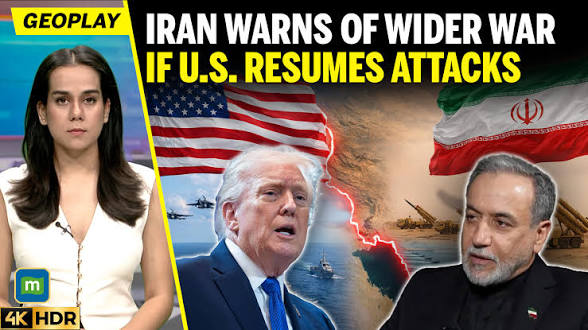
The latest US-Iran war update points to a dangerous new phase in the conflict as military exchanges resume after weeks of relative calm. Renewed U.S. strikes on Iranian positions near the Strait of Hormuz and Iran’s retaliatory attacks against American interests in the region have raised fresh fears that the conflict could move from a limited confrontation into a prolonged regional standoff.
Fox News chief foreign correspondent Trey Yingst, reporting from Tel Aviv, has highlighted the seriousness of the latest exchange as the United States and Iran once again trade strikes. His reporting comes as Washington and Tehran face a growing military, economic and diplomatic crisis with no immediate political settlement in sight.
The situation is particularly concerning because the latest escalation is not happening in isolation. The Strait of Hormuz remains under intense pressure, regional military bases are vulnerable to retaliation, and economic sanctions are becoming an increasingly important part of Washington’s strategy.
As of August 31, 2026, the conflict appears to be entering what many analysts describe as a difficult and potentially lengthy stalemate.
US-Iran War Update: What Triggered the Latest Escalation?
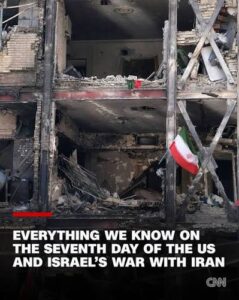
The latest round of fighting followed U.S. military action against Iranian rocket launchers near Larak Island, a strategically important location close to the Strait of Hormuz.
According to reports, the United States said the targets represented a threat to international shipping and raised concerns that Iranian forces could use mines or other weapons to disrupt one of the world’s most important maritime routes.
The U.S. strike marked the first significant American military action against Iran after a period of reduced direct confrontation. Iran responded with missile attacks targeting U.S. positions in Jordan, according to multiple reports.
The exchange demonstrated how quickly the conflict can return to open military confrontation even after temporary periods of calm.
This is one of the central problems facing both Washington and Tehran: neither side has found a stable mechanism for preventing individual military incidents from developing into wider escalation.
Trey Yingst’s Warning and the Growing Regional Risk
Trey Yingst’s reporting has focused attention on the increasingly dangerous nature of the confrontation.
Reporting from the Middle East, Yingst has covered repeated exchanges between the United States and Iran, including military strikes, Iranian retaliation and the broader pressure on American forces and regional allies.
The key warning emerging from the latest reporting is that this is no longer simply a short-term crisis. The conflict has developed into a broader strategic confrontation involving military power, maritime security, economic sanctions and regional politics.
The danger is that every new strike creates pressure for a response.
For the United States, failing to respond to attacks on American forces could be viewed as weakness. For Iran, failing to retaliate against U.S. military operations could create domestic and strategic pressure on its leadership.
This creates a cycle in which both sides may claim they are responding defensively while the overall conflict continues to expand.
Regional Strikes Raise the Stakes
The latest US-Iran war update is also important because the consequences are spreading beyond Iranian territory.
Reports indicate that Iran’s response included missile activity directed toward U.S. positions in Jordan. There were also concerns surrounding possible threats to American and allied interests elsewhere in the Middle East.
The regional dimension is one of the most dangerous aspects of the conflict.
The United States maintains military personnel and strategic facilities across the broader Middle East. Iran, meanwhile, has the ability to create pressure through missiles, drones, maritime operations and relationships with armed groups across the region.
As a result, a confrontation between Washington and Tehran can quickly affect:
- Jordan
- The United Arab Emirates
- Gulf shipping routes
- Israel
- Iraq and Syria
- U.S. military facilities across the region
- International commercial shipping
Recent reporting shows that the conflict has already demonstrated the potential for military activity to spread across multiple countries and strategic areas.
This regional vulnerability makes a simple military solution extremely difficult.
The Strait of Hormuz Remains at the Center of the Crisis
The Strait of Hormuz has become one of the most important battlegrounds in the wider confrontation.
The narrow waterway is essential for international energy markets, and any disruption can immediately affect global oil prices, shipping costs and economic confidence.
The United States has emphasized the need to protect international navigation, while Iran has maintained significant leverage because of its geographical position and military capabilities near the waterway.
Recent reports indicate that maritime traffic has been significantly affected by security concerns and that the latest military escalation has once again increased fears about safe navigation through the region.
The importance of the Strait of Hormuz means that the US-Iran conflict is not just a bilateral issue.
It has consequences for countries around the world.
A prolonged disruption could affect:
Global Oil Prices
Any threat to energy shipments can push oil prices higher.
Shipping Costs
Commercial companies may face higher insurance premiums and security expenses.
Inflation
Higher energy and transportation costs can eventually increase prices for consumers.
Asian Economies
Major energy-importing countries could be particularly vulnerable to disruptions.
The latest escalation reportedly contributed to renewed concerns in energy markets, showing how military developments in the Middle East can have immediate global economic consequences.
From Military Pressure to Economic Warfare
Another major development in the latest US-Iran war update is Washington’s increasing focus on economic pressure.
The Trump administration has been escalating sanctions and discussing broader measures designed to isolate Iran financially.
Recent reporting indicates that the U.S. strategy increasingly combines military deterrence with economic pressure, including efforts aimed at restricting Iran’s financial networks and international economic relationships.
This approach reflects an important shift.
Rather than relying entirely on continuous large-scale military operations, Washington appears to be using sanctions and economic restrictions as part of a longer-term strategy to pressure Tehran.
However, economic warfare presents its own challenges.
Iran has lived under various forms of sanctions for years and has developed methods of adapting to international restrictions. The effectiveness of additional pressure will depend heavily on international cooperation.
If major economic partners continue trading with Iran, sanctions may have limited strategic impact.
Why the Conflict Has Become a Long-Term Standoff
The biggest question surrounding the US-Iran conflict is simple:
How does it end?
At the moment, neither side appears willing to accept a political outcome that would be viewed as a major defeat.
The United States wants to prevent threats to its forces and allies while protecting strategic shipping routes and limiting Iran’s military capabilities.
Iran wants to maintain its sovereignty, resist American pressure and preserve its ability to influence events in the Gulf and wider Middle East.
These objectives are difficult to reconcile.
Recent assessments have described the conflict as a costly stalemate, with major original objectives remaining unresolved and diplomatic efforts failing to produce a durable agreement.
That makes the current situation particularly dangerous.
A conflict does not need to be constantly escalating to be unstable.
A long-term stalemate can produce repeated crises, accidental confrontations and sudden military flare-ups.
Diplomatic Talks Remain Difficult
Diplomacy remains the most obvious path toward preventing a wider war, but negotiations have faced major obstacles.
The central disagreements involve security, military activity, economic sanctions, nuclear issues and the future of regional navigation.
Even when temporary understandings are reached, they can quickly collapse if one side believes the other has violated commitments or used negotiations to gain a strategic advantage.
This lack of trust is perhaps the biggest obstacle to a lasting agreement.
A successful diplomatic framework would likely need to address several issues at the same time:
- Security of the Strait of Hormuz
- Protection of U.S. and allied forces
- Iranian security concerns
- Economic sanctions
- Nuclear-related disputes
- Regional military activity
- Verification and enforcement mechanisms
Without progress on these issues, temporary pauses in fighting may simply delay the next escalation.
Could the US-Iran War Expand Further?
The possibility of a wider regional war remains one of the biggest concerns.
A major Iranian attack causing significant American casualties could trigger a much larger U.S. military response.
Likewise, an attack on critical Iranian infrastructure or senior leadership could lead Tehran to expand retaliation against American and allied interests.
There is also the danger of miscalculation.
Military commanders often operate under pressure and with incomplete information. A radar warning, missile launch or maritime incident can create a chain reaction before political leaders have time to intervene.
The latest strikes near the Strait of Hormuz demonstrate how quickly a localized security incident can become an international crisis.
The Impact on the Middle East
The Middle East is already dealing with multiple security challenges.
The US-Iran confrontation adds another layer of uncertainty to an already volatile environment.
Regional governments face difficult choices.
Some want stronger American security guarantees, while also trying to avoid becoming direct targets in a larger confrontation.
Others may seek diplomatic engagement with Tehran while maintaining strategic relationships with Washington.
This balancing act becomes harder every time missiles, drones or airstrikes are exchanged.
The conflict could also reshape regional alliances.
Countries may increase defense spending, strengthen missile-defense systems and expand security cooperation with outside powers.
The longer the conflict continues, the greater the chance that the political and military consequences will become permanent.
What Happens Next?
Several possible scenarios could develop in the coming weeks.
Scenario 1: Limited Retaliation Continues
The United States and Iran could continue exchanging limited strikes without launching a full-scale war.
This would maintain a dangerous but controlled confrontation.
Scenario 2: Diplomatic Breakthrough
Economic pressure and military fatigue could eventually push both sides back toward serious negotiations.
This would require significant compromises.
Scenario 3: Major Regional Escalation
A deadly attack or major strategic incident could trigger much larger military operations.
This remains the most dangerous scenario.
Scenario 4: Long-Term Frozen Conflict
The most likely possibility may be an extended standoff involving sanctions, maritime tensions and occasional military exchanges.
In this scenario, neither side wins decisively, but both continue paying a high political and economic cost.
US-Iran War Update: The Bottom Line
The latest US-Iran war update shows that the conflict remains far from resolution.
Trey Yingst’s reporting on the renewed exchanges reflects a broader reality: the confrontation is no longer defined by a single strike or a single diplomatic deadline.
It has become a complex regional crisis involving military operations, missile threats, maritime security, economic sanctions and political pressure.
The renewed U.S. strike on Iranian positions near Larak Island and Iran’s retaliatory missile activity demonstrate how quickly the situation can deteriorate. Meanwhile, the Strait of Hormuz remains a critical pressure point with consequences for global energy markets and international trade.
The most important issue now is whether Washington and Tehran can find a path toward negotiations before another major escalation occurs.
For the moment, neither side appears ready to back down completely.
That is why the conflict increasingly looks like a long-term standoff rather than a short military crisis.
The coming days will be crucial. Another limited exchange could keep the conflict contained, but a major miscalculation could rapidly transform the situation into a much wider regional confrontation.
Frequently Asked Questions
1. What is the latest US-Iran war update?
The latest update involves renewed U.S. military strikes on Iranian positions near the Strait of Hormuz and Iranian retaliation against U.S. interests in the region.
2. What did Trey Yingst report about the conflict?
Trey Yingst has reported on the escalating military exchanges between the United States and Iran, including renewed strikes and the growing risk of wider regional escalation.
3. Why is the Strait of Hormuz important?
The Strait of Hormuz is one of the world’s most important energy shipping routes. Disruption there can affect oil prices, shipping and the global economy.
4. Is the US-Iran conflict becoming a long-term war?
Current reporting suggests the conflict has developed into a costly stalemate, with neither side achieving a decisive political or military outcome.
5. Could the conflict spread to other countries?
Yes. Because U.S. military forces and regional allies are located across the Middle East, further escalation could affect several countries and strategic locations.
6. Are economic sanctions part of the U.S. strategy?
Yes. Recent developments show the United States increasingly using economic pressure and sanctions alongside military deterrence to pressure Iran.
7. What could end the US-Iran conflict?
A lasting resolution would most likely require a diplomatic agreement addressing regional security, sanctions, maritime navigation and other major disputes between Washington and Tehran.
About the Author