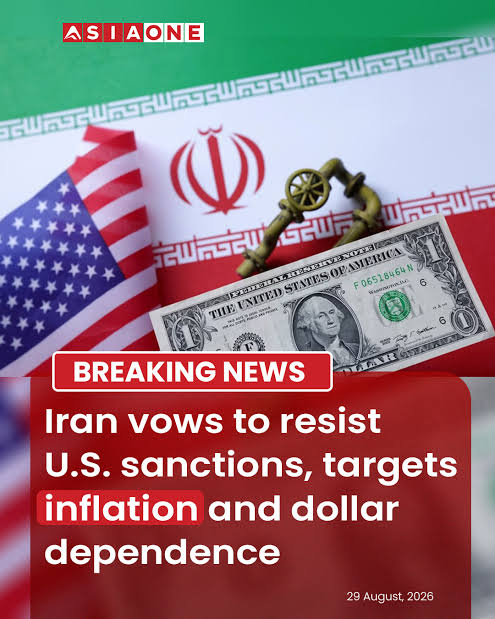
The phrase Iran economy crashing has become increasingly relevant as the country faces a combination of soaring inflation, weakening trade, currency pressure, reduced access to international finance and intensified US sanctions.
Iran’s economic problems are not the result of a single event. Years of sanctions, structural weaknesses, currency instability and international isolation had already placed enormous pressure on businesses and households. However, the latest escalation in US economic policy and regional conflict has made the situation significantly more severe.
Recent reporting indicates that Iran is experiencing exceptionally high inflation and major disruptions to trade and foreign-exchange access. The World Bank has also warned that conflict, intensified sanctions and disruptions to oil exports are placing the Iranian economy under growing pressure.
The United States is now using financial pressure as a central part of its strategy toward Tehran. The broader objective is to limit Iran’s ability to generate revenue, conduct international transactions and maintain commercial relationships with foreign partners.
But an important question remains: Can financial sanctions actually force a major political change in Iran, or will the country once again adapt to economic isolation?
Iran Economy Crashing: Why the Crisis Is Deepening
Iran has faced economic sanctions for many years. These restrictions have affected oil exports, banking relationships, foreign investment and access to the international financial system.
The latest pressure campaign is occurring at a particularly difficult moment.
According to recent reporting, Iran has experienced a sharp decline in foreign trade while inflation has surged dramatically. Reuters reported that Iranian President Masoud Pezeshkian cited a significant fall in foreign trade, while annual inflation had climbed to around 66% amid intensified sanctions and war-related disruption.
This combination is particularly dangerous for any economy.
When trade declines, businesses struggle to obtain imported goods and production materials. When foreign currency becomes scarce, the national currency can weaken. A weaker currency then makes imported products more expensive, creating further inflation.
This creates a damaging economic cycle:
- Sanctions restrict trade.
- Foreign currency becomes harder to obtain.
- The national currency weakens.
- Imported goods become more expensive.
- Inflation rises.
- Household purchasing power declines.
- Businesses reduce investment and production.
For ordinary Iranian families, the consequences can be severe.
Food, medicine, transportation and other essential products become increasingly expensive. Salaries often fail to keep pace with rising prices, meaning that even people who remain employed can experience a significant decline in their standard of living.
Inflation Spike Is Crushing Household Purchasing Power
Inflation is one of the biggest threats facing Iran’s population.
High inflation does more than increase prices. It reduces the value of money.
For example, if household income remains relatively stable but food and essential goods become significantly more expensive, families effectively become poorer.
Recent reports have described growing pressure on Iranian households as prices rise and the value of the national currency weakens. Some assessments have projected inflation at extremely high levels, while reporting from inside and outside Iran has highlighted worsening purchasing power.
The consequences of persistent inflation can include:
Rising Food Costs
Food inflation is particularly dangerous because families cannot simply stop purchasing essential products.
When basic food items become unaffordable, households may reduce consumption or switch to cheaper alternatives.
Higher Costs for Imported Goods
A weak currency makes imports more expensive.
Iran depends on international trade for numerous goods, technologies and industrial inputs. When access to foreign currency becomes more difficult, the cost of these products can rise sharply.
Savings Losing Value
High inflation destroys the purchasing power of savings.
Money saved today may buy significantly less in the future. This encourages people to move savings into foreign currencies, gold or other assets, creating additional pressure on the domestic currency.
Greater Poverty Risks
As prices rise faster than wages, lower-income families are usually hit first and hardest.
The economic burden therefore becomes both a financial and social problem.
US Financial Sanctions Are Targeting Iran’s Economic Connections
The latest US policy approach is not focused only on Iranian companies or government institutions.
A major element involves secondary sanctions and pressure on foreign entities that continue doing business with Iran.
This is important because the US financial system has enormous global influence.
Banks and companies around the world often depend on access to US dollars and international financial networks. The possibility of losing access to these systems can discourage institutions from conducting business with sanctioned countries.
Recent developments illustrate this broader strategy.
Reuters reported that US authorities increased pressure on financial institutions over alleged Iran-related transactions, including action involving Banque Misr’s UAE operations. UAE authorities subsequently began examining the matter.
The wider message is clear: Washington is attempting to make commercial relationships with Iran increasingly risky for foreign banks and businesses.
How Secondary Sanctions Increase Economic Pressure
Primary sanctions directly target a country or its entities.
Secondary sanctions, however, can target third parties that continue dealing with those sanctioned entities.
This can significantly increase economic pressure.
Imagine a foreign bank that has two choices:
- Continue doing business connected to Iran.
- Protect its access to the US financial system.
For many major institutions, the second option is financially more important.
As a result, even countries that do not fully support US policy may see their banks and companies reduce exposure to Iran.
This can make it harder for Iran to:
- Receive international payments.
- Finance imports.
- Access foreign currency.
- Sell oil through traditional channels.
- Attract foreign investment.
- Maintain international banking relationships.
The strategy is designed to increase Iran’s economic isolation without necessarily requiring every country to formally adopt identical sanctions.
Oil Revenue Remains a Critical Issue
Iran possesses major energy resources.
However, having large oil and natural-gas reserves does not automatically guarantee economic stability.
The country still needs reliable export routes, buyers, shipping arrangements and financial channels to convert energy resources into usable government revenue.
The World Bank notes that Iran’s economy and government revenues remain significantly dependent on oil, while conflict and potential disruption to oil exports create serious fiscal risks.
Recent reporting has also indicated that disruptions affecting shipping and trade have added to the pressure on Iranian oil revenue.
Reduced oil revenue can create major problems for the government.
The state needs money to finance:
- Public-sector salaries.
- Infrastructure.
- Subsidies.
- Security institutions.
- Social programs.
- Debt obligations.
- Essential imports.
If revenue declines while inflation rises, government finances can become increasingly difficult to manage.
Trade Disruptions Are Adding to the Economic Crisis
Iran’s economic difficulties are not limited to oil.
Trade disruptions can affect nearly every sector.
Businesses need access to:
- Raw materials.
- Machinery.
- Technology.
- Industrial components.
- Consumer goods.
- Medical supplies.
When sanctions and financial restrictions complicate international transactions, companies may face higher costs and longer delays.
The World Bank has warned that disruptions to imports of essential goods can add to inflationary pressure and increase food-security risks. It also estimated that Iran’s GDP contracted in the 2025/26 Iranian year amid conflict, protests and trade disruption.
This means the current crisis has both immediate and long-term consequences.
A company that cannot obtain equipment today may reduce production tomorrow.
Lower production can lead to fewer jobs.
Fewer jobs reduce household income.
Lower household income weakens consumer spending.
The economic slowdown can then reinforce itself.
Iran’s Currency Faces Severe Pressure
Currency instability is another major warning sign.
When confidence in a country’s economy declines, demand for foreign currencies can increase.
People and businesses may attempt to protect their wealth by purchasing:
- US dollars.
- Euros.
- Gold.
- Other hard assets.
This can place additional pressure on the national currency.
A weaker currency creates another round of inflation because imported goods become more expensive.
Recent reporting has described significant depreciation pressure on the Iranian rial and growing concern about the country’s purchasing power.
Currency weakness therefore becomes both a symptom and a cause of the wider economic crisis.
Can Iran Survive the Latest US Sanctions?
Despite the severity of the pressure, predicting the complete collapse of Iran’s economy would be difficult.
Iran has lived under sanctions for years and has developed various methods to maintain trade.
These include:
- Alternative payment arrangements.
- Trade through third countries.
- Barter arrangements.
- Informal commercial networks.
- Non-dollar transactions.
- Complex shipping arrangements.
Recent reporting suggests that Iran has continued attempting to maintain economic links through alternative systems and relationships with major trading partners.
This creates a major challenge for US policymakers.
Sanctions can increase costs and reduce revenue, but completely eliminating a country’s international economic activity is extremely difficult.
The effectiveness of the latest campaign will depend heavily on how foreign governments, banks and businesses respond.
China Remains a Major Factor
China is particularly important to Iran’s economic future.
Iran has relied heavily on commercial relationships with countries willing to continue purchasing Iranian goods or maintaining trade connections.
However, US pressure creates a difficult situation for Iran’s partners.
Foreign companies may have to weigh the benefits of doing business with Iran against the potential risks of secondary sanctions.
Recent reporting indicates that China remains a major factor in Iran’s trade and oil-export strategy, while US pressure on Iran’s international partners continues to increase.
The outcome of this economic confrontation could therefore depend partly on whether major countries continue finding ways to maintain commercial relationships with Tehran.
The Human Cost of Iran’s Economic Crisis
Economic statistics can sometimes hide the human consequences of a crisis.
For ordinary families, inflation is not an abstract number.
It affects daily life.
Families may have to:
- Spend more on food.
- Reduce savings.
- Delay medical treatment.
- Work additional jobs.
- Cut education expenses.
- Reduce spending on transportation.
- Postpone major purchases.
When inflation remains high for a long period, people can lose confidence in the future.
Businesses also become hesitant to invest because they cannot accurately predict future costs.
This uncertainty can damage economic growth even before new sanctions take effect.
Could US Policy Trigger Further Regional Economic Problems?
The Iran crisis is also affecting the broader region and global economy.
The International Monetary Fund has warned that the conflict in the Middle East has created major uncertainty, particularly through disruptions involving energy markets and shipping routes.
Higher energy prices can increase global inflation.
Transportation becomes more expensive.
Manufacturing costs rise.
Food prices can also increase because agriculture depends heavily on fuel and fertilizers.
The IMF has emphasized that a prolonged conflict could create wider economic risks even if the global economy initially proves resilient.
Therefore, the US-Iran economic confrontation is not only an issue for Tehran and Washington.
Its consequences could affect:
- Global oil prices.
- International shipping.
- Financial markets.
- Regional trade.
- Consumer inflation.
What Happens Next?
The future of Iran’s economy will depend on several major factors.
1. The Strength of US Sanctions Enforcement
The tougher the enforcement, the more difficult it could become for Iran to maintain international financial relationships.
2. Oil Export Levels
Oil revenue remains essential to government finances.
Any major reduction could create additional fiscal problems.
3. Inflation Control
If inflation continues rising, household pressure and social instability could increase.
4. Currency Stability
A further decline in the rial could make imports even more expensive.
5. International Support
Iran’s ability to maintain relationships with major trading partners will be critical.
6. Diplomatic Developments
A major diplomatic agreement could potentially change the economic outlook rapidly.
Conversely, further escalation could increase sanctions and deepen isolation.
Final Thoughts
The Iran economy crashing narrative reflects the enormous pressure currently facing Tehran, but the situation is more complex than a simple prediction of immediate collapse.
Iran is dealing with an exceptionally difficult combination of inflation, currency weakness, trade disruption, reduced financial access and intensified sanctions.
The United States is increasingly targeting not only Iran itself but also the international networks that allow the country to trade and move money.
This strategy could significantly deepen Iran’s economic problems.
However, Iran has also demonstrated an ability to adapt to sanctions through alternative trading systems and partnerships.
The coming months will therefore be crucial.
If inflation continues rising and financial isolation becomes more severe, the pressure on Iranian households and businesses could intensify dramatically.
At the same time, the success of US policy will ultimately depend on whether economic pressure can achieve Washington’s strategic objectives without producing wider instability across the Middle East and global energy markets.
For now, one conclusion is clear: Iran’s economy is facing one of its most difficult periods in years, and the battle over sanctions, trade and financial power is becoming increasingly important to the broader US-Iran confrontation.
Frequently Asked Questions
1. Why is Iran’s economy struggling?
Iran’s economy is struggling because of high inflation, long-term sanctions, currency weakness, trade disruptions, reduced financial access and the economic consequences of regional conflict.
2. How do US financial sanctions affect Iran?
US financial sanctions can restrict Iran’s access to international banking and make foreign companies and banks more cautious about conducting business with Iranian entities.
3. What are secondary sanctions?
Secondary sanctions target foreign companies, banks or organizations that continue doing business with sanctioned entities, potentially limiting their access to the US financial system.
4. Why is inflation so damaging to Iran?
High inflation reduces purchasing power, increases the cost of essential goods and can destroy the value of household savings.
5. Does Iran still export oil?
Iran continues attempting to maintain oil exports, but sanctions, shipping disruptions and financial restrictions can make those exports more difficult and costly.
6. Can sanctions completely collapse Iran’s economy?
Sanctions can cause severe economic damage, but predicting a complete collapse is difficult because Iran has developed alternative trading networks and methods of adapting to international restrictions.
7. How does Iran’s currency affect inflation?
When the Iranian currency weakens, imports become more expensive. This can push up prices for food, industrial goods and other essential products.
8. Could the Iran economic crisis affect other countries?
Yes. Problems involving Iran and the wider Middle East can affect global oil prices, shipping costs, inflation and financial markets.
9. What role does China play in Iran’s economy?
China is an important trading partner and buyer connected to Iran’s energy exports. Its decisions regarding trade with Iran could significantly influence Tehran’s economic options.
10. What could improve Iran’s economic outlook?
A reduction in regional conflict, improved trade access, lower inflation, currency stability and a potential diplomatic agreement that eases sanctions could improve Iran’s economic outlook.
About the Author