MIDDLE EAST ESCALATION: China’s Role Deeply Concerning Amid Red Sea Shipping Crisis And Regional War Threat
The Middle East remains strategically important to global security, energy supplies, and international trade. Rising regional tensions and threats to commercial vessels in the Red Sea have raised concerns about the possibility of a wider conflict. At the same time, China’s economic interests, diplomatic relationships, and growing international influence have placed its regional policies under closer scrutiny.
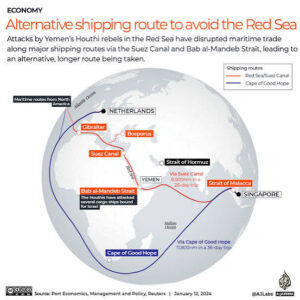
The Red Sea is one of the world’s most important maritime corridors. It connects the Indian Ocean to the Mediterranean Sea through the Bab el-Mandeb Strait and the Suez Canal. Disruptions along this route can affect shipping schedules, transportation costs, fuel prices, and the delivery of goods across several continents.
China has a significant interest in keeping this corridor open. It is a major trading nation that depends on international shipping for energy imports, manufactured products, and access to overseas markets. However, Beijing also maintains relationships with several Middle Eastern countries, giving it diplomatic interests that can sometimes compete with broader security objectives.
The central question is whether China can use its economic and diplomatic influence to help reduce regional tensions while protecting its own strategic interests.
Understanding this issue requires separating verified developments from political allegations, examining the shipping crisis, and considering the factors that could either prevent or encourage a wider regional confrontation.
1. Red Sea Shipping Crisis Raises Global Security Concerns
The Red Sea has become a major focus of international security discussions because attacks and threats against commercial vessels can disrupt trade far beyond the Middle East.
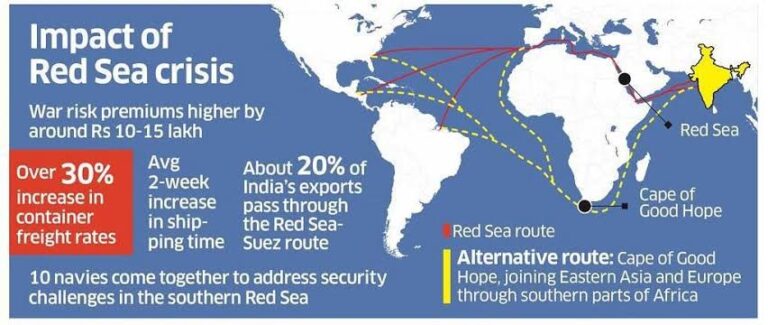
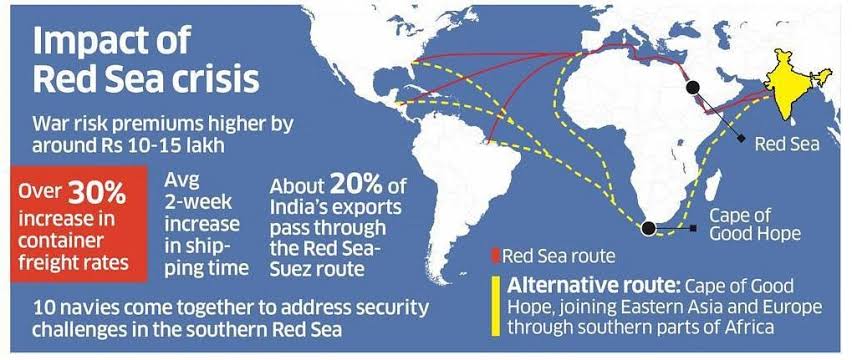
The waterway links the Suez Canal with the Gulf of Aden and the Indian Ocean. It offers a relatively direct route for ships travelling between Asia and Europe. When vessels cannot safely use this corridor, shipping companies may divert them around the Cape of Good Hope in southern Africa.
That alternative can add days or weeks to a voyage. It also increases fuel consumption, insurance costs, crew expenses, and delivery uncertainty.
The United Nations Conference on Trade and Development has previously documented substantial declines in Suez Canal and Red Sea shipping activity during periods of disruption. It also warned that rerouting can raise costs and put additional pressure on vulnerable economies.
The latest regional developments make these concerns particularly serious. The Council on Foreign Relations reported in October 2026 that Houthi activity, fighting in Yemen, and wider tensions involving Iran had increased concerns about the security of the Bab el-Mandeb Strait.
For China, these developments are not a distant security problem. They threaten important commercial routes connecting Chinese exporters, energy buyers, shipping companies, and overseas markets.
Why the Bab el-Mandeb Strait Matters
The Bab el-Mandeb Strait is a narrow maritime passage between Yemen and the Horn of Africa. It serves as the southern entrance to the Red Sea.
Its strategic importance comes from its location. Ships travelling from the Indian Ocean towards the Suez Canal must pass through this area.
An extended disruption could affect several major economies simultaneously. European manufacturers could face delayed deliveries, Asian exporters could encounter higher freight costs, and energy-importing countries could experience greater price volatility.
The risk also extends beyond commercial shipping. Naval forces operating in the region may become involved in protecting vessels, responding to attacks, or deterring further escalation.
Consequently, even a limited maritime confrontation can create diplomatic and military pressure involving several countries.
2. China’s Strategic Interests in the Middle East
China’s role in the crisis is shaped by three major priorities: economic stability, energy security, and international influence.
Beijing has built extensive commercial relationships throughout the Middle East. It maintains important economic ties with Gulf states, including Saudi Arabia, while also maintaining a relationship with Iran.
These relationships provide China with opportunities to participate in trade, infrastructure development, energy markets, and diplomatic negotiations.
However, regional instability creates difficult choices.
China benefits from stable energy supplies and safe shipping routes. At the same time, it has an interest in maintaining working relationships with governments and regional actors that may have competing objectives.
Protecting Trade and Energy Supplies
China is one of the world’s largest energy consumers and a major participant in international manufacturing and trade.
Disruptions to maritime routes can affect its economic interests in several ways:
Higher transportation costs: Shipping companies may increase freight charges to cover additional fuel, insurance, and security expenses.
Energy uncertainty: Interruptions to oil shipments can make supplies more expensive and difficult to schedule.
Export delays: Chinese manufacturers may face longer delivery times when goods travel to European and other overseas markets.
Investment risks: Infrastructure projects, ports, and overseas commercial operations may face greater security concerns.
Market volatility: Uncertainty surrounding oil supplies can affect industrial costs, transport prices, and business confidence.
These risks help explain why Beijing has an incentive to support de-escalation.
Yet China’s economic exposure does not automatically translate into the ability to stop attacks or resolve conflicts. The relevant armed groups and governments make decisions based on their own political and military calculations.
Maintaining Relations With Competing Regional Powers
China’s relationships with both Iran and Gulf Arab countries give it a potential diplomatic advantage.
Beijing can communicate with governments that have limited trust in one another. It can also argue that regional stability benefits every country involved in international trade.
However, maintaining diplomatic relationships is different from exercising direct control.
China cannot simply order independent armed groups to stop operating, nor can it guarantee that its diplomatic requests will be accepted by regional governments.
Its influence depends on the incentives it can offer, the political costs of continued confrontation, and the willingness of the parties to negotiate.
3. Why China’s Role Is Drawing Greater Scrutiny
China’s regional policy is receiving increased attention because of its economic ties, diplomatic ambitions, and connections with countries involved in the wider Middle East crisis.
A report by Reuters published in July 2026 described how Gulf states were looking to Beijing to use its economic leverage with Tehran amid disruptions to regional energy routes. The report highlighted questions about how far China could influence Iran and whether it was willing to exert additional pressure.
This presents Beijing with a difficult test.
If China successfully encourages restraint, it could strengthen its reputation as a diplomatic power capable of contributing to international security.
If its efforts fail, critics may question whether its economic relationships produce meaningful security benefits.
Diplomatic Influence Has Limits
China’s diplomatic influence is significant, but it should not be confused with command authority.
Iran has its own strategic objectives. Gulf governments have their own security concerns. The Houthis, who operate from Yemen, have their own political calculations and military capabilities.
These actors may cooperate with one another in certain circumstances without sharing identical interests or following a single decision-maker.
China must therefore navigate a complicated network of relationships rather than a simple chain of command.
Its approach may involve private diplomatic communications, public statements, economic discussions, and engagement through international institutions.
Whether those efforts succeed depends on the situation on the ground.
Questions About Military-Related Supply Chains
Another concern involves reports of Chinese-origin components appearing in supply chains associated with Houthi missile development.
The Associated Press reported on October 15, 2026, citing a report by Conflict Armament Research, that Houthi efforts to develop more advanced ballistic missiles involved components sourced from Chinese suppliers. The reporting also described the interception of shipments containing missile-related components by Yemeni authorities.
These allegations raise important questions about export controls, supply-chain transparency, and the ability of armed groups to obtain dual-use materials.
However, the presence of components originating in China does not, by itself, establish that the Chinese government authorized or directed their transfer.
Components can move through intermediaries, commercial networks, and illicit procurement channels. Establishing responsibility requires evidence about suppliers, transactions, end users, and any government involvement.
China’s government has said it adheres to relevant international regulations governing military exports. Any assessment should examine the available evidence rather than treating the origin of a component as proof of state sponsorship.
For policymakers, the challenge is to identify and disrupt unlawful procurement networks without making unsupported claims about responsibility.
4. China’s Official Position on the Red Sea Crisis
China has publicly expressed concern about the deterioration of security in Yemen and the surrounding maritime region.
In remarks delivered at a United Nations Security Council emergency briefing in September 2026, China’s representative condemned attacks on civilian vessels and infrastructure and called for restraint, a ceasefire, and diplomatic negotiations. The statement also emphasised the importance of maintaining normal commercial shipping operations.
This position reflects Beijing’s stated preference for resolving disputes through negotiations rather than continued military confrontation.
It also aligns with China’s commercial interests. A prolonged conflict threatens trade routes that serve China and numerous other economies.
However, diplomatic statements are only one part of the picture. Their effectiveness depends on whether they are followed by sustained engagement and whether the parties involved are prepared to change their behaviour.
Calls for Negotiation and Regional Cooperation
China’s approach emphasises several broad principles:
Respect for national sovereignty and territorial integrity.
Protection of civilians and civilian infrastructure.
Freedom of navigation for commercial vessels.
Dialogue between opposing parties.
Greater involvement by regional countries in mediation.
These principles provide a framework for diplomatic engagement, although disagreements remain over how to achieve them.
For example, governments may agree that commercial shipping should remain safe while disagreeing over military operations, sanctions, responsibility for attacks, and the political future of Yemen.
China’s ability to contribute constructively will depend on whether it can help bridge these disagreements.
Can Beijing Influence Tehran?
China’s relationship with Iran is an important part of this debate.
Economic engagement gives Beijing channels through which it can communicate its concerns about maritime security. It may also have opportunities to explain the economic consequences of prolonged instability.
Nevertheless, economic connections do not guarantee compliance.
Iranian leaders may prioritise security objectives or political considerations over commercial concerns. Beijing may also be reluctant to take steps that damage its bilateral relationship with Tehran.
The key question is not simply whether China has influence, but whether it is willing and able to use that influence when its interests conflict with those of a regional partner.
That distinction will remain central to assessments of China’s diplomatic role.
5. Could the Shipping Crisis Trigger a Wider Regional War?
The risk of a wider regional war is one of the most serious concerns surrounding the Red Sea crisis.
Maritime attacks can create a chain reaction. A strike against a commercial vessel may prompt military retaliation. That response can lead to further attacks, increased naval deployments, and additional threats against ports or energy infrastructure.
The danger becomes greater when the Red Sea crisis overlaps with tensions involving Iran, Israel, the United States, Saudi Arabia, and other regional powers.
The Council on Foreign Relations has highlighted the connection between threats to the Red Sea and wider regional maritime tensions, including the importance of the Strait of Hormuz.
Several developments could increase the risk of escalation.
Direct Attacks on Commercial Vessels
Attacks that cause deaths, serious injuries, or major environmental damage could intensify demands for a military response.
Governments may face pressure to protect their nationals, shipping companies, and energy infrastructure. If several countries become involved in retaliatory operations, the conflict could spread beyond its original area.
Expansion of Naval Operations
Additional warships and military aircraft could help protect commercial traffic. However, a larger military presence also creates more opportunities for confrontation.
A misidentified vessel, an accidental strike, or a misunderstanding between military forces could escalate a crisis rapidly.
Effective communication and clear rules for avoiding accidental clashes are therefore essential.
Attacks on Energy Infrastructure
Oil terminals, pipelines, refineries, and export facilities are particularly sensitive targets.
Damage to these facilities can disrupt supplies even when maritime routes remain technically open. If attacks affect several parts of the energy supply chain simultaneously, the consequences could extend across global markets.
Breakdown of Diplomatic Communication
Escalation becomes harder to control when governments stop communicating or reject negotiations.
Diplomatic channels allow opposing parties to clarify intentions, communicate warnings, and explore possible compromises. Without them, military decisions may be based on incomplete information.
China and other influential countries could help maintain these channels, although their involvement alone would not guarantee an agreement.
A wider war is a risk, not an inevitable outcome. The eventual direction of the crisis will depend on military decisions, diplomatic efforts, and whether the parties can establish practical arrangements to protect commercial navigation.
6. How the Crisis Could Affect Global Trade and Energy Prices
The consequences of maritime insecurity are not limited to governments and shipping companies. Ordinary consumers may also feel the effects.
When ships avoid a major trade route, the additional costs can move through international supply chains and eventually reach businesses and households.
UN Trade and Development has documented how disruptions to major maritime chokepoints can increase transportation expenses, delay deliveries, and place particular pressure on vulnerable economies.
Higher Shipping and Insurance Costs
Shipping companies must account for fuel, crew wages, vessel availability, insurance, and port charges.
A longer route increases several of these expenses. War-risk insurance premiums can also rise when ships face a greater likelihood of attack.
Companies may respond by charging customers more, reducing service frequency, or changing their shipping arrangements.
Smaller businesses often have fewer alternatives than major corporations, making them more vulnerable to unexpected cost increases.
Pressure on Oil Markets
Energy markets react not only to actual supply disruptions but also to the possibility of future shortages.
If traders believe that oil shipments may become harder to deliver, prices can rise even before a major interruption occurs.
However, prices do not move in one direction automatically. Demand, inventories, alternative suppliers, production decisions, and expectations about future diplomacy can all influence the market.
Reuters reported on October 16, 2026, that supertanker freight rates had fallen from recent record levels as demand weakened, although regional instability continued to support elevated shipping costs. This illustrates why the effects of a crisis can vary across different parts of the energy market.
Impact on Asian and European Businesses
Asian exporters may face longer delivery times when vessels divert away from the Red Sea. European importers may encounter delayed supplies of consumer goods, machinery, and industrial components.
Companies operating with limited inventories could be especially affected.
Manufacturers may need to hold more stock, secure alternative suppliers, or revise delivery commitments. These adjustments can increase operating expenses and reduce efficiency.
The impact will depend on the duration and severity of disruptions, as well as the availability of alternative routes and transport capacity.
What It Means for India
India also has significant interests in safe maritime routes across the Middle East.
The country imports substantial quantities of crude oil and participates extensively in international trade. Disruptions can affect freight costs, energy markets, export schedules, and the expenses faced by businesses that depend on imported materials.
Longer shipping journeys may also affect Indian exporters serving European markets.
Higher global oil prices can create additional pressure on transport and production costs, although the ultimate impact on domestic fuel prices depends on several factors, including exchange rates, government policy, and international crude prices.
For India, the crisis reinforces the importance of maritime security, diversified energy supplies, and diplomatic engagement with countries across the region.
7. Three Possible Scenarios for China’s Role
The future of the crisis remains uncertain. However, three broad scenarios help explain how China’s role could develop.
Scenario 1: Diplomatic de-escalation
China works with regional governments and other international partners to encourage negotiations, reduce attacks, and restore confidence in commercial shipping.
Potential result: Lower maritime risk and more predictable trade, if the parties cooperate.
Scenario 2: Prolonged maritime instability
Negotiations continue, but attacks and security threats persist. Shipping companies maintain costly diversions, while governments increase protective measures.
Potential result: Higher costs, continued uncertainty, and pressure on international supply chains.
How useful was this post?
Click on a star to rate it!
Average rating 0 / 5. Vote count: 0
No votes so far! Be the first to rate this post.
About the Author

usa5911.com
Administrator
Hi, I’m Gurdeep Singh, a professional content writer from India with over 3 years of experience in the field. I specialize in covering U.S. politics, delivering timely and engaging content tailored specifically for an American audience. Along with my dedicated team, we track and report on all the latest political trends, news, and in-depth analysis shaping the United States today. Our goal is to provide clear, factual, and compelling content that keeps readers informed and engaged with the ever-changing political landscape.