FRENCH PROTEST ARRESTS SURGE: Over 1,000 Detained In Single Day As Violence Clashes Escalate Nationwide
French Protest Arrests Surge as Nationwide Clashes Raise Tensions
France is confronting renewed social unrest after nationwide demonstrations on October 24, 2026, resulted in more than 1,300 arrests and clashes between protesters and police. The demonstrations brought together students, workers, trade union members and activists concerned about the rising cost of living, education funding and the condition of public services.
The French Interior Ministry reported 1,314 arrests, compared with 2,628 during the previous weekend’s demonstrations. Authorities also reported 53 injured security personnel and 24 shops looted. Although the number of arrests remained high, officials said their expanded security operation helped limit the scale of property damage.
The latest French protest arrests have placed renewed pressure on President Emmanuel Macron’s government. Demonstrators are demanding practical measures to address financial pressures and public-service concerns, while officials are attempting to prevent violent incidents from overshadowing peaceful political expression.
The situation remains politically sensitive because the protests reflect broader frustrations that extend beyond students. Trade unions and other groups are calling for further action, suggesting that the demonstrations could continue in the coming days.
What Happened During the French Protests on October 24?
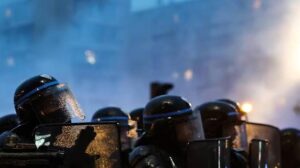
Saturday’s demonstrations formed part of a wider movement against rising living costs and concerns about education and public services.
According to the Interior Ministry, 410,000 people participated in 289 public demonstrations across France. Paris accounted for approximately 110,000 participants, according to the government’s figures. The CGT trade union, however, estimated nationwide participation at around 800,000, illustrating the difference between official and organiser estimates.
The demonstrations took place in several major cities, including Paris, Marseille, Lyon, Bordeaux, Lille, Nantes and Toulouse.
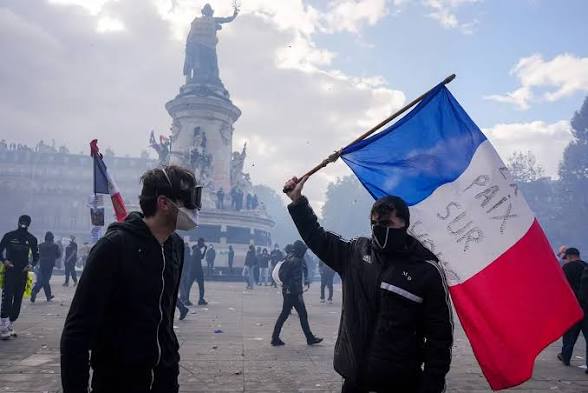
Many participants marched peacefully to express their concerns. However, confrontations occurred in some locations, particularly as demonstrations ended and crowds began dispersing.
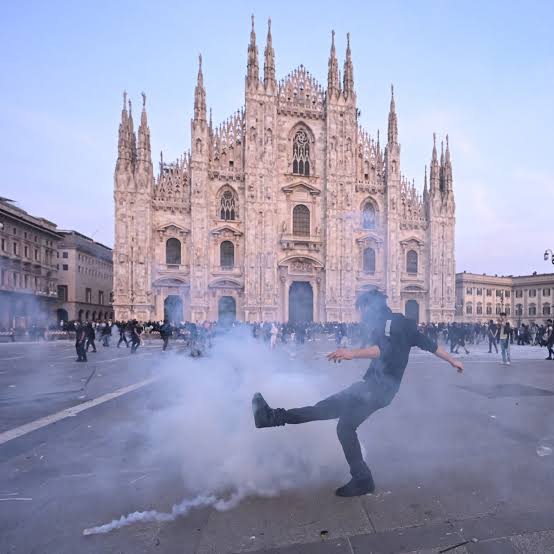
Police used tear gas, batons and water cannons in some areas to disperse groups involved in clashes. Reports also described projectiles being thrown at officers and fires being started during confrontations.
These incidents prompted additional police interventions and arrests.
Why Did the Demonstrations Turn Violent?
The immediate causes of the unrest vary by location. However, authorities have pointed to groups that they say attempted to provoke violence, attack security personnel or damage property.
Interior Minister Laurent Nuñez described the violence as particularly serious. Officials said that advance security checks and the positioning of police units helped prevent many planned acts of vandalism.
Nevertheless, the events demonstrated the difficulty of separating peaceful demonstrators from individuals involved in criminal acts when large crowds gather in busy urban areas.
It is important to distinguish between participation in a demonstration and involvement in violence. An arrest does not, by itself, establish guilt, and the reported arrest total should not be interpreted as the number of people convicted of offences.
French Protest Arrests: The Latest Numbers Explained
The official figures reveal both the scale of the security operation and the difference between the latest demonstrations and the previous weekend’s unrest.
Indicator | October 24 demonstrations |
|---|---|
Nationwide arrests | 1,314 |
Public demonstrations | 289 |
Official nationwide turnout | 410,000 |
Official turnout in Paris | 110,000 |
Security personnel injured | 53 |
Fire-related interventions | 75 |
Shops looted | 24 |
Source: French Interior Ministry, October 25, 2026. Figures were provisional at the time of publication.
The figures show that the demonstrations remained a major public-order challenge, even though the reported damage was lower than during the previous weekend.
On October 17, authorities reported 2,628 arrests, 1,144 injured security personnel, 2,025 fire-related interventions and 1,522 businesses affected by damage or looting. The government attributed the lower totals on October 24 partly to stronger preparations and more rapid police intervention.
These comparisons suggest that the security measures had a measurable impact on the immediate consequences of the protests. However, they do not demonstrate that the underlying public grievances have disappeared.
Paris Clashes Bring Fresh Attention to Police Tactics
Paris remained a major focus of the demonstrations, although the main march passed largely peacefully before confrontations developed near its endpoint.
Authorities directed the march towards the southeastern edge of the capital. The route formed part of efforts to manage large crowds and reduce the risk of violence near busy commercial districts.
After the march, clashes broke out as some demonstrators dispersed. Police used tear gas and batons, while water cannons were also reported during the wider response to the unrest.
The scenes raised concerns about the safety of protesters, police officers, nearby residents and business owners.
Tear gas can cause breathing difficulties and temporary eye irritation. Water cannons can also create risks when used against dense crowds. At the same time, officers face potential injuries when individuals throw objects or attack them.
These competing safety concerns have made police crowd-control methods a significant part of the public debate.
Businesses Take Precautions Against Looting
Some Paris businesses boarded up windows or took other precautions ahead of the demonstrations. Cultural institutions also adjusted operations, with reports that major museums closed temporarily during the security measures.
For shopkeepers, the threat of vandalism can create substantial costs even when a business is not directly attacked. Protective materials, lost sales, damaged property and disrupted deliveries can all affect local commerce.
The latest official tally of 24 looted shops was considerably lower than the previous weekend’s reported figure. However, businesses still faced uncertainty as authorities prepared for possible further demonstrations.
The economic effects may extend beyond the immediate damage. Customers can avoid affected areas, employees may struggle to travel to work, and smaller businesses may find it difficult to absorb repair expenses.
Cost of Living and Education Funding Drive Public Anger
The French protest arrests cannot be understood solely through the security response. The demonstrations have also highlighted concerns about household finances, wages and the quality of public services.
Rising living expenses can place sustained pressure on families, especially when wages do not keep pace with essential costs. Fuel, transport, food and housing expenses can reduce the money available for other needs.
For workers, the issue is not simply the overall inflation rate. It is also whether earnings provide enough purchasing power to cover everyday expenses.
Students and education workers have raised separate but related concerns about school funding, staffing and the resources available to educational institutions.
Students Want Stronger Education Support
The movement initially gained momentum around education-related grievances, including concerns about staff shortages and school resources. It subsequently attracted participants with wider economic and social demands.
Students often view education funding as an investment in future employment opportunities. When schools or universities face resource constraints, concerns can emerge about class sizes, access to support and the quality of learning.
Teachers and education unions may also worry about workloads, staffing levels and the ability to provide adequate instruction.
These issues have helped bring students and workers into the same demonstrations, although their individual priorities are not necessarily identical.
Workers Demand Better Wages and Public Services
Trade unions have argued that the concerns driving the demonstrations extend well beyond educational institutions.
Workers are seeking stronger purchasing power, while other participants have raised concerns about public services and government priorities. Firefighters, teachers and other groups have also been drawn into the wider debate.
Reuters reported on October 25 that unions and protest groups were calling for additional demonstrations and a nationwide strike, reflecting their view that the government’s response has not adequately addressed their concerns.
This broader coalition could make the protests more difficult to resolve through a single policy announcement.
Macron’s Government Faces a Difficult Political Test
The unrest presents a significant challenge for President Emmanuel Macron’s government as it attempts to maintain public order while responding to economic and social demands.
The administration faces competing priorities. It must protect residents and businesses from violence, preserve the right to peaceful assembly and address concerns about living standards.
A forceful police response may prevent immediate damage, but it cannot resolve disagreements over wages, education spending or public services. Conversely, negotiations may take time and could fail to satisfy demonstrators who want rapid changes.
Government Finances Limit Possible Responses
France’s strained public finances may restrict the government’s ability to offer costly concessions. Reuters reported that the administration has limited room to respond to demands, while its parliamentary position makes major legislative action more difficult.
Financial assistance, wage measures and increased public spending may help some households, but each option carries budgetary implications.
The government must therefore consider how to balance immediate relief with longer-term fiscal responsibilities.
However, failing to address public concerns also carries risks. Continued demonstrations could disrupt businesses, transport and public services while further weakening confidence in political institutions.
Negotiations May Offer a Way Forward
The government has begun discussions with union and student representatives. Protest leaders have nevertheless argued that the measures proposed so far are insufficient.
Negotiations could provide an opportunity to identify specific problems and develop practical responses.
For example, discussions might examine education staffing, the cost of essential goods, wage pressures and the availability of public services. Any agreement would need clear commitments and a credible implementation timetable to build trust.
Whether negotiations reduce tensions will depend partly on the government’s willingness to respond and the extent to which different protest groups accept the proposals.
Nationwide Security Measures Aim to Prevent More Violence
French authorities deployed approximately 70,000 police officers and other security personnel for the October 24 demonstrations, according to Reuters. The deployment was designed to protect public areas, secure businesses and respond quickly to violent incidents.
Officials said advance planning helped limit damage compared with the previous weekend.
Security operations can involve several measures, including crowd monitoring, route planning, checks for prohibited items and coordination between police units and emergency services.
These preparations can help officers identify risks before they escalate. However, large deployments also require substantial resources and can place pressure on police staffing.
Police unions have warned that maintaining such a high level of deployment for an extended period could be difficult.
The challenge is therefore not only how to manage one weekend of demonstrations, but also how to maintain public safety if protests continue for several weeks.
Peaceful Protest Remains a Central Issue
France has a long tradition of demonstrations and trade union action. Peaceful protest allows citizens to express dissatisfaction, organise collectively and pressure elected officials to reconsider policies.
Violence can undermine those objectives by shifting attention away from the issues that prompted a demonstration.
At the same time, allegations of excessive force or unnecessary restrictions can deepen public distrust. Authorities must therefore ensure that enforcement is proportionate and that alleged misconduct is investigated appropriately.
A sustainable response requires both public safety and respect for lawful political expression.
More French Protests Expected in the Coming Days
The demonstrations may continue as unions and activist groups seek to maintain pressure on the government.
Reuters reported on October 25 that protest groups had called for further demonstrations on October 31, while a nationwide strike was planned for November 5, 2026. The Yellow Vests movement, known for its earlier protests over fuel taxes and purchasing power, has also called for renewed mobilisation.
These plans indicate that the unrest could extend beyond a single weekend.
However, the scale of future participation and the possibility of further clashes remain uncertain. Attendance will depend on public support, union decisions, government negotiations and developments in the coming days.
What Could Happen Next?
Several developments could influence the next phase of the protests.
Further negotiations: Talks with unions and student representatives could help reduce tensions if they produce credible commitments.
Additional demonstrations: Organisers may use the planned rallies to increase pressure for economic and education reforms.
Continued police deployments: Authorities may maintain enhanced security around major events and commercial areas.
Public reaction to arrests: Legal proceedings and scrutiny of police conduct could influence public opinion.
Economic policy decisions: Measures addressing household expenses and public services may shape whether demonstrators continue their campaign.
The coming days will test whether dialogue can ease tensions or whether disagreements will lead to further street mobilisation.
What the French Protest Arrests Mean for the Country
The latest French protest arrests demonstrate the scale of the challenge facing authorities, but the figures tell only part of the story.
The 1,314 arrests reported on October 25 followed a weekend in which hundreds of thousands of people participated in demonstrations. The lower level of reported damage compared with October 17 suggests that enhanced security measures helped contain some of the violence.
Nevertheless, the continued mobilisation points to deeper concerns about household budgets, education and public services.
For the government, the immediate priority is to prevent injuries and protect communities. The longer-term challenge is to address the issues that have encouraged people to take to the streets.
For protest organisers, maintaining public support may depend on demonstrating that peaceful mobilisation can produce meaningful change while distancing their movement from violence.
For residents and businesses, the priority is a return to safe and predictable daily life.
Ultimately, the outcome will depend on more than police numbers or arrest totals. Constructive negotiations, proportionate enforcement and credible economic measures will all play important roles in determining whether France’s latest wave of unrest subsides.
Frequently Asked Questions (FAQs)
1. How many people were arrested during the French protests?
French authorities reported 1,314 arrests following the nationwide demonstrations on October 24, 2026. The Interior Ministry published the figures on October 25 and described the tally as provisional.
2. Why are people protesting in France?
Demonstrators are protesting over the cost of living, wages, education funding and concerns about public services. The movement has brought together students, workers, trade union members and other activists.
3. Which French cities experienced clashes?
Clashes were reported in several cities, including Paris, Marseille, Lyon, Bordeaux, Lille, Nantes and Toulouse. The intensity and circumstances varied by location.
4. How many people participated in the demonstrations?
France’s Interior Ministry estimated that 410,000 people participated nationwide, including 110,000 in Paris. The CGT trade union estimated a higher nationwide turnout of approximately 800,000.
5. Were the French protests peaceful?
Many demonstrations remained peaceful, but some groups became involved in clashes, property damage and other incidents. The authorities reported injuries to 53 security personnel during the October 24 events.
6. Did police use tear gas and water cannons?
Yes. Reports from Paris and other cities described police using tear gas and water cannons during confrontations. Officers also used batons in some incidents as they attempted to disperse crowds.
7. Will more protests take place in France?
Further demonstrations have been called for October 31, 2026, and a nationwide strike is planned for November 5. Participation and the course of these events remain uncertain.
8. What is the French government doing to control the unrest?
Authorities deployed approximately 70,000 security personnel, conducted advance checks and planned demonstration routes. The government has also begun discussions with union and student representatives.
9. Have the protests affected businesses?
Yes. Authorities reported 24 shops looted during the October 24 demonstrations, alongside damage to other businesses. The reported impact was substantially lower than the previous weekend’s figures.
10. What happens after someone is arrested during a protest in France?
An arrest does not automatically mean that a person will be charged or convicted. The next steps depend on the circumstances, the evidence and the applicable legal procedures. Authorities may investigate suspected offences, and courts determine criminal responsibility where cases proceed to trial.
How useful was this post?
Click on a star to rate it!
Average rating 0 / 5. Vote count: 0
No votes so far! Be the first to rate this post.
About the Author

usa5911.com
Administrator
Hi, I’m Gurdeep Singh, a professional content writer from India with over 3 years of experience in the field. I specialize in covering U.S. politics, delivering timely and engaging content tailored specifically for an American audience. Along with my dedicated team, we track and report on all the latest political trends, news, and in-depth analysis shaping the United States today. Our goal is to provide clear, factual, and compelling content that keeps readers informed and engaged with the ever-changing political landscape.