ILHAN OMAR PROBE 30M QUESTION: Jesse Watters Exposes Explosive Net Worth Surge In Federal Investigation
The Ilhan Omar probe has attracted renewed attention following questions about the Minnesota congresswoman’s financial disclosures and the reported value of businesses connected to her husband, Tim Mynett. The controversy intensified after figures in an earlier disclosure appeared to place the couple’s business assets in a range of $6 million to $30 million.
Fox News host Jesse Watters has become one of the prominent conservative media voices discussing the controversy. Meanwhile, President Donald Trump and Republican lawmakers have called for further scrutiny of Omar’s finances.
However, the headline figure requires important context. Omar later amended her financial disclosure, saying the original filing contained an accounting error. The amended figures were substantially lower, making it essential to distinguish between reported business valuations, personal wealth, and verified findings.
The controversy also raises broader questions about congressional financial transparency, the accuracy of public disclosures, and the responsibilities of elected officials. Although scrutiny has intensified, allegations and investigative questions should not be treated as proof of criminal wrongdoing.
What Is the Ilhan Omar Probe About?

The Ilhan Omar probe centers on questions about financial disclosures involving the congresswoman and businesses associated with her husband. The issue became prominent after her 2024 financial disclosure, filed in May 2025, listed estimated values of millions of dollars for two business interests.
According to reporting by Fox News and the Washington Examiner, the disclosed businesses included Rose Lake Capital, a venture capital management company, and eSt Cru Wines, a winery associated with Mynett.
The initial disclosure listed Rose Lake Capital in a value range of approximately $5 million to $25 million. The winery was listed in a range of approximately $1 million to $5 million.
Those figures attracted attention because earlier disclosures had shown substantially lower reported asset values.
However, there is a crucial distinction between the total value of a company and the value of an individual’s ownership stake. A business can have multiple partners, debts, operating expenses, and other financial obligations. Consequently, its overall valuation does not automatically represent the personal wealth of every person connected to it.
The controversy grew as Republican lawmakers sought additional information about the businesses and their finances.
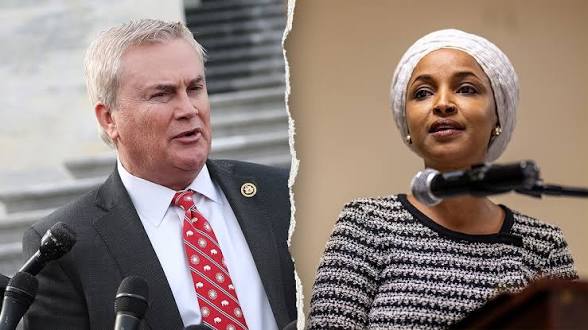
On February 6, 2026, the House Oversight Committee announced that Chairman James Comer had requested financial records from companies linked to Mynett. The committee cited the sharp change in the reported valuations and requested information about the businesses’ finances.
The request intensified public debate over the disclosure. Nevertheless, requesting records is part of an investigative process; it does not, by itself, establish that a crime occurred.
Why the $30 Million Question Became a Political Flashpoint
The reported $30 million figure became a central talking point because it appeared to suggest an extraordinary increase in the couple’s reported business wealth over a relatively short period.
Political commentators questioned how businesses associated with a sitting member of Congress’s spouse could show such a substantial change in estimated value.
President Trump publicly questioned the reported figure in January 2026 and called for an investigation. Republican lawmakers also raised questions about the companies’ ownership structures and financial performance.
Yet the headline number was based on the upper ends of estimated business-value ranges in the original disclosure. It was not a confirmed assessment of Omar’s personal net worth.
This distinction matters for readers trying to understand the controversy.
A company’s valuation can reflect expectations about future earnings, investments, liabilities, and market conditions. It can also be difficult for outsiders to assess when the company is privately held and does not publish detailed financial statements.
Furthermore, a person’s net worth is calculated by subtracting liabilities from assets. The total value of a business cannot simply be added to an individual’s wealth without accounting for their actual ownership percentage and relevant debts.
The $30 million question therefore involves more than a headline figure. It concerns how the assets were valued, how the ownership interests were reported, and whether the original disclosure accurately reflected the couple’s financial position.
Jesse Watters’ Role in the Ilhan Omar Wealth Controversy
Jesse Watters has discussed the controversy on Fox News as questions about Omar’s financial disclosures have drawn national attention.
His program has featured commentary about the reported increase in the value of businesses associated with Mynett. The coverage has also highlighted Republican demands for more information about the companies’ investors, ownership interests, and financial records.
The central question raised by critics is straightforward: how did the reported business valuations change so dramatically in one year?
However, the answer cannot be determined from headline figures alone. Financial records, ownership agreements, liabilities, and supporting documents are needed to establish what the businesses were actually worth and what portion belonged to Mynett.
The controversy also demonstrates the difference between political commentary and official investigative findings. A television host can question a public figure’s finances, but commentary does not establish financial misconduct.
Readers should therefore assess the underlying documents alongside the claims made by politicians and media personalities.
What the Original Financial Disclosure Reported
The original filing attracted attention because it reported dramatically different business-value ranges from those shown in earlier disclosures.
According to the House Oversight Committee’s February 2026 announcement, the reported values of the two companies changed from a combined maximum of approximately $51,000 in 2023 to as much as $30 million in 2024.
The figures related to two businesses:
Rose Lake Capital: A venture capital management company associated with Mynett.
eSt Cru Wines: A winery associated with Mynett and his business partners.
The original disclosure listed Rose Lake Capital at approximately $5 million to $25 million and eSt Cru Wines at approximately $1 million to $5 million.
These ranges raised questions about how the businesses had been valued. Nevertheless, they did not establish that Omar personally owned $30 million in assets.
In addition, privately held businesses can have ownership structures that are difficult to evaluate from public records alone. The proportion owned by each partner and the businesses’ liabilities can significantly affect the value of an individual’s interest.
Consequently, the original disclosure became a subject of scrutiny, while the underlying financial questions remained unresolved.
Ilhan Omar’s Response: An Accounting Error
Omar disputed claims that the original disclosure accurately represented her personal wealth.
Her office said the filing contained errors because it failed to account properly for liabilities associated with her husband’s businesses. The congresswoman subsequently amended the disclosure in April 2026.
According to The Wall Street Journal and CBS Minnesota, the amended filing reduced the reported combined assets to between approximately $18,004 and $95,000, with the businesses listed as having no net value after liabilities were considered.
That revision significantly changed the financial picture presented by the original filing.
Omar’s explanation was that the initial figures had created a misleading impression of the couple’s wealth. Her office also maintained that she had relied on the accountant who prepared the disclosure and had corrected the error.
Critics, however, continued to question the size of the discrepancy and whether the original report had accurately described the business interests.
The distinction is important: a corrected disclosure may address a reporting problem, but investigators can still examine the circumstances surrounding the original figures. Equally, a large discrepancy does not automatically prove deliberate deception.
The investigation must establish what happened, why it happened, and whether any applicable law or reporting requirement was violated.
Federal Investigation Into Omar’s Financial Disclosures
The controversy took a significant turn in October 2026.
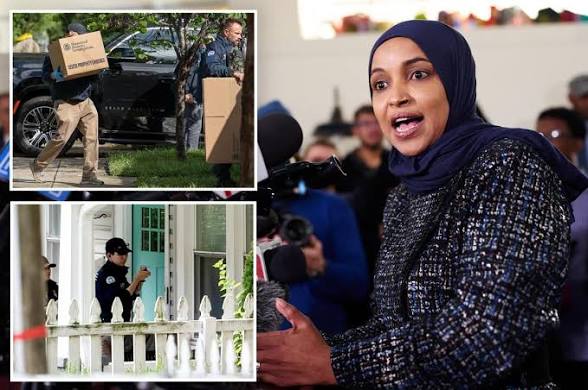
On October 13, Fox News reported that U.S. Attorney Jeanine Pirro had confirmed her office was investigating Omar’s financial disclosures. The announcement came one day after federal agents searched Omar’s Washington, D.C., residence in connection with a separate investigation involving her immigration paperwork.
These developments require careful distinction.
The reported financial investigation concerns the questions surrounding Omar’s disclosures. The search of her residence was reported as part of a separate immigration-related investigation. Available reporting has not established that the two investigations are connected.
The financial inquiry is significant because it brings additional scrutiny to an issue that had already attracted attention from congressional Republicans.
Investigators may seek to establish whether the original disclosure accurately represented the couple’s interests, whether liabilities were properly accounted for, and whether the amended figures resolve the concerns raised.
However, the existence of a federal investigation is not a finding of guilt. Authorities must assess the evidence before determining whether any violation occurred.
As of October 25, 2026, the cited reports do not establish that Omar has been criminally charged over the financial disclosure discrepancy.
Congressional Ethics Review Adds Another Layer
The federal inquiry is not the only official process connected to the controversy.
In September 2026, the Office of Congressional Conduct reportedly recommended that the House Ethics Committee dismiss allegations that Omar had filed false or incomplete financial information in violation of federal law or House rules.
The watchdog’s board voted 5–1 that there was not substantial reason to believe she had committed the alleged reporting violations, according to the Minnesota Star Tribune.
This development is an important part of the story.
It shows that a congressional watchdog reviewed the financial disclosure allegations and recommended dismissal. That finding should be included in any balanced account of the controversy.
At the same time, the reported federal investigation announced in October is a separate matter. The congressional watchdog’s recommendation does not automatically determine the outcome of a distinct federal inquiry.
The two processes have different institutional roles and may examine different evidence.
Therefore, reporting should explain both developments rather than suggesting that either one settles every outstanding question.
Why Rose Lake Capital and eSt Cru Wines Matter
The two businesses are central to the controversy because their reported valuations accounted for most of the assets highlighted in the original disclosure.
Rose Lake Capital
Rose Lake Capital is described in the disclosure as a venture capital management company. Its reported value in the original filing ranged from approximately $5 million to $25 million.
Republican investigators questioned the substantial increase and requested records relating to the company’s finances.
For investigators to evaluate the company’s value, relevant information could include its ownership structure, financial statements, liabilities, investment holdings, and sources of revenue.
The company’s estimated value alone cannot establish how much money any particular partner owns.
eSt Cru Wines
The winery was initially reported in a range of approximately $1 million to $5 million.
The House Oversight Committee raised questions about how the winery’s valuation changed despite concerns about its financial history. Its February request sought records and communications concerning the company’s finances.
The key issue is whether the reported valuation accurately represented the business and the value of Mynett’s ownership interest.
Without sufficient financial documentation, outside observers cannot independently determine the company’s precise value or establish whether any wrongdoing occurred.
What the $30 Million Figure Actually Means
The phrase “$30 million net worth” is attention-grabbing, but it can also be misleading.
The original filing included broad estimated ranges for business interests. Reporting that the upper ends of those ranges added up to $30 million is not the same as proving that Omar had $30 million in personal wealth.
Three concepts need to be separated:
Business valuation: The estimated value of a company.
Ownership interest: The portion of the company owned by a particular person.
Net worth: The value of a person’s assets after subtracting liabilities.
These figures can differ substantially.
For example, a company valued at $10 million might have several owners and significant outstanding debts. An owner’s personal interest could therefore be worth considerably less than the company’s overall valuation.
This is why the amended filing matters. It reportedly accounted for liabilities that had not been properly reflected in the original figures.
The correction does not eliminate every question about the initial filing. Nevertheless, it means that describing Omar as definitively having a $30 million net worth would go beyond what the original disclosure established.
Political Reactions and Public Accountability
The controversy has become part of the broader political conflict between Omar, President Trump, and congressional Republicans.
Critics argue that elected officials should provide clear financial disclosures and explain substantial changes in reported business interests. They contend that transparency is particularly important when a lawmaker’s spouse has business interests that may attract public scrutiny.
Omar and her representatives have rejected allegations of wrongdoing and challenged claims about her wealth.
The dispute has also generated discussion about how financial disclosure rules apply to spouses’ privately held businesses. Because public disclosures use estimated ranges and can involve complicated ownership structures, readers may struggle to understand the figures without additional context.
Still, the underlying principle is straightforward: public officials should comply with applicable disclosure requirements, and legitimate concerns should be examined through evidence-based processes.
The same standard should apply regardless of political party.
A fair assessment requires both accountability and due process. Unsupported accusations should not be treated as established facts, but official questions should not be dismissed without considering the available evidence.
What Happens Next in the Ilhan Omar Probe?
The next stage will depend on what investigators discover and whether they identify evidence of a legal violation.
Several developments could shape the case.
First, investigators may examine the original and amended disclosures alongside financial records from the companies. Those documents could help clarify how the valuations were calculated and how liabilities were handled.
Second, investigators may assess the ownership interests held by Mynett and other partners. This could help determine whether the original disclosure properly represented the value attributable to the couple.
Third, authorities may compare financial documentation with applicable reporting requirements. An error in a disclosure is not necessarily equivalent to intentional misconduct; the circumstances and supporting evidence matter.
Finally, investigators will need to determine whether any further action is warranted.
As of October 25, 2026, the public reporting cited here does not establish a final outcome in the federal financial inquiry.
Readers should watch for official statements, documented findings, amended records, or court filings rather than relying exclusively on political commentary.
Conclusion: The $30 Million Question Remains Under Scrutiny
The Ilhan Omar probe has become a major political controversy because of the dramatic change between the original and amended financial disclosures.
Jesse Watters and other conservative commentators have highlighted the discrepancy, while Republican lawmakers have sought additional records. In October 2026, a federal financial inquiry added another dimension to the dispute.
However, the evidence must be understood in context. The original $30 million figure reflected estimated values associated with businesses linked to Omar’s husband, not a confirmed calculation of Omar’s personal net worth.
Omar later amended her filing, attributing the original discrepancy to accounting errors and omitted liabilities. A congressional watchdog subsequently recommended dismissing allegations related to the financial disclosures, while a separate federal inquiry was reported in October.
The final outcome will depend on the evidence and the conclusions reached by the relevant authorities.
For now, the story remains a significant test of financial transparency, investigative independence, and responsible political reporting.
Frequently Asked Questions (FAQs)
1. Why is Ilhan Omar under investigation over her finances?
In October 2026, U.S. Attorney Jeanine Pirro confirmed that her office was investigating Omar’s financial disclosures. The inquiry follows questions about the reported values of businesses associated with her husband and a substantial revision to an earlier disclosure.
2. Is Ilhan Omar worth $30 million?
The original disclosure listed business interests associated with her husband in ranges that added up to as much as $30 million. However, that was not a confirmed figure for Omar’s personal net worth. She later amended the filing, reporting substantially lower combined asset figures after accounting for liabilities.
3. What did Jesse Watters say about the Ilhan Omar probe?
Jesse Watters has discussed the financial disclosure controversy on Fox News, where the reported increase in business valuations and Republican calls for scrutiny have received attention. His commentary should be distinguished from official investigative findings.
4. Who is Tim Mynett?
Tim Mynett is Ilhan Omar’s husband and a businessman associated with Rose Lake Capital and eSt Cru Wines. The reported valuations of these businesses became central to questions about the couple’s original financial disclosure.
5. Why did Ilhan Omar amend her financial disclosure?
Omar’s office attributed the original filing’s discrepancy to accounting errors and the failure to properly account for liabilities associated with her husband’s businesses. The amended filing substantially reduced the reported combined asset range.
6. Did a congressional ethics watchdog clear Ilhan Omar?
In September 2026, the Office of Congressional Conduct recommended dismissing allegations that Omar had violated financial disclosure rules. Its board concluded that there was not substantial reason to believe she had filed false or incomplete information. A separate federal inquiry was reported in October.
7. Is the $30 million controversy connected to the federal search of Omar’s home?
The October 2026 search of Omar’s Washington, D.C., home was reported as part of a separate investigation involving immigration paperwork. Available reporting has not established a connection between that search and the financial disclosure inquiry.
8. Has Ilhan Omar been charged with a crime over her financial disclosures?
The cited reporting does not establish that Omar has been criminally charged over the financial disclosure discrepancy as of October 25, 2026. An investigation does not itself establish criminal wrongdoing.
9. What are investigators examining in the Ilhan Omar probe?
The reported financial inquiry concerns her financial disclosures and the discrepancy between the original and amended filings. Investigators may examine relevant business records, ownership interests, liabilities, and compliance with applicable reporting requirements.
10. Why is financial disclosure important for members of Congress?
Financial disclosure rules are designed to promote transparency and help identify potential conflicts of interest. Accurate reporting allows the public and oversight bodies to assess lawmakers’ financial interests and evaluate whether the applicable requirements have been followed.
How useful was this post?
Click on a star to rate it!
Average rating 0 / 5. Vote count: 0
No votes so far! Be the first to rate this post.
About the Author

usa5911.com
Administrator
Hi, I’m Gurdeep Singh, a professional content writer from India with over 3 years of experience in the field. I specialize in covering U.S. politics, delivering timely and engaging content tailored specifically for an American audience. Along with my dedicated team, we track and report on all the latest political trends, news, and in-depth analysis shaping the United States today. Our goal is to provide clear, factual, and compelling content that keeps readers informed and engaged with the ever-changing political landscape.