FRENCH POLICE MILITARY SUPPORT: Troops Deployed Nationwide Alongside Armored Vehicles To Contain Riots
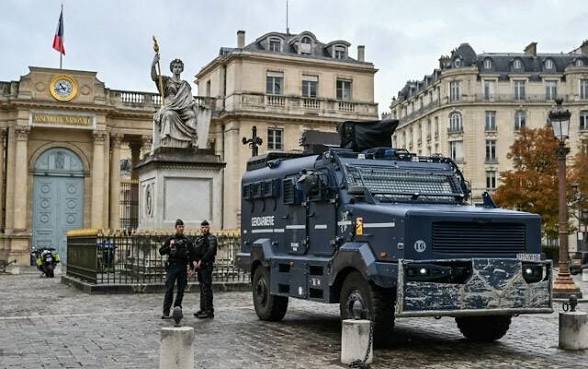
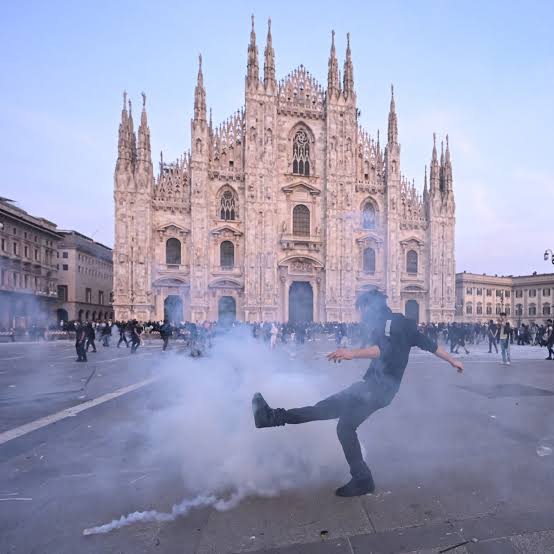
France has launched a major security operation involving police reinforcements, military personnel, armored vehicles, helicopters, and other specialized equipment as authorities seek to prevent another wave of violent unrest. The deployment follows clashes, looting, vandalism, and arson reported during demonstrations across several French cities on October 17, 2026.
The French government’s response marks a significant escalation in its efforts to maintain public order. Prime Minister Sébastien Lecornu and Interior Minister Laurent Nuñez have announced additional security measures ahead of further demonstrations, while officials face questions about policing tactics, restrictions on protests, and the public anger driving the unrest.
On October 24, authorities mobilized approximately 70,000 police officers and gendarmes nationwide. Soldiers from France’s existing Operation Sentinelle security mission also supported the operation by guarding sensitive locations, allowing more police officers to focus on managing demonstrations and responding to violence.
The operation highlights a difficult challenge for France: preventing riots and protecting residents without undermining the right to peaceful protest.
French Police Military Support: What Happened?
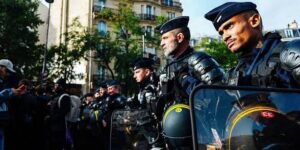
The French government announced military support after the security response to the October 17 unrest came under intense criticism. The authorities acknowledged that they had underestimated the scale of the demonstrations and struggled to respond effectively when violence spread across several cities.
According to reporting by Reuters and Euronews, the government planned a larger operation for the following weekend, combining military support with a substantially increased police presence.
The aim was to prevent another round of widespread looting and destruction while keeping key public locations secure.
The deployment was especially significant because France was preparing for demonstrations involving students, workers, trade unions, and other groups protesting rising living costs and deteriorating public services.
Rather than relying exclusively on conventional riot police, authorities adopted a broader security strategy. It included soldiers guarding sensitive sites, specialist police units responding to disorder, and additional surveillance and crowd-control resources.
However, the presence of military personnel does not mean France has placed the entire country under military control. The announced deployment involved support for civilian security forces, with soldiers assigned to particular protective duties.
Why Has France Deployed Military Personnel?
The decision reflects growing concerns about the ability of ordinary police deployments to protect public spaces during large and unpredictable demonstrations.
1. Preventing a Repeat of the October 17 Riots
The unrest on October 17 raised serious questions about security preparations in several major cities.
Paris, Marseille, Lyon, and other locations experienced violence, vandalism, and looting. Businesses were damaged, public buildings became potential targets, and security officials faced criticism over their response.
Prime Minister Sébastien Lecornu acknowledged shortcomings in the government’s handling of the earlier unrest. Officials also identified problems involving intelligence, the positioning of officers, and staffing decisions.
These failures increased pressure on the government to demonstrate that it could protect residents and businesses during subsequent demonstrations.
Military support became part of that response.
2. Protecting Important Public Buildings
French soldiers assigned to Operation Sentinelle normally help protect locations considered sensitive or strategically important.
These locations can include government buildings, transport hubs, religious sites, schools, and prominent public landmarks.
By assigning soldiers to static guarding duties, authorities can free police officers and gendarmes to handle crowd management, investigate offences, and respond to rapidly developing disturbances.
Interior Minister Laurent Nuñez explained that the military deployment was intended to replace internal security personnel on certain fixed-protection assignments.
This division of responsibilities is important. Soldiers guarding a building do not automatically assume the same duties as officers managing a demonstration.
3. Responding to Mobile Groups and Unpredictable Violence
Authorities have also expressed concern about small groups breaking away from larger demonstrations and engaging in violence.
Officials say such groups can move quickly between streets, damage property, and create confrontations before security units can respond.
The government therefore sought to improve the mobility and responsiveness of its forces. The expanded operation included specialist units, helicopters, drones, and armored vehicles.
The challenge is to distinguish people committing offences from the much larger number of demonstrators exercising their right to protest peacefully.
Armored Vehicles Deployed Alongside French Police
On October 24, police and gendarmes deployed Centaure armored vehicles in Paris and Marseille as authorities prepared for demonstrations. Vehicles were positioned near important locations, while security forces also used water cannon vehicles and other equipment.
These vehicles serve several potential purposes during serious public-order incidents.
Protection: Armored vehicles provide a degree of physical protection for personnel operating in areas where objects may be thrown or vehicles damaged.
Mobility: They can help security teams move through difficult conditions when ordinary vehicles face obstacles.
Public infrastructure protection: Their presence can support operations around government buildings and other sensitive locations.
Operational visibility: A visible security presence may discourage attacks on property, although it does not guarantee that violence will stop.
The deployment also sends a clear message that the government intends to respond more forcefully to organized violence and looting.
However, armored vehicles alone cannot resolve the causes of public unrest. Their effectiveness depends on the wider policing strategy, communication with demonstrators, and the ability to identify and manage specific threats.
70,000 Police Officers and Gendarmes Mobilized Nationwide
One of the most significant elements of the French security operation was the scale of the civilian deployment.
Interior Minister Laurent Nuñez announced that approximately 70,000 police officers and gendarmes would be mobilized across France for the October 24 demonstrations. This was 10,000 more than the number deployed the previous weekend.
The operation combined regular police personnel with specialist security teams and mobile gendarmerie units.
Authorities also prepared additional resources, including helicopters, drones, mounted police, armored vehicles, and water cannon.
The strategy was designed to improve coordination across multiple cities rather than concentrate all available personnel in Paris.
What Did the Security Operation Achieve?
The results reported on October 25 suggested that the expanded deployment helped limit the scale of the disorder, although it did not eliminate clashes.
According to Reuters, the Interior Ministry estimated that approximately 410,000 people participated in demonstrations across France on October 24. Trade unions put the turnout considerably higher.
Authorities reported 1,314 arrests and approximately 50 injured police officers. The previous weekend had seen more than 1,000 officers injured, according to the figures reported by Reuters.
Most demonstrations proceeded without the same level of widespread looting and vandalism seen on October 17. Nevertheless, confrontations occurred in Paris, Marseille, Lyon, and several other cities.
These figures suggest that the reinforced security operation coincided with a reduction in the severity of the unrest. They do not, by themselves, establish that the military deployment alone caused the improvement.
Other factors, including police preparation, protest organization, local restrictions, and decisions made by demonstrators, may also have influenced the outcome.
What Is Operation Sentinelle?
Its primary purpose is to support the protection of sensitive locations and help prevent terrorist attacks. Soldiers have patrolled areas around transport stations, tourist attractions, religious buildings, and other important sites.
According to Euronews, the operation involves thousands of soldiers deployed across France. During the October 2026 demonstrations, the government planned to use military personnel to guard selected locations and release police resources for public-order duties.
This distinction is essential to understanding the current deployment.
The military is not replacing every police officer or automatically taking charge of every protest. Instead, soldiers provide support within the responsibilities assigned to them, while civilian security forces remain central to managing demonstrations.
The arrangement allows the government to use existing military resources without creating an entirely new force for the protests.
Why Are Protests Spreading Across France?
The demonstrations are linked to a combination of economic, educational, and social grievances.
What began with student protests over school conditions expanded into a broader movement involving workers, trade unions, and people concerned about the cost of living and public services.
Rising Living Costs and Economic Pressure
Rising living costs have become a major source of public frustration.
Many protesters argue that wages and household finances are under pressure while essential expenses remain difficult to manage. Workers and unions have also raised concerns about wages, pensions, government spending, and the quality of public services.
These grievances have broadened the demonstrations beyond their original student-led focus.
Reuters reported on October 25 that trade unions and protest groups were calling for further demonstrations on October 31 and a nationwide strike on November 5.
The planned actions indicate that the unrest may continue even if police successfully prevent another large wave of property destruction.
Education and Public Services
Education has also played an important role in the protests.
Students initially raised concerns about school conditions, including staff shortages and inadequate facilities. Those complaints subsequently became part of a wider debate about public spending and the government’s priorities.
Teachers, students, and workers have joined demonstrations for different reasons. However, many share concerns about the accessibility and quality of public services.
This diversity of demands makes the situation more complicated for the government because a security response cannot address every underlying grievance.
Anger Over Government Policy
The demonstrations have also become a wider expression of dissatisfaction with the government of President Emmanuel Macron.
Some protesters argue that authorities have failed to respond adequately to economic hardship and inequality. Others object to restrictions on demonstrations and the use of force by police.
The government, meanwhile, has stressed the need to prevent violence, protect businesses, and maintain public order.
These competing positions have made negotiations more difficult. Although the government has begun discussions with student representatives and unions, protest leaders have said that the measures proposed so far are insufficient.
France Faces Criticism Over Protest Restrictions
The deployment of troops and armored vehicles is only one part of the government’s response. Authorities have also restricted or banned some demonstrations in specific locations.
Officials argue that these measures are necessary when organizers, routes, or intelligence assessments indicate a serious risk of disorder.
For example, authorities changed the planned route of a major Paris demonstration before the October 24 rallies. Restrictions were also imposed in several other cities.
However, the decisions have attracted criticism from unions, student groups, and civil liberties advocates.
Critics argue that restrictions can prevent peaceful demonstrators from making their views heard. Last-minute changes may also create confusion for organizers and participants.
Human rights concerns extend to the use of crowd-control weapons. The Associated Press reported that recent protests had left several teenagers with severe injuries, intensifying scrutiny of French policing tactics.
The government therefore faces two responsibilities: protecting people from violence and ensuring that security measures remain proportionate.
A successful strategy must account for both.
How the Military Deployment Could Affect Daily Life
The expanded security operation has consequences beyond the streets where demonstrations take place.
Transport and Public Access
Security operations can lead to temporary road closures, changes to public transport, and restrictions around major landmarks.
During the October 24 demonstrations, more than 20 Paris metro stations were reported closed, while several prominent cultural institutions shut their doors as a precaution.
Residents and visitors may therefore face delays even when their journeys have nothing to do with the demonstrations.
People planning to travel through affected areas should check official transport updates and local announcements.
Businesses and Retailers
Shops and restaurants have also been affected by the unrest.
Following the previous weekend’s looting and property damage, some businesses boarded up storefronts or temporarily closed. The uncertainty surrounding demonstrations has made normal trading more difficult in some locations.
For small businesses, the consequences can include lost sales, repair costs, and concerns about employee safety.
A sustained return to normal conditions will depend on both public security and confidence that shops can operate without repeated disruption.
Residents and Families
For residents, the main concerns include personal safety, access to essential services, and the possibility of sudden restrictions.
Military patrols and additional police may reassure some people, particularly those living near sensitive locations. Others may feel uncomfortable seeing armed personnel and armored vehicles in public spaces.
Authorities must communicate clearly about where restrictions apply, how long they will remain in force, and which services are affected.
What Happens Next in France?
The security operation has reduced the immediate risk of a repeat of the previous weekend’s widespread destruction, but the wider dispute remains unresolved.
On October 25, unions and protest organizations called for further action, including demonstrations on October 31 and a nationwide strike on November 5.
The government must now balance public safety with pressure to address economic and social concerns.
Several developments will be important in the coming days.
Further security deployments: Authorities may continue reinforcing police operations if new demonstrations create serious risks.
Negotiations with unions: Discussions over wages, public services, education, and living costs could influence future turnout.
Legal scrutiny: Protest restrictions and the use of crowd-control weapons may remain subjects of public and legal debate.
Business recovery: Shops and cultural institutions will need greater confidence in public safety before normal activity can fully resume in affected areas.
Political pressure: Continued demonstrations could increase pressure on the government to provide a clearer response to public grievances.
The government’s challenge is not simply to place more officers on the streets. It must also demonstrate that its response can protect residents while allowing peaceful demonstrations to take place.
Conclusion
France’s decision to combine military support with reinforced police deployments and armored vehicles represents a major effort to contain unrest following the violence of October 17, 2026.
The October 24 operation mobilized approximately 70,000 police officers and gendarmes, while soldiers from Operation Sentinelle helped protect sensitive locations. Although clashes continued in several cities, the authorities reported fewer injured officers and a lower level of widespread destruction than the previous weekend.
However, the deployment has not resolved the issues behind the demonstrations.
Rising living costs, concerns about education and public services, and disputes over government policy continue to drive public anger. Further demonstrations and a planned nationwide strike mean that France’s response will remain under scrutiny.
Ultimately, lasting stability will require more than armored vehicles and additional personnel. It will also depend on constructive dialogue, effective policing, protection of civil liberties, and meaningful efforts to address the concerns of demonstrators.
SEO Details
SEO title
French Police Military Support: Troops and Armored Vehicles Deployed
Focus keyphrase
French police military support
Meta description
French police military support expands as troops and armored vehicles help protect key sites and contain unrest amid nationwide protests.
Length: 130 characters
Slug
french-police-military-support-troops-armored-vehicles
Related keyphrases
French military deployment
France riots October 2026
French police armored vehicles
Operation Sentinelle France
Nationwide protests in France
Frequently Asked Questions (FAQs)
1. Why has France deployed military personnel to support police?
France announced military support to help protect sensitive locations and free police officers and gendarmes to manage demonstrations and respond to public-order incidents.
2. How many police officers were deployed across France?
Approximately 70,000 police officers and gendarmes were mobilized for the October 24, 2026, demonstrations, according to the French Interior Ministry’s figures reported by Reuters.
3. Which military operation is supporting French security forces?
The military support comes from Operation Sentinelle, an existing French security mission established in 2015 to help protect sensitive locations against terrorist threats.
4. Where have armored vehicles been deployed?
Centaure armored vehicles were deployed in Paris and Marseille on October 24 as part of preparations for demonstrations. Other cities also experienced reinforced security measures.
5. What caused the recent riots in France?
The unrest followed protests over school conditions and broadened into demonstrations over rising living costs, wages, inequality, and public services. Violence and looting occurred alongside the wider protest movement.
6. Did the military deployment stop all violence?
No. Although the October 24 security operation coincided with less widespread destruction than the previous weekend, clashes still occurred in Paris, Marseille, Lyon, and other cities.
7. Are peaceful protests banned across France?
No blanket nationwide ban was reported. Authorities restricted or prohibited demonstrations in certain locations, while other marches were permitted. Rules varied by city and event.
8. Will protests continue in France?
Further demonstrations have been called for October 31, 2026, and unions have also called for a nationwide strike on November 5. The scale of participation and the government’s response remain uncertain.
9. What is the role of armored vehicles during riots?
Armored vehicles can help protect security personnel and support operations in dangerous areas. They do not replace the need for trained officers, careful crowd management, and proportionate responses to threats.
10. What happens next in the French unrest?
The next phase will depend on negotiations with unions and student groups, future demonstrations, and whether the government can address public concerns while maintaining public safety.
How useful was this post?
Click on a star to rate it!
Average rating 0 / 5. Vote count: 0
No votes so far! Be the first to rate this post.
About the Author

usa5911.com
Administrator
Hi, I’m Gurdeep Singh, a professional content writer from India with over 3 years of experience in the field. I specialize in covering U.S. politics, delivering timely and engaging content tailored specifically for an American audience. Along with my dedicated team, we track and report on all the latest political trends, news, and in-depth analysis shaping the United States today. Our goal is to provide clear, factual, and compelling content that keeps readers informed and engaged with the ever-changing political landscape.