ENES KANTER FREEDOM SLAMS: Activist Athlete Calls Global Corporate Complicity And Human Rights Abuses ‘Unacceptable’
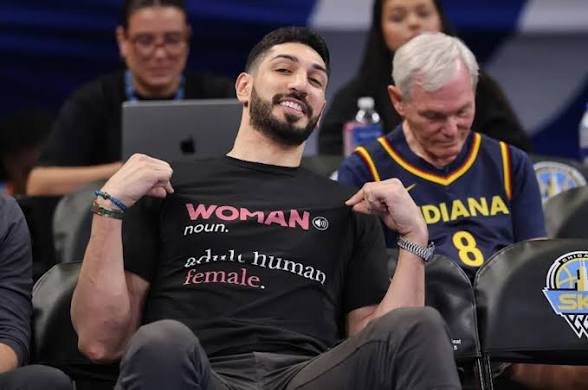
His activism has focused particularly on allegations of human rights abuses in China, including the treatment of Uyghur Muslims, restrictions on Tibetan rights and pressure on people who criticize government authorities. Freedom has also questioned whether major corporations and sports organizations apply their public commitments to human rights consistently when valuable international markets are involved.
The debate gained renewed attention in August 2025, when an investigation by The Guardian and the Bureau of Investigative Journalism examined links between major sportswear supply chains and allegations of forced labour connected to China’s Xinjiang region. The reporting placed questions about corporate accountability and sporting partnerships back in the spotlight.
Although the headline frames Freedom’s message as a condemnation of corporate complicity, the wider issue involves a complex set of questions: What responsibilities do multinational companies have when their supply chains face human rights allegations? Should sports organizations reconsider lucrative partnerships? And how can businesses demonstrate that their commitments to ethical conduct are more than public statements?
Freedom’s position is that financial interests should never outweigh basic human dignity. His critics and the companies involved may dispute aspects of his arguments, but the underlying debate continues to attract attention from journalists, policymakers, consumers and human rights advocates.
Who Is Enes Kanter Freedom?

Enes Kanter Freedom is a Swiss-born, Turkish-raised former professional basketball player who later became a United States citizen. He played 11 seasons in the NBA and became known beyond basketball for his criticism of political authorities and his advocacy for freedom of expression.
Freedom initially drew widespread attention for criticizing the Turkish government. His activism later expanded to China’s treatment of Uyghurs, Tibetans and other communities whose rights have been the subject of international concern.
In 2021, after becoming a U.S. citizen, he added “Freedom” to his name. That same period saw him use basketball shoes and public statements to highlight human rights issues, including messages supporting Tibetans and Uyghurs.
His approach has been direct. Rather than limiting his advocacy to speeches and interviews, he has used the visibility of professional basketball to draw attention to political issues.
That strategy has helped him reach audiences who might not otherwise follow human rights investigations or international policy debates. It has also brought him into conflict with powerful institutions and prompted questions about the risks athletes face when they challenge commercial interests.
For Freedom, the central argument is that athletes should not have to abandon their principles to protect sponsorships, television revenue or access to international markets.
Enes Kanter Freedom Slams Corporate Complicity in Human Rights Abuses

Freedom’s criticism centers on what he considers a troubling contradiction: companies often promote social responsibility while maintaining commercial relationships that critics say deserve closer scrutiny.
In his view, businesses should apply the same ethical standards across every market. They should not speak confidently about freedom and equality in one country while remaining silent about alleged abuses elsewhere.
His argument is particularly relevant to multinational corporations operating in regions where human rights concerns intersect with manufacturing, labour recruitment and government policy.
Freedom has challenged sportswear manufacturers, professional leagues and prominent athletes to examine these relationships. He argues that the influence of global brands creates an opportunity to demand stronger protections for workers and vulnerable communities.
However, accusations of corporate complicity require careful examination. A company’s presence in a country does not automatically establish that it has committed or knowingly supported human rights abuses. Investigators must examine the evidence, the company’s actual business relationships and the steps it has taken to address risks.
That distinction matters because meaningful accountability depends on reliable evidence, transparent investigations and clear standards.
Why Corporate Accountability Matters
Large companies influence working conditions through purchasing agreements, supplier requirements and decisions about where they manufacture their products.
When credible allegations of forced labour emerge, businesses have several responsibilities to consider. These include investigating their supply chains, identifying potentially affected workers and taking effective action to prevent exploitation.
Corporate accountability also extends beyond the factory floor. Advertising campaigns, sporting sponsorships and celebrity partnerships can strengthen a company’s public reputation. If credible allegations remain unresolved, those same partnerships may attract public criticism.
Freedom’s activism asks companies to consider whether their business practices match the values they advertise.
The question is not simply whether a company has published a human rights policy. It is whether that policy produces measurable results.
For consumers, this means looking beyond slogans and promotional campaigns. Independent audits, transparent supplier information and credible remediation measures can provide a clearer picture of how a company responds to labour concerns.
China, Uyghur Rights and the Global Supply Chain Debate
One of the central issues in Freedom’s activism is the treatment of Uyghurs and other ethnic minorities in China’s Xinjiang region.
Human rights organizations, researchers and several governments have raised concerns about detention, restrictions on religious and cultural practices, and labour-transfer programmes involving Uyghur workers. Chinese authorities reject many allegations of systematic abuse and have defended their policies in Xinjiang as measures intended to promote security, development and employment.
The disagreement has created significant challenges for companies that manufacture products in China or rely on complex supplier networks.
A product may pass through multiple factories and subcontractors before reaching a retailer. As a result, companies can struggle to establish the origin of every material and the circumstances under which every worker was employed.
That complexity, however, does not remove the need for due diligence.
What Investigations Have Found
A joint investigation published by The Guardian and the Bureau of Investigative Journalism on August 30, 2025, reported links between facilities associated with sportswear brands Li-Ning, Anta and 361 Degrees and labour-transfer programmes involving Uyghur workers. The investigation also examined allegations involving Nike’s wider supply chain.
The report raised questions about the use of transferred workers, conditions inside factories and the effectiveness of corporate oversight.
It is important to distinguish the investigation’s findings from a blanket legal conclusion that every named company knowingly used forced labour. The report documented alleged links and evidence that companies disputed or addressed in different ways.
According to the reporting, Li-Ning said it prohibited forced labour and conducted supplier audits. Nike disputed aspects of the evidence and said it had ended its relationship with the implicated Fujian factory in 2015. Anta and 361 Degrees did not respond to the investigators’ requests for comment at the time.
These responses illustrate why independent verification matters. Corporate statements, investigative findings and workers’ accounts all need to be evaluated carefully.
For Freedom, the larger issue is whether businesses are doing enough to identify risks and protect workers. He has argued that brands should not rely on public commitments alone when credible evidence raises questions about their suppliers.
Why Supply Chain Transparency Is Essential
Supply chain transparency allows consumers, regulators and investors to assess whether businesses are meeting their responsibilities.
Companies can improve oversight by publishing supplier lists, conducting independent inspections and investigating allegations promptly. They can also establish confidential complaint systems so workers can report mistreatment without fear of retaliation.
Effective monitoring should examine more than paperwork. It should assess whether workers can leave employment freely, receive fair compensation and work without coercion.
Independent verification is especially important when workers may face pressure to provide positive accounts of their working conditions.
Freedom’s campaign highlights the need for businesses to treat these safeguards as essential parts of responsible operations rather than optional public-relations measures.
The NBA Controversy: When Sports Meets Politics
Freedom’s human rights campaign became particularly visible during his final NBA season in 2021–22.
While playing for the Boston Celtics, he wore shoes displaying messages supporting Tibetans and Uyghurs. He also criticized the Chinese government and questioned the business relationships between major sports organizations and Chinese companies.
His actions attracted international attention because the NBA has a large audience in China and commercial interests in the country.
In January 2022, Freedom urged athletes to put principles ahead of financial incentives and called for a boycott of the Beijing Winter Olympics. He argued that athletes and celebrities should use their influence to draw attention to alleged human rights abuses.
The campaign placed the league in a difficult position. Sports organizations operate internationally, depend on commercial partnerships and must navigate different political environments. At the same time, their players have their own views and interests in speaking about public issues.
Did His Activism End His NBA Career?
Freedom has repeatedly argued that his criticism of China and major commercial interests contributed to the end of his professional basketball career.
His final NBA season was 2021–22. He was traded from Boston to Houston in February 2023 and subsequently waived.
Investigative reporting in 2025 revisited the controversy and described Freedom’s view that his activism had made him unwelcome in the league. The NBA, however, has said it supports members of its community expressing personal views on social and political issues. The available reporting does not independently establish that his activism was the sole reason his NBA career ended.
That distinction is important. Freedom’s account explains how he interprets the events, but professional sports careers can end for several reasons, including performance, team decisions and contract circumstances.
Nevertheless, the controversy raises a broader question about the practical limits of athlete activism.
If athletes can express opinions on certain issues but risk losing opportunities when their statements threaten commercial relationships, observers may question how consistently sports organizations protect freedom of expression.
A Debate Beyond Basketball
The controversy is not limited to the NBA.
International sporting events rely on sponsorship agreements, broadcasting deals, merchandising and partnerships with governments and private companies. These relationships can bring investment and global attention, but they can also create pressure when serious human rights concerns arise.
In 2023, the bipartisan Congressional-Executive Commission on China held a hearing on corporate complicity and alleged human rights abuses. Freedom testified about his experiences and concerns involving the NBA, China and the freedom of athletes to speak publicly. The commission subsequently raised questions about forced-labour risks and freedom of expression in letters to the NBA and the National Basketball Players Association.
The hearing demonstrated that questions about corporate responsibility in sport had moved beyond social media debates and into formal policy discussions.
Why Global Companies Face Pressure Over Human Rights
Global companies face growing expectations to understand the social consequences of their operations.
Consumers increasingly ask where products are made, who makes them and whether workers receive fair treatment. Investors may also consider human rights risks when assessing a company’s long-term stability and reputation.
When a brand is associated with serious allegations, the potential consequences can extend across several areas.
1. Consumer Trust
Consumers may reconsider purchases when credible evidence suggests a brand has failed to address worker exploitation.
Public criticism can spread quickly through social media, news coverage and advocacy campaigns. Companies that respond slowly or provide vague explanations may struggle to rebuild confidence.
Transparent communication can help, but it must be supported by verifiable action.
2. Legal and Regulatory Risks
Governments have introduced or strengthened rules addressing forced labour and supply chain accountability.
Depending on the jurisdiction, businesses may face import restrictions, disclosure obligations, investigations or other penalties if they fail to meet applicable requirements.
Companies therefore have practical reasons to identify labour risks early. Strong due diligence can reduce exposure to legal disputes and disruptions.
3. Investor Confidence
Investors increasingly consider governance, supply chain resilience and reputational exposure when evaluating businesses.
Allegations of labour abuse may lead to questions about management oversight, compliance procedures and the reliability of corporate disclosures.
A company that can demonstrate credible monitoring and remediation may be better positioned to address these concerns.
4. Sponsorship and Brand Reputation
Sporting partnerships provide companies with visibility and opportunities to reach global audiences.
However, sponsorship can also attract criticism if a partner is connected to credible human rights allegations. Sports teams, event organizers and athletes may face pressure to explain their decisions.
Freedom’s activism challenges organizations to consider whether commercial benefits justify the reputational risks of ignoring such concerns.
The Meaning of ‘Unacceptable’ in the Corporate Human Rights Debate
The word unacceptable captures the moral position behind Freedom’s campaign: economic success should not come at the expense of basic human dignity.
That argument has particular force when the alleged conduct involves coercion, restrictions on personal freedom or the exploitation of vulnerable workers.
Yet turning a moral position into effective policy requires clear standards and reliable evidence.
Businesses need to know what constitutes a serious violation, how to investigate complaints and what corrective action is expected. Regulators must apply the law consistently, while independent organizations need the freedom to document working conditions.
There is also an important distinction between ending a business relationship and improving conditions for workers.
If a company simply abandons a supplier without considering the consequences, workers could lose their income without receiving compensation or protection. Responsible disengagement should therefore consider worker welfare, remediation and the risk that harmful practices will continue elsewhere.
For Freedom and other human rights advocates, the ultimate goal is not merely to damage a company’s reputation. It is to encourage meaningful changes that protect people.
What Should Companies Do to Address Human Rights Concerns?
Corporate leaders can take several practical steps to strengthen human rights protections. These measures also help companies demonstrate that their public commitments are supported by real action.
Conduct Independent Supply Chain Audits
Businesses should examine their suppliers and subcontractors regularly. Independent audits can help identify warning signs, including coercive recruitment, restrictions on worker movement and unsafe working conditions.
However, audits should not rely exclusively on documents provided by factory management. Investigators should also speak with workers confidentially and examine whether complaints lead to corrective action.
Publish Clear Supplier Information
Companies can improve accountability by identifying their manufacturing partners and explaining how they monitor labour standards.
Greater transparency allows journalists, regulators and civil society organizations to investigate concerns more effectively. It also makes it easier for companies to demonstrate that they have addressed identified risks.
Protect Workers Who Report Abuse
Workers need safe channels to report exploitation. Companies should provide confidential complaint mechanisms and protect individuals from retaliation.
Where violations are identified, businesses should work toward appropriate remedies. These may include recovering unpaid wages, improving working conditions and ensuring that workers can leave employment freely.
Make Sponsorship Decisions More Carefully
Sports organizations and sponsors should assess human rights risks before entering major partnerships.
They should establish clear contractual standards and procedures for responding to credible allegations. If a partner fails to address serious violations, organizations should consider proportionate consequences, including suspension or termination of the agreement.
These measures would help turn corporate responsibility from a marketing promise into a measurable commitment.
The Role of Consumers and Athletes
Freedom’s campaign also highlights the influence of ordinary consumers and professional athletes.
Consumers can research brands, read independent investigations and ask companies for information about their manufacturing practices. They can also support businesses that provide credible evidence of responsible sourcing.
Athletes, meanwhile, have access to audiences that may be difficult for traditional advocacy organizations to reach.
Their influence can help bring attention to overlooked issues, encourage public discussion and prompt companies to respond to questions about their operations.
However, athletes should also distinguish between documented findings and unverified claims. Accurate information makes advocacy more credible and helps audiences understand the difference between allegations, corporate responses and established facts.
Freedom’s career illustrates both the potential influence and the personal controversy associated with speaking publicly about powerful institutions.
His approach will not persuade everyone. Nevertheless, his campaign has helped keep corporate accountability and human rights on the agenda in professional sports.
What Happens Next in the Corporate Accountability Debate?
The debate over corporate complicity is likely to remain relevant as businesses continue to operate across international markets.
Supply chains are increasingly complex, while governments and consumers demand greater transparency. Companies must balance commercial objectives with legal obligations and the responsibility to identify and address human rights risks.
For sports organizations, the challenge is especially visible. Their global reach creates valuable commercial opportunities, but those same relationships can expose them to difficult ethical questions.
The reporting published in 2025 about sportswear supply chains demonstrated that concerns about labour practices can remain relevant long after an athlete first raises them.
Freedom’s message is that financial incentives should not determine which human rights issues receive attention.
Whether companies agree with his broader criticism or not, the questions he raises are concrete: Are suppliers being monitored effectively? Are workers protected? Are allegations investigated independently? And do public commitments result in meaningful improvements?
The answers will help determine whether corporate responsibility becomes a practical standard or remains largely a public-relations exercise.
Conclusion
Enes Kanter Freedom’s criticism of global corporate complicity highlights the difficult relationship between business, professional sports and human rights.
His campaign has focused on alleged abuses affecting Uyghurs and other communities, the responsibilities of multinational brands and the pressures that commercial relationships can place on public expression.
Investigations into sportswear supply chains, congressional discussions and the continuing debate over athlete activism demonstrate why these issues deserve careful attention. At the same time, allegations must be assessed fairly, and companies should have an opportunity to respond to specific findings.
Ultimately, responsible business requires more than statements supporting freedom and equality. It requires transparent supply chains, credible oversight, protection for workers and effective action when violations occur.
Freedom’s central message remains straightforward: commercial success should never become an excuse to ignore human rights.
SEO Details
SEO title
Enes Kanter Freedom Slams Corporate Complicity in Human Rights Abuses
Focus keyphrase
Enes Kanter Freedom slams corporate complicity
Meta description
Enes Kanter Freedom criticizes corporate complicity in alleged human rights abuses, raising questions about global brands, forced labour and sports.
URL slug
enes-kanter-freedom-corporate-complicity-human-rights
Related focus keywords
Enes Kanter Freedom human rights
corporate complicity in human rights abuses
Uyghur forced labour allegations
global sports brands accountability
NBA China controversy
Frequently Asked Questions (FAQs)
1. Who is Enes Kanter Freedom?
Enes Kanter Freedom is a former NBA basketball player and human rights activist known for criticizing the Turkish government and raising concerns about China’s treatment of Uyghurs, Tibetans and other communities.
2. Why does Enes Kanter Freedom criticize global corporations?
He argues that some companies prioritize profits and access to lucrative markets over human rights. He has called for greater transparency and accountability regarding alleged abuses in corporate supply chains.
3. What is the connection between sportswear brands and alleged forced labour in China?
Investigations published in 2025 reported links between facilities associated with several sportswear brands and labour-transfer programmes involving Uyghur workers. The companies’ responses varied, and some disputed aspects of the reporting.
4. Did Enes Kanter Freedom criticize the NBA?
Yes. Freedom criticized the NBA over its commercial relationships with China and argued that financial interests could discourage outspoken criticism of human rights abuses. The league has stated that it supports members expressing personal views on social and political issues.
5. Did Enes Kanter Freedom’s activism end his basketball career?
Freedom believes his activism contributed to the end of his NBA career. His final NBA season was 2021–22, but publicly available reporting does not establish that his political activism was the sole reason he did not continue playing in the league.
6. What does corporate complicity mean?
Corporate complicity generally refers to a company’s involvement in, contribution to or knowing support for wrongdoing. The precise meaning depends on the circumstances and applicable law. Operating in a country where abuses are alleged does not automatically establish complicity.
7. How can companies prevent human rights abuses in their supply chains?
Companies can conduct independent audits, disclose supplier information, investigate allegations, protect workers who report abuse and provide appropriate remedies when violations are identified.
8. Why is corporate accountability important in professional sports?
Sports organizations rely on global sponsors, merchandise manufacturers and broadcasting partnerships. Accountability helps protect workers, maintain public trust and ensure that commercial relationships are consistent with stated ethical commitments.
9. What role can consumers play in promoting ethical business practices?
Consumers can research brands, review independent investigations, ask questions about sourcing and support companies that demonstrate transparent and responsible labour practices.
10. What is the main message of Enes Kanter Freedom’s activism?
His central message is that businesses and sports organizations should not allow financial interests to outweigh fundamental human rights. He advocates greater transparency, freedom of expression and stronger corporate accountability.
How useful was this post?
Click on a star to rate it!
Average rating 0 / 5. Vote count: 0
No votes so far! Be the first to rate this post.
About the Author

usa5911.com
Administrator
Hi, I’m Gurdeep Singh, a professional content writer from India with over 3 years of experience in the field. I specialize in covering U.S. politics, delivering timely and engaging content tailored specifically for an American audience. Along with my dedicated team, we track and report on all the latest political trends, news, and in-depth analysis shaping the United States today. Our goal is to provide clear, factual, and compelling content that keeps readers informed and engaged with the ever-changing political landscape.