The controversy surrounding Nvidia’s former chief executive, Jensn Huang, has developed into a major national security issue in Washington. Congressional leaders are demanding answers about his reported relationship with a business executive suspected by US authorities of having links to Chinese intelligence.
The controversy has placed one of America’s most influential technology companies under intense political scrutiny. It has also raised difficult questions about the security of advanced artificial intelligence chips, international business relationships, and America’s ability to prevent sensitive technology from reaching strategic competitors.
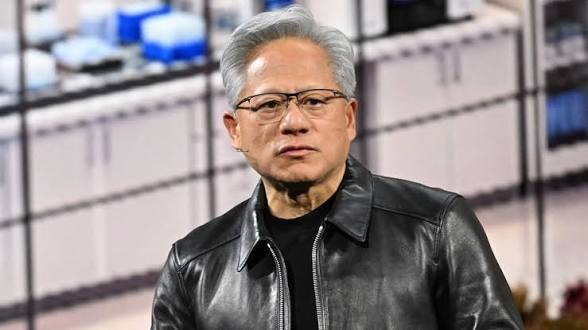
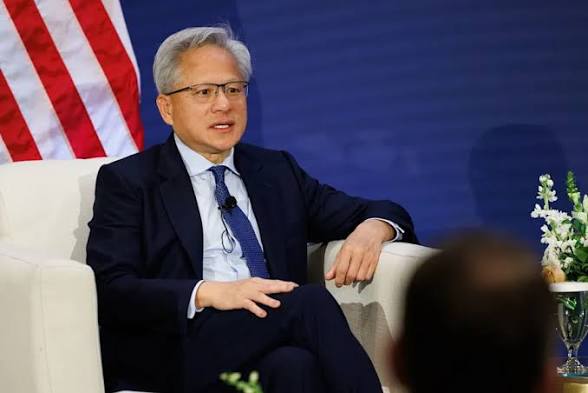
Huang recently stepped down from his leadership position at Nvidia following reports about his personal relationship with Alice Huang, an executive associated with Singapore-based technology company Megaspeed. The company has attracted scrutiny over concerns that Nvidia’s advanced chips may have reached restricted Chinese customers through overseas business arrangements.
However, allegations of espionage have not been established as proven criminal conduct. The questions surrounding the case remain the subject of government scrutiny and congressional oversight.
Republican lawmakers now want Huang to explain what he knew about Megaspeed, his reported relationship with its executive, and Nvidia’s procedures for protecting sensitive technology.
The developing investigation could have consequences far beyond one executive’s departure. It may influence America’s technology export policies, the future of Nvidia’s international business, and Washington’s broader approach to competition with China.
Congress Demands Jensen Huang’s Testimony
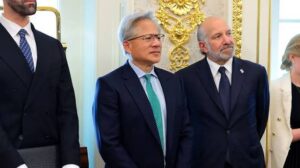
Congressional pressure intensified in November 2026 after reports connected Huang to a suspected Chinese intelligence operation.
According to Reuters reporting published November 5, Republican lawmakers requested a closed-door briefing from Huang. The request came from senior members of the House Foreign Affairs Committee, the House Select Committee on China, and the House Intelligence Committee.
The lawmakers wanted information about Nvidia’s security procedures and Huang’s reported interactions with Alice Huang.
Their concerns focused on whether foreign intelligence interests could have gained access to sensitive American technology or business information through relationships involving Nvidia and Megaspeed.
The pressure increased further on November 12, when three Republican committee chairmen requested a closed-door, transcribed interview with Huang for December 1.
They warned that the House Foreign Affairs Committee could issue a subpoena if Huang refused to cooperate.
Senate Banking Committee Chairman Tim Scott also requested Huang’s voluntary appearance before his committee in early December. The Senate request reportedly identified December 3 as the proposed date.
These developments demonstrate that lawmakers want direct explanations rather than relying exclusively on company statements.
The investigation also extends beyond Huang personally. Nvidia General Counsel Tim Teter has been asked to participate in a separate closed-door interview scheduled for December 2.
Lawmakers want to examine whether Nvidia properly monitored its customers and whether the company responded appropriately to potential violations of US export restrictions.
The congressional requests do not establish wrongdoing. Instead, they represent an effort to determine whether existing safeguards adequately protected American technology.
ABC News+3
What Is the Alleged Chinese Spy Scandal?
At the centre of the controversy is Alice Huang, a technology executive associated with Megaspeed, a Singapore-based company that purchased advanced Nvidia AI chips.
US authorities reportedly suspect that Alice Huang had connections to Chinese intelligence. Investigators have also examined whether Megaspeed helped restricted Chinese customers obtain access to advanced American semiconductor technology.
These allegations have attracted attention because Nvidia produces some of the world’s most powerful artificial intelligence processors.
Such chips are essential for training sophisticated AI systems, operating large data centres, conducting advanced computing research, and supporting applications with potential military uses.
Consequently, access to these processors is considered a significant national security issue.
The reported relationship between Jensen Huang and Alice Huang has created additional concerns about possible exposure to sensitive business information.
According to published reports, Huang acknowledged having an affair but did not publicly identify the person involved. His personal relationship became a major issue after reports connected Alice Huang to the wider investigation.
Importantly, an alleged intelligence connection does not automatically establish that espionage occurred or that Huang knowingly shared confidential information.
Investigators must establish what information was accessed, whether it was transferred, who received it, and whether any laws were violated.
The distinction between suspicion and proven wrongdoing will be important as congressional scrutiny develops.
Why Megaspeed Has Become Central to the Investigation
Megaspeed is important because of its position in the international AI computing market.
The company operates in the data centre and cloud computing sector, where customers can access powerful processors remotely instead of purchasing and physically operating their own hardware.
This business model has legitimate uses. Companies around the world rent computing capacity to train AI models, develop software, and conduct research.
However, it can also create challenges for export-control enforcement.
US restrictions are designed to prevent certain advanced semiconductor technologies from reaching Chinese organisations that could use them for military or other restricted purposes.
A company outside China may legally purchase hardware under applicable licensing rules. Yet authorities may still investigate whether that hardware is subsequently diverted to prohibited customers.
Remote cloud access creates another complicated question.
Even when a physical chip remains outside China, a restricted Chinese organisation might potentially access its computing power through an overseas cloud provider.
That possibility has become an important part of Washington’s debate over semiconductor security.
Reports have indicated that Megaspeed attracted attention from American and Singaporean authorities over suspected chip diversion.
Megaspeed has denied allegations of wrongdoing, according to published reporting.
Nvidia has also said that it ended its business relationship with Megaspeed in June 2025 and prevented the company from receiving further shipments or placing new orders.
These developments make Megaspeed a central part of the questions facing Congress: Did Nvidia identify potential risks early enough, and were the company’s safeguards effective?
Investing.com+2
Nvidia’s Advanced AI Chips and US National Security
The controversy is particularly sensitive because Nvidia occupies a central position in the global artificial intelligence industry.
Its graphics processing units, commonly known as GPUs, are widely used to develop and operate advanced AI systems.
Unlike traditional computer processors, specialised AI chips can perform enormous numbers of mathematical calculations simultaneously. This makes them valuable for training large language models, developing image-generation systems, and running complex scientific simulations.
The same computing capabilities can also support military research and advanced surveillance applications.
Washington has therefore introduced restrictions on exports of certain advanced semiconductor products to China.
The objective is to limit Beijing’s access to computing resources that could strengthen its military and strategic capabilities.
However, enforcing these restrictions is difficult.
International supply chains involve manufacturers, distributors, cloud companies, data centre operators, and technology customers. A chip may pass through several commercial arrangements before reaching its final user.
This creates opportunities for companies or individuals to exploit weaknesses in monitoring systems.
The Nvidia controversy has renewed questions about whether existing export regulations can keep pace with the rapidly expanding AI industry.
Lawmakers are particularly interested in understanding how Nvidia evaluates customers, monitors shipments, and identifies suspicious purchasing patterns.
Their findings could influence future regulations governing the international semiconductor market.
Attorney General Todd Blanche Says No Final Conclusion Has Been Reached
One of the most important developments involves the US Justice Department’s position on the espionage allegations.
Attorney General Todd Blanche has indicated that the department has not reached a conclusion about whether Alice Huang was working as a Chinese intelligence operative.
This statement is significant because it highlights the difference between intelligence concerns, investigative leads, and legally established facts.
The Justice Department must determine whether sufficient evidence exists to support any criminal allegations. It must also examine whether any individuals knowingly participated in activities that violated federal law.
The investigation could involve several important questions:
Did Alice Huang have an actual relationship with Chinese intelligence?
Did she attempt to obtain sensitive information from Nvidia?
Did Jensen Huang know about any alleged intelligence connections?
Did Megaspeed knowingly help restricted Chinese organisations obtain advanced chips?
Were US export-control regulations violated?
Did government officials receive warnings and respond appropriately?
These questions could shape the direction of congressional hearings and any related federal investigation.
China has rejected the espionage allegations. Beijing has described the claims as unsubstantiated and warned against using them as an excuse for additional restrictions on Chinese technology access.
For now, the Justice Department’s position means that the allegations should not be treated as established criminal findings.
Reuters+1
Howard Lutnick Also Faces Congressional Questions
Jensen Huang is not the only prominent figure facing scrutiny.
Commerce Secretary Howard Lutnick has also become part of the controversy because his department oversees important US export-control policies.
The Commerce Department plays a central role in determining which advanced technologies American companies can sell to foreign customers.
Its Bureau of Industry and Security is responsible for administering and enforcing many semiconductor export restrictions.
Lawmakers want to understand whether government officials acted appropriately when concerns about Megaspeed emerged.
Reports have raised questions about whether an investigation involving the company was delayed or altered following communications involving Nvidia representatives.
These allegations have placed additional pressure on the Commerce Department.
Senate Banking Committee Chairman Tim Scott requested that Lutnick appear before the Senate committee to answer questions about the controversy.
According to reporting, Lutnick agreed to appear voluntarily, although the exact timing remained unclear.
The issue is politically sensitive because lawmakers want to determine whether government oversight was sufficiently independent from the interests of powerful technology companies.
If officials received credible warnings about potential chip diversion but failed to act, Congress could examine whether existing enforcement procedures need significant changes.
However, allegations about government interference or improper decisions also require evidence.
The hearings could help establish what officials knew, when they knew it, and why particular decisions were made.
ABC News+2
Elizabeth Warren Demands Preservation of Nvidia Records
Democratic lawmakers are also pushing for a closer examination of the controversy.
On November 11, 2026, Senators Elizabeth Warren and Chris Coons sent a letter to Commerce Secretary Howard Lutnick, Secretary of State Marco Rubio, and White House Chief of Staff Stephen Miller.
They demanded that government officials preserve documents, communications, and other records connected to Nvidia’s chip exports and the reported intelligence operation.
The senators also requested written confirmation that preservation instructions had been issued by November 17.
Their concerns extend beyond Huang’s personal relationship.
They want to examine communications between Nvidia executives and senior government officials, investigations into potential chip smuggling, and decisions involving restrictions on advanced AI technology.
The request is important because government records could help establish whether officials received intelligence warnings and how they responded.
It could also provide information about discussions involving Nvidia’s business interests and US national security policy.
The senators have argued that the government must establish whether appropriate safeguards were followed.
This creates the possibility of a broader bipartisan investigation.
Republicans are seeking testimony from Huang and Lutnick, while Democrats are demanding documents and greater transparency from the administration.
Although lawmakers may disagree about the appropriate response, both parties have expressed concerns about protecting American technology from potential foreign intelligence threats.
Senate Banking Committee+1
Why Jensen Huang’s Resignation Matters
Huang’s departure from Nvidia represents a major development for the technology industry.
He co-founded Nvidia and helped transform it from a graphics-chip manufacturer into one of the world’s most influential artificial intelligence companies.
Under his leadership, demand for Nvidia processors increased dramatically as businesses invested in AI infrastructure.
Major technology companies began spending billions of dollars on data centres powered by Nvidia hardware.
His departure therefore raises questions about corporate leadership, investor confidence, and the company’s future strategy.
According to Reuters, Nvidia announced Huang’s resignation on November 12, 2026. The company’s chief financial officer, Colette Kress, was identified as interim chief executive.
The departure also changes the nature of congressional oversight.
Lawmakers are no longer dealing with a sitting chief executive who controls the company’s daily operations. Instead, they want explanations from a former leader who played a central role in building Nvidia’s global business.
His resignation does not eliminate his responsibility to cooperate with lawful congressional requests.
Indeed, lawmakers may consider his testimony particularly important because he was involved in major business decisions during the period under investigation.
Congress will likely want to understand whether Nvidia’s internal compliance systems identified potential risks and whether senior executives received warnings about Megaspeed.
The company’s board is also under pressure to demonstrate that its internal investigation is independent and credible.
For Nvidia, restoring confidence among investors, customers, employees, and government officials will be a significant challenge.
Investing.com+1
What Congress May Ask Jensen Huang
If Huang appears before lawmakers in December, several subjects are likely to dominate questioning.
1. His relationship with Alice Huang
Lawmakers may ask when the relationship began, whether he knew about her professional background, and whether their interactions involved Nvidia’s business.
2. Nvidia’s relationship with Megaspeed
Congress may investigate why Megaspeed became a significant Nvidia customer and what procedures the company used to evaluate the business.
3. Potential access to confidential information
Committee members may ask whether confidential technical information, internal documents, or commercial details were shared with unauthorised individuals.
4. Chip exports and customer monitoring
Lawmakers may examine whether Nvidia adequately monitored the destination and use of its advanced processors.
5. Communications with government officials
Huang could face questions about conversations with Commerce Department officials and other senior government representatives regarding export restrictions.
6. Nvidia’s response to warning signs
Congress may want to establish when the company first identified potential risks involving Megaspeed and what steps it took afterward.
The answers could help determine whether the controversy resulted from individual misconduct, weaknesses in corporate compliance, failures in government oversight, or a combination of these factors.
However, the scheduled congressional interviews are requests for testimony, not completed hearings. Their findings remain unknown.
Could the Scandal Change US-China Technology Policy?
The controversy could have consequences for America’s broader relationship with China.
Washington has spent years restricting access to advanced semiconductor technology because of concerns about China’s military and technological development.
These restrictions are designed to preserve America’s advantage in high-performance computing and artificial intelligence.
The Nvidia controversy has given supporters of stricter controls another argument.
They believe existing rules may not adequately prevent restricted Chinese organisations from accessing American chips through overseas companies or cloud computing arrangements.
Some lawmakers are therefore considering stronger monitoring requirements and additional restrictions.
Potential policy changes could include:
More detailed verification of overseas chip customers.
Stronger reporting requirements for semiconductor manufacturers.
Improved tracking of advanced AI processors.
Tighter restrictions on remote access to restricted computing hardware.
Greater coordination between the United States and its international partners.
Increased penalties for companies involved in illegal technology diversion.
The Associated Press has reported that lawmakers are considering measures involving congressional review of chip export licences and improved tracking of advanced AI processors.
China, meanwhile, has warned Washington against using the allegations to justify further restrictions.
The dispute could therefore complicate negotiations between the two countries over trade, artificial intelligence, and national security.
For Nvidia and other American semiconductor manufacturers, the outcome could determine how easily they can serve international customers in the coming years.
AP News+1
What the Scandal Means for Nvidia Investors and the AI Industry
The controversy could create uncertainty for Nvidia investors.
The company has become a major beneficiary of worldwide investment in artificial intelligence. Its processors support cloud computing platforms, AI research, autonomous technology, and enterprise software.
However, national security investigations can introduce new risks.
Investors may worry about potential restrictions on international sales, additional compliance costs, and uncertainty surrounding Nvidia’s leadership.
The company’s relationships with overseas customers could also receive greater scrutiny.
If Washington introduces stricter export rules, Nvidia may need to change how it verifies customers and monitors the use of its processors.
Another concern involves competition.
Chinese semiconductor manufacturers are investing heavily in developing domestic alternatives. Restrictions on Nvidia products could encourage Chinese companies to accelerate those efforts.
At the same time, American technology companies may face pressure to balance commercial opportunities with national security responsibilities.
The outcome of the congressional investigation could therefore influence the entire semiconductor industry.
What Happens Next in the Jensen Huang Investigation?
The next major developments are expected to come from congressional interviews and government investigations.
The House committees have requested Huang’s appearance for December 1, while Nvidia General Counsel Tim Teter has been asked to attend a separate interview on December 2.
The Senate Banking Committee has also requested Huang’s voluntary testimony, with December 3 proposed as the date.
Commerce Department official Jeffrey Kessler has separately been asked to testify before the House on December 3.
These meetings could provide lawmakers with important information about Nvidia’s business practices and the government’s handling of potential export-control violations.
The Justice Department’s investigation will remain equally important.
Attorney General Todd Blanche’s statement that no final conclusion has been reached means that the espionage allegations remain unresolved.
Further evidence could clarify whether the reported relationship involved any improper transfer of information or whether the concerns were based on intelligence assessments that require additional investigation.
Nvidia will also need to demonstrate that its internal compliance procedures are capable of identifying suspicious customers and preventing restricted technology from reaching unauthorised users.
For now, the situation remains fluid.
Congress wants answers, the Justice Department continues examining the allegations, and the technology industry is watching closely.
Conclusion: Jensen Huang Testimony Could Become a Major National Security Moment
The growing controversy surrounding Jensen Huang has transformed a corporate leadership crisis into a significant Washington national security issue.
Congressional leaders want to understand whether Nvidia’s business relationships created vulnerabilities that could have exposed sensitive American technology to foreign intelligence interests.
The questions involve much more than one executive’s personal life. They concern semiconductor exports, international business arrangements, corporate accountability, and the government’s ability to enforce restrictions on advanced artificial intelligence technology.
Huang’s requested testimony could help lawmakers establish what happened and whether additional safeguards are necessary.
However, the allegations must be investigated carefully. Suspicion alone does not establish espionage or criminal responsibility.
The coming congressional interviews and Justice Department findings will be important in determining the facts.
Ultimately, the Jensen Huang testimony controversy could influence America’s AI strategy, its relationship with China, and the future rules governing the global semiconductor industry.
Frequently Asked Questions (FAQs)
1. Why is Jensen Huang being asked to testify before Congress?
Congressional leaders want Huang to explain his reported relationship with Alice Huang, a Megaspeed executive suspected by US authorities of having connections to Chinese intelligence. They also want information about Nvidia’s chip exports and security procedures.
2. Is Jensen Huang still Nvidia’s CEO?
No. Nvidia announced his resignation on November 12, 2026. The company identified CFO Colette Kress as interim CEO.
3. Who is Alice Huang?
Alice Huang is a technology executive associated with Singapore-based company Megaspeed. US authorities reportedly suspect her of having connections to Chinese intelligence. These allegations have not been established as proven criminal conduct.
4. What is the Megaspeed controversy?
Megaspeed is under scrutiny over concerns that advanced Nvidia AI chips purchased through overseas business arrangements may have reached restricted Chinese customers. The company has denied allegations of wrongdoing.
5. When will Jensen Huang testify before Congress?
House Republicans requested a closed-door interview for December 1, 2026. Senate Banking Committee Chairman Tim Scott has separately requested Huang’s voluntary testimony, with December 3 proposed as the date.
6. What did Attorney General Todd Blanche say?
Todd Blanche said the Justice Department had not reached a conclusion about whether Alice Huang was a Chinese spy. The allegations therefore remain unresolved.
7. Is Howard Lutnick also facing congressional scrutiny?
Yes. Senate Banking Committee Chairman Tim Scott has requested testimony from Commerce Secretary Howard Lutnick about Nvidia, export controls, and national security concerns.
8. Why are Nvidia chips important to US national security?
Advanced Nvidia processors provide computing power for sophisticated AI systems. Such technology can support commercial research, military applications, and other strategic capabilities.
9. Has China responded to the espionage allegations?
Yes. Beijing has rejected the allegations and warned Washington against using them as justification for additional restrictions on Chinese access to American technology.
10. Could the investigation affect Nvidia’s business?
Yes. Additional export restrictions, compliance requirements, and uncertainty surrounding international customers could affect Nvidia’s operations, sales opportunities, and investor confidence.
About the Author