President Donald Trump has announced that the United States will end its annual military aid to Israel after 2026, marking a potentially historic change in the relationship between the two countries.
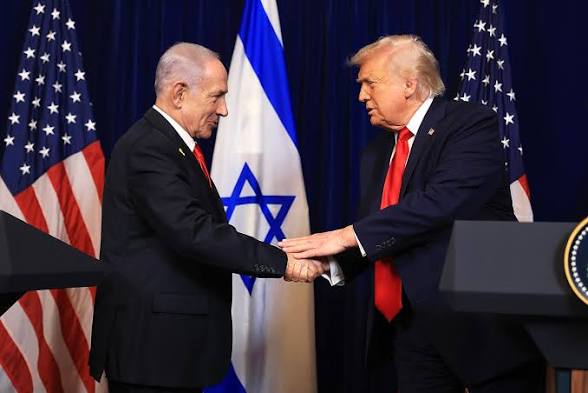
Speaking to Fox News on November 3, Trump said he had reached an agreement with Israeli Prime Minister Benjamin Netanyahu to stop the payments. He argued that Israel had become a successful country and no longer needed American financial assistance.
The announcement concerns approximately $4 billion in annual aid. However, it does not mean that the United States will immediately end all military cooperation with Israel. Trump has said that Israel will still be able to purchase American weapons and that Washington will continue to help its ally if necessary.
The announcement has also raised important questions about an existing military assistance agreement, the role of Congress, and the future of American support for Israel.
Here is what we know about Trump’s announcement, why it matters, and what could happen next.
AP News+1
Trump announces an end to annual aid payments
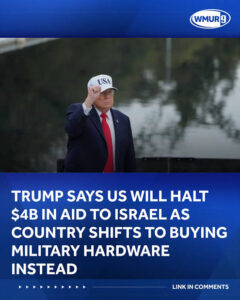
Trump made the announcement during a telephone interview with Fox News on Tuesday, November 3, 2026.
He said that he and Netanyahu had discussed ending the payments for several years. According to Trump, the Israeli prime minister approached him about the idea.
The president described the agreement as a decision to stop providing Israel with approximately $4 billion every year.
Trump also said that the United States would continue to support Israel if the country needed assistance.
His comments suggest that the administration wants to change the financial structure of the relationship rather than end the alliance itself.
The distinction is important because American military assistance has played a major role in Israel’s defense planning for decades.
The announcement does not yet provide a detailed explanation of how the proposed change would work. It also does not establish which existing funding arrangements would be affected.
The White House and Netanyahu’s office had not immediately provided further details in the initial reports.
AP News+1
Why Trump says Israel no longer needs American aid
Trump’s main argument is that Israel has become economically successful and can support more of its own defense spending.
Israel has a developed economy and a significant domestic defense industry. It also produces advanced military technology, including air defense systems, surveillance equipment, and other weapons.
Trump believes that continuing to provide billions of dollars in annual assistance is no longer necessary.
He has also argued that the aid has become a political issue in American elections.
During the interview, Trump pointed to criticism from Democratic politicians who have questioned the amount of American financial support provided to Israel.
According to the president, ending the payments could remove an issue that political opponents use to criticize Republicans.
However, the announcement does not mean that all American military spending connected to Israel will disappear.
If Israel continues to purchase American weapons, money could still flow from Israel to American defense companies. Such purchases could also support American manufacturing and employment.
This is one reason the administration may view a change in aid arrangements as a way to maintain defense cooperation while reducing direct financial assistance.
AP News+1
Understanding the existing US-Israel aid agreement
The United States and Israel currently operate under a 10-year military assistance agreement signed in 2016.
The agreement provides approximately $38 billion in assistance over the period from fiscal year 2019 through fiscal year 2028.
This includes:
$33 billion in Foreign Military Financing.
$5 billion for cooperative missile defense programs.
The annual military assistance figure is approximately $3.8 billion, which Trump has rounded to $4 billion.
Most of the assistance supports purchases of American military equipment and services. The arrangement has helped Israel obtain advanced weapons while strengthening defense cooperation between the two countries.
The agreement is an important part of the long-standing American commitment to Israel’s security.
However, Trump’s announcement suggests that the administration wants to end the direct assistance earlier than the agreement’s scheduled expiration.
That creates an important legal and political question.
The president has announced his intention to stop the payments, but the existing agreement and congressional appropriations still need to be considered. The precise process for ending the assistance has not yet been explained.
Congress may therefore play a significant role in determining how the proposed change is implemented.
The Times of Israel+1
Will the United States stop selling weapons to Israel?
No. Trump has indicated that Israel will still be able to purchase American weapons.
This is a major distinction between ending direct military assistance and ending the wider defense relationship.
Under the current arrangement, American assistance helps Israel finance purchases of military equipment.
If the aid ends, Israel could need to use more of its own money to purchase weapons and maintain its defense capabilities.
American defense companies could continue selling equipment to Israel through commercial or government-approved arrangements.
Trump has also emphasized that Israel remains an important American ally.
He said that the United States would continue to help Israel if it needed assistance.
However, the president has not provided a detailed explanation of what that future assistance would involve.
It remains unclear whether Washington would continue providing emergency military support, intelligence cooperation, or other forms of security assistance under the proposed arrangement.
For this reason, the announcement should not be interpreted as an immediate end to all American military support for Israel.
AP News+1
Why the announcement matters for Israel’s defense
Israel relies on a combination of domestic defense production, American military equipment, and international security partnerships.
Ending American military aid could require the Israeli government to make important decisions about its defense budget.
The country may need to spend more of its own money on weapons, military technology, and long-term defense planning.
This could affect the timing of future purchases and the resources available for other government priorities.
However, the impact would depend on how the transition is implemented.
Israel could gradually increase its domestic defense spending, expand its own military manufacturing, or negotiate new arrangements with American defense companies.
The country also has experience developing advanced military technology.
Therefore, the end of direct American aid would not automatically mean that Israel could no longer maintain its military capabilities.
The bigger question is how quickly Israel could replace the financial support and whether the change would affect its defense readiness.
The Israeli government has not yet provided a detailed public response to Trump’s announcement.
Until further information becomes available, the long-term effect on Israel’s defense budget remains uncertain.
AP News+1
Netanyahu’s position on ending American aid
Trump said that Netanyahu had approached him about ending the assistance.
The Israeli prime minister has previously expressed support for reducing Israel’s dependence on American military aid.
However, Netanyahu has also discussed a gradual transition rather than an immediate end to the payments.
In earlier public remarks, he indicated that Israel could eventually become less dependent on American assistance while maintaining a strong defense partnership.
This distinction is important because the two countries may agree on the long-term goal while differing over the timing and practical details.
A gradual reduction could allow Israel to adjust its defense budget and military procurement plans over several years.
An earlier cutoff, by contrast, could require faster changes.
Trump’s announcement does not provide a complete explanation of how Netanyahu’s earlier position relates to the proposed end of aid after 2026.
The Israeli government will need to clarify whether it supports the specific timeline and what arrangements it expects to replace the current funding system.
Until then, the details of the reported agreement remain incomplete.
The Wall Street Journal+1
The political impact in the United States
The announcement comes at a time when American support for Israel has become a significant political issue.
For decades, support for Israel’s security has received strong backing from both major political parties.
However, disagreements over the Gaza war and American military assistance have created divisions among lawmakers and voters.
Some politicians argue that American aid is necessary to protect an important ally and maintain stability in the Middle East.
Others believe that the United States should reduce its financial commitments abroad or place greater conditions on military assistance.
Trump has acknowledged that the aid issue has become politically controversial.
His announcement could appeal to voters who want the government to reduce foreign spending.
It could also create new disagreements among Republicans who support continued military assistance to Israel.
Democrats may also disagree over whether ending aid would reduce American involvement in the region or weaken an important security partnership.
The debate is therefore likely to continue beyond the initial announcement.
The central political question is whether the United States should continue providing direct military assistance or move toward a relationship based more heavily on commercial defense purchases and other forms of cooperation.
AP News+1
What the aid cutoff could mean for American taxpayers
Ending direct military assistance could reduce one part of the federal government’s foreign aid spending.
However, the overall financial impact would depend on what replaces the current arrangement.
If Israel purchases more American weapons using its own funds, American defense companies could continue receiving substantial revenue from those sales.
The United States could also continue spending money on other forms of regional security cooperation.
Therefore, the proposed change does not necessarily mean that every dollar associated with American support for Israel will disappear.
It is also important to distinguish between the cost of military assistance and the broader economic effects of defense cooperation.
American manufacturers benefit when foreign governments purchase their equipment.
At the same time, federal spending decisions involve questions about national security, economic priorities, and the use of taxpayer money.
A complete assessment of the financial impact would require more details about the proposed transition.
For now, the announcement establishes a proposed end to direct annual aid, not a complete end to all American spending connected to Israel.
AP News+1
Could Congress block the decision?
Congress is likely to be an important part of the process.
The existing military assistance agreement runs through fiscal year 2028, and lawmakers have authorized funding for the program.
Trump’s announcement does not, by itself, explain how the administration intends to address those existing commitments.
Congress has constitutional authority over federal spending.
The administration may need to work with lawmakers to change appropriations, revise funding arrangements, or establish a new framework for military assistance.
The precise legal requirements will depend on the actions the administration proposes and the terms of the existing agreements.
Lawmakers could support the proposed change, seek a gradual transition, or argue that some forms of assistance should continue.
The issue may also become part of broader discussions about American foreign policy and military spending.
Until the administration provides more details, it is too early to say whether the announced cutoff will proceed exactly as Trump described.
The next important development will be an official explanation of how the government intends to implement the proposal.
The Wall Street Journal+1
What happens next?
Several developments will help determine the significance of Trump’s announcement.
First, the White House may provide a formal explanation of the proposed aid cutoff and its timeline.
Second, the Israeli government may clarify whether it supports ending the payments after 2026 and how it plans to finance future military purchases.
Third, Congress may debate the existing assistance agreement and the administration’s proposed changes.
Finally, American and Israeli defense officials may discuss how to maintain military cooperation without the current system of direct assistance.
These discussions will be important because the United States and Israel have a long-standing security relationship that extends beyond financial aid.
The announcement could mark the beginning of a new arrangement in which Israel pays more directly for American military equipment while continuing to cooperate with Washington.
However, the final outcome will depend on negotiations, congressional decisions, and the practical details of the proposed transition.
For now, the announcement represents a major policy shift rather than a fully implemented change.
AP News+1
Conclusion
Trump’s announcement that the United States will end approximately $4 billion in annual aid to Israel after 2026 could reshape one of the most important elements of the US-Israel relationship.
The president argues that Israel is now economically successful enough to support its own defense spending.
He has also indicated that Israel will continue to purchase American weapons and that the United States will remain willing to help its ally if necessary.
However, the existing military assistance agreement, congressional authority over spending, and Israel’s future defense requirements create important questions about how the proposed change will work.
The announcement does not mean that all military cooperation between the two countries will end.
Instead, it points toward a possible transition from direct American military assistance to a different system of defense cooperation.
The coming weeks and months will be important in determining whether the proposed aid cutoff becomes a formal policy and how it will affect the future of American support for Israel.
Frequently asked questions
1. Why is Trump stopping $4 billion in aid to Israel?
Trump says Israel has become a successful country that no longer needs the annual assistance. He has also argued that the aid has become a political issue in the United States.
AP News+1
2. When will the United States stop providing aid to Israel?
Trump announced that the United States would stop the annual payments after 2026. However, the precise implementation process and its relationship to the existing agreement remain unclear.
AP News+1
3. How much military aid does Israel receive from the United States?
The current 10-year military assistance agreement provides approximately $3.8 billion annually, including funding for military equipment and missile defense programs. Trump has described the amount as $4 billion.
The Times of Israel+1
4. Will the United States stop selling weapons to Israel?
No. Trump has said that Israel will still be able to purchase American weapons. The announcement concerns direct financial assistance, not an immediate end to commercial defense sales.
AP News+1
5. Did Benjamin Netanyahu agree to end American aid?
Trump said that he and Netanyahu had reached an agreement. However, the Israeli government had not immediately provided a detailed public response confirming the specific terms and timeline.
AP News+1
6. Can Trump end military aid without Congress?
The existing assistance agreement and congressional funding decisions are important to the process. The administration has not yet explained how it will address those commitments, so the precise legal and legislative steps remain unclear.
The Wall Street Journal+1
7. Will ending aid affect Israel’s military?
It could require Israel to increase its own defense spending and change how it purchases military equipment. However, the actual impact will depend on future funding arrangements and the details of the transition.
8. Does the announcement mean the United States is ending its alliance with Israel?
No. Trump has described Israel as an important ally and said that the United States would continue to help if necessary. The announcement concerns the financial structure of military assistance rather than an end to the alliance.
AP News+1
9. Is the $4 billion aid cutoff already final?
Trump has announced the proposed change, but the full implementation details have not been established publicly. The existing agreement and congressional funding arrangements will be important in determining what happens next.
10. What is the biggest consequence of the announcement?
The biggest potential consequence is a change in how Israel finances its defense and how the United States supports its closest ally in the Middle East. The long-term impact will depend on the final agreement and future defense cooperation.
About the Author