Federal investigators are intensifying their scrutiny of California’s election system, bringing new attention to ballot records, voter eligibility and the relationship between federal authorities and state election officials.
The latest developments involve subpoenas issued to California election officials as part of investigations into allegations of noncitizen voting. The requests have raised serious questions about election security, voter privacy and the limits of federal authority over elections.
However, the legal dispute is more complicated than the headline suggests. The subpoenas are part of a broader investigation involving the U.S. Department of Justice (DOJ) and Homeland Security Investigations (HSI). They do not automatically mean that the FBI has established election fraud or that the officials receiving the subpoenas are accused of wrongdoing.
According to reporting published by the Associated Press on October 29, federal prosecutors subpoenaed Los Angeles County election employees, requesting records and testimony connected to allegations involving California’s voter rolls. The subpoenas were issued in October and directed officials to appear on November 4, one day after the November 3 election.
AP News+1
The investigation comes amid a growing conflict between the Trump administration and California over how elections should be administered and how potential voting violations should be investigated.
For voters, the central question is whether the investigation will uncover evidence of illegal voting, create additional pressure on election officials, or lead to further legal challenges over the handling of ballots.
1. Why are California ballot records under federal scrutiny?
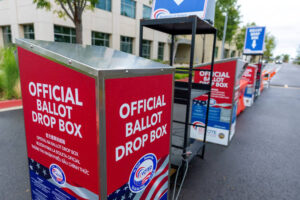
The controversy centers on allegations that some noncitizens may have registered to vote or cast ballots in California.
Federal authorities have argued that election officials must investigate potential violations and provide records needed to determine whether unlawful voting occurred.
California officials, however, have challenged the reliability of the federal government’s allegations and questioned whether the requested records can legally be used to interfere with ballots already being processed.
The dispute has become particularly significant because California is one of the largest voting states in the country. Any legal challenge involving its ballots could affect election administration, voter confidence and the certification of election results.
According to the Associated Press, the federal government has alleged that up to 20,000 ballots may have been associated with noncitizens. California has disputed the reliability of the underlying information, and the allegations have not been established as proven cases of illegal voting.
AP News+1
The investigation therefore involves two separate issues: whether individual voters violated election laws and whether the federal government can compel state officials to provide particular records or change how ballots are handled.
2. What do the FBI subpoenas actually request?
A subpoena is a legal demand for documents, testimony or other evidence. It is not, by itself, proof that a crime has occurred.
The California subpoenas reportedly seek records and communications related to federal allegations about noncitizen voting.
They also seek information about how election officials screen voter registrations, investigate potential violations and prevent ineligible individuals from casting ballots.
The requests form part of a criminal investigation involving federal authorities. The exact scope of each subpoena varies, and the records requested do not necessarily establish that any particular person committed an offense.
The Associated Press reported that three subpoenas sent to Los Angeles County election employees sought documents concerning communications with federal officials and efforts to prevent noncitizen votes from being counted.
AP News+1
Importantly, the subpoenas should not be confused with a finding of guilt.
Election officials may receive subpoenas because they maintain relevant records or have information about administrative procedures. Their receipt of a subpoena does not automatically mean they are suspects.
3. Why California is challenging the federal investigation
California officials have argued that the federal government is seeking information and remedies that could interfere with the state’s constitutional responsibility to administer elections.
The U.S. Constitution gives states a central role in establishing election procedures, subject to federal constitutional and statutory requirements.
That division of authority has become a major point of disagreement between California and the Trump administration.
The federal government maintains that it has authority to investigate violations of federal election law. California argues that federal investigations must respect state election procedures and applicable legal protections.
The dispute is particularly sensitive because the investigation involves ballots that have already entered the election process.
Once ballots are processed, separating them according to individual voter identity can be difficult or impossible without compromising the secrecy of the ballot.
That creates a practical problem: even if investigators identify a voter whose eligibility requires further examination, it does not necessarily follow that officials can identify or remove that person’s ballot after it has been processed.
4. The federal court dispute over 20,000 ballots
The subpoenas are connected to a wider legal conflict involving approximately 20,000 ballots that federal officials believe may have been associated with noncitizens.
The Trump administration sought to require California election officials to set aside the ballots until the citizenship of the individuals involved could be verified.
U.S. District Judge David O. Carter rejected that request in late October.
The court also appointed a special master to examine the evidence and help establish the factual record surrounding the allegations.
The legal dispute involves whether the federal government can require election officials to separate or withhold ballots based on information that California says is unreliable.
The judge also raised concerns about federal pressure on local election employees and warned that threats against election officials should stop.
The Associated Press reported that the judge found the federal government’s demands violated the National Voter Registration Act’s restrictions on changes to voter rolls and election procedures within 90 days of an election.
AP News+1
The ruling does not mean that every allegation of noncitizen voting has been disproved. Instead, it addresses the legal basis for the government’s requested action and the evidence supporting it.
The federal government has continued to challenge the ruling through the appeals process.
5. What does the investigation mean for California voters?
For ordinary voters, the most immediate concern is whether the investigation will affect their ability to cast a ballot and have it counted.
The subpoenas do not automatically invalidate votes, cancel registrations or change election results.
However, the dispute could create additional administrative work for election officials, particularly if they must respond to extensive document requests while also completing election duties.
California officials have emphasized that election workers must be able to perform their responsibilities without intimidation or improper pressure.
Voters should also understand that a person’s name appearing on a federal list of potential noncitizen voters does not necessarily establish that the person is ineligible to vote.
Citizenship records can contain outdated information, mismatches and administrative errors. A person may also become a citizen after initially registering or may have a record that requires further verification.
That is why investigators must examine individual evidence rather than assume that every name on a list represents a violation.
The legal process must distinguish between a genuine violation, a clerical mistake and an allegation that cannot be substantiated.
6. Why voter privacy is central to the controversy
Election records contain sensitive information about voters, including names, addresses, registration histories and other personal details.
Some of that information is publicly available under state law. Other records are protected by privacy rules or restrictions on disclosure.
The federal subpoenas have raised questions about how much personal information election officials must provide and what safeguards should apply when government agencies obtain it.
The controversy is particularly important because ballot secrecy is a fundamental feature of American elections.
Election officials must be able to verify eligibility and investigate potential violations without compromising the privacy of lawful voters.
The distinction between voter registration records and actual ballots is therefore essential.
Registration records may help investigators determine whether an individual was eligible to vote. A completed ballot, however, is generally protected by rules designed to prevent the government or other parties from identifying how a person voted.
This distinction is one reason why the handling of already-processed ballots has become a central legal issue.
7. Is there evidence of widespread noncitizen voting?
The federal government has alleged that noncitizens may have registered or voted unlawfully in California.
But allegations and verified cases are not the same thing.
Available research indicates that noncitizen voting in federal elections is exceedingly rare. Reuters reported in October 2026 that its review of election records and available evidence found very few confirmed cases compared with the number of people who vote in American elections.
Reuters
Federal authorities have brought criminal cases against individuals accused of illegal voting. Those cases are important because they show that election violations can be investigated and prosecuted.
However, individual prosecutions do not establish that widespread fraud occurred or that an election result was affected.
A credible investigation must establish the facts of each case, including the person’s citizenship status at the relevant time, whether the person actually voted and whether the conduct violated applicable law.
It must also distinguish between inaccurate voter registration information and an unlawful vote.
That distinction matters because an individual may appear on a voter registration list without having cast a ballot.
8. How the dispute could affect election administration
The subpoenas have arrived during a period of heightened political tension over election administration.
California officials are preparing to complete election procedures while responding to federal demands for information.
The situation could place additional pressure on election offices, which must balance legal obligations with the need to process ballots accurately and efficiently.
If officials disagree about the scope of a subpoena, they may seek clarification from a court or challenge the request through legal proceedings.
Courts may then need to determine whether the requested information is relevant to an investigation, whether the demand is legally valid and whether compliance would violate other legal protections.
These questions are not unique to California. Federal investigations into election records have also expanded in other states.
Reuters reported in October that the Trump administration had issued more than 100 subpoenas seeking records concerning tens of thousands of voters across at least 13 states.
Reuters
The broader investigation could therefore influence how state and local election offices respond to federal requests in the future.
9. What happens next in the California ballot investigation?
The next stage will depend on the evidence gathered by federal investigators and the outcome of ongoing court proceedings.
Election officials may be required to provide records or testimony under the subpoenas. If disagreements arise, courts may determine whether particular demands are lawful.
Investigators must then examine the evidence to determine whether any individuals violated federal election laws.
The legal dispute over the approximately 20,000 ballots could also continue through the appeals process.
A court may ultimately determine whether California must take additional steps to investigate the allegations or whether the federal government’s requested remedies exceed its legal authority.
For now, the subpoenas represent an important development in the investigation, but they do not establish that widespread election fraud occurred.
The outcome will depend on the quality of the evidence, the applicable law and the decisions of the courts reviewing the dispute.
10. Why the story matters beyond California
The controversy has implications for election administration across the United States.
Every state must balance the need to prevent illegal voting with the responsibility to protect eligible voters and maintain accurate election records.
The California dispute highlights the importance of clear legal procedures for investigating potential violations.
It also raises questions about how federal authorities should work with state and local election officials.
If courts establish new limits or requirements for federal access to election records, those decisions could influence future investigations in other states.
The dispute may also affect public confidence in election administration.
Voters need reliable information about election security, but they also need assurance that allegations will be investigated fairly and that lawful ballots will be protected.
That requires transparency, credible evidence and respect for the legal process.
Conclusion
The FBI subpoenas California ballot records controversy is part of a broader federal investigation into allegations of noncitizen voting.
The requests have intensified tensions between the Trump administration and California officials over election security, voter privacy and the legal authority to investigate election records.
Although the investigation could uncover individual violations, the subpoenas themselves do not prove that widespread election fraud occurred.
The federal court dispute over approximately 20,000 ballots also demonstrates why the handling of election records requires careful legal review.
As the investigation continues, the most important questions remain whether the allegations can be substantiated, whether the requested records can be legally obtained and whether the rights of eligible voters will remain protected.
The final outcome will depend on evidence, court decisions and the ability of election officials to carry out their duties without improper interference.
Frequently asked questions
1. Why did the FBI subpoena California ballot records?
Federal investigators are examining allegations of noncitizen voting and have requested election records and communications from California officials. The subpoenas are part of a broader federal investigation into potential violations of election law.
2. Does the FBI subpoena prove election fraud occurred?
No. A subpoena is a legal demand for information or testimony. It does not establish that a crime occurred or that election fraud has been proven.
3. Are California election officials accused of committing a crime?
The subpoenas do not automatically mean that the officials receiving them are suspects. Officials may be required to provide information because they maintain relevant records.
4. What are the 20,000 California ballots?
They are ballots that federal officials believe may have been associated with noncitizens. The allegations remain disputed, and a federal judge has appointed a special master to examine the evidence.
5. Can noncitizens vote in federal elections?
Noncitizens are generally prohibited from voting in federal elections. Some local jurisdictions permit noncitizens to vote in certain local elections, but that does not authorize voting in federal elections.
6. Will the subpoenas change California election results?
The subpoenas do not automatically change election results or invalidate ballots. Any action affecting ballots would depend on applicable law and decisions by election officials or courts.
7. What happens after the subpoenas are issued?
Investigators may review the requested records, question witnesses and determine whether there is evidence of criminal violations. Courts may also resolve disputes over the scope and legality of the subpoenas.
8. Why is voter privacy important in this investigation?
Election records may contain sensitive personal information. Authorities must investigate potential violations while respecting privacy protections and maintaining the secrecy of completed ballots.
9. Has widespread noncitizen voting been proven in California?
No. The allegations remain under investigation. Available research indicates that noncitizen voting in federal elections is exceedingly rare, and individual cases do not establish widespread fraud.
10. What is the next major development to watch?
The next important developments include responses to the subpoenas, court decisions concerning the disputed ballots and any verified findings from federal investigators.
About the Author