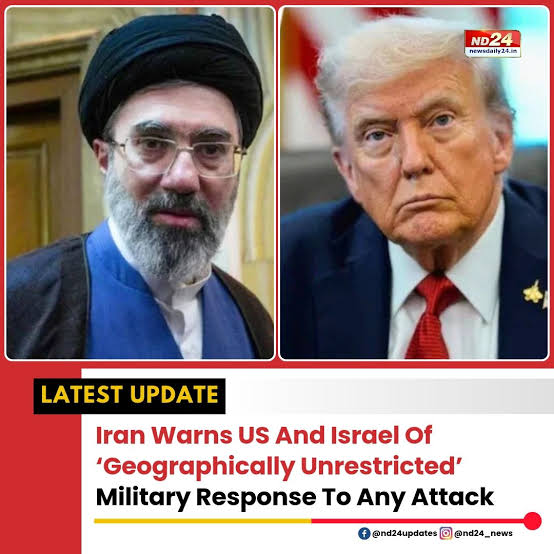
Iran’s Supreme Leader Mojtaba Khamenei has issued a stark warning to the United States and Israel, ordering Iran’s armed forces to respond immediately to any renewed attack without geographical restrictions. The statement, released on October 31, 2026, signals a tougher military posture as diplomatic efforts continue to prevent another major conflict in the Middle East.
Khamenei’s message came during a meeting with senior Iranian military commanders. According to the statement, he called for maximum deterrence and instructed military officials to update their lists of potential targets.
The warning raises concerns about the possible consequences of renewed fighting. However, it does not confirm that Iran has launched a new military operation or that the United States has decided to attack.
Iran Supreme Leader Issues New Warning to US Forces
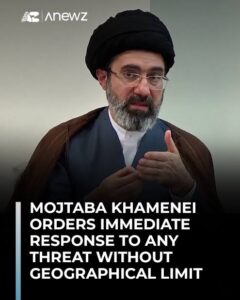
Iran’s Supreme Leader Mojtaba Khamenei delivered the warning in a statement published through his official channels. He called for an immediate and effective response to any threat against Iran, regardless of its geographical location.
The statement said Iran’s armed forces and people would determine when and under what conditions any renewed hostilities would end.
This language represents a strong declaration of military readiness. It also signals that Tehran does not intend to limit its potential response to a narrow battlefield if another conflict begins.
According to reporting by Reuters and other international news organizations, Khamenei also directed military commanders to update Iran’s target database. The directive reportedly includes American and Israeli assets, both physical and non-physical.
The statement does not provide a complete list of those targets. It also does not establish that every asset mentioned has been approved for an attack.
Nevertheless, the language is significant because it suggests that Iranian leaders want their military planners to consider a wider range of possible responses.
What Does “No Geographic Limits” Mean?
The phrase “no geographic limits” is central to the latest warning.
In military and political terms, it suggests that Iran would not necessarily restrict retaliation to the location of an initial attack. A conflict could potentially affect several areas of the Middle East rather than remain confined to Iran.
However, the phrase does not automatically mean that Iran plans to attack American territory.
The statement does not specify the locations, methods or timing of any possible military response. It also does not identify which American or Israeli assets would be considered legitimate targets under Iran’s declared policy.
The warning is therefore best understood as a broad threat of retaliation rather than a detailed operational plan.
For the United States, the message could raise concerns about American military personnel and facilities operating across the region. It could also affect security calculations for countries hosting American forces.
Still, any assessment of the threat must distinguish between Iran’s declared intentions and its actual military capabilities.
Why Iran Is Warning Washington Now
The latest warning comes amid renewed fears of a wider confrontation between Iran, the United States and Israel.
Relations between Tehran and Washington remain deeply strained following the military campaign that began on February 28, 2026. That conflict caused major casualties and intensified regional instability.
Iran’s current leadership has repeatedly emphasized military readiness and the need to deter further attacks.
At the same time, American officials have continued to consider their options regarding Iran’s military and nuclear activities. Reports of possible future strikes have added to uncertainty across the region.
US President Donald Trump has made statements suggesting that the conflict could end soon, while also maintaining pressure on Tehran over its nuclear program.
These developments have created a difficult diplomatic environment. Both sides are signaling their willingness to respond to threats, yet neither has publicly ruled out negotiations.
Khamenei’s latest statement fits into this broader pattern of military pressure and diplomatic uncertainty.
Iran Orders Military Commanders to Update Target Lists
One of the most important elements of the warning concerns Iran’s military target database.
According to the statement, Khamenei instructed commanders to update their lists so that American and Israeli assets would be within the reach of Iranian forces.
The directive reportedly refers to both physical and non-physical assets. However, Iranian officials have not publicly provided a comprehensive explanation of what those categories include.
The language could cover a broad range of military and strategic interests. It should not be treated as proof that Iran has selected specific new targets or begun preparations for an imminent attack.
The order nevertheless carries political significance.
By publicly emphasizing target planning, Tehran is communicating that it wants to maintain the ability to retaliate if another military confrontation occurs.
The directive also reinforces the message that Iran’s leadership intends to preserve military options while diplomatic discussions continue.
US Forces Face a More Uncertain Security Environment
The threat of a geographically unrestricted response could complicate security planning for American forces in the Middle East.
The United States maintains military personnel and facilities across the region. These forces support a range of operations, including regional security, maritime protection and cooperation with partner countries.
If hostilities resume, American commanders would need to assess potential risks across multiple locations.
That does not mean every American facility faces an immediate or equal threat. The level of risk would depend on Iran’s capabilities, its operational decisions and the circumstances surrounding any renewed conflict.
The presence of American forces in the region has also been a recurring source of tension between Washington and Tehran.
Iran has previously warned that American military involvement could lead to retaliation. The latest statement strengthens that message while leaving the details of any future response unclear.
For regional governments, the warning creates another reason to prioritize diplomacy and avoid actions that could trigger a wider confrontation.
Strait of Hormuz Remains a Major Regional Concern
The Strait of Hormuz is another important part of the wider security picture.
The narrow waterway connects the Persian Gulf with the Gulf of Oman and the Arabian Sea. It is a major route for international oil and gas shipments.
Any serious conflict involving Iran could threaten maritime security and disrupt commercial shipping.
A disruption in the strait could affect energy markets, transportation costs and international trade. Countries that depend on imported energy would be particularly sensitive to prolonged instability.
However, Khamenei’s latest statement does not announce a new closure of the Strait of Hormuz.
The waterway should be discussed as a potential area of concern, not as a confirmed target of an upcoming Iranian operation.
Regional governments and international shipping companies will continue to monitor developments closely because the consequences of a major disruption could extend far beyond the Middle East.
Diplomatic Efforts Continue Despite the Threats
Although the military language is severe, diplomatic efforts have not stopped.
Qatar has continued its role as a mediator between Iran and the United States. Regional officials have also called for restraint and a return to negotiations.
Iranian Foreign Minister Abbas Araghchi has described discussions involving a proposal from Washington as a positive development.
These diplomatic contacts suggest that both sides still have reasons to avoid another prolonged conflict.
The central challenge is whether negotiations can address the disagreements that have prevented a lasting settlement.
Washington has emphasized concerns about Iran’s nuclear program and the need for guarantees that prevent the development of a nuclear weapon.
Tehran, meanwhile, has sought changes to the conditions surrounding the conflict, including measures related to sanctions and the security of the Iranian state.
The latest warning could be intended to strengthen Iran’s negotiating position. It could also reflect genuine concern about the possibility of renewed attacks.
Without further official clarification, it is difficult to determine how much the statement is aimed at deterrence and how much it reflects immediate military planning.
What the Warning Means for Israel
Israel is also directly mentioned in Iran’s warning.
The relationship between Tehran and Jerusalem has been marked by longstanding hostility, military confrontation and competing regional security interests.
Iran’s statement suggests that any renewed attack involving Israel could trigger a response that extends beyond the immediate area of conflict.
For Israeli officials, this raises questions about preparedness and coordination with the United States.
However, the warning does not confirm that Iran has decided to launch a new operation against Israel.
The timing and scale of any potential response would depend on developments that have not yet been established.
The situation remains especially sensitive because military action by one side could prompt retaliation by the other, creating a cycle of escalation that becomes increasingly difficult to control.
Could the Conflict Spread Beyond Iran?
The possibility of a wider regional conflict is one of the main concerns raised by the statement.
Iran has relationships with several regional armed and political groups. These relationships have long influenced security calculations across the Middle East.
In a renewed conflict, the actions of regional partners and other armed groups could affect the course of events.
However, it would be inaccurate to assume that every group aligned with Iran would automatically participate in a new confrontation.
Each group has its own leadership, interests and operational considerations.
The same caution applies to countries hosting American forces. Their involvement would depend on their security agreements, political decisions and the circumstances of any attack.
The key issue is whether a renewed conflict could expand beyond the immediate participants.
That possibility explains why regional governments have called for restraint and why diplomatic channels remain important.
What Happens Next?
The next stage will depend on decisions made in Tehran, Washington and Jerusalem.
Iran has made clear that it intends to respond forcefully to renewed attacks. The United States and Israel will need to assess that warning alongside their own security priorities.
Diplomatic negotiations could still reduce the risk of another confrontation. A credible agreement would need to address the issues that have kept tensions high, including Iran’s nuclear activities and the security concerns of regional governments.
Military developments will also matter.
Any confirmed movement toward renewed hostilities could increase pressure on regional leaders to intervene diplomatically.
For now, the latest statement is a warning, not confirmation of an imminent attack.
The most important developments to watch are further official statements, the progress of mediation efforts and any independently confirmed changes in military activity.
Conclusion
Iran’s Supreme Leader Mojtaba Khamenei has issued a direct warning that any renewed attack against Iran would receive an immediate response without geographical restrictions.
The statement highlights Tehran’s determination to maintain military readiness and preserve the ability to retaliate against American and Israeli interests.
It also comes at a moment when regional governments are trying to prevent another major conflict.
The warning should not be mistaken for proof that Iran has already launched a new operation or that the United States has made a final decision to attack.
Instead, it reflects the growing pressure surrounding the Iran conflict and the uncertainty facing the Middle East.
Whether the situation moves toward negotiations or renewed fighting will depend on the decisions made by the parties involved in the coming days.
Frequently Asked Questions
1. What did Iran’s supreme leader say about US forces?
Iran’s Supreme Leader Mojtaba Khamenei said any renewed threat or attack against Iran should receive an immediate and effective response without geographical restrictions.
2. When did Khamenei issue the warning?
The warning was reported on October 31, 2026, following a meeting with senior Iranian military commanders.
3. Does “no geographic limits” mean Iran will attack the United States?
Not necessarily. The statement does not specify that Iran intends to attack American territory. It indicates that Iran would not necessarily limit its response to the location of an initial attack.
4. Why is Iran threatening a wider response?
The warning comes amid fears of renewed US-Israeli military action against Iran. Tehran says its armed forces must remain prepared to respond to threats.
5. Has Iran announced a new attack against US forces?
No confirmed new attack was announced in the statement. The warning describes how Iran says it would respond if hostilities resume.
6. What does the warning mean for the Middle East?
It raises concerns about a wider conflict that could affect American forces, Israel, regional security and maritime trade. However, the extent of any future escalation remains uncertain.
7. Are the United States and Iran still negotiating?
Yes. Diplomatic contacts and mediation efforts have continued despite the military warnings. Qatar has played a role in efforts to prevent renewed fighting.
8. Could the Strait of Hormuz be affected?
The strait is a major regional shipping route and could face risks during a wider conflict. However, Khamenei’s latest statement does not announce a new closure of the waterway.
9. What happens if the United States attacks Iran again?
Iran has threatened an immediate response. The timing, location and scale of any retaliation remain uncertain and would depend on the circumstances of a renewed conflict.
10. Is another Iran-US war inevitable?
No. The warning signals serious tensions, but diplomatic efforts continue. Whether fighting resumes will depend on decisions made by the governments involved.
About the Author