Europe is facing another wave of public unrest as violent demonstrations and clashes with police spread to Germany. What began as youth-led protests demanding better education, lower living costs and greater economic opportunities turned violent in several German cities on October 31, 2026.
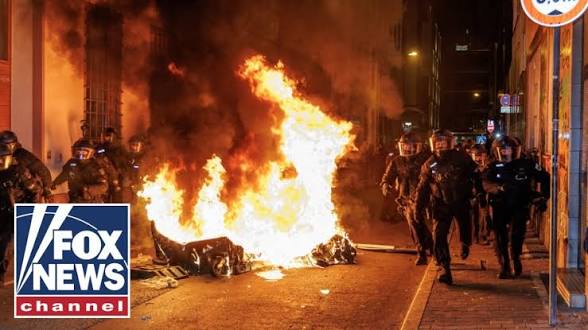
Frankfurt experienced some of the most serious disturbances, with rioters smashing shop windows, looting businesses and throwing incendiary devices at emergency services. Other cities, including Berlin, Hamburg and Cologne, also witnessed confrontations between demonstrators and police.
The developments have raised concerns about public safety and the growing frustration among younger Europeans. Germany’s latest unrest also comes amid continuing demonstrations in France and other European countries.
Although most demonstrators initially gathered peacefully, violence involving smaller groups overshadowed the wider protests. Authorities are now promising stronger action against those responsible for criminal activities.
Violent Riots In Germany: What Happened?
Germany witnessed a major wave of youth-led demonstrations on Saturday, October 31. The protests took place in approximately 34 cities, including Berlin, Frankfurt and Munich.
The demonstrations were organised under the campaign name “Gen Z regelt”, which translates roughly as “Gen Z takes charge”.
Young demonstrators wanted political leaders to address several issues affecting their future. Their demands included better educational facilities, lower living costs, stronger public services and opposition to compulsory military service.
However, the situation changed dramatically in some locations as evening approached.
In Frankfurt, groups of hooded individuals began damaging businesses and breaking shop windows. Some stores were reportedly looted, while police faced attacks involving fireworks and Molotov cocktails.
According to Reuters, Frankfurt police warned people to avoid the city centre because violent disturbances were continuing.
The incidents created a tense atmosphere as emergency services attempted to restore order.
Authorities had prepared for possible disturbances because demonstrations across Europe had recently experienced similar episodes of violence.
Frankfurt Becomes A Major Flashpoint
Frankfurt was among the German cities most seriously affected by the unrest.
The city’s famous Zeil shopping street experienced significant damage as rioters targeted commercial properties. Shop windows were smashed, and individuals attempted to steal merchandise from businesses.
The violence also affected emergency services.
According to Reuters, police reported that Molotov cocktails were being thrown at emergency responders. Officers urged residents and visitors to stay away from affected areas.
Security concerns had already prompted some businesses to take precautionary measures before the demonstrations.
Several shops reportedly boarded up their windows or planned to close early to protect their properties.
Police deployed more than 1,000 officers, including specialised units, to manage the situation.
Water cannons, armoured vehicles and a helicopter were also used during the response, according to reporting by Euronews.
A gun shop was among the businesses targeted. Police reportedly seized two weapons at the location.
More than 30 temporary arrests were reported in Frankfurt, although investigations into the incidents continued.
The violence demonstrated how quickly a peaceful public gathering can become dangerous when criminal groups become involved.
Berlin Witnesses Clashes And Arrests
Berlin also experienced disturbances during the October 31 demonstrations.
Thousands of people gathered in the German capital as part of the wider youth protest movement.
The demonstration involved approximately 3,500 people, according to figures reported by Berlin police through Euronews.
Participants raised concerns about living costs, education and political decisions affecting younger generations.
However, some groups also brought different political messages into the demonstrations.
Flares and firecrackers were reportedly set off during the gathering. Police later faced confrontations as tensions increased.
According to Euronews, 27 police officers sustained minor injuries during the unrest, while almost 60 people were arrested.
The incidents increased pressure on German authorities to prevent further violence.
Berlin remains particularly important because demonstrations in the capital often attract national and international attention.
The government now faces the challenge of protecting public order without restricting the rights of peaceful demonstrators.
Hamburg And Cologne Also Experience Unrest
The unrest was not limited to Frankfurt and Berlin.
Hamburg also witnessed violent confrontations between police and groups involved in the demonstrations.
According to Euronews, individuals constructed burning barricades and attacked officers with stones, bottles and fireworks.
Police deployed approximately 1,300 officers during the operation.
Authorities warned that some troublemakers had deliberately joined peaceful demonstrations to provoke confrontations and commit criminal offences.
The situation also became tense in Cologne.
Police ended a protest march after some participants covered their faces and set off pyrotechnics.
According to the Associated Press, police intervened after demonstrators used fireworks and emergency workers were attacked.
One officer reportedly suffered a hand injury.
These incidents illustrate the difficulties facing German police as they attempt to manage large demonstrations across several cities simultaneously.
Why Are Young People Protesting Across Germany?
The demonstrations are connected to several economic and political concerns.
Young people across Germany are increasingly worried about their financial future, educational opportunities and employment prospects.
One major issue is the rising cost of living.
Housing, food, transportation and everyday expenses have placed pressure on households. Students and young workers are particularly concerned because their incomes often fail to keep pace with increasing expenses.
Education is another major concern.
Protesters have criticised poor school and university facilities, inadequate public investment and problems affecting educational institutions.
Some students argue that government spending decisions do not adequately reflect the needs of younger generations.
Compulsory military service has also become an important issue within the movement.
Some demonstrators oppose military obligations and argue that young people should have greater freedom to decide their futures.
The campaign has therefore brought together people with different political opinions and demands.
However, not every participant supports the same objectives, and the movement’s leadership and representativeness have also faced questions.
Gen Z Regelt Movement Faces Questions
The “Gen Z regelt” campaign has attracted attention because of its youth-focused message.
Its organisers say the movement wants political leaders to listen to younger generations.
The demonstrations have highlighted concerns about economic pressure, education and public services.
However, the campaign has also faced questions about its organisation and political representation.
Germany’s national school student umbrella organisation has distanced itself from the initiative and announced plans for a separate protest on November 20.
This development suggests that the broader youth movement does not necessarily speak for every student organisation.
Another challenge is the violence that occurred during the demonstrations.
Organisers have an important responsibility to distinguish their peaceful political demands from criminal behaviour.
Violent incidents can damage public support and make it harder for legitimate protest movements to communicate their messages.
For this reason, the future of the campaign may depend on whether organisers can maintain peaceful demonstrations while addressing disagreements within their movement.
Germany’s Government Promises Tough Action
The violence has created political pressure on Germany’s government.
Interior Minister Alexander Dobrindt called for tough penalties against individuals involved in looting and violent attacks.
He also criticised groups that allegedly took advantage of peaceful demonstrations to create disorder.
German authorities have warned that extremist organisations may attempt to exploit public frustration.
However, identifying those responsible for individual offences remains an important part of the investigation.
Police must establish who participated in criminal activities and collect evidence before legal action can proceed.
Authorities also face the difficult task of preventing future violence while respecting Germany’s constitutional protection of peaceful assembly.
The government’s response will be closely watched because the protests involve issues that affect a large section of the population.
France’s Unrest Adds To Europe’s Growing Tensions
Germany’s latest disturbances come at a time when several European countries are experiencing major demonstrations.
France has been particularly affected by protests over living costs, public services and political dissatisfaction.
On October 31, approximately 320,000 people participated in demonstrations across France, according to figures released by the country’s interior ministry and reported by the Associated Press.
Most demonstrations were peaceful.
However, clashes occurred in Paris, Lyon and other locations as groups of masked individuals confronted police.
French authorities reported hundreds of arrests during the nationwide demonstrations.
The protests also involved students, trade unions and people concerned about economic inequality.
The situation demonstrates that dissatisfaction with economic conditions is not limited to Germany.
Similar concerns have appeared in different European countries, although each movement has its own political background and demands.
Al Jazeera reported on November 2 that strikes and protests were also affecting countries including Belgium, France and Spain.
The wider developments have increased concerns about public stability across the continent.
German Workers Join The Wave Of Protests
Germany’s unrest is also unfolding alongside significant labour disputes.
On November 2, the IG Metall union launched a new wave of warning strikes across the country’s metal and electrical engineering industries.
The industrial action affects a sector employing approximately 3.7 million people.
The union is demanding a five percent wage increase, better job security and measures to protect production facilities.
Major companies affected include Audi, Mercedes-Benz and Tata Steel.
The employers’ proposal was rejected by the union, which argued that it would not adequately protect workers’ purchasing power.
This industrial dispute highlights another important source of public dissatisfaction.
Many German workers are concerned about wages, employment security and the rising cost of everyday life.
Although labour strikes and violent street riots are different forms of protest, both reflect wider debates about economic security and government policy.
Germany must therefore manage several challenges at the same time.
Could The Violence Spread Further Across Europe?
The possibility of additional unrest remains a concern for European authorities.
Recent demonstrations have shown that peaceful gatherings can become violent when tensions increase or groups engage in criminal behaviour.
However, it would be inaccurate to suggest that every European country is experiencing widespread riots.
The majority of participants in the German demonstrations reportedly gathered peacefully before isolated incidents escalated.
The same distinction applies to France, where large numbers of people participated in demonstrations without engaging in violence.
Nevertheless, authorities are closely monitoring developments because similar protests could encourage further demonstrations.
Social media also plays an important role in mobilising participants and spreading information about planned gatherings.
While online platforms help young people organise peaceful political activities, they can also spread rumours and inflammatory messages.
European governments will need to address the underlying concerns while ensuring that violent offenders face appropriate legal consequences.
The Economic Impact Of Riots And Public Unrest
Violent demonstrations can create serious economic consequences for cities.
Businesses affected by looting, vandalism and fires may face expensive repairs and lost revenue.
Small businesses are particularly vulnerable because they often have limited financial resources to recover from major damage.
Retail districts can also experience reduced customer activity when residents avoid areas affected by unrest.
Transport disruptions may affect commuters, tourists and employees.
Emergency services must redirect resources to manage public safety incidents, while local authorities may need to spend additional money on repairs and cleanup operations.
Germany’s reputation as a stable business and financial centre also makes public security important.
Frankfurt is a major international financial hub. Images of damaged businesses and clashes with police can therefore attract attention from investors and international businesses.
However, the long-term economic impact will depend on the scale of damage and whether further disturbances occur.
What Happens Next In Germany?
German authorities are expected to continue investigating the incidents connected to the October 31 demonstrations.
Police will examine available evidence, identify suspects and pursue legal action where sufficient evidence exists.
The government must also consider the wider concerns raised by young demonstrators.
Better educational facilities, affordable living conditions and employment opportunities remain important issues for Germany’s future.
Simply increasing police deployments may prevent some disturbances, but it will not automatically resolve the economic and political frustrations behind the protests.
Political leaders will need to engage with students, workers and civil society organisations.
Meanwhile, protest organisers must ensure that peaceful demonstrations are not overshadowed by violence.
The planned November 20 student protest could provide another opportunity for young people to express their concerns.
Whether that gathering remains peaceful will be closely watched.
Conclusion: Europe Faces Another Test Of Public Stability
The violent riots in Germany have added another chapter to Europe’s growing wave of protests and demonstrations.
Frankfurt, Berlin, Hamburg and Cologne experienced different levels of unrest after youth-led gatherings over education, economic pressures and compulsory military service.
Although most demonstrations began peacefully, looting, vandalism and attacks on emergency services created serious security concerns.
Germany’s government has promised tough action against those responsible.
At the same time, the wider protests highlight genuine concerns about living costs, public services and opportunities for younger generations.
Europe is not uniformly experiencing chaos, but the recent developments demonstrate the importance of addressing public frustration before tensions escalate.
The coming weeks will be important for Germany as authorities investigate the violence and political leaders face growing pressure to respond to the concerns of ordinary citizens.
The central question is whether European governments can restore confidence through meaningful reforms while protecting the right to peaceful protest.
Frequently Asked Questions (FAQs)
1. Why did violent riots break out in Germany in October 2026?
Violence occurred during youth-led demonstrations organised under the “Gen Z regelt” campaign. Protesters raised concerns about education, living costs and compulsory military service. Most gatherings were peaceful, but some groups engaged in looting and clashes with police.
2. Which German cities experienced violent unrest?
Frankfurt, Berlin, Hamburg and Cologne experienced disturbances during the October 31 demonstrations. Frankfurt witnessed particularly serious incidents involving looting and damaged businesses.
3. What is the Gen Z regelt movement?
Gen Z regelt is a youth-focused protest campaign in Germany. It aims to highlight concerns about education, living costs, public services and compulsory military service.
4. Were the German protests peaceful?
Most demonstrations initially remained peaceful. However, violence later erupted in several cities, including Frankfurt, where businesses were looted and police reported attacks involving incendiary devices.
5. How many people were arrested in Berlin?
According to Euronews, almost 60 people were arrested during disturbances connected to the Berlin demonstration on October 31, 2026.
6. Why are young Europeans protesting?
Young Europeans have raised concerns about rising living costs, education, employment opportunities, housing affordability and government policies affecting their future.
7. Is France also experiencing violent protests?
Yes. France experienced another weekend of demonstrations on October 31, with clashes between police and some groups of protesters in Paris and other cities. However, most demonstrations were peaceful.
8. What has Germany’s government said about the riots?
Interior Minister Alexander Dobrindt called for tough penalties against individuals involved in looting and violent disturbances. Authorities have also promised investigations into criminal activities.
9. Could more protests take place in Germany?
Yes. Protest organisers and student groups have indicated plans for further demonstrations, including a separate student protest scheduled for November 20, 2026.
10. Are the riots affecting Germany’s economy?
The unrest has damaged businesses and created disruption in some commercial areas. Further economic effects will depend on the extent of property damage, business closures and whether additional disturbances occur.
About the Author