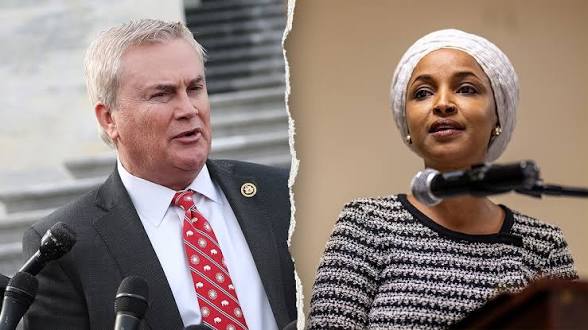
TAXPAYER FRAUD CRACKDOWN: Government Anti-Fraud Czar Exposes Billions In Mismanaged Federal Spending
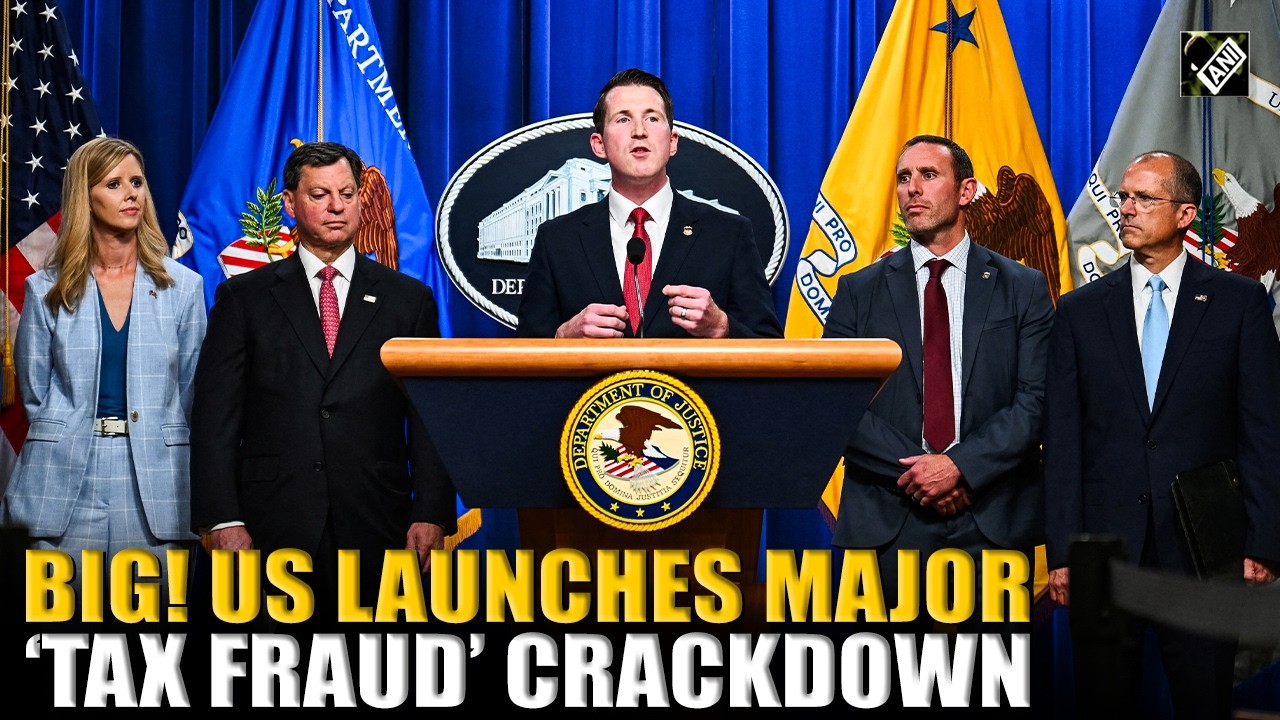
The US government is intensifying its efforts to combat taxpayer fraud, improper payments, and the misuse of federal funds. The administration’s anti-fraud initiative has brought renewed attention to billions of dollars in suspected fraud involving government programs, healthcare payments, federal contracts, and public assistance.
According to the US Government Accountability Office (GAO), estimated annual direct financial losses from fraud across government programs range from $233 billion to $521 billion. However, these figures are estimates based on fiscal years 2018–2022, not a confirmed total of money stolen during the current administration.
The latest crackdown aims to strengthen oversight, identify suspicious transactions, investigate fraudulent claims, and recover public money where wrongdoing is established. Officials say better data analysis and cooperation between federal agencies could help prevent losses before payments are made.
At the same time, questions remain about how the government calculates its fraud figures, distinguishes suspected fraud from proven criminal activity, and measures the actual savings generated by enforcement actions.
This growing debate has made taxpayer fraud crackdown efforts a major issue in discussions about government accountability, public spending, and financial transparency.
What Is Behind the Taxpayer Fraud Crackdown?

The taxpayer fraud crackdown reflects growing concern about how federal money is distributed, monitored, and protected. Federal agencies oversee enormous payment systems that support healthcare, housing, food assistance, disaster relief, government contracts, and other public services.
These programs provide essential support to millions of Americans. However, their size and complexity can also create opportunities for fraud, inaccurate payments, and administrative failures.
In March 2025, President Donald Trump signed Executive Order 14249, titled Protecting America’s Bank Account Against Fraud, Waste, and Abuse. The order called for stronger financial controls and better access to payment information across the federal government.
The administration subsequently expanded its anti-fraud activities through a broader, government-wide initiative. The White House announced a series of enforcement actions in May 2026, including investigations into suspected fraud involving government contracts and healthcare providers.
The central objective is to detect questionable transactions earlier, prevent payments that should not be made, and pursue legal action against people or organizations that deliberately defraud government programs.
Officials also want federal departments to share information more effectively. When agencies work with disconnected databases, suspicious patterns can remain hidden for months or years.
The challenge is not simply identifying questionable spending. Investigators must establish what happened, determine whether the conduct violated the law, and distinguish criminal fraud from honest mistakes or legitimate disputes over eligibility.
Anti-Fraud Czar Highlights Billions in Suspected Federal Spending Fraud
Vice President JD Vance leads the White House Task Force to Eliminate Fraud, which coordinates efforts to identify and prevent the misuse of taxpayer money.
The White House’s published Fraud Ledger reports $260.7 billion in estimated fraud uncovered since January 2025, alongside $72 billion in annualized savings attributed to administrative actions and $58.9 billion in enforcement-related figures. These are three separate measures and should not be treated as one confirmed amount of cash recovered.
The distinction matters because identifying suspected fraud does not automatically prove that a crime occurred. Similarly, stopping a payment or changing a rule may prevent potential losses without recovering money that has already been paid.
The task force’s work has placed federal spending oversight under greater scrutiny. Supporters argue that stronger enforcement is necessary to protect public resources. Critics, however, have questioned whether some of the administration’s headline figures are sufficiently documented.
A September 2026 analysis reported that some White House claims relied on broad estimates, temporary funding pauses, and cases that predated the current task force. It also noted that the methodology behind several totals was not publicly itemized in enough detail for independent verification.
Consequently, the anti-fraud effort faces two important tests: whether investigators can uncover genuine wrongdoing and whether the government can demonstrate its results through transparent, independently verifiable evidence.
How Much Money Is the Federal Government Losing to Fraud?
The scale of possible fraud is one of the main reasons the issue has attracted national attention.
The GAO estimates that fraud costs government programs between $233 billion and $521 billion annually. This estimate draws on data from fiscal years 2018 through 2022 and includes losses involving federal programs administered at different levels of government. It should not be interpreted as a current-year audit of confirmed theft.
Several factors make fraud difficult to measure accurately.
First, fraud can remain undetected for years. Investigators may discover a scheme only after examining financial records, interviewing witnesses, or connecting transactions across multiple agencies.
Second, government accounting systems do not always distinguish fraud from other improper payments. An improper payment may involve an incorrect amount, a missing document, an outdated eligibility record, or a payment made to the wrong recipient. Some cases involve deliberate deception, while others result from administrative errors.
Third, different departments use different reporting systems and investigative methods. This makes it difficult to combine findings without counting the same case more than once.
These problems explain why the government needs consistent reporting standards. Clear definitions can help taxpayers understand whether a published figure represents suspected fraud, prevented payments, court-ordered restitution, or money actually returned to the Treasury.
Without those distinctions, large headline figures may create confusion instead of improving public understanding.
Treasury Expands Payment Screening to Prevent Fraud
One major part of the taxpayer fraud crackdown involves the US Department of the Treasury and its payment-integrity systems.
On October 6, 2026, the Treasury Department announced that its expanded safeguards had screened more than 1.1 billion federal payments worth approximately $3.7 trillion during fiscal year 2026. The department reported that these checks identified and returned around 13,500 payments worth $175 million that otherwise would have gone to deceased individuals.
The Treasury also reported that approximately 99% of federal programs could access the data sources available through its Do Not Pay system, compared with around 4% at the end of fiscal year 2025.
Do Not Pay allows authorized agencies to check identity and eligibility information before issuing payments. Its purpose is to help identify suspicious or ineligible transactions before public money leaves government accounts.
This approach represents a shift away from the traditional practice of paying first and attempting to recover money later.
Under a preventive model, agencies can verify payment details, investigate inconsistencies, and address potential problems before releasing funds.
However, screening does not guarantee that every fraudulent transaction will be detected. Systems depend on accurate records, reliable data matching, appropriate rules, and effective human review.
Officials must also ensure that automated checks do not unnecessarily delay legitimate benefits or deny assistance to eligible recipients.
Federal Contracts Face Increased Fraud Investigations
Government contracts are another important target of the crackdown.
Federal agencies spend substantial amounts on construction, technology, consulting, healthcare services, equipment, and other goods and services. These contracts can involve multiple companies, subcontractors, invoices, and payment schedules.
That complexity can create opportunities for inflated invoices, false business information, duplicate billing, conflicts of interest, and other forms of misconduct.
In August 2026, the General Services Administration (GSA) announced that it had identified more than $13 billion in suspected procurement fraud involving federal contractors since March 2026. The agency said it had expanded its detection efforts using government-wide contracting data, public reporting, and inspector general enforcement information.
The amount represents suspected fraud identified by the agency, rather than a finding that every dollar was stolen or recovered.
Investigations into contractor misconduct can take considerable time. Authorities must establish whether an invoice was knowingly falsified, whether a company violated its contractual obligations, or whether an apparent discrepancy has a legitimate explanation.
If evidence supports allegations of fraud, the government may pursue civil or criminal proceedings, seek financial penalties, suspend a contractor, or attempt to recover improperly obtained funds.
Stronger controls could also help agencies identify suspicious bids and unusual payment patterns before awarding contracts.
For taxpayers, effective procurement oversight is important because money lost through fraudulent contracts cannot be used for its intended public purpose.
Healthcare and Benefit Programs Under Scrutiny
Healthcare programs and public assistance systems are central to federal anti-fraud efforts.
Programs such as Medicare, Medicaid, and the Supplemental Nutrition Assistance Program serve large populations and involve extensive networks of healthcare providers, retailers, state agencies, and other organizations.
Investigators may look for false reimbursement claims, billing for services that were never provided, identity misuse, duplicate payments, or deliberate misrepresentation of eligibility.
The White House has reported enforcement actions involving hospice providers, home health agencies, Medicaid payments, and suspected fraud involving food assistance retailers. These actions include suspensions, payment deferrals, and criminal investigations.
However, a suspension or payment deferral is not the same as a criminal conviction. Such measures may be used while an investigation proceeds or when officials identify a heightened risk that requires further review.
The government must balance fraud prevention with the need to protect people who depend on legitimate benefits.
For example, an overly broad payment restriction could affect eligible patients, families, or healthcare providers who have committed no wrongdoing. Agencies therefore need clear evidence, fair procedures, and timely reviews when challenging questionable payments.
The long-term objective should be to protect public funds without disrupting essential services.
Justice Department Strengthens Its Fraud Enforcement Strategy
The US Department of Justice is expanding its approach to fraud investigations through its National Fraud Enforcement Division.
According to the department, the division was created in 2026 to coordinate investigations and prosecutions involving fraud against federal programs, federally funded benefits, businesses, nonprofits, and private citizens. Colin M. McDonald was sworn in as its first assistant attorney general on April 1, 2026.
The division works with federal investigators and other law enforcement agencies to identify schemes, build cases, and pursue appropriate criminal or civil remedies.
In September 2026, the FBI described the launch of the National Fraud Detection Center, which brings together federal law enforcement, inspectors general, and state partners to connect information about fraud across programs and jurisdictions.
This coordination matters because large fraud schemes may cross state lines or involve multiple organizations. A single agency might see only one part of a suspicious transaction, while another agency holds records that reveal a broader pattern.
By combining information lawfully, investigators can identify links between cases, prioritize serious allegations, and reduce duplication.
The approach also supports action against organized fraud networks rather than focusing only on individual transactions.
Still, successful prosecutions require admissible evidence and due process. Investigators must distinguish suspicion from proof, and defendants retain the right to challenge allegations in court.
National Tax Fraud Enforcement Surge Targets Hundreds of Millions of Dollars
The crackdown also includes direct action against tax fraud.
On October 14, 2026, the Justice Department announced a nationwide tax enforcement surge conducted with the Internal Revenue Service and IRS Criminal Investigation.
The department said the operation involved 35 US attorneys’ offices and led to prosecutorial action against 76 defendants whose alleged and proven conduct involved an estimated loss of more than $490 million in federal revenue.
The announcement covered a range of cases involving suspected efforts to defraud the tax system. The combined amount refers to estimated revenue losses associated with the cases, not a declaration that the government had already recovered $490 million.
Tax fraud can take several forms, including deliberately concealing income, submitting false tax returns, claiming fraudulent refunds, or using deceptive business arrangements to avoid legal obligations.
Such conduct can shift a greater share of the public financial burden onto people and businesses that follow the law.
The enforcement surge demonstrates that the government’s strategy extends beyond benefit payments and procurement. It also targets schemes that deprive the Treasury of revenue it is legally owed.
Future results will depend on the quality of the evidence, the outcomes of individual cases, and the government’s ability to recover funds where the law permits.
Why Transparency Is Essential to the Crackdown
Although the government has announced major anti-fraud figures, independent verification remains essential.
A credible public accounting system should explain how each figure was calculated and what it represents. It should also distinguish newly discovered cases from older investigations that remain active.
For example, a payment temporarily withheld during an investigation may reduce immediate exposure, but it does not necessarily represent permanent savings. Likewise, an estimated fraud amount may include claims that have not yet been fully investigated.
The September 2026 reporting on the White House’s fraud figures raised concerns about the lack of detailed public documentation behind some of the administration’s claims.
These concerns do not establish that the figures are necessarily false. Instead, they highlight the need for clearer evidence and consistent reporting.
Independent audits can help verify reported savings, assess whether enforcement actions have worked, and identify weaknesses in the government’s calculations.
Public reporting should ideally disclose:
The amount of suspected fraud identified.
The amount prevented before payment.
The amount recovered after payment.
The number of cases resulting in civil settlements or criminal convictions.
The estimated administrative cost of enforcement.
The steps taken to protect eligible beneficiaries from wrongful payment delays.
Such reporting would help lawmakers, journalists, watchdog organizations, and taxpayers assess progress using comparable information.
Transparency can also strengthen public confidence by showing which actions produced measurable results.
How Technology Could Improve Federal Fraud Detection
Technology is playing an increasingly important role in government payment oversight.
Modern data systems can compare records, flag unusual transactions, and identify repeated patterns across large volumes of information. These tools can help investigators detect suspicious claims that would be difficult to identify through manual review alone.
For example, a screening system might flag several payments connected to inconsistent identity information, repeated billing for the same service, or unusual links between vendors and government contracts.
The Treasury’s expanded Do Not Pay access and payment verification measures illustrate how agencies are using more data to improve payment integrity.
Artificial intelligence may also help analysts prioritize cases by identifying patterns that deserve further investigation.
However, technology is not a substitute for human judgment. Incorrect or outdated information can produce false alerts, while sophisticated fraudsters may adapt their methods to avoid detection.
Government agencies must also safeguard personal information, limit access to authorized users, and follow applicable privacy and security requirements.
The strongest systems combine reliable data, risk-based screening, trained investigators, independent oversight, and clear procedures for correcting errors.
What the Crackdown Means for American Taxpayers
For ordinary taxpayers, the goal of stronger fraud prevention is straightforward: public money should reach its intended destination.
When agencies prevent fraudulent payments, they can reduce waste and preserve resources for legitimate services. Better contract oversight may also discourage businesses from submitting false claims or exploiting weak controls.
However, the benefits depend on whether the government can demonstrate genuine savings rather than relying solely on estimates.
Effective fraud enforcement does not eliminate the need for broader budget decisions. Even successful investigations cannot resolve every fiscal challenge facing the federal government.
Nor should the presence of fraud in a program be taken as evidence that every recipient or provider is dishonest.
A fair system should protect eligible beneficiaries, pursue credible allegations, recover funds where appropriate, and correct administrative mistakes promptly.
Taxpayers also benefit when agencies explain the results of their investigations in clear language. Transparent reporting helps the public distinguish proven cases from allegations and understand whether enforcement efforts are producing lasting improvements.
Ultimately, public confidence depends on both accountability and fairness.
What Happens Next in the Federal Spending Fraud Crackdown?
The next phase of the taxpayer fraud crackdown is likely to focus on improving payment screening, strengthening cooperation between agencies, and pursuing complex cases involving healthcare, contracts, taxes, and public assistance.
The Treasury’s expanded verification systems provide a framework for preventing some questionable payments before they are issued. Meanwhile, the Justice Department’s enforcement division and the National Fraud Detection Center are designed to improve investigations that span multiple agencies or jurisdictions.
Congressional oversight will remain important. Lawmakers can examine whether agencies have adequate resources, whether internal controls are working, and whether new policies are protecting public funds without creating unnecessary barriers for legitimate recipients.
Independent auditors can also help determine whether reported savings are accurate and whether changes reduce fraud over time.
The administration will face pressure to provide measurable evidence that its enforcement strategy is effective. That means publishing reliable figures, documenting recoveries, and explaining the difference between suspected losses and established wrongdoing.
For now, the crackdown highlights a significant challenge in public administration: preventing fraud across a vast system while preserving access to essential services.
The ultimate measure of success will not simply be the size of the announced figures. It will be the amount of fraud genuinely prevented, the funds lawfully recovered, the cases successfully resolved, and the improvements that make future abuse more difficult.
Frequently Asked Questions (FAQs)
1. What is the taxpayer fraud crackdown?
The taxpayer fraud crackdown is a series of US government initiatives designed to identify and prevent fraud, waste, and improper payments involving federal funds. The efforts include payment screening, investigations, contractor oversight, and criminal prosecutions.
2. Who is leading the federal anti-fraud initiative?
Vice President JD Vance leads the White House Task Force to Eliminate Fraud. The Treasury Department, Justice Department, IRS, FBI, and other federal agencies also conduct fraud-prevention and enforcement activities.
3. How much does fraud cost the US government?
The Government Accountability Office estimates that direct annual financial losses from fraud range from $233 billion to $521 billion. This estimate is based on fiscal years 2018–2022 and should not be confused with a confirmed figure for fraud in 2026.
4. Has the government recovered billions of dollars?
Government agencies report significant enforcement and prevention results. However, the amount of fraud identified, the value of payments stopped, annualized savings, and money actually recovered are different measures. They should not be combined into a single recovery figure.
5. Which federal programs are being investigated?
Enforcement efforts include healthcare programs, food assistance, federal contracts, tax systems, and other taxpayer-funded activities. Specific investigations depend on the available evidence and the agencies involved.
6. What is the Treasury’s Do Not Pay system?
Do Not Pay is a government resource that allows authorized agencies to check identity and eligibility information to help prevent, detect, and recover fraudulent or improper payments.
7. Does an improper payment always mean fraud?
No. An improper payment may result from administrative mistakes, missing information, eligibility errors, or deliberate deception. Investigators must establish the relevant facts before concluding that a payment involved criminal fraud.
8. How can technology help prevent government fraud?
Data analytics and payment verification can identify unusual transactions, inconsistent records, and potential eligibility problems. These tools help investigators prioritize cases, but they require accurate data, human review, and appropriate privacy safeguards.
9. Why is independent oversight important?
Independent oversight helps verify reported savings, assess whether fraud claims are supported by evidence, and ensure that enforcement measures are effective and fair. It also helps taxpayers understand how public money is protected.
10. What is the main goal of the taxpayer fraud crackdown?
The main goal is to protect public funds by preventing fraudulent payments, investigating suspected wrongdoing, recovering money where legally possible, and improving financial controls across federal programs.
Conclusion
The taxpayer fraud crackdown has placed federal spending oversight at the center of the US government’s accountability agenda. New payment safeguards, investigations into suspected contractor fraud, tax enforcement actions, and improved information-sharing systems show the breadth of the effort.
Yet large financial claims must be evaluated carefully. Estimated fraud, prevented payments, annualized savings, and confirmed recoveries are not interchangeable.
As investigations continue, the government’s credibility will depend on transparent reporting, independent verification, fair enforcement, and measurable improvements in payment integrity.
Protecting taxpayer money requires more than identifying large numbers. It requires proving wrongdoing, preventing repeat offenses, recovering funds lawfully, and ensuring that legitimate public services continue to reach the people who need them.
How useful was this post?
Click on a star to rate it!
Average rating 0 / 5. Vote count: 0
No votes so far! Be the first to rate this post.
About the Author

usa5911.com
Administrator
Hi, I’m Gurdeep Singh, a professional content writer from India with over 3 years of experience in the field. I specialize in covering U.S. politics, delivering timely and engaging content tailored specifically for an American audience. Along with my dedicated team, we track and report on all the latest political trends, news, and in-depth analysis shaping the United States today. Our goal is to provide clear, factual, and compelling content that keeps readers informed and engaged with the ever-changing political landscape.