Virginia Election Results: Democrats Win Map Vote, Power Shift, US Shocked
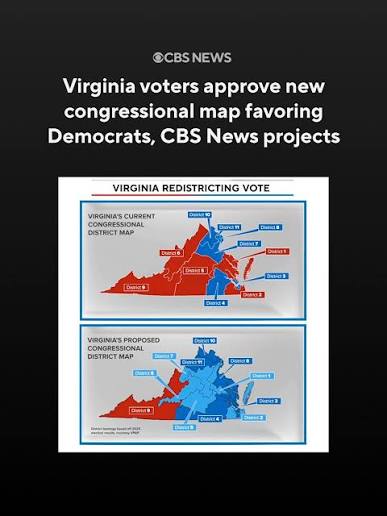
The latest Virginia election results have triggered one of the biggest political shakeups in recent U.S. history. In a closely watched referendum, voters approved a new congressional map widely seen as favoring Democrats. The decision could reshape the balance of power in Washington and dramatically influence upcoming elections.
This victory marks a turning point in the nationwide battle over redistricting. With both major parties competing to gain electoral advantages through map changes, Virginia’s vote is being called a defining moment in the fight for control of the U.S. House.
In this detailed report, we break down what happened, why voters supported the change, how Democrats secured the win, and what this power shift means for the future of American politics.
What Happened in the Virginia Election Results

The central issue in the Virginia election was a constitutional amendment allowing lawmakers to redraw congressional districts ahead of schedule.
Virginia voters approved the measure by a narrow margin, enabling the Democratic-led legislature to implement a new map before the next election cycle.
This decision temporarily bypasses the state’s bipartisan redistricting commission, allowing lawmakers to redraw district boundaries directly.
Key outcomes include:
- Approval of a new congressional map
- Potential Democratic advantage in up to 10 out of 11 districts
- Opportunity to gain as many as four additional seats
- Major influence on upcoming midterm elections
Currently, Democrats hold six seats in Virginia, but the new map could significantly expand their influence.
Why the Map Vote Was So Important
Redistricting determines how voting districts are drawn. Even small changes in boundaries can affect election outcomes for years.
Virginia’s vote was not just about state politics—it was part of a nationwide contest between Democrats and Republicans.
Supporters argued that the change was necessary to counter Republican-led redistricting efforts in other states. Critics claimed the move represented aggressive political maneuvering.
The stakes were extremely high because:
- Control of Congress is closely divided
- A few seats can determine national policy direction
- Redistricting changes last for multiple election cycles
The measure’s approval has already reshaped the national political landscape.
How Democrats Secured the Victory
Democrats ran a strong and well-funded campaign to persuade voters.
National leaders and advocacy groups invested heavily in outreach, advertising, and voter education.
Several factors helped Democrats win:
High Voter Turnout
Turnout was unusually high for a special election, indicating strong public interest.
Urban and suburban areas played a crucial role in the final result.
Strategic Messaging
Campaign messaging focused on fairness and balancing political power nationwide.
Supporters described the measure as a way to respond to aggressive redistricting efforts in Republican-controlled states.
Strong Organizational Support
Political groups poured millions of dollars into advertising campaigns and outreach efforts to encourage voters to approve the measure.
Republican Reaction to the Results
Republicans reacted sharply to the outcome, describing the vote as a major setback.
Many GOP leaders warned that the decision could create a precedent for aggressive mid-decade redistricting nationwide.
Critics raised several concerns:
- Increased political polarization
- Reduced fairness in elections
- Growing use of partisan map strategies
Some Republican officials are considering legal challenges against the newly approved maps.
Despite opposition, the vote remains valid and is expected to influence upcoming elections.
How the New Map Changes Political Power
The biggest impact of the Virginia election results is the potential shift in congressional seats.
Under the new plan:
- Democrats could gain up to four additional House seats
- Republicans may face losses in previously competitive districts
- Several incumbents could face tougher re-election battles
This change could alter the balance of power in Congress, especially if elections remain close nationwide.
Experts say the outcome could play a decisive role in determining which party controls the House.
The National Impact of Virginia’s Vote
Virginia’s election results have implications far beyond state borders.
The decision is part of a larger national redistricting battle involving multiple states.
Both parties have been aggressively redrawing maps to secure advantages.
Virginia’s move gives Democrats momentum in this ongoing contest.
Analysts say the outcome:
- Counters earlier Republican redistricting gains
- Strengthens Democratic chances nationally
- Signals increased political competition ahead
The new map could help Democrats regain control of the House if the trend continues.
Virginia’s approval adds four Democratic-leaning districts, reshaping the national redistricting balance.
Legal Challenges and Future Risks
Although the vote passed, legal battles may still follow.
Opponents argue that bypassing the bipartisan commission could violate constitutional standards.
Possible future developments include:
- Court challenges to district boundaries
- Delays in implementing new maps
- Federal-level legal disputes
Despite these concerns, most analysts believe the maps will take effect as scheduled.
Public Reaction Across the United States
Public response to the Virginia election results has been intense.
Supporters celebrated the decision as a major political victory.
Opponents expressed concerns about fairness and long-term consequences.
Across social media and political circles, reactions ranged from excitement to outrage.
Many voters view the decision as a turning point in the national redistricting debate.
What Happens Next After the Vote
The immediate next step involves implementing the newly approved congressional map.
Lawmakers will finalize district boundaries and prepare for upcoming elections.
Other states may follow Virginia’s example, launching similar redistricting efforts.
Experts expect increased political tension as the next election cycle approaches.
Key developments to watch:
- Final map approval timeline
- Candidate filings in new districts
- Early polling data
- Court rulings on legal challenges
Each of these factors could shape future election outcomes.
Historical Context of Virginia Redistricting
Virginia has experienced multiple redistricting debates over the years.
Traditionally, district boundaries were redrawn after each census.
However, recent political competition has pushed lawmakers to consider mid-decade changes.
The latest vote represents one of the most significant departures from traditional redistricting timelines.
Experts say the decision reflects growing political rivalry nationwide.
Why This Election Shocked the Nation
The Virginia election shocked many observers because of its timing and impact.
Mid-decade redistricting votes are relatively rare.
Additionally, the close margin made the outcome uncertain until late counting stages.
The vote also surprised analysts who expected stronger opposition.
Ultimately, the decision reshaped expectations for upcoming national elections.
Virginia voters approved the measure narrowly, highlighting deep political divisions across the state.
Economic and Policy Implications
Political shifts often lead to changes in policy priorities.
If Democrats gain more seats nationally, several policy areas could be affected:
- Healthcare reform
- Climate policy
- Tax legislation
- Infrastructure spending
The Virginia election results could indirectly shape federal policies affecting millions of Americans.
How This Vote Could Affect Future Elections
The long-term effects of the Virginia election may extend beyond one election cycle.
Redistricting influences voter representation and campaign strategies.
Candidates may need to adjust messaging and outreach strategies based on new district demographics.
Political parties will likely invest heavily in newly competitive areas.
These changes could reshape the national political map for years to come.
Expert Analysis of the Virginia Results
Political analysts view the Virginia vote as a calculated risk that paid off for Democrats.
Many experts describe the move as strategic, responding to similar actions in Republican-led states.
Key expert observations include:
- The decision reflects growing national polarization
- Redistricting battles will intensify nationwide
- Future elections may become increasingly competitive
Overall, analysts believe the Virginia results will shape the political landscape for the next decade.
Conclusion
The Virginia election results mark a turning point in American politics.
By approving a new congressional map, voters triggered a significant power shift that could influence elections nationwide.
Democrats secured a major victory, potentially gaining multiple seats and strengthening their national position.
Republicans, meanwhile, face new challenges as they prepare for upcoming contests.
As legal battles, campaign strategies, and voter reactions continue to unfold, one thing is clear: the Virginia vote will remain a defining moment in the ongoing battle for political power in the United States.
FAQs
What were the Virginia election results about?
The election focused on a constitutional amendment allowing lawmakers to redraw congressional districts before the usual timeline.
Did Democrats win the Virginia map vote?
Yes. Virginia voters approved the Democratic-backed redistricting plan by a narrow margin.
How many seats could Democrats gain?
Democrats could gain up to four additional congressional seats under the new map.
Why is redistricting important?
Redistricting determines district boundaries, which can influence election outcomes and political representation.
Will there be legal challenges?
Yes. Some opponents are expected to challenge the new maps in court.
How does this affect national politics?
The Virginia results could influence control of the U.S. House and reshape national election strategies.
When will the new maps take effect?
The maps are expected to be implemented before the next election cycle unless delayed by legal action.
Why did this result shock many observers?
The narrow margin, timing, and national impact made the outcome unexpected for many political analysts.
I
How useful was this post?
Click on a star to rate it!
Average rating 0 / 5. Vote count: 0
No votes so far! Be the first to rate this post.
About the Author

usa5911.com
Administrator
Hi, I’m Gurdeep Singh, a professional content writer from India with over 3 years of experience in the field. I specialize in covering U.S. politics, delivering timely and engaging content tailored specifically for an American audience. Along with my dedicated team, we track and report on all the latest political trends, news, and in-depth analysis shaping the United States today. Our goal is to provide clear, factual, and compelling content that keeps readers informed and engaged with the ever-changing political landscape.