The US-Greenland security deal has emerged as a major development in Arctic geopolitics after Secretary of State Marco Rubio said the agreement permanently addresses Washington’s national security concerns involving Greenland.
The announcement follows months of tension between the United States, Denmark and Greenland over the island’s strategic importance. President Donald Trump had repeatedly argued that Greenland was critical to US national security and had previously raised the possibility of acquiring the territory.
The newly announced agreement takes a different route. Rather than transferring Greenland to the United States, the arrangement is intended to expand the American military presence while maintaining the sovereignty of Denmark and Greenland.
Rubio described the agreement as a historic development and said Greenland would remain part of the strategic defense area of North America. He also emphasized that the arrangement is designed to prevent adversaries from establishing military bases or gaining sensitive strategic positions on the island.
However, important questions remain. The full agreement text has not been publicly released, and Danish and Greenlandic officials have indicated that additional political and parliamentary procedures are required before the agreement enters into force.
What Is the US-Greenland Security Deal?
The US-Greenland security deal is an emerging agreement involving the United States, Denmark and Greenland that would strengthen American defense access and military capabilities in the Arctic.
According to reporting on the agreement, the United States would receive expanded and long-term security rights in Greenland. The arrangement would also restrict non-NATO military bases and place limits on certain sensitive investments by countries considered strategic competitors.
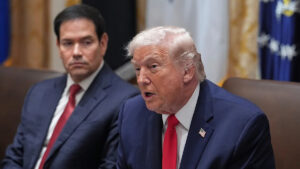
Trump described the agreement as giving the United States permanent control over security and other security-related needs in Greenland.
Rubio used similar language when describing the strategic effect of the agreement. He said Greenland would remain part of North America’s strategic defense area and that the agreement would prevent adversaries from establishing a presence there.
The distinction between security access and sovereignty is important.
The agreement does not transfer ownership of Greenland to the United States. Greenland remains an autonomous territory within the Kingdom of Denmark, while Greenlandic authorities continue to emphasize their right to self-determination.
Why Greenland Matters to US National Security
Greenland occupies an unusually important position between North America and Europe.
Its location places it near the Arctic approaches to North America and along the broader North Atlantic security environment. The island is also associated with the strategically important Greenland-Iceland-United Kingdom, or GIUK, gap.
For decades, the United States has maintained military infrastructure in Greenland.
The most important current installation is Pituffik Space Base, formerly known as Thule Air Base. The facility supports missions involving space surveillance, missile warning and defense-related operations.
The US Northern Command described Pituffik in August 2026 as a critical part of the defense network protecting North America. The base also marked its 75th anniversary this year.
The US State Department has previously described Pituffik as strategically valuable to both American and NATO defense capabilities because of its location and early-warning functions.
Therefore, the latest agreement builds on an existing military relationship rather than creating an entirely new American presence.
Rubio’s Statement on the Historic Agreement
Marco Rubio’s description of the deal is central to the latest development.
The secretary of state said the agreement would permanently and completely address US national security concerns involving Greenland.
That statement reflects Washington’s longstanding concern that the strategic status of Greenland could change in the future.
One issue discussed during negotiations has been Greenland’s possible independence from Denmark. Greenland has a strong independence movement, although it currently remains within the Kingdom of Denmark.
US officials have been concerned about ensuring that defense arrangements remain effective regardless of Greenland’s future constitutional status.
The agreement is therefore being presented by Washington as a long-term framework for Arctic security.
The Deal Does Not Mean the US Owns Greenland
One of the most important points for readers following the story is that the agreement does not amount to a transfer of Greenland to the United States.
Greenland remains part of the Kingdom of Denmark.
Danish Prime Minister Mette Frederiksen said the agreement recognizes the sovereignty and territorial integrity of the Kingdom of Denmark while also recognizing the Greenlandic people’s right to self-determination.
Greenland Prime Minister Jens-Frederik Nielsen likewise described the agreement in terms of Greenland’s interests and international cooperation.
That distinction matters because Trump’s earlier Greenland policy had focused heavily on the possibility of American acquisition.
The new arrangement instead focuses on defense cooperation, military access and strategic restrictions.
How the Agreement Changes the Arctic Security Picture
The Arctic has become increasingly important in global security discussions.
Russia has major Arctic capabilities, while China has also sought a greater economic and strategic role in the region.
The United States and its NATO allies are therefore paying increasing attention to Arctic infrastructure, surveillance, military mobility and access.
Under the reported agreement, only NATO members would be permitted to establish military bases in Greenland. Sensitive investments would also be restricted to NATO and European Union members under the reported framework.
The purpose is to reduce the possibility of a rival military or strategic presence developing on the island.
For Washington, Greenland’s geography provides an opportunity to monitor activity across the North Atlantic and Arctic regions.
For NATO, the island forms part of a broader northern defense network involving North America and Europe.
The Role of Pituffik Space Base
Any discussion of Greenland’s defense strategy eventually returns to Pituffik Space Base.
The installation has operated for decades and provides capabilities related to missile warning and space surveillance.
The US Northern Command has described the base as a cornerstone of layered North American defense. Its location gives American and allied forces access to a remote but strategically important part of the Arctic.
The new agreement could therefore support further development of American military infrastructure in Greenland.
Trump said the United States would begin developing plans for a larger military presence.
However, the exact scale, location and timetable of any future expansion have not been fully detailed publicly.
The 1951 Defense Agreement Still Matters
The current development also builds on a much older US-Danish defense relationship.
The United States and Denmark signed the Defense of Greenland Treaty in 1951. That agreement established the legal foundation for the American military presence in Greenland during the Cold War.
The United States continued operating military facilities there for decades, although the American presence was reduced after the Cold War.
The existing framework already gives Washington significant defense access.
The latest agreement is therefore better understood as an attempt to strengthen and extend strategic arrangements rather than creating the first US military relationship with Greenland.
Why the Deal Followed Months of Tension
The agreement comes after an unusually difficult period in US-Danish relations.
Trump repeatedly argued that the United States needed greater control over Greenland for national security reasons. At various points, he refused to rule out the use of military force to obtain the territory.
Those comments generated strong reactions in Denmark, Greenland and other European countries.
Denmark and Greenland repeatedly maintained that Greenland was not for sale.
The dispute also created complications within NATO because Denmark is a US ally.
The latest agreement represents a shift from the earlier territorial debate toward a security-focused arrangement involving all three governments.
Denmark’s Position on the Agreement
Danish officials have presented the arrangement differently from some American statements.
Frederiksen said the agreement strengthens common security in the Arctic and North Atlantic while recognizing Danish sovereignty and Greenland’s right to self-determination.
That language is significant because Denmark has sought to preserve its territorial integrity while also maintaining its longstanding defense partnership with Washington.
The Danish government therefore appears to view expanded US defense cooperation as compatible with continued Danish sovereignty.
However, the agreement still requires further procedures before it becomes legally operative.
Greenland’s Position
Greenland’s government has also taken a measured approach.
Prime Minister Jens-Frederik Nielsen welcomed the prospect of an agreement and said it recognizes Greenland’s interests and its role in international cooperation.
At the same time, Greenlandic officials have not presented the agreement as a transfer of sovereignty.
This distinction is especially important because Greenland’s political future remains connected to questions about greater autonomy and possible independence.
The reported agreement is designed to remain relevant even if Greenland’s constitutional relationship with Denmark changes in the future.
What Happens Next?
The agreement is not yet the end of the process.
According to Danish and Greenlandic officials, the governments still need to sign the agreement and complete the necessary parliamentary procedures before it can enter into force.
The full text has also not been publicly released, meaning that many details remain subject to clarification.
This is particularly relevant when interpreting phrases such as “permanent control” or “permanent security.”
The political statements surrounding the announcement are clear about the intended strategic direction, but the precise legal mechanisms will become easier to assess once the formal text is available.
What the US-Greenland Deal Means for NATO
The agreement could have broader implications for NATO.
Greenland is part of the Kingdom of Denmark, which is a NATO member. The United States is also a NATO member.
A stronger US military presence could improve surveillance and defense coordination in the Arctic and North Atlantic.
NATO spokesperson Allison Hart welcomed the announcement, saying the Arctic and North Atlantic are essential to collective security and that the agreement could advance security, stability and cooperation in the region.
At the same time, the agreement follows months of disagreement among allies.
The long-term impact on US-European relations will depend partly on how the agreement is implemented and how Greenlandic and Danish institutions participate in future decisions.
Russia and China Remain Central to the Strategic Debate
Another major issue is the role of Russia and China.
The reported agreement is specifically designed to prevent non-NATO adversaries from establishing military bases in Greenland.
China’s economic interest in Arctic resources and Russia’s extensive military capabilities in the Arctic have increased Western attention to the region.
Greenland also contains substantial mineral resources, adding an economic dimension to the geopolitical competition.
However, security concerns and resource competition should not be treated as identical issues. Military access, infrastructure, investment restrictions and mineral development involve different policy questions.
The agreement attempts to address several of those concerns through a broader security framework.
A Shift From Acquisition to Strategic Access
Perhaps the most significant change is the apparent shift in US policy from territorial acquisition toward strategic access.
Earlier in 2026, Rubio acknowledged that Trump’s objective had been to acquire Greenland. By June, Rubio said negotiations with Denmark and Greenland over collective defense were progressing and described the talks as being in a good place.
The September announcement indicates that negotiations ultimately moved toward a security agreement.
That represents a different approach to achieving the strategic objectives Washington has emphasized.
Instead of changing Greenland’s sovereignty, the arrangement seeks to guarantee long-term US defense access while preventing rival military positioning.
Why the Final Text Matters
Despite the strong language surrounding the announcement, the final legal details will be crucial.
Questions include:
- What specific military rights will the United States receive?
- What new infrastructure can be constructed?
- How will Greenlandic authorities participate in decisions?
- What investment restrictions will apply?
- How will the agreement operate if Greenland becomes independent?
- What parliamentary approvals are required?
- What mechanisms will resolve future disputes?
These details cannot be fully answered until the formal agreement becomes available.
For now, the public information establishes the broad political direction but leaves important implementation questions open.
What the Historic Greenland Deal Means for Global Geopolitics
The US-Greenland security deal places the Arctic at the center of a wider geopolitical competition involving North America, Europe and Russia.
For Washington, the agreement offers a framework for maintaining long-term defense access to a strategically located territory.
For Denmark, it provides a mechanism for strengthening defense cooperation while retaining sovereignty.
For Greenland, the agreement places its territory at the heart of major strategic discussions while formally recognizing its interests and right to self-determination.
The agreement also illustrates how Arctic security is becoming increasingly important to NATO planning.
Rather than simply being a remote and sparsely populated region, Greenland is now central to discussions about missile warning, space surveillance, military mobility, Arctic access and North Atlantic security.
Conclusion
Marco Rubio’s declaration that the US-Greenland security deal permanently and completely addresses American national security concerns marks a significant moment in the Arctic geopolitical story.
The agreement reportedly expands the US military role in Greenland and seeks to prevent rival powers from establishing military or sensitive strategic positions on the island.
At the same time, the deal does not transfer Greenland to the United States. Denmark and Greenland continue to emphasize sovereignty, territorial integrity and Greenlandic self-determination.
The next major development will be the publication, signing and approval of the formal agreement.
Until those steps are completed, the broad strategic framework is clearer than the precise legal details.
What is already evident is that Greenland’s importance to North American and Arctic defense has moved to the center of international security policy. The new agreement could establish a long-term framework for US-Danish-Greenlandic defense cooperation, but its ultimate significance will depend on the final text and how the three governments implement it.
FAQs
1. What is the US-Greenland security deal?
The US-Greenland security deal is an agreement involving the United States, Denmark and Greenland intended to strengthen US defense access and military capabilities in Greenland while maintaining Danish and Greenlandic sovereignty.
2. What did Marco Rubio say about the Greenland agreement?
Marco Rubio said the agreement permanently and completely addresses US national security concerns involving Greenland and keeps the territory within North America’s strategic defense area.
3. Does the United States now own Greenland?
No. Greenland remains an autonomous territory within the Kingdom of Denmark. Danish and Greenlandic officials have emphasized sovereignty and the Greenlandic people’s right to self-determination.
4. Why is Greenland strategically important?
Greenland’s location between North America and Europe makes it important for Arctic and North Atlantic defense. Its Pituffik Space Base also supports missile-warning and space-surveillance missions.
5. Will the US increase its military presence in Greenland?
The announced framework is intended to allow an expanded US military presence. Trump said the United States would begin developing plans for a larger military presence, although specific details have not been fully published.
6. Does the agreement prevent Russia and China from establishing bases in Greenland?
According to reporting on the agreement, it prevents non-NATO countries from establishing military bases in Greenland and restricts certain sensitive investments.
7. Is the Greenland security agreement already legally final?
Not completely. Danish and Greenlandic officials said the agreement must go through necessary signing and parliamentary procedures before entering into force.
8. What is Pituffik Space Base?
Pituffik Space Base is a US military installation in northwestern Greenland. It supports space surveillance, missile warning and broader North American defense missions.
9. Why has Greenland become an international security issue?
Greenland’s Arctic location, existing US military infrastructure, proximity to North American and North Atlantic routes, and potential mineral resources have made it strategically important to the United States and its allies.
10. What happens next with the US-Greenland deal?
The next steps include signing the agreement, completing required parliamentary procedures and clarifying its detailed legal and military provisions. The full text will be important for understanding how the arrangement will operate in practice.
About the Author