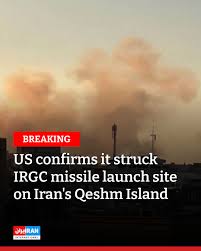
The US-Iran war has entered another dangerous phase after American fighter jets struck an Iranian missile launch site on Qeshm Island near the strategically important Strait of Hormuz. The November 17 operation targeted a military installation operated by Iran’s Islamic Revolutionary Guard Corps (IRGC), according to a US military official.
Washington described the operation as an act of self-defense in response to Iranian aggression against American personnel and military assets. The strikes followed Iran’s reported drone attack targeting a US-operated radar installation in Bahrain.
The latest military action has renewed concerns about a wider regional confrontation. It also highlights the growing importance of the Strait of Hormuz, one of the world’s most critical energy and commercial shipping routes.
Although Iranian officials reported no damage to residential, commercial, or infrastructure areas on Qeshm Island, the attack demonstrates that American forces remain prepared to strike Iranian military positions.
With tensions continuing across the Persian Gulf, questions are emerging about Iran’s next move, the security of international shipping, and the possibility of further American military operations.
US Fighter Jets Strike Iranian Missile Site on Qeshm Island
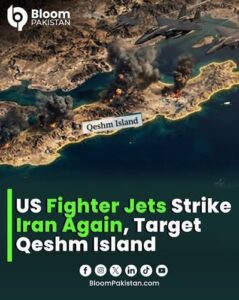
American fighter jets carried out precision airstrikes against an Iranian missile launch site on November 17, according to a US military official cited by Reuters and other international news organizations.
The targeted installation reportedly belonged to the Islamic Revolutionary Guard Corps. The official described the operation as defensive and said it responded to Iranian aggression against US personnel and military assets.
The announcement came after Iranian forces reportedly launched drones toward a US radar installation in Bahrain.
The US military said its forces remained on high alert and prepared to protect American personnel and interests throughout the region.
The strike represents another example of the continuing military confrontation between Washington and Tehran.
Importantly, the November 17 operation was not presented as the beginning of a completely new military campaign. Instead, American officials connected it to the continuing exchange of attacks between the two countries.
The distinction matters because the conflict has involved several rounds of military action, defensive operations, and diplomatic efforts.
Why Qeshm Island Is an Important Military Target
Qeshm Island occupies a strategically important position in southern Iran, close to the Strait of Hormuz.
The island sits near a major international shipping corridor connecting the Persian Gulf with the Gulf of Oman and the wider Arabian Sea.
Its location makes it important for Iran’s coastal defense and military operations.
The Strait of Hormuz is particularly sensitive because a substantial share of internationally traded oil passes through this narrow waterway.
Military installations located near the strait can influence regional security, shipping operations, and the movement of commercial vessels.
For Washington, protecting navigation and preventing attacks against American military assets remain major priorities.
For Tehran, maintaining influence over the waterway provides an important strategic advantage.
This geographic reality helps explain why Qeshm Island has repeatedly appeared in reports about the US-Iran conflict.
American strikes against missile launch facilities could reduce Iran’s ability to threaten military installations and commercial shipping.
However, attacks against military infrastructure can also increase the possibility of retaliation.
Iran’s Drone Attack on Bahrain Triggered New Concerns
The latest American operation followed renewed Iranian military activity targeting a US radar installation in Bahrain.
Iran’s Islamic Revolutionary Guard Corps claimed that its combat drones targeted a radar system operated by American forces at Sheikh Isa Air Base.
The reported attack was described by Iran as a response to what Tehran called repeated violations of its airspace by US military drones.
Bahrain’s military said its air defense systems intercepted Iranian aerial attacks.
American officials also said the incoming drones were intercepted without damage to US equipment or injuries to American personnel.
The incident raised concerns because Bahrain hosts important American military facilities.
The country is home to the headquarters of the US Navy’s Fifth Fleet, which plays a major role in American maritime operations across the Middle East.
Any successful attack against facilities in Bahrain could have wider consequences for regional security.
The attempted drone strikes also demonstrate how the conflict extends beyond Iranian territory.
American military installations and allied countries across the Persian Gulf remain exposed to potential attacks.
Washington Describes the Qeshm Operation as Self-Defense
The United States has presented the Qeshm Island strikes as a defensive military operation.
According to the US military official cited in media reports, American aircraft used precision-guided weapons against an IRGC missile launch site.
The official said the operation was carried out in response to aggression targeting US personnel and assets.
This explanation is important because Washington is attempting to distinguish limited defensive strikes from a broader escalation of military operations.
The US government has repeatedly emphasized the protection of American troops, regional partners, and international shipping routes.
However, Tehran may interpret attacks against its military installations differently.
Iran could view the strikes as another violation of its sovereignty and use them to justify additional military action.
This difference in interpretation makes the situation particularly dangerous.
When both countries describe their actions as defensive, it becomes harder to establish clear limits on military retaliation.
The possibility of miscalculation therefore remains a serious concern.
Iran Reports No Damage to Civilian Infrastructure
Iranian authorities acknowledged that American forces attacked locations on Qeshm Island.
Ahmad Nafisi, deputy provincial governor of Hormozgan province, said the attacks caused no damage to residential, commercial, or infrastructure areas.
Iran’s official IRNA news agency reported that several explosions were heard on the island.
Nafisi also said the situation remained under control and that emergency, service, and government agencies were on alert.
These statements provide an important part of the picture.
While American officials described the target as an IRGC missile launch site, Iranian authorities emphasized the absence of reported damage to civilian areas.
Independent verification of the full extent of the damage was not immediately available.
The distinction between military and civilian targets is especially important during an active conflict.
Military operations near populated areas create risks even when civilian infrastructure is not directly targeted.
Any further strikes could increase those risks, particularly if military installations remain close to residential or commercial locations.
Strait of Hormuz Becomes a Major Flashpoint
The Strait of Hormuz remains at the center of the growing confrontation.
This narrow maritime passage connects the Persian Gulf to the Gulf of Oman and is essential to international energy transportation.
A significant portion of global oil supplies normally moves through the waterway.
Consequently, military activity in the area can affect international markets far beyond the Middle East.
Iran has repeatedly attempted to restrict shipping movements during the conflict, while the United States has sought to maintain maritime access.
The American naval blockade of Iranian ports has added another layer of pressure.
Washington has also supported efforts to protect commercial vessels traveling through the region.
These competing actions have increased the security risks facing shipping companies, tanker operators, and international energy suppliers.
The Qeshm Island strikes are therefore significant for reasons beyond their immediate military objectives.
The targeted missile site was located near one of the most important maritime chokepoints in the world.
Any increase in attacks from the island or surrounding waters could further complicate commercial navigation.
Oil Markets Face Renewed Uncertainty
The escalating US-Iran conflict has created uncertainty for global energy markets.
Oil traders closely monitor developments around the Strait of Hormuz because disruptions could affect supplies from several major producing countries.
Even without a complete closure of the waterway, threats against tankers can increase transportation costs and insurance premiums.
Shipping companies may also change routes or delay journeys when security conditions deteriorate.
These developments can increase the cost of delivering energy to international markets.
The latest Qeshm Island operation has added to concerns about the security of the Persian Gulf.
Brent crude prices were reported at approximately $92.76 per barrel on November 17, according to figures cited by The Times of Israel.
Prices remain influenced by several factors, including supply expectations, shipping risks, geopolitical developments, and demand.
A prolonged confrontation could create additional volatility.
However, the effect of the latest strike on oil prices should not be considered in isolation.
The broader conflict, maritime security conditions, and decisions by major oil producers will also influence future market movements.
Iran’s Retaliation Options Could Expand the Conflict
One of the biggest questions following the American strikes concerns Iran’s potential response.
Tehran has several ways to increase pressure on Washington and its regional partners.
These could include additional drone operations, missile launches, threats against commercial shipping, or attacks involving regional allied groups.
Iran’s military strategy has frequently relied on asymmetric capabilities.
These capabilities can allow Tehran to challenge stronger conventional military forces without engaging in a traditional large-scale battle.
The country’s missile and drone programs remain important elements of its regional military influence.
The latest American attack against an IRGC missile facility could therefore become another source of tension.
However, Iran’s response is not predetermined.
Tehran may choose limited retaliation, diplomatic pressure, or a combination of military and political measures.
Its decision will depend on the perceived costs of escalation and the broader strategic situation.
The United States will also need to consider how its response could influence Iran’s next decisions.
American Military Strategy Focuses on Protecting Regional Assets
The Qeshm Island operation highlights the importance of protecting American military assets throughout the Persian Gulf.
US forces maintain a significant presence across the region.
These installations support maritime security, intelligence gathering, air defense, and military coordination with regional partners.
Bahrain is particularly important because of its naval facilities.
Other regional partners also play major roles in supporting American operations.
Iranian attacks or attempted attacks against these facilities can force Washington to strengthen defensive measures.
These measures may include additional air defense systems, surveillance operations, naval patrols, and protective deployments.
The American military must also balance deterrence with the risk of triggering a wider war.
Strikes against Iranian military infrastructure can demonstrate that attacks against US personnel may carry consequences.
At the same time, repeated military exchanges could create a cycle of retaliation that becomes difficult to stop.
This challenge is likely to remain central to American strategy.
Diplomatic Efforts Face Growing Pressure
Military escalation is taking place alongside diplomatic efforts to reduce tensions.
Oman and Qatar have been involved in discussions and mediation efforts related to the conflict.
Their diplomatic role is important because direct negotiations between Washington and Tehran remain difficult.
Both countries have significant disagreements over security arrangements, military activities, sanctions, and the future of the regional order.
The Strait of Hormuz is another major issue.
Iran wants to maintain influence over maritime movement near its coastline.
The United States wants commercial shipping to continue without restrictions or threats.
These competing objectives make negotiations complicated.
The latest strikes could weaken diplomatic progress if either side believes military pressure is more effective than negotiations.
Nevertheless, diplomatic channels remain important.
Even limited communication can help prevent misunderstandings and reduce the possibility of accidental escalation.
Regional governments also have strong reasons to avoid a wider conflict.
A prolonged war could damage trade, energy exports, investment, and economic stability across the Middle East.
Could the Qeshm Island Strikes Lead to a Wider War?
The latest operation does not automatically mean that a larger US-Iran military campaign is beginning.
American officials described the strike as defensive and connected it to attacks against US personnel and assets.
However, the continuing exchange of military operations creates several risks.
First, Iran could retaliate against American installations or regional partners.
Second, additional attacks could threaten commercial vessels and international shipping.
Third, military operations could spread to other locations across the Persian Gulf.
Finally, a miscalculation by either side could turn a limited confrontation into a much larger conflict.
The presence of multiple regional actors makes the situation even more complicated.
Countries hosting American forces may become involved in the consequences of military exchanges even when they are not directly participating in offensive operations.
For now, the available reporting does not establish that the Qeshm strikes have triggered a new full-scale offensive.
Nevertheless, the operation demonstrates that military confrontation remains active despite diplomatic discussions.
What Happens Next in the US-Iran Conflict?
The next phase will depend largely on decisions made in Washington and Tehran.
American officials will likely continue monitoring Iranian missile and drone capabilities, particularly those positioned near important shipping routes and US military facilities.
Iran, meanwhile, will face pressure to respond without creating consequences that could further weaken its military and economic position.
The security of the Strait of Hormuz will remain a central concern.
Commercial shipping companies will continue assessing risks, while regional governments will seek to prevent the conflict from spreading.
Diplomatic mediation could become increasingly important if both countries recognize the economic and military costs of continued escalation.
The situation also highlights the importance of reliable information during wartime.
Official military statements, Iranian government announcements, and independent reporting may provide different accounts of the same events.
Readers should distinguish between confirmed developments, official claims, and unverified reports.
The November 17 strikes are confirmed by multiple media reports citing American military officials and Iranian authorities. However, detailed independent assessments of the damage and the full military consequences remain limited.
Conclusion
The US-Iran war has entered another tense chapter following American fighter jet strikes against an IRGC missile launch site on Qeshm Island.
Washington described the operation as self-defense after renewed Iranian attacks targeting US military assets in the Persian Gulf region.
Iran acknowledged the strikes but said residential, commercial, and infrastructure areas were not damaged.
The island’s location near the Strait of Hormuz makes the operation strategically significant.
Any further escalation could affect regional security, international shipping, and global energy markets.
Although the latest strikes do not necessarily signal a return to full-scale combat, they demonstrate that the conflict remains dangerous and unresolved.
The coming days will be critical as both governments consider their next moves and diplomatic efforts face another major test.
Frequently Asked Questions (FAQs)
1. Why did the United States strike Qeshm Island?
The United States struck an IRGC missile launch site on Qeshm Island on November 17, 2026. A US military official said the operation was carried out in self-defense following Iranian aggression against American personnel and assets.
2. What military target did American fighter jets attack?
American fighter jets targeted a missile launch site operated by Iran’s Islamic Revolutionary Guard Corps. Officials said precision-guided munitions were used during the operation.
3. Where is Qeshm Island located?
Qeshm Island is located in southern Iran near the Strait of Hormuz. Its strategic position makes it important for regional military operations and maritime security.
4. Did the Qeshm Island strikes damage civilian areas?
Iranian provincial official Ahmad Nafisi said the attacks caused no damage to residential, commercial, or infrastructure areas. Independent verification of the full damage assessment was not immediately available.
5. What triggered the latest American strikes?
The operation followed reported Iranian drone attacks targeting a US radar installation at Sheikh Isa Air Base in Bahrain. American and Bahraini authorities said the incoming drones were intercepted.
6. Why is the Strait of Hormuz important?
The Strait of Hormuz is one of the world’s most important oil transportation routes. A significant share of internationally traded oil passes through this narrow waterway, making its security essential to global energy markets.
7. Could Iran retaliate against the United States?
Iran could consider several responses, including missile or drone operations and increased pressure on regional shipping. However, its next move has not been confirmed.
8. Will the latest strikes increase global oil prices?
The strikes could increase market uncertainty because Qeshm Island is located near the Strait of Hormuz. However, actual oil prices depend on wider supply, demand, shipping, and geopolitical conditions.
9. Is the United States preparing for a larger war with Iran?
The November 17 operation was described as a defensive strike rather than the beginning of a new full-scale offensive. Nevertheless, continued military exchanges could increase the risk of a wider confrontation.
10. Are diplomatic negotiations between the US and Iran still possible?
Yes. Diplomatic mediation involving regional countries such as Oman and Qatar remains important. However, military escalation and disagreements over maritime security continue to complicate negotiations.
About the Author