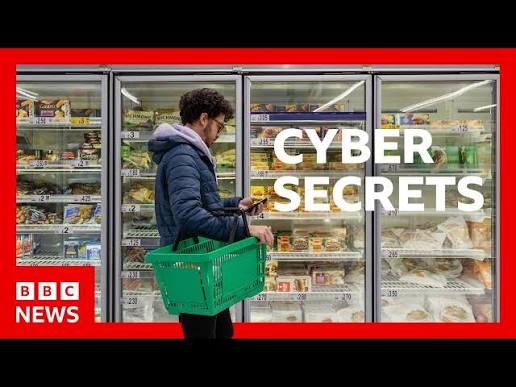
The UK has narrowly avoided a potentially serious threat to its food supply after cybersecurity experts uncovered vulnerabilities in supermarket refrigeration systems. A secret nationwide operation involving government agencies, security researchers and major retailers helped protect thousands of refrigeration controllers from possible cyberattacks.
The operation took place amid a series of cyber incidents targeting supermarket refrigeration systems across Europe. Hackers had previously managed to manipulate commercial refrigerators and freezers, causing temperatures to rise and destroying large quantities of fresh and frozen food.
Although the UK had not experienced the same level of disruption, experts discovered that British refrigeration equipment could also be vulnerable.
The discovery triggered an urgent response involving the National Cyber Security Centre (NCSC), refrigeration specialists and major supermarket operators. Companies were warned to secure their systems before criminals could exploit the weaknesses.
According to reports published on November 20, 2026, thousands of devices controlling tens of thousands of refrigeration units were disconnected from the public internet or moved behind more secure networks.
The operation remained confidential while security teams worked to reduce the risk. Officials and researchers wanted to avoid revealing technical details that could help potential attackers.
The incident highlights a growing cybersecurity challenge for the UK. Modern food distribution depends on connected technology, and even equipment as ordinary as a supermarket freezer can become a target.
UK Supermarket Fridge Hack: What Happened?

The UK supermarket fridge hack threat emerged after cybersecurity researchers examined refrigeration systems following attacks elsewhere in Europe.
Commercial refrigerators are not simply independent cooling appliances. Large supermarkets use sophisticated control systems to monitor temperatures, manage cooling cycles and identify equipment problems.
These systems often connect multiple refrigerators and freezers to a central controller. Staff and maintenance engineers can then monitor equipment remotely.
However, internet connectivity also creates potential security risks.
Researchers discovered vulnerabilities in refrigeration controllers manufactured by British company Resource Data Management (RDM). These devices are used by supermarkets and other businesses to manage commercial cooling equipment.
The weaknesses raised concerns that attackers could potentially interfere with refrigeration operations.
Cybersecurity specialists from Omega Solutions initially identified a significant issue. Experts at Pen Test Partners then examined the equipment and discovered additional vulnerabilities.
Their findings were shared with the relevant authorities and industry organisations.
The investigation quickly developed into a coordinated security response. The NCSC helped alert potentially affected businesses, while retailers began checking their refrigeration infrastructure.
The priority was simple: prevent criminals from gaining control of equipment responsible for protecting valuable food supplies.
According to Pen Test Partners, the operation involved substantial cooperation between researchers, government agencies, the manufacturer and supermarket security teams.
Pen Test Partners+1
Why Supermarket Refrigeration Systems Became a Cybersecurity Target
Supermarket refrigeration systems play an essential role in the modern food industry.
Fresh meat, dairy products, seafood, vegetables and frozen goods all depend on controlled temperatures. Even a short interruption can create serious problems.
Large supermarkets operate extensive refrigeration networks. A single control system may manage dozens of cooling units across a store.
This arrangement improves efficiency. It also allows engineers to identify faults without visiting every appliance.
However, a compromised controller could potentially affect several connected units at once.
For example, an attacker who gains unauthorised access might attempt to:
Change refrigeration temperature settings.
Interrupt normal cooling operations.
Trigger unnecessary defrost cycles.
Disrupt monitoring and warning systems.
Cause food to spoil.
Create operational problems for supermarkets and warehouses.
These risks make refrigeration equipment an important part of food supply security.
Unlike ordinary office computers, industrial refrigeration controllers may remain in service for many years. Some equipment also receives fewer software updates than modern consumer devices.
This can leave businesses exposed to security weaknesses that attackers may eventually discover.
The UK operation demonstrated why companies must protect every part of their digital infrastructure, including equipment that does not look like a traditional computer.
Secret Nationwide Operation Protected Thousands of Devices
The scale of the UK response was significant.
According to the BBC’s November 20 report, cybersecurity teams worked behind the scenes to protect refrigeration systems across supermarkets, warehouses, restaurants, petrol stations, stadiums and other commercial facilities.
The operation involved several organisations, including:
National Cyber Security Centre.
Department for Environment, Food and Rural Affairs (Defra).
Food Standards Agency (FSA).
Omega Solutions.
Pen Test Partners.
Resource Data Management.
British Retail Consortium.
Supermarket security and IT teams.
These organisations worked together to identify exposed equipment and communicate urgent security recommendations.
Thousands of refrigeration controllers were reportedly disconnected from the public internet. In some cases, technicians physically removed internet connections.
Businesses also reviewed their network configurations and introduced additional protective measures.
Some retailers had to redirect large IT teams towards the emergency response. Workers reportedly spent evenings and weekends securing equipment.
One particularly important part of the operation involved monitoring refrigeration systems manually after certain controllers were taken offline.
This helped businesses maintain temperature controls while reducing the risk of remote interference.
The BBC reported that the response covered tens of thousands of refrigeration units, demonstrating the potential scale of the threat.
BBC News+1
How Hackers Could Have Disrupted Britain’s Food Supply
The threat was particularly concerning because refrigeration systems are closely connected to food safety.
Supermarkets depend on cold storage to protect products from the moment they arrive at distribution centres until customers purchase them.
If hackers gain control of refrigeration equipment, they may be able to interfere with this process.
1. Raising Refrigerator Temperatures
One possible attack involves changing temperature settings remotely.
Refrigerators and freezers must maintain specific temperature ranges. If an attacker raises temperatures, food may become unsafe or unusable.
Fresh meat, fish, dairy products and frozen goods are particularly vulnerable to temperature changes.
2. Triggering Continuous Defrost Cycles
Another potential method involves manipulating the defrost settings.
Commercial freezers periodically use defrost cycles to remove ice. However, forcing equipment into continuous defrost mode can cause temperatures to rise.
This could damage food stocks and disrupt normal supermarket operations.
3. Disabling Temperature Monitoring
Temperature monitoring systems help businesses identify problems quickly.
If attackers interfere with monitoring equipment, employees might not receive accurate information about refrigeration conditions.
This could delay emergency responses and increase food losses.
4. Disrupting Multiple Locations
Large retail companies operate several stores, warehouses and distribution facilities.
Some refrigeration controllers manage multiple cooling units. Therefore, a successful attack against a central system could potentially affect more than one appliance.
The consequences could extend beyond a single supermarket.
However, it is important to distinguish between a discovered vulnerability and a confirmed attack. There is no public evidence that hackers successfully exploited the specific RDM vulnerabilities during the UK security operation.
European Supermarket Cyberattacks Raised the Alarm
The UK’s emergency response followed a series of attacks against refrigeration infrastructure in Europe.
France experienced particularly serious disruption in October 2026.
Hackers reportedly manipulated refrigeration systems at hundreds of supermarkets and other retail locations. Temperatures increased in affected equipment, forcing businesses to discard large quantities of fresh and frozen food.
Reports indicated that some refrigeration systems reached temperatures of approximately 50°C.
Around 700 supermarkets were reportedly affected in France, according to information published during the incident.
The attacks created financial losses and raised concerns about food safety.
Businesses had to inspect damaged equipment, remove spoiled products and restore normal refrigeration operations.
European retailers also experienced incidents in other countries.
During another wave in November, supermarkets and businesses across several European countries reported refrigeration-related cyber disruptions.
These developments demonstrated that commercial cooling infrastructure could become a target for cybercriminals.
The UK was particularly concerned because its supermarkets depend on similar connected technologies, even though the equipment used in Britain differs from some systems targeted elsewhere.
The European incidents therefore became an important warning for British businesses.
The UK response focused on identifying weaknesses before attackers could exploit them.
AP News+2
What Made the UK Refrigeration Systems Vulnerable?
The investigation focused on refrigeration controllers manufactured by Resource Data Management.
These devices help businesses monitor and manage commercial refrigeration equipment.
They provide information about temperatures, operating conditions and equipment performance.
Although the technology is useful, researchers identified security weaknesses that could create opportunities for attackers.
The concerns were serious enough to prompt additional testing and cooperation with the manufacturer.
Pen Test Partners reported discovering several vulnerabilities during its investigation.
The researchers also explained that the British systems were not identical to the refrigeration equipment involved in earlier European incidents.
This distinction matters.
The UK had not simply experienced the same attack through the same equipment. Instead, researchers identified a separate set of potential weaknesses in systems widely used by British businesses.
The manufacturer responded by developing software updates and communicating mitigation advice to customers.
RDM said it had acted quickly to address the concerns. Its chief executive also disputed some comparisons between the company’s equipment and the systems targeted in European attacks.
The company maintained that the vulnerabilities were identified in a test environment and said it had already deployed initial patches.
This response helped businesses begin addressing the security risks.
Pen Test Partners+1
Why Officials Kept the Cyber Operation Secret
One of the most unusual aspects of the UK food supply rescue was the decision to keep the operation largely confidential.
Normally, major cybersecurity incidents attract public attention quickly.
However, revealing technical details too early can create additional risks.
If researchers publicly explain how a system can be compromised, malicious actors may use that information to develop attacks.
This is particularly dangerous when the affected equipment is connected to essential services.
In this case, supermarket refrigeration systems were part of a much wider commercial network.
A public announcement could have alerted criminals to weaknesses that businesses were still trying to fix.
Keeping the investigation confidential gave retailers and security teams valuable time.
They could identify vulnerable equipment, disconnect exposed controllers and apply security updates without unnecessarily advertising the problem.
Cybersecurity specialists also avoided publishing detailed technical information about the vulnerabilities.
The approach reflects an important principle in responsible vulnerability disclosure.
Researchers should notify manufacturers and relevant authorities before releasing information that could increase the risk of exploitation.
The objective is to protect affected organisations while giving manufacturers enough time to develop and distribute fixes.
In the UK case, cooperation between researchers, government agencies and industry helped accelerate the response.
The operation also demonstrated the importance of information sharing during a potential national infrastructure threat.
NCSC and Government Agencies Played a Critical Role
The National Cyber Security Centre played an important role in coordinating the response.
The NCSC works with businesses, government departments and other organisations to improve the UK’s cybersecurity.
Its involvement was especially important because refrigeration systems are used throughout the food industry.
A weakness affecting one manufacturer could potentially create problems for many businesses.
The NCSC helped communicate warnings and security guidance to potentially affected organisations.
Defra and the Food Standards Agency were also involved because the incident had implications for food storage and supply chain safety.
Their involvement highlighted the connection between cybersecurity and food security.
A cyberattack does not need to target food production directly to affect the availability of food.
Disrupting storage facilities, distribution centres or supermarket operations could also create serious consequences.
The British Retail Consortium helped support communication across the retail sector.
This cooperation allowed businesses to receive warnings and take protective action.
The incident demonstrated that cybersecurity is not only a responsibility for technology companies. It is also an important issue for organisations responsible for essential goods and services.
Could the UK Have Faced Major Food Shortages?
The possibility of widespread food disruption was one of the biggest concerns surrounding the incident.
Supermarkets depend on refrigeration at several stages of the supply chain.
Food often travels from farms and manufacturers to refrigerated warehouses before reaching individual stores.
A disruption at any stage could create problems.
For example, if a large cold-storage warehouse loses refrigeration, businesses may have to move products to alternative facilities.
If several supermarkets experience similar problems, the pressure on available storage capacity could increase.
Retailers could also face difficulties replacing spoiled products quickly.
Fresh food is particularly sensitive because many products have limited shelf lives.
However, there is no confirmed evidence that the UK faced nationwide food shortages because of the vulnerabilities uncovered during this operation.
The security response was designed to prevent such disruption.
Taking exposed controllers offline and applying protective updates reduced the possibility of a successful attack.
Nevertheless, the incident exposed a wider weakness in modern food distribution.
Supermarkets rely heavily on connected systems, and a serious cyber incident could affect more than just digital information.
It could directly damage physical products and interrupt everyday services.
This makes cybersecurity an important part of protecting Britain’s food supply.
Small Food Businesses Could Still Face Cybersecurity Risks
Although major supermarkets received considerable attention during the operation, smaller businesses also face potential risks.
The food supply chain includes many organisations beyond large grocery retailers.
These include:
Independent supermarkets.
Convenience stores.
Restaurants and fast-food outlets.
Food processing facilities.
Refrigerated transport companies.
Cold-storage warehouses.
Petrol station shops.
Hotels and catering businesses.
Many smaller operators have limited cybersecurity resources.
Some may use older refrigeration controllers or equipment connected directly to the internet.
They might also lack dedicated IT departments to monitor unusual activity.
This creates a challenge for the wider food industry.
Protecting major supermarket chains is important, but smaller suppliers and storage operators must also secure their equipment.
A cyberattack against a relatively small supplier could still affect larger businesses that depend on its products.
For this reason, security experts have urged operators throughout the food supply chain to review their systems and apply available updates.
What Businesses Should Do to Protect Their Refrigeration Systems
The UK incident offers several important lessons for businesses that rely on commercial refrigeration.
Cybersecurity specialists recommend taking practical steps to reduce the risk of unauthorised access.
Keep Refrigeration Controllers Off the Public Internet
One of the most important recommendations is to avoid exposing refrigeration controllers directly to the public internet.
Businesses should use secure private networks or properly configured virtual private networks (VPNs).
This makes it harder for unauthorised users to reach the equipment.
Install the Latest Firmware Updates
Manufacturers regularly release firmware updates to fix security weaknesses.
Businesses should check whether their refrigeration equipment has received the latest available updates.
Older software can create unnecessary security risks.
Change Default Passwords
Default passwords are a common security weakness.
Businesses should replace factory-set passwords with strong, unique credentials.
Access should also be restricted to authorised employees and maintenance personnel.
Monitor Refrigeration Temperatures
Regular temperature monitoring can help businesses identify unexpected changes.
Companies should also maintain independent monitoring procedures where practical.
This is particularly important when remote monitoring systems are temporarily disconnected.
Review Third-Party Access
External maintenance providers sometimes require remote access to refrigeration systems.
Businesses should ensure that these connections are secure and properly controlled.
Access should be removed when it is no longer required.
These measures can reduce exposure and help protect essential cooling infrastructure.
What the Incident Means for Britain’s Cybersecurity Future
The UK supermarket fridge hack threat highlights a growing problem involving industrial technology.
Cybersecurity discussions often focus on banks, government websites, hospitals and large technology companies.
However, connected equipment is now used across almost every major industry.
Refrigeration systems, heating equipment, manufacturing machinery and warehouse controls increasingly depend on digital networks.
These technologies improve efficiency, but they also introduce new security challenges.
Many industrial systems were originally designed to operate for long periods rather than receive frequent software upgrades.
As a result, businesses may continue using equipment with outdated security protections.
The UK incident demonstrates why companies must include operational technology in their cybersecurity strategies.
Operational technology refers to systems that monitor and control physical equipment.
In this case, refrigeration controllers represented an important part of that infrastructure.
Protecting these systems is essential because a cyberattack can create real-world consequences.
It can destroy products, interrupt services and create financial losses.
The government and private sector will therefore need to continue working together to improve security standards.
Will UK Supermarkets Face More Fridge Hacking Attempts?
The risk cannot be completely eliminated.
Cybercriminals continually search for weaknesses in connected devices.
As businesses adopt more remote monitoring technology, the number of systems requiring protection also increases.
The European attacks have demonstrated that refrigeration infrastructure can attract malicious attention.
The discovery of separate vulnerabilities in UK equipment makes continued monitoring particularly important.
Although the November operation addressed major concerns, smaller businesses and parts of the wider supply chain may still require additional security improvements.
Pen Test Partners has also warned that identifying and contacting every operator can be difficult because the refrigeration supply chain is extensive.
Manufacturers must continue releasing security updates, while businesses need to ensure that those updates are actually installed.
Government agencies can support this process through warnings, technical guidance and industry cooperation.
The biggest lesson is that cybersecurity must become a continuous responsibility rather than a one-time emergency response.
The Bigger Picture: Cybersecurity Is Now Part of Food Security
The incident has changed the way businesses must think about food protection.
Food security traditionally focuses on production, transportation, storage and availability.
However, digital technology now connects many of these activities.
A supermarket may have sufficient food supplies, but a refrigeration failure could still make those products unusable.
Similarly, a warehouse may have enough storage capacity, but a cyberattack could disrupt the systems that keep products at safe temperatures.
This means protecting the food supply requires more than maintaining physical infrastructure.
Businesses must also protect the software, networks and devices that support their operations.
The UK’s secret cyber operation provides an important example of how early intervention can reduce the risk of serious disruption.
It also highlights the value of cooperation between government agencies, security researchers and private companies.
For consumers, the immediate message is reassuring: the operation was designed to prevent a potential problem, not to respond to a confirmed nationwide supermarket fridge attack.
However, the wider warning remains significant.
As the food industry becomes increasingly connected, protecting digital infrastructure will be essential to keeping supermarket shelves stocked.
Frequently Asked Questions (FAQs)
1. What was the UK supermarket fridge hack operation?
It was a confidential cybersecurity operation involving the NCSC, security researchers, refrigeration specialists and retailers. The operation identified and addressed vulnerabilities in commercial refrigeration controllers before they could potentially be exploited by hackers.
2. Why were UK supermarket fridges at risk?
Researchers identified security weaknesses in refrigeration controllers manufactured by Resource Data Management (RDM). These controllers manage commercial cooling equipment and could potentially be exposed to unauthorised access.
3. How many refrigeration systems were protected?
According to BBC reporting on November 20, 2026, thousands of controllers managing tens of thousands of refrigeration units were secured during the nationwide operation.
4. Did hackers successfully attack UK supermarkets?
There is no public evidence that attackers successfully exploited the specific RDM vulnerabilities uncovered during the secret UK operation. The purpose of the response was to prevent a potential attack.
5. Which government agency helped protect UK supermarkets?
The National Cyber Security Centre (NCSC) played a central role. Defra and the Food Standards Agency also participated in the wider response.
6. What is Resource Data Management (RDM)?
Resource Data Management is a British company that manufactures refrigeration monitoring and control equipment. Its systems are used by businesses to manage commercial refrigerators and freezers.
7. How can hackers damage supermarket food supplies?
Attackers who gain control of refrigeration systems could potentially manipulate temperatures, interfere with cooling cycles or disrupt monitoring. These actions could cause food to spoil and create operational problems.
8. Were other European countries affected by fridge cyberattacks?
Yes. France and several other European countries experienced incidents involving commercial refrigeration systems during October and November 2026. Some businesses reported spoiled food and operational disruption.
9. How can supermarkets prevent refrigeration cyberattacks?
Businesses should keep controllers off the public internet, install firmware updates, use strong passwords, secure remote connections and monitor refrigeration temperatures.
10. Is Britain’s food supply currently under threat?
The specific vulnerabilities addressed by the November operation were subject to significant mitigation efforts. There is no confirmed evidence that the incident caused nationwide food shortages. However, continued cybersecurity improvements remain necessary.
About the Author