TEXAS ICE SHOOTING: Protests erupt, federal chaos, border crackdown, violent clashes
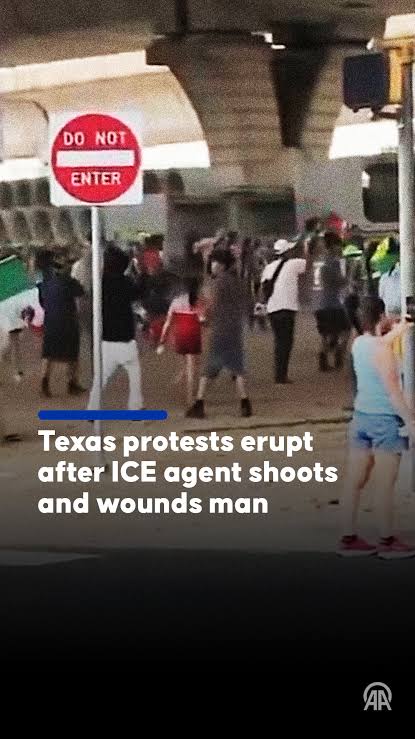
The Texas ICE shooting has triggered protests and renewed scrutiny of federal immigration enforcement after an Immigration and Customs Enforcement officer shot and wounded a Venezuelan man in Austin.
The incident happened Sunday, September 20, in Texas. The man, identified by his attorney as 28-year-old Wilber Rafael Garces Perez, suffered a gunshot wound to the torso and was hospitalized in serious but stable condition. He was later placed in federal custody, according to reporting from the Associated Press and Reuters.
The shooting has quickly become another flashpoint in the national debate over immigration enforcement. Protesters gathered in Austin following the incident, while city officials demanded greater transparency over what happened.
At the same time, federal authorities have defended the broader enforcement operation, saying Perez had a final order of removal. His attorney disputes aspects of the government’s account and says his immigration status was different from the federal description.
The competing accounts mean several important questions remain unresolved.
What Happened in the Texas ICE Shooting?
The Texas ICE shooting occurred in Austin during an immigration enforcement operation.
According to Reuters, ICE agents pursued Perez on foot before an officer shot him in the torso. He was transported to a hospital and was later placed in federal custody.
The Department of Homeland Security said Perez had previously entered the United States illegally and was subject to a final removal order.
However, Perez’s attorney, Kate Lincoln-Goldfinch, disputes the government’s description of his immigration status. That disagreement is important because the legal circumstances surrounding an immigration operation can affect how the public understands the events leading to the shooting.
Authorities have not released a complete public account resolving every detail.
The investigation therefore remains central to understanding the incident.
Austin Officials Demand Independent Investigation
Austin officials have raised concerns about relying exclusively on an internal federal investigation.
Mayor Kirk Watson called for local law enforcement and the Texas Rangers to participate in the investigation. Reuters reported that Watson expressed distrust in an investigation conducted solely within ICE.
That demand reflects a broader concern surrounding incidents involving federal immigration officers and civilians.
Local officials generally have an interest in determining what occurred within their communities, even when federal officers are carrying out federal duties.
The investigation could potentially examine:
- Why the federal operation began.
- What led to the foot pursuit.
- Whether Perez posed an immediate threat.
- Why the officer fired.
- Whether less-lethal alternatives were available.
- What body-camera or surveillance footage shows.
- How the federal and local agencies coordinated.
- What happened immediately after the shooting.
Those questions cannot be conclusively answered until investigators examine available evidence.
Protests Erupt After the Shooting
The shooting quickly became a focus of demonstrations in Austin.
Protesters gathered near the scene, with immigration enforcement becoming the central issue. Reports described heightened tensions between demonstrators and law enforcement.
The demonstrations are part of a wider pattern surrounding ICE operations.
Immigration detention centers, federal enforcement operations and deportation efforts have increasingly become sites of political demonstrations across the United States.
However, it is important to distinguish between peaceful protest activity and verified acts of violence.
The Texas ICE shooting itself was an action involving an ICE officer and a civilian. That does not establish that protesters caused the shooting or that demonstrations were inherently violent.
Reports of clashes should therefore be assessed individually, based on confirmed police statements, video evidence and independent reporting.
Why the Texas ICE Shooting Matters
The Austin shooting comes during an intense period of immigration enforcement.
ICE has significantly expanded enforcement activity under the Trump administration. AP reported that the agency recorded more than 50,000 monthly arrests in both July and August, representing the highest monthly levels in the agency’s history.
That scale of enforcement means encounters between federal immigration officers and members of the public are receiving increased attention.
When an officer fires a weapon during an enforcement operation, questions about training, use-of-force policies and accountability naturally become part of the public debate.
At the same time, federal officials argue that immigration laws must be enforced and that officers face potentially dangerous situations while carrying out their duties.
The Austin case therefore sits at the intersection of immigration policy, law enforcement authority and public accountability.
Federal Immigration Crackdown Intensifies
The Texas incident also comes as the federal government continues a broad immigration crackdown.
Immigration enforcement has expanded beyond traditional border operations. ICE conducts investigations and arrests within the interior of the United States, while Customs and Border Protection remains primarily responsible for border enforcement.
The distinction matters.
ICE and CBP are both components of the Department of Homeland Security, but their missions are different.
ICE generally focuses on immigration enforcement within the country, including arrests, detention and removal proceedings.
CBP is responsible for border security and related customs functions.
The federal government’s broader immigration strategy includes detention, deportation operations, border barriers and increased enforcement resources.
In Texas, border security has also been a major state priority.
Texas Border Security Takes Center Stage
Texas has invested heavily in border enforcement through state initiatives.
The federal government recently agreed to reimburse Texas for billions of dollars spent on border-security measures under Operation Lone Star. The Houston Chronicle reported that the state is expected to receive at least $7.5 billion from the Department of Homeland Security.
Meanwhile, the Trump administration has continued expanding physical barriers along the Texas-Mexico border.
AP reported that construction began in September in the Big Bend region of West Texas as part of a much larger border-wall program. The project includes barriers, roads and surveillance infrastructure.
These developments demonstrate that border enforcement remains a major federal and state priority.
However, the Austin shooting is geographically and operationally different from a border-wall project because it involved interior immigration enforcement.
From Border Security to Interior Enforcement
The distinction between border security and interior enforcement is becoming increasingly important.
A person can encounter federal immigration authorities far from the international border.
ICE investigations may occur in cities, neighborhoods, workplaces and other locations throughout the United States.
That reality has generated concern among immigrant communities and civil-rights organizations.
Supporters of expanded enforcement argue that immigration laws apply throughout the country and that federal officers need the authority and resources to locate people subject to removal.
Critics argue that aggressive enforcement can increase fear and create dangerous encounters.
The Texas ICE shooting has intensified that disagreement.
Questions About the Use of Force
One of the most significant unanswered questions concerns the circumstances under which the ICE officer fired.
Federal authorities have not publicly established every detail surrounding the shooting.
That means claims about whether the shooting was justified should be treated cautiously until investigators release additional evidence.
Use-of-force investigations commonly examine an officer’s perception of danger, the sequence of events, available alternatives and whether the force used complied with applicable policies and law.
Body-camera footage, witness accounts, physical evidence and official reports can all become important.
Austin Mayor Kirk Watson has specifically sought greater transparency, including local involvement in the investigation.
Federal and Local Authority Collide
The incident also highlights a complicated feature of American government.
Immigration enforcement is primarily a federal responsibility.
At the same time, local governments remain responsible for public safety within their jurisdictions.
That can create tension when federal agents conduct operations inside cities.
Local officials may demand information or participation in an investigation, while federal agencies maintain authority over their own operations.
The Austin case demonstrates how quickly those overlapping responsibilities can become politically and legally contentious.
Are Violent Clashes Confirmed?
The phrase “violent clashes” has circulated in descriptions of the broader immigration-enforcement environment, but the available reporting on the Austin shooting should not be used to automatically characterize all protests as violent.
There were protests after the shooting, and reports described tensions between demonstrators and law enforcement.
However, protest activity and violence are not synonymous.
That distinction is especially important in fast-moving breaking news.
A protest can include large crowds, confrontations, shouting or police activity without every participant engaging in violence.
Meanwhile, separate violent incidents at immigration facilities have occurred in Texas.
For example, the 2025 shooting outside the Prairieland Detention Center led to federal terrorism prosecutions and later prison sentences for multiple defendants.
That earlier incident should not be confused with the September 2026 Austin shooting.
The Political Debate Is Growing
The Texas ICE shooting has intensified arguments over immigration policy.
Supporters of the administration’s enforcement strategy point to removal orders, border security and the government’s responsibility to enforce immigration laws.
Opponents have raised concerns about transparency, civil liberties and the potential risks of expanding federal immigration operations in local communities.
Neither side’s broader political argument by itself establishes what happened during the Austin shooting.
That determination requires evidence from the investigation.
This distinction is particularly important because immigration policy is one of the most politically divisive issues in the United States.
What Happens Next?
Several developments could shape the next stage of the Texas ICE shooting investigation.
1. Investigators review evidence
Authorities are expected to examine video footage, witness accounts, physical evidence and statements from involved officers.
2. Local authorities seek greater involvement
Austin officials have already called for local participation, including involvement by the Texas Rangers.
3. Immigration status remains disputed
Federal officials say Perez was subject to a final removal order, while his attorney disputes the government’s characterization of his legal status.
4. Protests could continue
The shooting has already prompted demonstrations. Further protests could follow as additional information becomes public.
5. Federal enforcement remains under scrutiny
The incident adds to broader scrutiny surrounding the expanding use of federal immigration officers.
Why Transparency Will Be Important
Transparency could determine how the public understands the Texas ICE shooting.
When an officer shoots a civilian, independent examination of the evidence can help establish what happened.
Body-camera footage may be particularly significant if available.
Other evidence could include:
- Police reports
- ICE reports
- Emergency dispatch records
- Witness statements
- Surveillance video
- Medical records
- Ballistics evidence
- Court and immigration records
A complete investigation could also clarify disputed claims about Perez’s immigration status and the events immediately preceding the shooting.
A Larger National Immigration Debate
The Austin incident is unlikely to remain an isolated local story.
Immigration enforcement has become a national political issue, particularly as the federal government expands arrests and removals.
Texas occupies a particularly important position in that debate because it shares a long international border with Mexico and has invested heavily in border security.
Yet the Austin shooting demonstrates that immigration enforcement is not limited to the border.
Federal agents can conduct operations deep inside major American cities.
That creates difficult questions about federal authority, local oversight, individual rights and public safety.
The answers will depend not only on political arguments but also on investigations, court proceedings and publicly released evidence.
Conclusion
The Texas ICE shooting has become a major flashpoint after an ICE officer shot and wounded 28-year-old Venezuelan national Wilber Rafael Garces Perez in Austin.
Federal authorities say Perez had a final order of removal, while his attorney disputes aspects of that account. The circumstances surrounding the shooting remain under investigation.
Protests followed the incident, adding another layer to an already heated immigration debate.
Austin officials are calling for greater transparency and local participation in the investigation.
Meanwhile, the federal government continues a broader immigration crackdown, while Texas pursues extensive border-security measures.
The key issue now is evidence.
As investigators review the shooting and authorities release more information, the public will have a clearer picture of what happened in Austin and what the incident could mean for the future of immigration enforcement in Texas and across the United States.
FAQs About the Texas ICE Shooting
What happened in the Texas ICE shooting?
An ICE officer shot and wounded 28-year-old Venezuelan national Wilber Rafael Garces Perez in Austin, Texas, on September 20, 2026. He suffered a gunshot wound to the torso and was later placed in federal custody.
Where did the Texas ICE shooting happen?
The shooting happened in Austin, Texas, during an immigration enforcement operation.
Why did the ICE officer shoot the man?
The complete circumstances surrounding the shooting remain under investigation. Authorities have not publicly established every detail explaining why the officer fired.
What does ICE say about the man’s immigration status?
Federal authorities say Perez had previously entered the United States illegally and was subject to a final order of removal. His attorney disputes aspects of the government’s account.
Were there protests after the shooting?
Yes. Protests were reported in Austin following the shooting, with demonstrators criticizing federal immigration enforcement.
Who is investigating the Texas ICE shooting?
The Department of Homeland Security’s Homeland Security Investigations unit, with FBI assistance, is involved in the investigation. Austin officials have also called for local participation, including involvement by the Texas Rangers.
Is the Texas ICE shooting connected to border-wall construction?
The events are part of the broader immigration-enforcement environment, but the Austin shooting itself was an interior ICE operation rather than a border-wall operation. Separately, the federal government has begun additional border-wall construction in West Texas.
Why is the shooting receiving national attention?
The incident comes amid historically high levels of ICE enforcement and growing debate over federal immigration policy, use of force and transparency. AP reported that ICE recorded more than 50,000 monthly arrests in July and August.
What happens next?
Investigators are expected to review available evidence, including witness accounts and other records. Further official findings could clarify the circumstances of the shooting and the disputed details surrounding the man’s immigration status.
How useful was this post?
Click on a star to rate it!
Average rating 0 / 5. Vote count: 0
No votes so far! Be the first to rate this post.
About the Author

usa5911.com
Administrator
Hi, I’m Gurdeep Singh, a professional content writer from India with over 3 years of experience in the field. I specialize in covering U.S. politics, delivering timely and engaging content tailored specifically for an American audience. Along with my dedicated team, we track and report on all the latest political trends, news, and in-depth analysis shaping the United States today. Our goal is to provide clear, factual, and compelling content that keeps readers informed and engaged with the ever-changing political landscape.