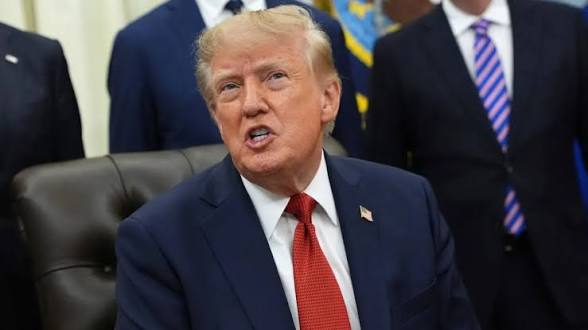
IRAN CRUSHED: Waltz demands sanctions compliance, economy choked, regime cornered
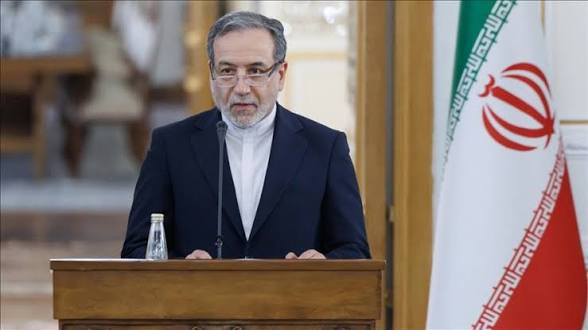
The United States is intensifying economic pressure on Iran, with U.S. Ambassador to the United Nations Mike Waltz urging countries to enforce sanctions and restrict economic activity that could provide Tehran with additional revenue.
The latest pressure campaign comes as Washington expands efforts to target Iran’s financial networks, oil revenues, shipping operations and other channels that the U.S. government says are being used to support the Iranian state and its military activities.
The phrase “Iran crushed” is being used in political commentary to describe the growing economic pressure. However, the actual situation is more complicated. Iran continues to operate an economy, maintain trade relationships and seek alternative routes around restrictions. At the same time, new American measures are raising the costs of doing business with Tehran.
On September 16, the U.S. Treasury’s Financial Crimes Enforcement Network met with global financial institutions as part of Operation Economic Outcast, seeking to give banks and financial institutions information that could help identify Iranian sanctions-evasion networks.
The development illustrates an important change in the sanctions strategy: Washington is not focusing only on Iranian companies. It is also attempting to influence the international institutions and foreign businesses that allow Iranian trade and financial transactions to continue.
Mike Waltz pushes sanctions compliance
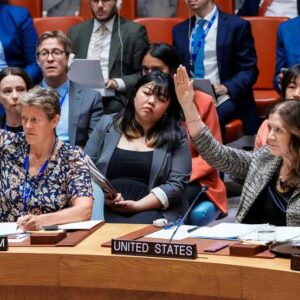
Mike Waltz has become one of the prominent U.S. officials advocating stronger pressure on Tehran.
According to recent reporting, Waltz said the Trump administration would press Gulf countries and other partners to enforce Iran sanctions through international institutions. His comments came ahead of President Donald Trump’s return to the United Nations.
The central message is straightforward: Washington wants foreign governments and companies to think carefully before continuing commercial relationships with Iran.
That matters because sanctions are most effective when financial institutions, shipping companies, insurers, traders and governments comply with them.
A sanctions program can lose some of its impact if companies can easily move money through third countries, disguise cargo ownership, use alternative shipping arrangements or find financial intermediaries willing to accept the risk.
The latest American strategy therefore focuses heavily on enforcement.
Operation Economic Outcast expands the pressure
The U.S. Treasury formally launched Operation Economic Outcast on August 24, 2026.
Treasury described the initiative as a whole-of-government campaign intended to target the economic networks supporting Iran and the Islamic Revolutionary Guard Corps.
The department said its strategy would focus on Iran’s financial connections around the world and its methods for generating revenue and avoiding sanctions.
Treasury also warned foreign entities involved in sanctions evasion that they could face restrictions involving the U.S. financial system.
That creates a significant dilemma for international companies.
A business may have commercial reasons for maintaining an Iranian relationship, but access to the U.S. financial system is important for many multinational companies. The possibility of secondary sanctions can therefore influence corporate decisions even when the company itself is outside the United States.
Oil remains at the center of the economic pressure
Iran’s oil industry is particularly important because energy exports provide a major source of foreign currency.
Washington has repeatedly targeted Iranian oil networks, including companies, intermediaries, vessels and brokers involved in transporting Iranian petroleum.
The Treasury’s August announcement identified shipping and petroleum networks among the areas receiving increased attention. It also said authorities had targeted a network of brokers, companies and shadow-fleet vessels operating across several jurisdictions.
The objective is not simply to prevent one tanker from carrying Iranian crude.
Instead, the strategy attempts to make the entire transaction more difficult.
That can include:
- Identifying the seller.
- Tracking the vessel.
- Monitoring ownership structures.
- Examining insurance arrangements.
- Following financial payments.
- Identifying intermediaries.
- Targeting companies involved in transportation.
- Increasing the risks associated with purchasing Iranian oil.
This approach can increase the cost of Iranian exports even when the underlying oil remains available.
Financial pressure goes beyond traditional banking
Iran’s sanctions challenge is also increasingly connected to alternative financial systems.
Treasury said its latest campaign includes digital assets, technology, gold, aviation and shipping.
The inclusion of these sectors reflects Washington’s view that sanctions evasion does not happen only through conventional bank transfers.
Cryptocurrency can potentially provide another payment channel. Gold can function as a store of value when access to conventional financial markets is restricted. Aviation and shipping networks can provide logistical pathways for people, goods and money.
By expanding the number of sectors exposed to sanctions, Washington is attempting to close some of these alternative routes.
Why sanctions compliance matters
The phrase Iran sanctions compliance has become increasingly important for international businesses.
U.S. sanctions can affect companies that have no direct presence in America if their activities involve restricted Iranian entities or transactions that fall under U.S. sanctions authorities.
For large multinational companies, the risk can be significant.
A company could face financial penalties, restrictions or loss of access to parts of the U.S. financial system if regulators determine that it violated applicable sanctions.
As a result, sanctions enforcement can influence corporate behavior even without direct military action.
Banks may conduct additional due diligence. Shipping companies may avoid particular routes. Insurers may reconsider coverage. Traders may demand higher premiums for transactions involving Iranian entities.
The combined effect can make international trade more expensive and complicated.
Iran’s economy faces mounting pressure
Economic pressure on Iran is not new.
The country has dealt with sanctions for years, forcing businesses and government institutions to develop alternative mechanisms for trade.
However, the latest U.S. campaign adds additional pressure by targeting multiple parts of the economic system simultaneously.
Recent reporting indicates that alternative trade routes are also facing difficulties.
The Wall Street Journal reported that Iran’s attempts to circumvent restrictions through overland trade have encountered delays and higher costs at borders with neighboring countries. The report also described sharply higher food prices and increased transportation costs.
These developments demonstrate an important feature of economic warfare: restrictions do not necessarily have to eliminate trade completely to create economic consequences.
If transportation becomes slower, financing becomes harder and insurance becomes more expensive, businesses can face significant additional costs.
Inflation adds another layer of pressure
Inflation is one of the most important indicators when examining the effects of economic restrictions on ordinary households.
When imported goods become more expensive, transportation costs rise or the domestic currency loses purchasing power, consumers can face higher prices.
The Wall Street Journal reported that food prices in Iran rose substantially in August, while transportation difficulties contributed to higher costs for goods.
However, attributing every economic problem in Iran directly to U.S. sanctions would be too simplistic.
Domestic economic management, currency conditions, infrastructure, trade restrictions, conflict-related disruption and government policies can all influence prices.
Sanctions are one important factor within a broader economic environment.
The international dimension
Washington’s strategy also depends on the behavior of other countries.
Iran maintains relationships with countries outside the U.S.-led sanctions system. Those relationships can provide alternative markets, financial channels and transportation routes.
The United States is therefore attempting to increase the cost of supporting Iranian trade.
Treasury said countries and companies involved in Iran-related activity could face greater sanctions exposure.
This creates a wider geopolitical issue.
Countries that maintain commercial ties with Tehran must weigh their economic interests against the possibility of U.S. sanctions.
The result is a complicated international environment in which Iran’s trade relationships are influenced not only by economics but also by foreign-policy calculations.
What Mike Waltz’s message means
Waltz’s recent statements suggest that Washington wants sanctions enforcement to become an international effort rather than an exclusively American policy.
That is significant.
The effectiveness of sanctions depends partly on enforcement beyond U.S. borders. If financial institutions and companies in other countries continue processing transactions without sufficient scrutiny, sanctions can be bypassed.
By encouraging allies and partners to cooperate, Washington hopes to make sanctions evasion more difficult.
The approach also increases diplomatic pressure on countries that continue doing business with Tehran.
Iran still has tools to respond
Despite the increased pressure, it would be inaccurate to suggest that Iran has been completely economically isolated.
Iran has experience operating under sanctions and has developed alternative trade networks.
It can attempt to use:
- Third-country intermediaries.
- Alternative payment arrangements.
- Overland transportation.
- Regional trading partners.
- Shadow shipping networks.
- Cryptocurrency and other financial mechanisms.
- Barter or indirect trade arrangements.
The United States is attempting to target many of these methods.
But sanctions enforcement is an ongoing process rather than a single event.
When one route becomes difficult, traders may search for another.
The Strait of Hormuz remains crucial
The broader economic confrontation is also connected to the Strait of Hormuz.
The waterway is one of the world’s most important energy routes. Any prolonged disruption can affect oil markets far beyond Iran and the Persian Gulf.
Washington has increased attention on shipping connected to Iranian activity, while Iran has also attempted to use its geographical position as leverage.
The economic stakes are therefore global.
Recent market movements show how quickly expectations about U.S.-Iran diplomacy can influence energy prices. Reuters reported on September 21 that oil prices fell as investors responded to optimism about possible diplomatic developments involving the Middle East.
The Financial Times likewise reported that Brent crude moved below $100 per barrel amid hopes for diplomatic progress and comments involving possible U.S.-Iran negotiations.
This demonstrates that economic pressure on Iran can have consequences beyond Iran itself.
Sanctions versus diplomacy
The latest developments also raise a question about whether economic pressure and diplomacy are competing strategies or complementary ones.
The Trump administration has continued to apply significant pressure while also leaving open the possibility of negotiations.
Recent reports indicate that Washington has discussed conditions for future talks, including issues related to Iran’s nuclear program and regional activities.
That means sanctions can serve two purposes from the U.S. government’s perspective.
First, they can restrict revenue and economic activity.
Second, they can be used as leverage in negotiations.
Iran, meanwhile, has its own calculations about the costs and benefits of engaging with Washington.
Why the “regime cornered” claim needs context
The phrase “regime cornered” is a political characterization rather than an independently measurable fact.
There is clear evidence that Iran faces increased economic pressure.
There is also evidence that the United States is expanding sanctions enforcement and targeting additional economic sectors.
But these facts do not automatically demonstrate that Iran’s government is close to collapse.
Iran continues to have functioning state institutions, economic activity, international relationships and mechanisms for adapting to sanctions.
Therefore, a more precise description is that Tehran is facing intensified economic and diplomatic pressure while attempting to maintain alternative trade and financial channels.
That distinction is important for accurate reporting.
What happens next?
Several developments will be important to watch.
1. Sanctions enforcement
The effectiveness of the new measures will depend heavily on enforcement.
Washington is likely to continue identifying companies, vessels, financial intermediaries and other organizations suspected of supporting Iranian trade.
2. International cooperation
The response of European, Asian and Middle Eastern governments will matter.
If major trading partners cooperate with U.S. sanctions, Iran’s ability to bypass restrictions could become more difficult.
If some governments resist, Tehran could retain alternative economic channels.
3. Oil exports
Iranian oil exports will remain a key indicator.
Any significant reduction could put additional pressure on government revenues.
At the same time, disruptions to Iranian oil flows can also affect global energy markets.
4. Diplomatic talks
Potential U.S.-Iran negotiations could change the trajectory quickly.
An agreement could lead to sanctions relief or a reduction in enforcement pressure.
A breakdown in diplomacy could produce another round of economic restrictions.
5. Domestic economic conditions
Inflation, currency stability, employment and access to essential goods will remain important indicators of the sanctions’ domestic effects.
Global markets are watching closely
The Iran sanctions campaign is not simply a Middle East story.
Energy traders, shipping companies, banks and governments around the world are monitoring developments.
Oil prices can react rapidly to changes in expectations about supply.
Financial markets can also respond to signs of escalation or diplomatic progress.
The September 21 market response showed this clearly. Oil prices fell while investors reacted to signals of possible diplomatic progress involving Iran and the wider Middle East.
This means the economic consequences of the Iran confrontation extend well beyond Tehran.
Conclusion
The latest U.S. pressure campaign represents a significant expansion of the effort to restrict Iran’s access to international finance, energy markets and commercial networks.
Mike Waltz is urging countries to enforce sanctions, while the Treasury Department’s Operation Economic Outcast is targeting financial and commercial networks that Washington says help Iran generate revenue and evade restrictions.
The campaign covers oil, shipping, aviation, technology, gold, digital assets and financial activity.
Iran is facing real economic challenges, including higher trade costs and inflationary pressure. However, descriptions such as “crushed” or “cornered” should be understood as political language rather than established measurements of the country’s political future.
The key question now is whether intensified sanctions enforcement will produce changes in Tehran’s economic behavior, foreign policy or willingness to negotiate.
For businesses, banks and governments around the world, the immediate issue is sanctions compliance.
For Iran, the challenge is maintaining trade and financial access while facing an increasingly coordinated effort by Washington to restrict those channels.
For global markets, the biggest uncertainty remains whether the confrontation develops toward further escalation or renewed diplomacy.
FAQs
What is the latest Iran sanctions policy?
The United States has expanded sanctions enforcement against Iran, including measures targeting financial networks, oil-related activity, shipping, aviation, technology, gold and digital assets.
What did Mike Waltz say about Iran sanctions?
Recent reporting says Waltz urged countries and U.S. partners to enforce sanctions against Iran and indicated that the administration would press allies to support sanctions enforcement internationally.
What is Operation Economic Outcast?
Operation Economic Outcast is a U.S. Treasury campaign launched in August 2026 to target economic and financial networks that Washington says support Iran and facilitate sanctions evasion.
Are Iran’s oil exports being targeted?
Yes. U.S. sanctions have targeted networks involved in Iranian petroleum sales, shipping and revenue generation. Treasury’s August campaign specifically identified petroleum and shipping networks among its targets.
Are Iran’s economic problems caused only by sanctions?
No. Sanctions are an important factor, but inflation, currency conditions, domestic economic policies, trade disruptions and regional conflict can also affect Iran’s economy.
Is Iran completely isolated economically?
No. Iran continues to maintain trade and economic relationships with countries outside the U.S.-led sanctions system and has developed alternative methods for conducting international commerce.
Could sanctions affect global oil prices?
Yes. Iran is an important regional energy producer, and developments affecting its exports or the Strait of Hormuz can influence global oil-market expectations. Recent market movements have also shown that diplomatic developments can quickly affect oil prices.
What should businesses know about Iran sanctions compliance?
Businesses involved in Iran-related transactions need to understand applicable sanctions rules, conduct appropriate due diligence and assess exposure to U.S. sanctions and secondary-sanctions risks.
Could sanctions lead to negotiations?
Economic pressure can be used as leverage in diplomatic negotiations. Recent reporting indicates that U.S. officials have continued discussing conditions for possible negotiations with Iran.
What happens next for Iran?
The major developments to watch are sanctions enforcement, Iranian oil exports, international cooperation, domestic economic conditions and the possibility of renewed U.S.-Iran diplomacy.
How useful was this post?
Click on a star to rate it!
Average rating 0 / 5. Vote count: 0
No votes so far! Be the first to rate this post.
About the Author

usa5911.com
Administrator
Hi, I’m Gurdeep Singh, a professional content writer from India with over 3 years of experience in the field. I specialize in covering U.S. politics, delivering timely and engaging content tailored specifically for an American audience. Along with my dedicated team, we track and report on all the latest political trends, news, and in-depth analysis shaping the United States today. Our goal is to provide clear, factual, and compelling content that keeps readers informed and engaged with the ever-changing political landscape.