Ainsley Earhardt has once again become the subject of intense political and media debate after comments made during Fox News programming triggered criticism across the political spectrum.
The controversy reflects a familiar pattern in modern American media: a television segment becomes a social-media talking point, competing outlets interpret the same remarks differently, and accusations of bias quickly follow.
However, separating documented facts from political rhetoric is essential.
Earhardt is a longtime Fox News personality and co-host of Fox & Friends. Fox News continues to list her among the program’s hosts, alongside Brian Kilmeade and Lawrence Jones.
In August 2026, one of the segments attracting particular attention involved Democratic politicians and their growing use of appearance, personality and social media to connect with younger voters. The discussion was framed around the phrase “Democrats Enter Their Thirst Trap Era.”
The segment generated criticism from progressive commentators, while supporters of the discussion viewed it as part of a broader political-media conversation about how candidates communicate with younger audiences.
The controversy therefore raises several questions: What did Earhardt actually say? Was there evidence of a media “meltdown”? Were claims about “fake news” supported? And why did the segment attract such strong reactions?
Who Is Ainsley Earhardt?
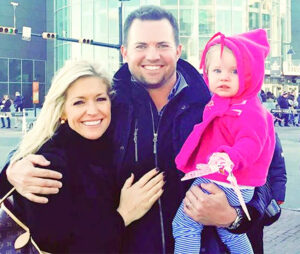
Ainsley Earhardt is one of Fox News’ prominent television personalities.
She has been associated with Fox News since 2007 and became a familiar face on Fox & Friends, the network’s influential morning program.
The program regularly combines breaking news, interviews, political commentary and cultural discussions. Because of its large audience and highly political subject matter, comments made by its hosts can quickly spread beyond the original broadcast.
That dynamic is particularly important in the current media environment.
A television discussion that lasts only a few minutes can generate thousands of social-media posts within hours. Clips can also circulate without the surrounding conversation, making it difficult for viewers to determine exactly what was said and in what context.
That is part of what happened with the August discussion involving Earhardt and Democratic politicians.
What Did the Fox Segment Actually Discuss?
The August 19, 2026 segment focused on the way Democratic politicians have increasingly used social media, visual presentation and personal branding to appeal to younger voters.
Reporting about the segment identified politicians including Alexandria Ocasio-Cortez, Zohran Mamdani and Michigan Democratic Senate candidate Abdul El-Sayed.
Earhardt commented on their presentation and social-media appeal. The discussion included references to El-Sayed’s clothing, Ocasio-Cortez’s appearance and Mamdani’s online popularity.
Earhardt also acknowledged that Democrats have been effective at using social-media platforms to reach younger audiences.
That point is significant because it complicates the idea that the segment was simply an attack.
The discussion also included a strategic argument: Republicans could learn from the Democrats’ approach to TikTok and other social platforms.
Therefore, the segment contained both criticism and recognition of an opposing political party’s communication strategy.
Why Did the Segment Generate Outrage?
Political television frequently produces sharply divided reactions because viewers approach the same comments with different ideological expectations.
Critics argued that focusing on politicians’ appearance rather than their policies was inappropriate or distracting.
Some commentators also questioned why a serious political discussion would emphasize clothing, attractiveness and social-media presentation.
Other observers viewed the discussion differently. They argued that political campaigns increasingly depend on social-media visibility and that appearance, personality and branding can influence how candidates connect with younger voters.
The disagreement therefore extends beyond Earhardt herself.
It reflects a broader debate about modern political communication.
Traditional political coverage focused heavily on speeches, legislation, voting records and policy platforms. Modern campaigns also invest heavily in short-form video, influencers, memes, Instagram posts and TikTok content.
As a result, appearance and personality can become part of political communication even when the underlying policy issues remain unchanged.
Did Fox News Experience a “Meltdown”?
The phrase “Fox hosts meltdown” is a characterization rather than an independently established fact.
Available reporting confirms that Earhardt made controversial comments during the segment and that the discussion attracted criticism. However, describing the entire episode as a “meltdown” requires an interpretation of the hosts’ behavior.
The same applies to claims of widespread “media panic.”
There is evidence of criticism from media organizations and commentators. That does not automatically establish that the entire media industry reacted with panic.
This distinction matters for accurate reporting.
A strong SEO headline can attract attention, but the article itself should distinguish between:
- What a host actually said
- What another publication reported
- What critics claimed
- What supporters argued
- What can be independently verified
That approach gives readers a clearer picture of the controversy.
The “Fake News” Question
The phrase “fake news” is frequently used in American political arguments, but it can describe very different things.
Sometimes it refers to an intentionally fabricated story.
At other times, political figures use it to describe reporting they believe is biased, incomplete or unfavorable.
Those categories should not be treated as identical.
In the Earhardt controversy, there is no basis in the available reporting to conclude broadly that the coverage surrounding the incident was “fake news.”
Instead, readers should examine individual claims.
For example, reporting about the Fox segment can be compared with available video or transcript material. If a quotation appears in multiple reports, readers can examine whether the wording matches the original broadcast.
This is a more reliable way to evaluate a disputed media story than assuming that one side is automatically correct.
The Bigger Debate Over Political Media
The Earhardt controversy illustrates a much larger argument about political television.
Fox News has a clearly identifiable conservative audience, while other major American news organizations attract different political demographics.
That creates an environment in which the same event can receive very different framing.
A Fox News discussion may emphasize one part of a political story, while MSNBC, CNN, newspapers or digital publications may emphasize another.
This does not automatically mean that one report is fabricated.
It can mean that different organizations select different facts, guests and interpretations.
That is why readers should distinguish reporting from commentary.
A factual statement can be checked against primary evidence.
An opinion cannot be “fact-checked” in exactly the same way because it represents a judgment or interpretation.
Social Media Has Changed the Controversy Cycle
The controversy surrounding Earhardt also demonstrates how quickly television commentary can become an online political story.
A segment may originally be watched by a television audience. Someone then posts a short clip on X, Instagram, TikTok or another platform.
The clip can receive millions of views.
Users may add captions that frame the clip in a particular way. Other accounts then repost it with additional commentary.
By the time the original broadcast reaches a large online audience, the discussion may no longer be about the complete segment.
Instead, it becomes a debate over the most controversial sentence or moment.
This phenomenon affects hosts across the political spectrum.
A conservative commentator can become the subject of progressive criticism. A progressive commentator can become the target of conservative criticism.
In both cases, short clips can create an impression that is different from watching the complete conversation.
Why Ainsley Earhardt Remains a Major Fox News Figure
Earhardt’s position on Fox News gives her comments substantial visibility.
Fox News continues to feature Fox & Friends as a major morning program, with Earhardt among its co-hosts. The network’s official programming information lists current segments and interviews involving the program.
Her profile has also expanded beyond routine morning news.
She has interviewed major political figures and participated in discussions about presidential politics, foreign policy, culture and domestic issues.
For example, Media Matters documented an interview with Donald Trump on Fox & Friends in June 2026 in which Earhardt discussed U.S. military action involving Iran. The organization quoted Earhardt expressing the view that Americans had an appetite for the conflict, while Trump discussed his own view of media coverage.
That earlier episode demonstrates why Earhardt’s political commentary can generate significant attention.
Criticism From the Left and Right
Political criticism of media personalities rarely comes from only one direction.
Progressive critics have frequently challenged Fox News hosts over political framing and commentary.
At the same time, Fox News viewers can also criticize hosts when they believe the network has gone too far in one direction.
Recent reporting illustrated that dynamic when some Fox & Friends viewers reacted negatively to comments by Lawrence Jones during a September 2026 discussion involving research about children and pets. Earhardt and Brian Kilmeade were also part of the program.
This shows that media controversies can develop within a network’s own audience.
The lesson is important: disagreement with a host does not automatically establish that the host’s entire program is false, just as support for a host does not prove every statement is accurate.
How Readers Can Fact-Check Political Media Claims
Readers can take several simple steps when encountering a viral political-media controversy.
1. Watch the Original Clip
Whenever possible, locate the complete segment rather than relying on a short social-media clip.
Context can change the meaning of a statement.
2. Check the Date
Political controversies are frequently recirculated months or years after the original event.
A current-looking post may actually contain an old video.
3. Compare Multiple Sources
Read coverage from different outlets.
Look for agreement on basic facts before considering competing interpretations.
4. Separate Facts From Opinions
Statements such as “the host said X” can potentially be verified.
Statements such as “the host was hysterical” are interpretations.
Keeping those categories separate improves accuracy.
5. Look for Primary Evidence
Video, transcripts, official statements and original documents are generally more useful than screenshots of someone else’s commentary.
6. Be Careful With Viral Headlines
Words such as “meltdown,” “explosive,” “destroyed,” “panic” and “exposed” often function as attention-grabbing language.
They do not necessarily describe independently verified facts.
What the Ainsley Controversy Really Shows
The latest debate around Ainsley Earhardt is less about one television personality than about the changing nature of political media.
Television hosts now operate in an environment where every statement can become a social-media clip.
Political parties increasingly use entertainment techniques to reach younger voters.
News organizations compete for attention in an increasingly fragmented media market.
And audiences often consume political information through short videos rather than complete broadcasts.
Those trends make context more important than ever.
The August 2026 controversy demonstrates this clearly. Earhardt criticized aspects of the presentation and social-media strategy used by progressive Democratic figures, while also acknowledging that Democrats have been effective at reaching younger audiences online.
That combination is more complicated than the simplified versions that often appear on social media.
Final Takeaway
The Ainsley Earhardt controversy has become another example of the intense political-media cycle surrounding Fox News.
There is documented evidence that Earhardt participated in a controversial discussion about Democratic politicians’ appearance, social-media strategies and appeal to younger voters. There is also evidence that critics reacted strongly to the segment.
However, broader claims about a universal Fox News “meltdown,” nationwide “media panic” or a sweeping “fake news” exposure require more evidence than the available reporting provides.
The most useful approach is to examine the original comments, identify which statements are factual and which are opinion, and compare reporting from multiple sources.
In today’s political environment, that distinction is increasingly important.
The controversy surrounding Ainsley Earhardt is therefore not simply a story about one Fox News host.
It is also a case study in how political commentary, social media, partisan reactions and viral headlines combine to create the modern news cycle.
Readers who want the clearest picture should focus on the underlying broadcast, documented statements and independently verifiable facts rather than relying solely on emotionally charged descriptions.
FAQs
Who is Ainsley Earhardt?
Ainsley Earhardt is a Fox News television personality and co-host of Fox & Friends. She has been associated with Fox News since 2007.
Why is Ainsley Earhardt in the news?
Earhardt attracted attention following political commentary on Fox News, including an August 2026 discussion about Democratic politicians’ use of appearance and social media to connect with younger voters.
What was the controversial Fox News segment about?
The August segment discussed the growing use of social-media branding and visual presentation by Democratic politicians and was presented under the banner “Democrats Enter Their Thirst Trap Era.”
Did Ainsley Earhardt criticize Democratic politicians?
Yes. Reporting on the August 2026 segment says Earhardt criticized the presentation and political messaging of several Democratic figures while also acknowledging their success on social media.
Was there really a Fox News “meltdown”?
“Meltdown” is an interpretive description rather than an independently established fact. The available reporting documents controversial comments and criticism, but the term itself reflects a characterization.
Was “fake news” proven?
The available evidence does not establish a broad claim that the coverage was “fake news.” Individual statements should instead be checked against the original broadcast, transcripts and reliable reporting.
Why do Fox News controversies spread so quickly?
Fox News has a large political audience, and controversial television clips can spread rapidly through social-media platforms. Short clips can also remove important context from the original discussion.
Is Ainsley Earhardt still on Fox & Friends?
Fox News’ current programming information lists Earhardt as a co-host of Fox & Friends.
How can readers verify political-media claims?
Readers should watch the original footage, check the date, compare multiple reliable sources, distinguish facts from opinions and look for primary evidence whenever possible.
What is the main lesson from the controversy?
The controversy demonstrates the importance of context when evaluating political television. Viral headlines and short clips can emphasize particular moments, while the complete broadcast may contain additional statements that change the overall picture.
About the Author