The Middle East crisis has entered another dangerous phase after Iran’s leadership called on Gulf nations and the wider Muslim world to strengthen unity and identify what Tehran describes as their “real enemy.”
The appeal comes at a highly sensitive moment. Tensions between Iran and the United States have intensified again, military activity around the Strait of Hormuz remains a major international concern, and Gulf governments are facing growing pressure to balance their security relationships with Western powers against the need to prevent a wider regional war.
Iran’s call for greater cooperation is particularly significant because relations between Tehran and several Gulf Arab states have historically been marked by rivalry, mistrust and competing security interests. However, the continuing conflict has created a new geopolitical environment in which traditional alliances are being reassessed.
Iranian Supreme Leader Mojtaba Khamenei recently urged Muslim nations, particularly rulers in the Gulf region, to recognize their “real enemy,” stressing that division among Muslim countries benefits outside powers. His message emphasized unity, mutual defense and cooperation at a time when the region is facing extraordinary military and political pressure.
The development has raised an important question: Could the Middle East crisis produce a new regional alignment, or will Iran’s appeal deepen the existing divisions between Tehran, the Gulf states and the West?
Iran’s Call for Gulf Unity
Iran’s latest message is built around a familiar strategic argument: regional powers should resolve their differences and avoid allowing external actors to determine the future of the Middle East.
According to recent reporting, Mojtaba Khamenei urged Gulf leaders and Muslim nations to strengthen cooperation and mutual defense. He argued that internal divisions weaken the region and create opportunities for outside powers to expand their influence.
For Tehran, the message serves several purposes.
First, Iran wants to present itself as a regional power capable of challenging Western military and political influence.
Second, it seeks to reduce the possibility of a united Gulf response against Iranian military activities.
Third, Tehran wants to increase pressure on Gulf governments that host American military facilities or maintain close defense partnerships with Washington.
The strategy is therefore both ideological and geopolitical.
Iran’s leadership is attempting to shift the regional debate away from the traditional rivalry between Iran and Arab Gulf states. Instead, Tehran is promoting a broader argument that Muslim nations should focus on external threats rather than internal disputes.
However, turning this message into a genuine Gulf alliance will be extremely difficult.
Why the Gulf States Face a Difficult Choice
The Gulf countries are not politically or strategically identical. Saudi Arabia, the United Arab Emirates, Qatar, Bahrain, Kuwait and Oman have different diplomatic relationships with Iran, the United States and other global powers.
Some governments have attempted to maintain dialogue with Tehran even during periods of intense conflict. Others remain deeply concerned about Iran’s missile capabilities, regional influence and military activities.
At the same time, the current crisis has created new doubts about long-term security arrangements.
Recent analysis suggests that Gulf states are developing new and overlapping security partnerships while still maintaining important ties with the United States. Rather than completely replacing Washington’s role, Gulf governments appear to be seeking greater flexibility and strategic independence.
This means the Middle East is moving toward a more complicated security system.
Instead of relying entirely on one external protector, regional governments may increasingly build relationships with multiple international and regional powers.
That shift could become one of the most important consequences of the Iran conflict.
Renewed US-Iran Hostilities Raise Alarm
Iran’s call for Gulf unity has come as military tensions between Washington and Tehran have once again intensified.
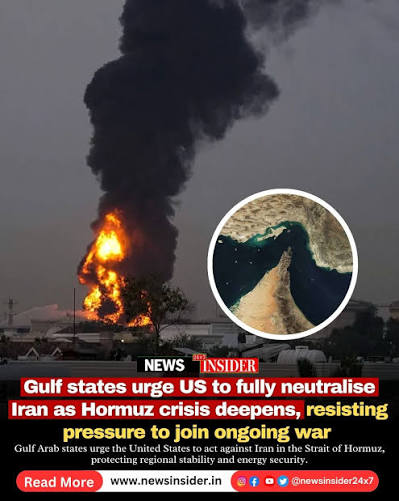
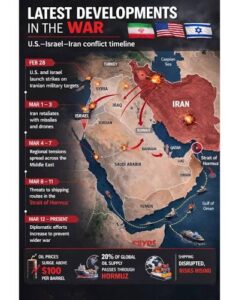
Recent reports indicate that the United States and Iran exchanged fire again after a period of reduced direct hostilities. The renewed confrontation has focused attention on the Strait of Hormuz, one of the world’s most strategically important waterways.
The situation is particularly dangerous because the Strait of Hormuz is vital to global energy supplies.
Any major disruption can immediately affect:
- Global oil prices
- Shipping routes
- Energy markets
- Inflation
- Asian economies
- International trade
Reuters reported that continued supply risks connected to the Middle East conflict have kept oil markets under pressure, with analysts expecting elevated prices because of ongoing uncertainty around regional energy flows.
Therefore, the Middle East crisis is no longer only a regional security issue.
It has become a global economic problem.
Strait of Hormuz Remains the Center of the Crisis
The Strait of Hormuz is one of the most strategically important locations in the world.
It connects the Persian Gulf with international waters and serves as a major route for oil and energy shipments.
When tensions rise between Iran and the United States, the Strait immediately becomes a central geopolitical battleground.
Iran has long viewed control and influence around the waterway as a major source of strategic leverage. The United States and its partners, meanwhile, emphasize freedom of navigation and the protection of international shipping.
This creates a dangerous cycle.
Military activity increases.
Shipping companies become cautious.
Insurance costs rise.
Energy markets react.
Governments deploy additional military forces.
The risk of miscalculation then grows further.
A single incident involving missiles, drones, naval forces or commercial shipping could potentially trigger a much wider confrontation.
That is why the renewed Middle East crisis has generated concern far beyond the Gulf.
Is Iran Building an Anti-Western Front?
The phrase “anti-Western front” is increasingly being used to describe the broader geopolitical strategy Tehran may be pursuing.
Iran’s position is not simply about creating a formal military alliance between Gulf countries.
Instead, Tehran appears to be encouraging a regional political environment in which Western military influence becomes less dominant.
This strategy could include:
Greater Regional Cooperation
Iran wants neighboring countries to communicate directly and develop regional security mechanisms.
Reduced Dependence on Western Security Guarantees
Tehran has consistently criticized the presence of American military forces in the Middle East.
Political Unity Against External Pressure
Iran argues that sanctions, military pressure and foreign intervention are being used to reshape the region.
Stronger Relations With Non-Western Powers
Iran has also strengthened relationships with countries and organizations outside the traditional Western alliance system.
However, there is a major contradiction.
Iran is calling for regional unity while many Gulf governments remain concerned about Iranian military actions and threats to their sovereignty.
For this reason, Iran’s diplomatic message may attract attention without necessarily producing a formal alliance.
UAE-Iran Tensions Show the Limits of Unity
The latest developments involving the United Arab Emirates demonstrate how difficult it will be for Tehran to build trust across the Gulf.
Recent reporting said the UAE intercepted an Iranian drone over its territorial waters amid renewed regional tensions. The UAE described the incident as a violation of its sovereignty, while the broader conflict between Iran and the United States continued to escalate.
Such incidents make regional diplomacy significantly more complicated.
Iran may call for Muslim and Gulf unity, but neighboring governments must also respond to immediate security concerns.
This creates a fundamental problem for Tehran’s strategy.
Political unity requires trust.
Trust is extremely difficult to establish when countries fear missile attacks, drone incidents or military escalation.
As a result, the future of any potential Gulf-Iran dialogue will depend heavily on whether the current military confrontation can be reduced.
Gulf Frustration With the United States Is Growing
Despite continuing security relationships with Washington, there are signs that some Gulf governments have become increasingly frustrated by the prolonged conflict.
The concern is understandable.
A major war between the United States and Iran places Gulf countries in an extremely difficult position because many of them host Western military facilities while also being geographically close to Iran.
They could become targets even if they do not want to participate directly in the conflict.
This has created pressure for Gulf leaders to pursue diplomacy and de-escalation.
Recent reporting has highlighted growing frustration among Gulf partners over the economic and security consequences of the prolonged Iran conflict.
The situation could encourage Gulf governments to demand greater influence over decisions that directly affect their security.
In other words, the crisis may push regional states toward greater strategic independence.
The Economic Cost of a Wider Middle East War
The consequences of a major escalation would be enormous.
The Gulf is not only an important political region. It is one of the world’s most important economic centers.
Dubai, Doha, Riyadh and other cities have become major hubs for:
- International trade
- Aviation
- Tourism
- Banking
- Energy
- Technology
- Investment
A prolonged regional war could threaten decades of economic development.
Oil prices have already shown sensitivity to renewed military tensions. Energy markets remain vulnerable because of uncertainty surrounding production and shipping routes.
Higher energy prices can also increase inflation in countries far away from the Middle East.
Consumers could face higher prices for:
- Fuel
- Transportation
- Food
- Manufactured goods
Therefore, preventing escalation is not only a Middle Eastern priority.
It is a global economic priority.
Could the Crisis Create a New Gulf Security Architecture?
One of the most important long-term consequences of the conflict could be the creation of a new Gulf security architecture.
Traditionally, the United States has played a central role in the defense of several Gulf countries.
However, recent events may encourage regional governments to diversify their security relationships.
A new system could involve:
- Continued American military cooperation
- Greater Gulf-to-Gulf defense coordination
- Direct diplomatic engagement with Iran
- Increased cooperation with Asian powers
- Expanded relations with European countries
- Independent regional security mechanisms
Recent analysis suggests that Gulf states are already developing overlapping partnerships rather than relying exclusively on a single security arrangement.
This does not necessarily mean the end of American influence.
Instead, it could mean that the Middle East is becoming more multipolar.
Iran’s Economy Adds Pressure to the Crisis
The geopolitical confrontation is occurring while Iran faces serious economic difficulties.
Reports have described intense pressure on the Iranian economy, including high inflation, currency weakness and the effects of sanctions and war-related disruption.
Economic pressure can produce two very different outcomes.
It could encourage diplomacy and compromise.
Or it could push leaders toward greater confrontation if they believe external pressure is intended to force political surrender.
This uncertainty makes the current situation especially dangerous.
Iran’s leadership may believe that demonstrating military and political resistance is necessary to maintain its negotiating position.
The United States, meanwhile, may believe that continued pressure will force Tehran to change its policies.
When both sides believe pressure will eventually make the other side compromise, escalation can continue for a long time.
What Happens Next?
The future of the Middle East crisis will likely depend on several critical factors.
1. US-Iran Diplomacy
A return to serious negotiations could reduce the immediate danger.
2. Strait of Hormuz Security
Any agreement protecting commercial shipping could lower global economic pressure.
3. Gulf Diplomacy
Gulf states could play an increasingly important role as mediators.
4. Military Incidents
Another major drone, missile or naval confrontation could rapidly expand the conflict.
5. Iran’s Regional Strategy
Tehran will need to decide whether calls for regional unity are supported by practical diplomatic engagement.
6. Western Policy
Washington and its allies will also face pressure to balance military deterrence with diplomacy.
The region remains highly unpredictable.
Conclusion: Iran’s Gulf Alliance Call Comes at a Critical Moment
Iran’s call for Gulf unity represents one of the most significant political developments in the latest phase of the Middle East crisis.
By urging Gulf rulers and Muslim nations to identify their “real enemy,” Tehran is attempting to reshape the regional political conversation and challenge the influence of Western powers.
However, building a genuine Gulf alliance will not be easy.
Historical rivalries, security concerns and recent military incidents remain major obstacles.
At the same time, the prolonged conflict is forcing Gulf governments to reconsider their strategic options. Some countries appear to be seeking greater diplomatic flexibility and more diversified security relationships.
The biggest danger remains escalation.
Renewed military activity involving Iran, the United States and the strategically vital Strait of Hormuz could quickly affect the entire region and global economy.
For now, the Middle East stands at a critical crossroads.
One path could lead toward greater regional dialogue, new security arrangements and diplomatic compromise.
The other could lead toward a broader confrontation involving more countries, disrupted energy supplies and a prolonged period of instability.
Iran’s call for Gulf unity may therefore be more than a political message.
It could be an attempt to shape the future balance of power in a Middle East that is rapidly changing.
FAQs
1. Why is Iran urging Gulf countries to unite?
Iran’s leadership has called for greater unity among Muslim and Gulf nations, arguing that regional divisions benefit outside powers and that countries should strengthen cooperation and mutual defense.
2. Who is Iran’s “real enemy” referring to?
Iranian rhetoric generally refers to external powers and Western influence, particularly the United States and its regional military partnerships. The exact political interpretation varies depending on the statement and context.
3. Could Iran and Gulf states form a formal alliance?
A formal alliance would be difficult because of longstanding political and security differences. However, increased diplomatic engagement and regional security cooperation remain possible.
4. Why is the Strait of Hormuz important?
The Strait of Hormuz is a major global energy shipping route. Disruption there can affect oil supplies, shipping costs and international energy prices.
5. How could the Middle East crisis affect oil prices?
Military tensions and shipping disruptions can reduce supply or create fears of supply shortages, causing oil prices to rise.
6. Are Gulf countries moving away from the United States?
There is no simple answer. Gulf states continue to maintain important relationships with Washington, but recent developments suggest they are also seeking more diverse security and diplomatic partnerships.
7. Could the US-Iran conflict become a wider regional war?
Yes. The risk of wider escalation remains significant, especially if additional countries become directly involved or major military incidents occur.
8. What could prevent further escalation?
Diplomatic negotiations, regional mediation, military restraint and agreements protecting international shipping could all help reduce tensions.
9. Why is Iran’s economy important to the conflict?
Economic pressure can influence Tehran’s political decisions. Severe sanctions and inflation may encourage negotiations, but they can also increase resistance if Iranian leaders view external pressure as an attempt to force surrender.
10. What is the biggest risk facing the Middle East right now?
The greatest immediate danger is a miscalculation that turns limited military exchanges into a much broader regional war involving additional states and critical energy infrastructure.
About the Author