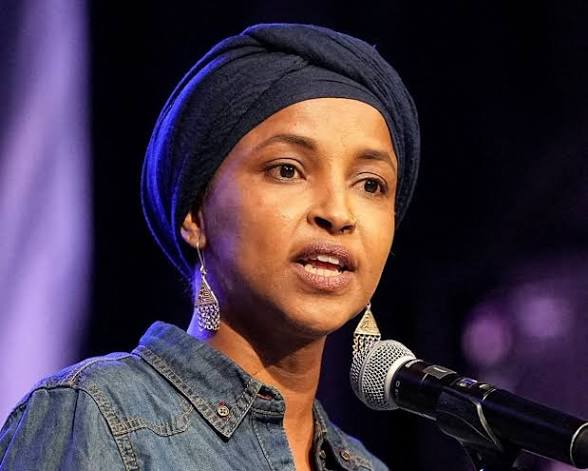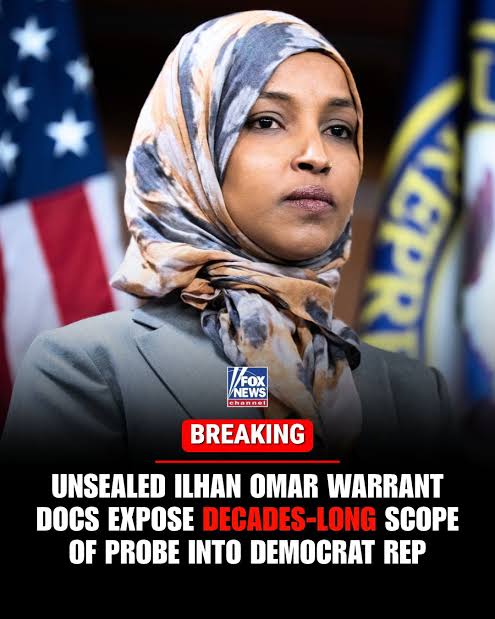
Newly unsealed federal court documents have revealed significant details about the investigation involving Democratic Representative Ilhan Omar. The records show that federal investigators are examining suspected offenses dating back decades, potentially reaching as far as 1980.
The disclosure has intensified political attention surrounding the Minnesota congresswoman, whose Washington, D.C., residence was searched by federal agents in October 2026.
The documents offer the clearest public indication yet of the investigation’s potential timeframe. However, many important details remain hidden behind extensive redactions. Prosecutors have not publicly identified all the suspected offenses, and Omar has not been charged with a crime.
The case has also raised constitutional questions about the government’s authority to search the private residence of a sitting member of Congress.
As the investigation continues, the newly released records have created fresh questions about its origins, scope and potential political consequences.
Unsealed Documents Reveal the Scope of the Ilhan Omar Investigation
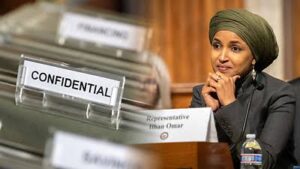
The latest development came on November 23, 2026, when a federal court released more than 160 pages of previously sealed records connected to the search of Omar’s Washington residence.
The documents followed a legal challenge by news organizations seeking public access to records surrounding the October search.
According to reporting by the Minnesota Star Tribune, the documents indicate that federal investigators are seeking evidence concerning suspected offenses dating from 1980 to the present.
One government filing reportedly states that the United States believes Omar committed certain alleged crimes over decades, beginning long before she entered Congress.
However, the specific allegations remain redacted.
This distinction is important because the records do not establish that investigators have been conducting one continuous investigation for several decades. Instead, they indicate that the current federal investigation is examining conduct or records that may extend across a lengthy historical period.
The documents also reveal that the Justice Department sought permission to search the congresswoman’s residence as part of its investigation.
Although the disclosure provides new information, it does not answer the central question: what specific evidence do federal investigators believe supports their suspicions?
Federal Agents Searched Ilhan Omar’s Washington Home
The investigation became public after federal agents searched Omar’s Washington, D.C., residence on October 12, 2026.
The search attracted considerable attention because Omar is an elected member of the United States House of Representatives.
According to court records, the government initially applied for a search warrant on October 2. The application was followed by discussions between prosecutors and the magistrate judge before the warrant was approved on October 9.
Federal agents subsequently executed the warrant on October 12.
Investigators reportedly sought electronic devices and documents that could contain information relevant to the suspected offenses.
The warrant materials referenced items such as:
- Thumb drives and external storage devices.
- Computers and other electronic equipment.
- Records and documents connected to the investigation.
- Cell phones and other potential sources of digital information.
The exact categories of evidence sought remain partly redacted.
Earlier reporting by the Minnesota Star Tribune also indicated that agents seized Omar’s phone, laptop, notebooks and passport.
These reported seizures have added to the controversy surrounding the case.
The Justice Department has maintained that the investigation concerns matters unrelated to Omar’s legislative responsibilities.
Nevertheless, searching a congresswoman’s private residence creates legal questions about the protection of congressional materials and constitutional privileges.
Why Does the Investigation Reach Back to 1980?
One of the most striking details in the newly released documents is the reference to 1980.
Federal investigators reportedly requested evidence covering the period from 1980 to the present.
Omar was born in 1982, according to her congressional biography. Consequently, the investigation’s stated timeframe begins before her birth.
This detail has attracted considerable attention because it suggests that investigators may be examining historical records involving her family or immigration background.
However, the documents do not explain why prosecutors selected 1980 as the starting point.
They also do not establish that Omar personally engaged in any wrongdoing during that period.
The distinction between an investigative timeframe and an individual’s personal conduct is essential.
Investigators can examine records involving relatives, historical transactions, immigration documents and other background information without establishing that the person under investigation committed a crime.
The released records also do not identify every individual whose activities may be relevant.
For now, the reference to 1980 remains an important clue about the breadth of the investigation rather than proof of criminal conduct.
Immigration History at the Centre of Earlier Allegations
Previous reporting has connected the federal investigation to questions about Omar’s immigration history and family records.
Omar was born in Somalia and arrived in the United States in 1995 after fleeing the country’s civil war with her family.
She later became a naturalized American citizen in 2000.
For years, political opponents have circulated allegations involving her personal history, including questions about her birth date, marriage history and immigration documentation.
The congresswoman has repeatedly rejected accusations of wrongdoing.
According to reporting by The Washington Post in October 2026, investigators were examining claims that Omar or her late father may have provided inaccurate information on immigration paperwork.
Reuters also reported that federal authorities were examining possible false statements, conspiracy and immigration fraud involving historical immigration records.
These remain investigative allegations, not established findings.
The newly unsealed documents do not provide a complete account of the evidence supporting those suspicions.
They also do not confirm that prosecutors have established that Omar knowingly provided false information.
That distinction matters because allegations involving immigration documents require evidence of specific conduct and the relevant legal elements.
Earlier Federal Scrutiny and the Current Investigation
The latest investigation has renewed attention on earlier federal scrutiny involving Omar.
According to the Minnesota Star Tribune, the Minnesota U.S. Attorney’s Office previously examined immigration-fraud allegations during President Donald Trump’s first administration.
That earlier inquiry reportedly ended without criminal charges after investigators concluded that the applicable statute of limitations had expired.
The current investigation appears to involve federal prosecutors in Washington, D.C., examining immigration history and financial matters.
However, the existence of earlier inquiries does not establish that the current case is simply a continuation of the same investigation.
The newly released documents provide a broader picture of the evidence sought, but they do not fully explain how the present investigation developed.
They also do not establish that earlier allegations were proven.
The distinction between previous investigative activity and the current federal case will remain important as additional information becomes available.
Judge Raised Constitutional Concerns Before Approving the Search
Another major revelation concerns the constitutional questions surrounding the search of a sitting member of Congress’s home.
Before approving the warrant, U.S. Magistrate Judge Matthew J. Sharbaugh questioned the Justice Department about potential implications under the Constitution’s Speech or Debate Clause.
This provision protects members of Congress from certain executive and judicial inquiries connected to their legislative activities.
The protection exists to preserve the independence of the legislative branch and prevent improper interference with congressional responsibilities.
The judge wanted assurances that investigators would not improperly access protected congressional materials during the search.
According to newly released records, prosecutors and the court discussed safeguards designed to address these concerns.
The government argued that its investigation did not concern Omar’s professional work as a member of Congress.
However, the judge still considered the constitutional implications important enough to require further discussion.
This disagreement highlights the legal complexity of investigating an elected lawmaker.
Federal investigators can pursue legitimate criminal investigations involving members of Congress. However, they must also respect constitutional protections that apply to legislative activities.
The case therefore raises questions extending beyond Omar herself.
It could also influence future discussions about how investigators should handle searches involving congressional offices, private residences and electronic devices containing legislative material.
What Is the Speech or Debate Clause?
The Speech or Debate Clause appears in Article I, Section 6 of the United States Constitution.
Its purpose is to protect legislative independence.
The provision generally prevents members of Congress from being questioned elsewhere about certain legislative acts and provides protection against certain legal actions connected to their official duties.
However, the protection is not unlimited.
It does not give lawmakers complete immunity from criminal investigations involving personal conduct or activities unrelated to their legislative responsibilities.
That distinction is central to the Omar investigation.
The Justice Department has argued that its inquiry concerns alleged conduct outside her congressional work.
Nevertheless, investigators must ensure that protected legislative communications and materials are not improperly examined.
The judge’s questions demonstrate why such safeguards matter.
What Information Remains Hidden in the Court Records?
Although the release includes more than 160 pages, substantial portions remain redacted.
Some pages contain extensive blackouts, making it difficult to understand the full investigative theory.
Most importantly, the central 67-page search warrant affidavit has not been made public.
That affidavit contains the information investigators presented to establish probable cause for the search.
Without access to it, the public cannot independently assess the complete factual basis for the warrant.
Several important questions therefore remain unanswered:
- Which specific federal laws are investigators examining?
- What evidence led prosecutors to seek the search warrant?
- Which historical records are considered relevant?
- What information was recovered from the seized devices?
- Which family members or other individuals are involved?
- Will prosecutors eventually file criminal charges?
The Justice Department has argued that certain records should remain confidential because releasing sensitive investigative details could affect the ongoing inquiry.
Prosecutors have also sought to keep separate records concerning Omar’s efforts to recover property taken during the search under seal.
The court has not made every investigative detail public.
This means the latest disclosure represents an important development, but not a complete explanation of the case.
Ilhan Omar Denies Wrongdoing and Calls Investigation Political
Omar has strongly rejected the allegations surrounding the investigation.
She has described the federal scrutiny as politically motivated and accused the Trump administration of targeting her.
The Minnesota Democrat has also denied the longstanding allegations involving her personal and immigration history.
Her supporters argue that the investigation raises concerns about the use of federal law enforcement powers against a prominent political opponent.
Critics, meanwhile, maintain that elected officials should not receive special treatment when federal authorities investigate potential violations of the law.
Both positions highlight the wider political controversy.
However, the legal question remains whether investigators can establish evidence supporting the suspected offenses.
Political criticism cannot independently prove wrongdoing. Similarly, accusations of political motivation do not automatically invalidate a properly supported criminal investigation.
The evidence, legal procedures and decisions made by prosecutors will ultimately determine the direction of the case.
Political Consequences for the Trump Administration
The investigation has become politically sensitive because Omar is a prominent critic of President Donald Trump.
She has frequently challenged Republican policies involving immigration, foreign affairs and the administration’s broader political agenda.
The October search therefore attracted immediate attention from both sides of the political divide.
The timing also raised questions because the search took place less than a month before the November midterm elections.
Omar subsequently won reelection in Minnesota’s Fifth Congressional District.
According to the Minnesota Star Tribune, she received approximately 76% of the vote.
Her electoral victory demonstrates that the investigation did not prevent her from securing another congressional term.
Nevertheless, the controversy could continue to influence national political discussions.
Republicans may point to the investigation as evidence that allegations involving public officials deserve scrutiny.
Democrats may use the case to question the administration’s approach to politically sensitive investigations.
However, the release of redacted documents does not establish either party’s political interpretation.
The central issue remains the evidence supporting the federal inquiry.
Could Ilhan Omar Face Criminal Charges?
One of the biggest questions following the document release is whether Omar could eventually face criminal charges.
At present, she has not been charged with a crime in connection with the investigation.
A search warrant does not establish guilt.
It indicates that a judge authorized investigators to search for evidence after considering the legal requirements for a warrant.
Prosecutors must still determine whether the available evidence supports criminal charges.
That process can involve examining documents, interviewing witnesses, reviewing electronic records and evaluating the applicable statutes.
If investigators believe the evidence is insufficient, the inquiry could end without charges.
If prosecutors identify sufficient evidence, they could consider further legal action.
However, the public documents released on November 23 do not establish what decision prosecutors will ultimately make.
It is also important to distinguish between criminal charges and immigration consequences.
Any attempt to challenge a person’s citizenship would involve separate legal requirements and procedures.
At this stage, no final determination about Omar’s legal status has been announced.
Why the Investigation Matters Beyond Ilhan Omar
The case carries implications beyond one congressional representative.
First, it highlights the challenges federal agencies face when investigating elected officials.
Lawmakers remain subject to applicable criminal laws, but their constitutional responsibilities create additional procedural considerations.
Second, the investigation raises questions about historical immigration records.
Decades-old documents can be difficult to obtain, verify and interpret. Investigators must establish whether any alleged inaccuracies were intentional and legally significant.
Third, the case demonstrates the tension between public transparency and investigative confidentiality.
News organizations argued that the public deserved access to records concerning the search of a sitting member of Congress.
The Justice Department, meanwhile, maintained that releasing sensitive details could compromise an ongoing investigation.
The court’s decision to release some records while keeping the central affidavit sealed reflects an attempt to balance those competing interests.
Finally, the case highlights the importance of distinguishing allegations from proven facts.
Public officials can face serious investigations without being convicted or even charged.
The legal process must determine whether the evidence supports the government’s suspicions.
What Happens Next in the Ilhan Omar Federal Investigation?
The next phase will likely depend on the evidence collected during the October search and the government’s continuing investigative work.
Federal prosecutors may examine the seized electronic devices, historical documents and information obtained through subpoenas.
They may also seek additional records from individuals connected to the investigation.
The release of the redacted court documents could increase pressure for further transparency.
However, the Justice Department may continue requesting confidentiality while investigative steps remain ongoing.
The sealed 67-page affidavit is particularly important because it contains the underlying information presented to obtain the search warrant.
If additional portions of the case become public, they could provide a clearer understanding of the suspected offenses and the government’s legal arguments.
For now, there is no publicly announced criminal charge against Omar.
The investigation remains unresolved.
Conclusion
The newly unsealed documents have brought the Ilhan Omar federal investigation into sharper focus.
The records reveal that investigators are examining suspected offenses dating back to 1980, while also providing new information about the October search of her Washington residence.
They further expose constitutional concerns raised by the judge over the protection of congressional materials.
However, major details remain confidential, including the central search warrant affidavit and the specific offenses under investigation.
Omar continues to deny wrongdoing and has described the inquiry as politically motivated.
With no criminal charges announced, the case remains an ongoing legal and political controversy.
The most important developments will be whether investigators uncover evidence supporting the allegations and whether prosecutors decide to pursue further legal action.
Until then, the distinction between suspicion and proven criminal conduct remains essential.
Frequently Asked Questions (FAQs)
1. Why is Ilhan Omar under federal investigation?
Federal investigators are examining suspected offenses connected to historical immigration records and other matters. Earlier reporting has linked the inquiry to questions involving Omar’s immigration history and family documentation.
2. What did the newly unsealed documents reveal?
The documents reveal that investigators are seeking evidence concerning suspected offenses dating from 1980 to the present. They also provide details about the October search of Omar’s Washington residence and constitutional discussions surrounding the warrant.
3. Why does the investigation mention 1980?
The government reportedly requested evidence covering the period from 1980 to the present. The documents do not fully explain why investigators selected that starting date.
4. Has Ilhan Omar been charged with a crime?
No. As of November 24, 2026, Omar has not been publicly charged with a crime in connection with this investigation.
5. When did federal agents search Ilhan Omar’s home?
Federal agents searched Omar’s Washington, D.C., residence on October 12, 2026, after obtaining a search warrant.
6. What were investigators looking for?
The warrant materials referenced electronic devices, including computers, thumb drives and external storage equipment, as well as relevant documents and records.
7. What is the Speech or Debate Clause?
It is a constitutional provision that protects members of Congress from certain legal inquiries involving their legislative activities. It helps preserve the independence of the legislative branch.
8. Why did the judge raise constitutional concerns?
The judge questioned whether the search could interfere with Omar’s congressional privileges. He sought safeguards to protect potentially privileged legislative materials.
9. Does the investigation prove Omar committed immigration fraud?
No. An investigation and search warrant do not establish guilt. The specific allegations remain partly redacted, and prosecutors have not publicly established criminal wrongdoing.
10. What happens next in the investigation?
Federal investigators may continue reviewing documents, electronic devices and information obtained through subpoenas. Prosecutors will determine whether the available evidence supports further legal action.
11. Did Ilhan Omar respond to the investigation?
Omar has denied wrongdoing and described the investigation as politically motivated. She has criticized the Trump administration’s handling of the matter.
12. Why are some court documents still sealed?
The Justice Department has argued that releasing sensitive investigative information could compromise the ongoing inquiry or expose evidence that may become relevant in future legal proceedings.
About the Author