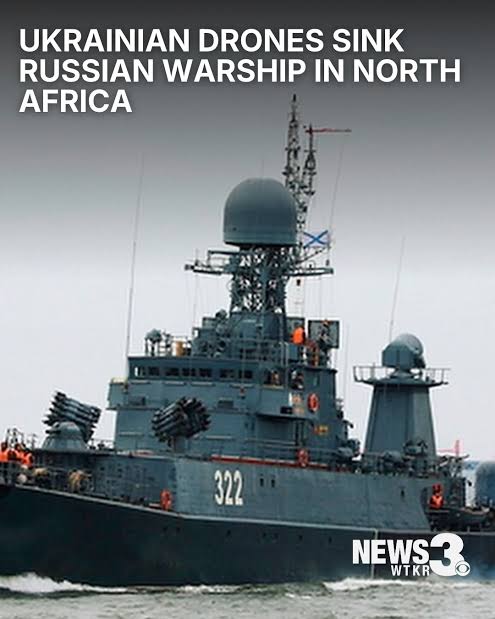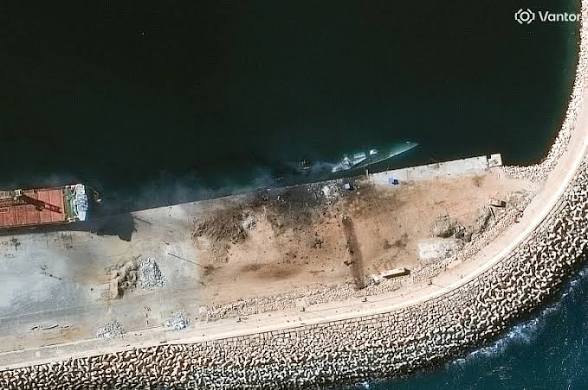
The Russia-Ukraine war has taken a dramatic new turn following a Ukrainian drone operation against Russian naval assets in the Mediterranean Sea near Libya. The attack, which took place at the port of Benghazi, resulted in the sinking of the Russian naval corvette Merkury, according to Ukrainian President Volodymyr Zelensky.
The operation represents a significant expansion of Ukraine’s military campaign beyond the traditional battlefields of eastern Europe and the Black Sea. It also raises fresh questions about Russia’s military presence in North Africa and the security of its maritime supply routes.
According to Ukrainian officials, seven Ukrainian-made naval drones participated in the operation. The attack also targeted a Russian cargo vessel, the MV Angara, which Kyiv claims was being used to transport weapons.
The Ukrainian government described the operation as a successful strike against Russian military capabilities. However, the incident has created diplomatic concerns because it took place in Libya, a country already divided by competing political and military authorities.
The Mediterranean attack could have consequences far beyond the immediate destruction of the Russian warship.
What Happened During the Ukraine Mediterranean Strike?
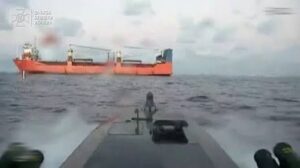
The Ukrainian operation took place on Sunday, November 22, at the naval facilities in Benghazi, eastern Libya.
Initial reports from Libyan officials described an explosion and fire involving a Russian naval vessel. Satellite imagery subsequently showed the corvette partially submerged at the port.
Ukraine later confirmed responsibility for the operation.
President Volodymyr Zelensky announced that Ukrainian forces had deployed seven domestically manufactured naval drones. He said the drones successfully reached their targets despite attempts to stop them.
The principal target was the Russian corvette Merkury, which had reportedly docked at Benghazi for refuelling and supplies.
Ukrainian officials said the vessel was sunk during the operation. They also reported the destruction of a Russian Ka-27 military helicopter.
A second target was the Russian dry cargo ship MV Angara. Zelensky said the vessel had been used to transport weapons for Russia.
The Ukrainian Security Service, known as the SBU, also released footage showing explosions and smoke around the targeted vessels.
Reuters reported that the released footage had been verified. However, the full operational details and the precise circumstances surrounding the attack remain important questions for investigators.
Reuters+2
Russian Corvette Merkury: Why the Warship Matters
The sinking of the Merkury is particularly significant because it was considered one of Russia’s newer naval vessels.
The corvette entered service in 2023, during Russia’s full-scale invasion of Ukraine. Russian officials had previously highlighted the country’s expanding naval capabilities and the importance of modern warships.
The vessel also carried symbolic importance for Moscow.
Russian President Vladimir Putin had visited the shipbuilding facility where the vessel was being constructed in 2019. He later highlighted the ship during celebrations marking Russia’s Navy Day in 2023.
The ship was associated with Russia’s efforts to modernise its naval forces and strengthen its maritime presence.
Losing such a vessel in a Mediterranean port would represent more than a financial or military setback.
It would also demonstrate that Russian naval assets may face serious threats far beyond the waters surrounding Ukraine.
For Moscow, the incident raises concerns about protecting military vessels operating near countries where political instability and competing foreign interests create additional security risks.
Seven Ukrainian Naval Drones Used in the Operation
One of the most important aspects of the Ukraine Mediterranean strike is the reported use of seven Ukrainian-made maritime drones.
Ukraine has invested heavily in unmanned naval technology since Russia launched its full-scale invasion in February 2022.
Without a conventional navy capable of matching Russia’s Black Sea Fleet, Kyiv increasingly turned to smaller, remotely operated maritime weapons.
These systems have helped Ukraine challenge Russian naval superiority.
The latest operation suggests that Ukraine’s drone capabilities may now reach targets considerably farther from its own coastline.
How Naval Drones Changed the War
Naval drones are unmanned vessels that can travel across water and carry explosive payloads.
They can be operated remotely and are designed to strike ships, ports and other maritime targets.
Their relatively small size can make detection difficult. They can also force an opposing navy to spend considerable resources protecting vessels and coastal installations.
Ukraine has previously used maritime drones against Russian naval facilities and warships in the Black Sea.
Those operations contributed to the pressure on Russia’s Black Sea Fleet and forced Moscow to reconsider how it protects important naval bases.
The Benghazi operation represents a different challenge.
Instead of targeting a Russian ship close to Ukrainian territory, the reported attack reached a Mediterranean port thousands of kilometres from the main battlefield.
According to the Ukrainian Security Service, the drones were transported to the region aboard a larger support vessel, described as a mother ship.
This approach potentially allows Ukraine to deploy maritime drones without requiring them to travel the entire distance from Ukrainian-controlled waters.
However, the precise route, launch location and logistical arrangements have not been independently established in full.
The operation nevertheless highlights the growing importance of unmanned systems in modern naval warfare.
The Guardian+2
MV Angara Cargo Ship Also Targeted
The Russian warship was not the only vessel targeted during the operation.
Ukraine also reported striking the dry cargo ship MV Angara.
President Zelensky claimed that Russia had used the vessel to transport weapons. Ukrainian officials described it as an important target because of its alleged contribution to Moscow’s military supply network.
This is significant because Russia relies on maritime transportation to move military equipment, supplies and other resources between different regions.
Commercial-looking cargo vessels can play an important role in these networks.
They can transport equipment that supports military operations far from Russia’s borders.
However, the precise cargo aboard the Angara at the time of the strike has not been independently established in the available reporting.
The distinction matters because Ukrainian claims about a vessel’s military role should be separated from independently verified information.
Nevertheless, the attack sends a strong message to Russian shipping operators.
It suggests that vessels suspected of supporting Moscow’s military activities may face increasing risks, even when operating far from the Black Sea.
Russia’s Maritime Supply Network Faces New Pressure
Russia has developed an extensive network of maritime connections to support its military and political interests abroad.
Its shipping operations are important for transporting fuel, equipment and supplies.
Libya has become particularly relevant because Moscow maintains relationships with powerful eastern Libyan factions.
Russian vessels have reportedly used ports in eastern Libya while supporting wider military logistics in Africa.
The attack on the Merkury and Angara could therefore complicate Russia’s ability to operate comfortably in the region.
It may also encourage Moscow to reconsider the security arrangements surrounding its cargo ships and naval escorts.
Why Was the Russian Warship in Libya?
The location of the attack is almost as important as the destruction of the warship itself.
The Merkury was reportedly docked at Benghazi’s naval base for refuelling and supplies.
The eastern Libyan authorities said the vessel had stopped under a cooperation arrangement with the local administration.
Benghazi is controlled by forces aligned with eastern Libyan military leader Khalifa Haftar.
Haftar has maintained close ties with Moscow, making eastern Libya an important location for Russian interests in North Africa.
Russia’s Growing Influence in Eastern Libya
Russia has spent years developing relationships with military and political actors in Libya.
Its presence became particularly important after the collapse of Muammar Gaddafi’s government in 2011.
The country remains divided between rival political authorities.
The internationally recognised government operates from Tripoli in western Libya, while a rival administration controls much of the east.
Russia has supported Haftar’s forces and maintained a military presence in eastern Libya.
This relationship offers Moscow opportunities to strengthen its influence across North Africa and the Sahel region.
It also provides access to locations that could support military transportation and logistical operations.
Russia’s position in Libya has become increasingly important following changes to its military arrangements elsewhere in the Mediterranean, particularly after the fall of Bashar al-Assad in Syria.
Consequently, the loss of the Merkury could create additional problems for Moscow.
The attack demonstrates that even established military relationships do not necessarily guarantee the safety of Russian vessels.
Libya Faces a Dangerous Diplomatic Challenge
The Ukraine Mediterranean strike has placed Libya in a difficult position.
Although the attack targeted Russian military assets, it occurred inside a country already struggling with political division.
The eastern administration and the internationally recognised government in Tripoli have different relationships with foreign powers.
This makes any military operation on Libyan territory especially sensitive.
Eastern Libya Launches an Investigation
The eastern-based authorities said the Russian warship had been attacked while docked at Benghazi’s naval base.
They indicated that an investigation was necessary to establish how the incident occurred.
The administration also condemned the attack and raised concerns about foreign military operations on Libyan territory.
Meanwhile, the Tripoli-based government expressed serious concern about the incident.
It said Libya had not authorised foreign military operations on its territory or in its territorial waters.
The government also demanded clarification from Ukrainian authorities about whether Libyan ports, military installations or other facilities had been used to support the operation.
These concerns are important because Libya does not want to become a battlefield for competing international powers.
The United Nations has also called for an independent and transparent investigation.
The UN mission warned that Libya must not become a battleground for foreign conflicts.
The Guardian+2
United Nations Raises Concerns Over the Attack
The United Nations has repeatedly warned about the consequences of foreign military involvement in Libya.
The country has experienced years of instability, political division and armed conflict.
The latest attack creates another challenge for efforts to stabilise the region.
The UN Support Mission in Libya expressed serious concern over the developments.
It called for an immediate, independent and transparent investigation.
The organisation’s position reflects fears that the conflict between Russia and Ukraine could create additional instability in an already fragile country.
There are several reasons why international observers are concerned.
First, military attacks inside Libyan ports could threaten civilian infrastructure.
Second, foreign military operations could increase tensions between the rival Libyan administrations.
Third, Russia could use the incident to justify additional military measures or pressure against groups it considers responsible.
The situation could also complicate diplomatic efforts aimed at bringing Libya’s competing authorities closer together.
For the United Nations, preventing further escalation remains an important priority.
How the Attack Could Affect Russia’s Mediterranean Strategy
The Mediterranean Sea is strategically important for Russia.
It connects southern Europe, North Africa and the Middle East.
The region also provides access to important shipping routes and military facilities.
Russia has long sought to maintain a naval presence in these waters.
Its relationships with governments and military groups across the region help Moscow protect its interests and maintain influence.
Libya has become an important part of that strategy.
A New Security Problem for Moscow
The sinking of the Merkury creates several potential challenges.
1. Greater protection costs
Russia may need to strengthen security around its vessels operating near Libyan ports.
Additional surveillance, escorts and defensive equipment could increase operational costs.
2. Increased risks for cargo ships
The strike against the Angara raises concerns about the security of Russian-linked commercial shipping.
Cargo vessels suspected of transporting military supplies may become potential targets.
3. Reduced confidence in port security
The attack took place while the Russian warship was docked.
This could raise questions about the ability of local authorities to protect foreign military vessels.
4. Greater diplomatic pressure
Russia may seek explanations and stronger security guarantees from its partners in eastern Libya.
5. Strategic uncertainty
Moscow could face pressure to reconsider how it uses Libyan ports to support its wider activities in Africa.
These developments do not necessarily mean Russia will abandon Libya.
However, the attack demonstrates that maintaining a military presence in the Mediterranean may become more complicated.
Could Russia Retaliate Against Ukraine?
One of the biggest questions following the attack concerns Moscow’s possible response.
Russia has not provided a detailed public explanation of the incident or announced a specific retaliation plan in the reporting available as of November 24.
However, the destruction of a modern naval vessel could increase pressure on the Kremlin to respond.
Russian officials may consider several options.
Possible Military Response
Russia could increase attacks against Ukrainian military infrastructure.
Ports, shipbuilding facilities and drone production sites could receive greater attention.
Moscow could also strengthen naval protection around its remaining vessels operating in the Mediterranean.
Another possibility involves increased military cooperation with eastern Libyan authorities.
Such cooperation could include additional surveillance equipment, defensive systems and security arrangements.
However, these are potential scenarios rather than confirmed Russian plans.
Diplomatic Response
Russia could also use diplomatic channels to demand an investigation.
Moscow may seek clarification from Libyan authorities about how Ukrainian forces managed to attack a Russian warship inside Benghazi.
It could also increase pressure on countries suspected of assisting Ukraine.
The diplomatic consequences may prove particularly complicated because Libya’s rival administrations have different relationships with international powers.
Any Russian response must also consider the risk of creating further instability in North Africa.
Ukraine Demonstrates Its Expanding Military Capabilities
The operation represents another example of Ukraine’s growing ability to challenge Russia through unconventional military technology.
At the beginning of the full-scale invasion, Russia possessed a significant advantage in conventional military equipment.
Its navy was also considerably stronger than Ukraine’s.
However, Ukraine gradually developed new methods of attacking Russian military assets.
Naval drones became one of the most important examples of this transformation.
Lessons From the Black Sea
Ukraine’s earlier maritime operations demonstrated that relatively small unmanned vessels could threaten much larger warships.
Russian naval forces experienced repeated attacks around occupied Crimea and other Black Sea locations.
These operations forced Moscow to move important assets and reconsider the security of its naval facilities.
The latest Mediterranean strike extends that strategy geographically.
It suggests that Ukraine wants to challenge Russian military assets wherever they contribute to Moscow’s war effort.
The operation also demonstrates the growing importance of intelligence gathering.
Identifying a target, understanding its movements and arranging a suitable launch platform require significant planning.
The reported use of a mother ship suggests that Ukraine has developed methods for extending the operational reach of its naval drones.
This could influence how other countries approach maritime security.
Is the Russia-Ukraine War Spreading Beyond Europe?
The attack has raised serious questions about the geographical expansion of the Russia-Ukraine conflict.
For years, the most visible fighting has taken place inside Ukraine and surrounding areas.
The Black Sea has also become an important theatre of military operations.
However, recent attacks against Russian-linked vessels suggest that maritime assets far from the main battlefield may also face risks.
The Mediterranean is particularly sensitive because several major international powers have military, economic and political interests there.
North Africa is also an important region for energy transportation, international trade and migration routes.
An increase in military operations could therefore affect countries that are not directly involved in the war.
Why the Mediterranean Matters
The Mediterranean connects several strategically important regions.
It provides access to:
European commercial ports.
North African shipping facilities.
Middle Eastern trade routes.
Important naval installations.
Energy transportation networks.
Russia’s presence in the region is connected to its wider foreign policy objectives.
Ukraine’s ability to strike a Russian vessel near Libya could force Moscow to reassess its maritime security arrangements.
It may also encourage other countries to review the protection of their own commercial and military shipping.
However, one successful operation does not automatically mean that the conflict will spread into a wider international war.
The diplomatic response and any subsequent military developments will be important in determining what happens next.
What the Attack Means for NATO and Western Countries
The incident may attract attention from NATO members and other Western governments.
Although the attack was carried out by Ukraine, it occurred in a region where several Western countries have strategic interests.
Libya’s political stability is important for European security, particularly because of migration, energy supplies and Mediterranean shipping.
An escalation could complicate existing diplomatic and security arrangements.
However, there is currently no evidence that NATO directly participated in the operation.
It is important to distinguish Ukraine’s military capabilities from any claims about foreign involvement.
The attack could also increase discussions about the effectiveness of modern maritime defence systems.
Traditional naval forces were designed primarily to protect against aircraft, submarines and conventional missiles.
Small unmanned vessels create additional challenges.
Navies may now need more advanced surveillance, electronic warfare and coastal protection systems.
The Benghazi incident could become an important example in future military assessments.
What Happens Next?
The immediate consequences of the Ukraine Mediterranean strike will depend on several developments.
First, investigators will need to establish the full circumstances surrounding the attack.
This includes identifying how the drones reached Benghazi and whether any local facilities were involved.
Second, Russia’s response will be closely watched.
Moscow could choose diplomatic pressure, additional military protection or a more direct response against Ukrainian targets.
Third, Libyan authorities will face pressure to prevent further foreign military operations inside the country.
The incident could also influence the relationship between eastern Libyan authorities and Russia.
Finally, Ukraine may view the operation as evidence that its naval drone strategy can threaten Russian military logistics far beyond the Black Sea.
For now, the sinking of the Merkury represents a significant development in the nearly five-year conflict.
It demonstrates the growing reach of unmanned naval technology and the increasing importance of maritime security.
It also highlights the risks faced by countries that become connected to the military interests of competing international powers.
The Mediterranean strike has opened another chapter in the Russia-Ukraine war, and its diplomatic consequences could extend well beyond Libya.
Key Takeaways From the Ukraine Mediterranean Strike
Ukraine confirmed responsibility for the November 22 attack near Benghazi.
President Volodymyr Zelensky said seven Ukrainian-made naval drones were deployed.
The Russian corvette Merkury was reportedly sunk.
Ukraine also reported striking the cargo ship MV Angara.
A Russian Ka-27 helicopter was reportedly destroyed.
Libya’s rival administrations expressed concerns about foreign military operations.
The United Nations called for an independent investigation.
Russia’s future military and diplomatic response remains uncertain.
Frequently Asked Questions (FAQs)
1. Did Ukraine sink a Russian warship off Libya?
Yes. Ukraine confirmed that its forces sank the Russian naval corvette Merkury during a drone operation near Benghazi, Libya, on November 22, 2026.
2. Which Russian warship was destroyed?
The targeted vessel was the Merkury, a Russian naval corvette commissioned in 2023. It was reportedly docked at Benghazi’s naval base when the attack occurred.
3. How many drones did Ukraine use?
Ukrainian President Volodymyr Zelensky said seven Ukrainian-made naval drones were used during the operation.
4. Was another Russian ship attacked?
Yes. Ukraine also reported striking the Russian cargo vessel MV Angara, which Kyiv claims was transporting weapons.
5. Was a Russian helicopter destroyed?
According to President Zelensky, a Russian Ka-27 military helicopter was also destroyed during the operation.
6. Why was the Russian warship in Libya?
The Merkury had reportedly stopped at Benghazi for refuelling and supplies. The eastern Libyan administration said the vessel was operating under a cooperation arrangement.
7. Has Russia confirmed the sinking?
As of November 24, detailed public confirmation from Russian authorities remains limited. Ukraine has claimed responsibility, while satellite imagery and independent reporting support the vessel’s sinking.
8. Why is the attack important for Ukraine?
The operation demonstrates Ukraine’s growing ability to use naval drones against Russian military assets far beyond the Black Sea. It also puts pressure on Russian maritime supply networks.
9. What has Libya said about the attack?
Libyan authorities have expressed serious concerns about foreign military operations. The Tripoli-based government has demanded clarification and rejected the use of Libyan territory for external conflicts.
10. Could the attack trigger a wider conflict?
The attack could increase tensions between Russia, Ukraine and Libyan political factions. However, a wider international conflict is not inevitable. Much will depend on Russia’s response and the outcome of investigations.
About the Author