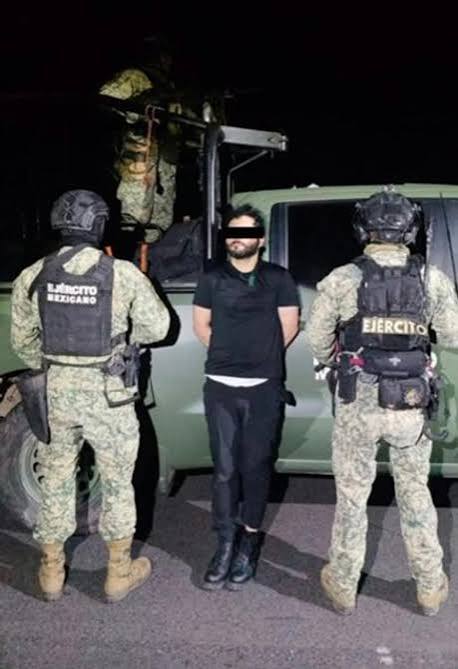
Mexico has recorded a major victory in its fight against organized crime following the capture of Fausto Isidro Meza Flores, better known as Chapo Isidro. The suspected cartel leader was arrested during a major military operation in Sinaloa on November 20, 2026.
The arrest represents an important development for Mexican security forces and American law enforcement agencies. Meza Flores had been one of the FBI’s Ten Most Wanted Fugitives. US authorities had accused him of leading a powerful drug trafficking network responsible for moving large quantities of illegal narcotics into the United States.
Mexican military forces carried out the operation with intelligence support from American agencies. The arrest also triggered violent clashes in the surrounding region, highlighting the continuing security challenges facing Mexico.
According to the US Department of Justice, the operation targeted both Meza Flores and members of his criminal organization. Another alleged cartel leader, identified as Germán Rolando Gálvez Meza, known as El Serafín, was also arrested.
The operation has attracted international attention because of the suspect’s alleged influence in Mexico’s criminal underworld and his long-standing position on the FBI’s most-wanted list.
Who Is Chapo Isidro?
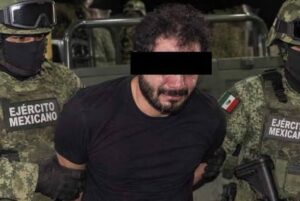
Background on the captured cartel figure
He became a prominent figure in Mexico’s organized crime landscape through his alleged connections with powerful criminal networks. US authorities have linked him to the production, transportation and distribution of several illegal drugs.
These substances include:
Fentanyl
Cocaine
Methamphetamine
Heroin
Marijuana
According to the FBI, Meza Flores was involved in drug trafficking activities for approximately two decades. Investigators accused him of expanding his criminal operations and developing connections that helped move narcotics across international borders.
His organization allegedly relied on armed personnel, intimidation and violence to protect its territory and trafficking routes.
The US government also accused the group of involvement in kidnapping, extortion, torture and murder.
However, these allegations must be distinguished from proven criminal convictions. Meza Flores will have the opportunity to contest the charges through the legal process.
Why Was He on the FBI’s Most-Wanted List?
The FBI added Meza Flores to its Ten Most Wanted Fugitives list in February 2025.
The decision reflected the seriousness of the allegations against him and the importance American investigators placed on locating him.
The US State Department offered a reward of up to $5 million for information leading to his arrest or conviction.
According to the FBI, Meza Flores had previously faced federal drug trafficking charges. An indictment dating back to 2012 accused him of participating in an international narcotics conspiracy.
A superseding indictment filed in 2019 added further allegations involving drug trafficking and illegal firearms possession.
His addition to the FBI’s most-wanted list increased international attention on his whereabouts. It also strengthened efforts to coordinate investigations between American and Mexican authorities.
The November 2026 arrest now marks a major turning point in that pursuit.
FBI+1
How Mexican Special Forces Captured Chapo Isidro
According to the Mexican government and the US Department of Justice, elite Mexican military forces conducted the operation following intelligence work involving American agencies.
The operation was designed to locate and arrest Meza Flores and members of his criminal network.
The Mexican Defense Ministry described the mission as a military operation involving elite forces. Authorities used intelligence and coordinated security measures to reach the suspected cartel leader.
The operation also resulted in the arrest of two other individuals connected to the organization.
One was Germán Rolando Gálvez Meza, also known as El Serafín, who investigators identified as an alleged senior figure within the criminal group.
The second individual was identified as José Luis, described in the US announcement as a relative and alleged financial operator connected to the organization.
The arrests represent more than the detention of one suspected cartel leader. They also provide investigators with an opportunity to examine the organization’s alleged leadership, financial structure and operational connections.
US Intelligence Played an Important Role
One of the most significant aspects of the operation was the cooperation between Mexico and the United States.
The Mexican government acknowledged that intelligence supplied by the Trump administration helped authorities locate and capture Meza Flores.
US Attorney General Todd Blanche also praised the Mexican military for carrying out the operation.
The Department of Justice described the arrest as the result of a combined investigation involving the Homeland Security Task Force and several American law enforcement agencies.
These included:
Federal Bureau of Investigation (FBI)
Homeland Security Investigations (HSI)
Drug Enforcement Administration (DEA)
Bureau of Alcohol, Tobacco, Firearms and Explosives (ATF)
US Marshals Service
The collaboration demonstrates how international investigations can target criminal organizations operating across national borders.
Although the arrest took place in Mexico, American investigators had a significant interest in the outcome because of the alleged flow of narcotics into US communities.
The operation also highlighted the importance of intelligence sharing between neighboring countries.
United States Department of Justice+1
Deadly Clashes Follow the Cartel Leader’s Arrest
Gunfire, burning vehicles and clashes between armed individuals and Mexican security forces disrupted parts of Sinaloa.
The violence demonstrated the risks involved in targeting senior figures within powerful criminal organizations.
According to reports from Mexican authorities, seven alleged cartel gunmen and four Mexican soldiers were killed during the clashes.
Authorities also reported attacks involving firearms and explosives as security forces moved against the criminal network.
Roadblocks and burning vehicles further complicated the security situation in several municipalities.
The violence affected ordinary residents who found themselves caught in the middle of the confrontation.
Panic at a Local Baseball Game
One of the most disturbing moments occurred near a baseball game in Guasave.
Spectators attending the sporting event reportedly heard gunfire and rushed to escape the stadium area.
Videos circulating online showed people running for safety as the situation deteriorated.
Families, children and other spectators faced sudden uncertainty as armed clashes unfolded nearby.
The incident illustrated how cartel-related violence can affect public spaces and everyday activities.
Sports events are normally places where communities gather for entertainment. However, the security operation transformed the atmosphere into one of fear and confusion.
The incident also renewed concerns about civilian safety in areas affected by organized crime.
Mexican Authorities Face Difficult Security Challenges
The clashes following Meza Flores’s arrest demonstrate that removing a senior criminal figure does not automatically restore peace.
Cartel organizations often maintain extensive networks of armed members, financial operators and local associates.
When a powerful leader is arrested, other members may attempt to protect their positions or reorganize the organization.
Such developments can create additional violence.
Security forces must therefore consider both the immediate arrest and the possibility of retaliatory attacks.
The situation in Sinaloa remains an important example of the difficulties Mexico faces when confronting heavily armed criminal groups.
Sky News+2
What Charges Does Chapo Isidro Face in the United States?
The US Department of Justice has outlined several serious federal charges against Meza Flores.
A federal grand jury returned a second superseding indictment on September 25, 2026.
The indictment includes allegations involving narcoterrorism, international drug trafficking, money laundering and firearms offenses.
The charges include:
Conspiracy to provide material support to a designated terrorist organization.
Narcoterrorism conspiracy.
Operating a continuing criminal enterprise.
Conspiracy to manufacture and distribute controlled substances.
International money laundering conspiracy.
Firearms-related offenses involving prohibited weapons.
Prosecutors allege that Meza Flores led an organization involved in moving large quantities of illegal drugs into the United States.
The indictment also accuses him of using violence to maintain control over criminal operations and protect trafficking routes.
If convicted, he could face extremely severe penalties, including life imprisonment or the death penalty under the applicable federal charges.
However, the final punishment would depend on the legal proceedings, applicable law and outcome of the case.
An important legal distinction: An indictment contains allegations, not proof of guilt. Meza Flores remains entitled to the presumption of innocence unless convicted in court.
United States Department of Justice
Why Chapo Isidro’s Capture Matters to the United States
The arrest is particularly important for Washington because American investigators have long associated Meza Flores with the movement of illegal drugs into the United States.
The US government has identified fentanyl and methamphetamine trafficking as major national security and public health concerns.
Fentanyl is especially dangerous because even small quantities can cause fatal overdoses.
American authorities have repeatedly focused on disrupting the organizations responsible for producing, transporting and distributing illegal narcotics.
The capture of a suspected senior cartel figure therefore represents a significant enforcement development.
A Major Target Removed From the Criminal Network
For years, investigators had sought to locate Meza Flores.
His alleged position within a powerful criminal organization made him a priority target.
His arrest could provide authorities with new opportunities to investigate:
Drug manufacturing operations.
International trafficking routes.
Financial networks.
Weapons suppliers.
Criminal associates.
Cross-border distribution systems.
Investigators may also examine whether members of his organization maintained connections with other criminal groups.
However, the full impact of the arrest will depend on what authorities uncover during the investigation.
Stronger US-Mexico Security Cooperation
The operation also carries diplomatic importance.
Security cooperation between Mexico and the United States has often been complicated by disagreements over sovereignty, military involvement and responsibility for cross-border crime.
Nevertheless, both governments have a shared interest in disrupting major trafficking networks.
The intelligence support behind this operation demonstrates the potential value of coordinated investigations.
American agencies can provide information about suspects, financial transactions and international trafficking investigations. Mexican forces can then use their legal authority and operational capabilities to conduct arrests inside Mexico.
The successful capture of Meza Flores could encourage additional cooperation in future investigations.
Will the Arrest Weaken Mexico’s Cartel Networks?
Although the capture of Chapo Isidro is a major development, experts caution that arresting a cartel leader does not necessarily dismantle the entire criminal organization.
Drug trafficking networks are often built around multiple layers of leadership. These include regional commanders, financial operators, transportation coordinators and armed groups.
Even when the top leader is removed, other members may continue operating.
In some cases, the arrest of a powerful figure can trigger internal disputes over territory and control.
The Risk of a New Power Struggle
Sinaloa has experienced years of violence involving competing criminal factions.
The arrest of Meza Flores could create additional uncertainty within the criminal landscape.
Potential consequences include:
Rival groups attempting to expand their influence.
Former associates competing for leadership positions.
Increased violence over drug trafficking routes.
Retaliatory attacks against security forces.
Disruption of local businesses and public services.
These risks explain why Mexican authorities must maintain security operations after high-profile arrests.
The government will also need to investigate the financial and logistical networks supporting the organization.
Without those efforts, the arrest could become a temporary victory rather than a lasting disruption.
Why Sinaloa Remains Strategically Important
Sinaloa is one of Mexico’s most important regions in the country’s organized crime landscape.
Its geography, transportation connections and history of cartel activity have made it a significant area for criminal networks.
Guasave, where Meza Flores was captured, is located in northern Sinaloa.
The surrounding region has faced security challenges linked to disputes between armed criminal groups.
For authorities, maintaining control over strategic areas is essential to preventing criminal organizations from rebuilding their operations.
The capture could therefore have implications beyond the immediate arrest location.
However, it remains too early to determine whether the operation will significantly reduce drug trafficking activity across the region.
The Beltrán Leyva Connection and Chapo Isidro’s Criminal History
Meza Flores has long been associated with the Beltrán Leyva criminal organization.
The group emerged from the wider Mexican drug trafficking landscape and became involved in violent disputes over territory and criminal influence.
Meza Flores was also associated with the Sinaloa Cartel, although relationships between criminal factions have changed over time.
These connections help explain why he became an important target for Mexican and American investigators.
From Regional Criminal Figure to International Fugitive
According to organized crime researchers, Meza Flores became involved in criminal activity during the 1990s.
His alleged activities expanded over the following years.
US authorities accused him of developing a trafficking network with international reach.
His alleged organization operated in areas including Guasave and Los Mochis, as well as remote mountainous regions of Sinaloa.
Investigators claimed that these locations helped support drug production, storage and transportation.
The US government’s case also alleges that his organization used armed personnel to maintain control over territory.
His criminal history includes multiple previous encounters with Mexican authorities.
InSight Crime reported on November 23, 2026, that authorities had detained him four times between 2011 and 2015, but he was released on each occasion.
That history makes the November 2026 arrest particularly significant.
It also raises questions about why previous efforts failed to keep him in custody and what has changed in the latest investigation.
The InSight Take+1
What Happens Next After Chapo Isidro’s Capture?
The next phase will focus on legal proceedings, investigations and security measures.
The United States has already announced the charges against Meza Flores.
American prosecutors are expected to pursue the case through the federal justice system.
One important question concerns whether he will face prosecution in Mexico first or be transferred to the United States through the applicable legal process.
His capture in Mexico does not automatically mean that he will immediately be extradited.
Authorities must follow the relevant legal procedures and determine how the competing criminal proceedings will be handled.
Investigators May Target His Financial Network
Drug trafficking organizations depend on money as much as armed personnel.
Investigators will likely be interested in identifying the financial structures that allegedly supported Meza Flores’s operations.
These investigations may examine:
Properties connected to suspected criminal proceeds.
Bank accounts and financial transactions.
Businesses allegedly used to conceal illegal income.
International money transfers.
Assets linked to suspected associates.
Financial investigations can be especially important because they target the resources that allow criminal organizations to operate.
More Arrests Could Follow
The arrest of Meza Flores and other alleged senior figures may help investigators identify additional suspects.
Authorities could examine communications, financial records and information collected during the operation.
However, further arrests should not be assumed until officially confirmed.
The wider investigation will determine whether authorities can move beyond individual arrests and disrupt the organization’s operational structure.
Mexico’s Drug War Enters Another Important Phase
The capture of Chapo Isidro comes amid continuing efforts by Mexican authorities to confront powerful criminal organizations.
Drug trafficking remains a major challenge for Mexico because of the networks involved in narcotics production, international distribution and financial crime.
The United States also remains closely involved because of the impact of illegal drug trafficking on American communities.
Both countries have increasingly emphasized cooperation against major criminal organizations.
The latest operation demonstrates the importance of intelligence sharing, coordinated investigations and targeted enforcement.
However, military operations alone cannot resolve the wider problems associated with organized crime.
Long-term progress also requires stronger criminal investigations, effective courts, financial oversight and protection for vulnerable communities.
Corruption, intimidation and weak local institutions can allow criminal organizations to survive even after senior leaders are arrested.
Therefore, the real measure of success will be whether authorities can reduce the organization’s ability to operate.
A Significant Victory, but Not the End of the Cartel Threat
The arrest of Meza Flores is undoubtedly an important development for Mexican and American law enforcement agencies.
He had spent years under investigation and was one of the FBI’s most wanted fugitives.
His capture in Guasave demonstrates the reach of international law enforcement cooperation.
Nevertheless, the violence surrounding the operation shows how dangerous these criminal networks remain.
Authorities must now prevent further clashes, investigate the alleged organization and ensure that its leadership structures cannot easily recover.
For residents of Sinaloa, the most important outcome will be lasting improvements in public safety.
For American investigators, the priority will be bringing the accused fugitive before the courts and pursuing the wider network allegedly responsible for drug trafficking.
The operation has delivered a major arrest. Whether it becomes a turning point in Mexico’s fight against organized crime will depend on what happens next.
Frequently Asked Questions (FAQs)
1. Who is Chapo Isidro?
Chapo Isidro is the nickname of Fausto Isidro Meza Flores, a Mexican national accused by US authorities of leading a major drug trafficking organization connected to the Sinaloa Cartel.
2. Was Chapo Isidro captured in Mexico?
Yes. Mexican military forces captured Meza Flores on November 20, 2026, during an operation in Guasave, Sinaloa.
3. Why was Chapo Isidro wanted by the FBI?
The FBI wanted him over allegations involving international drug trafficking, illegal firearms and leadership of a major criminal organization. He was added to the FBI’s Ten Most Wanted Fugitives list in February 2025.
4. Did the United States help capture Chapo Isidro?
Yes. Mexican authorities acknowledged that US intelligence support contributed to the operation. The US Department of Justice also confirmed cooperation through the Homeland Security Task Force.
5. How much was the reward for Chapo Isidro?
The US State Department offered a reward of up to $5 million for information leading to his arrest or conviction.
6. Where was Chapo Isidro arrested?
He was captured in Guasave, located in the northwestern Mexican state of Sinaloa.
7. Were there casualties during the operation?
Yes. Mexican authorities reported that seven alleged cartel gunmen and four Mexican soldiers were killed during the clashes associated with the operation.
8. Who was arrested alongside Chapo Isidro?
Authorities also arrested Germán Rolando Gálvez Meza, known as El Serafín, and another alleged associate identified as José Luis.
9. What charges does Chapo Isidro face?
He faces US federal charges involving narcoterrorism, drug trafficking, money laundering, firearms offenses and conspiracy to provide material support to a designated terrorist organization.
10. Will Chapo Isidro be extradited to the United States?
His capture does not automatically mean immediate extradition. The relevant authorities must follow legal procedures and determine how the US prosecution will proceed.
11. Will his arrest end cartel violence in Mexico?
Not necessarily. Criminal organizations can continue operating through other leaders and associates. The long-term impact will depend on whether authorities successfully disrupt the wider network.
12. When was Chapo Isidro captured?
Mexican forces captured him on November 20, 2026. The US Department of Justice publicly announced the arrest on November 21, 2026.
About the Author