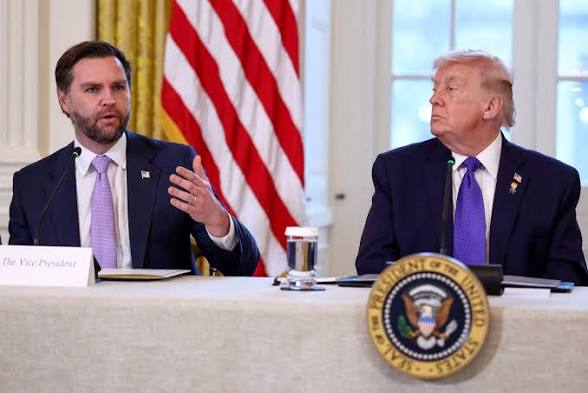
UK-US DIPLOMATIC CLASH: Minister Slams Trump Embrace Of Butcher Putin
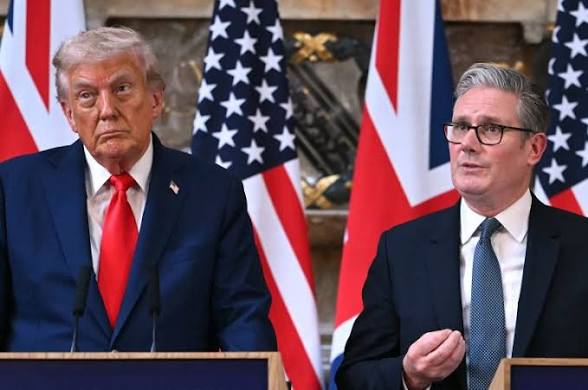
The comments have triggered strong criticism from British politicians, including European relations minister Hamish Falconer. His response was particularly direct. He described Putin as a butcher and insisted that the Russian leader was not a friend of Britain.
The controversy follows a high-profile meeting between Trump, Putin and Chinese President Xi Jinping in Shenzhen, China. The meeting has raised fresh questions about the future of international diplomacy, Western unity and continued support for Ukraine.
For Britain, the issue goes beyond a photograph or a friendly greeting. It concerns how Western leaders respond to Russia’s invasion of Ukraine and whether Washington remains fully committed to supporting European security.
What sparked the UK-US diplomatic clash?
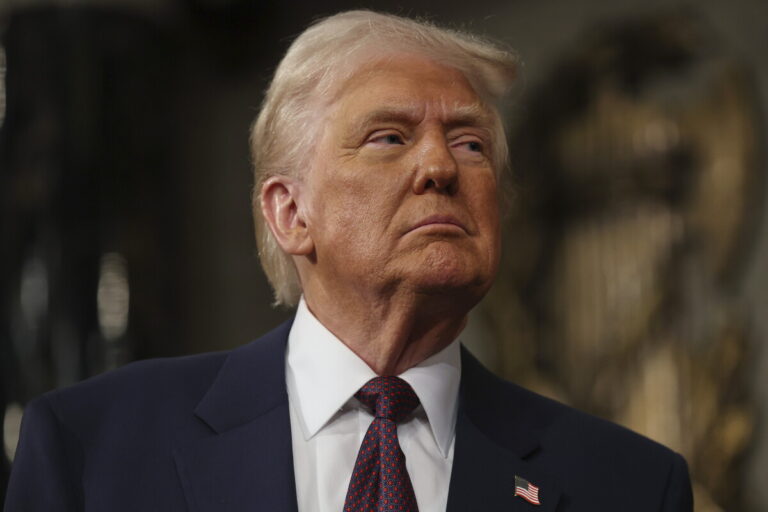
The latest diplomatic disagreement began after Trump shared a photograph of himself with Putin on his social media platform, Truth Social.
The image carried a simple but politically significant caption: “My friend.”
The photograph followed Trump’s meeting with Putin during the Asia-Pacific Economic Cooperation summit in Shenzhen. Trump had also described the Russian president as his friend during the gathering.
His remarks attracted attention because Russia’s war against Ukraine remains unresolved. Moscow continues to face international criticism over its military campaign, while Western governments maintain that Ukraine must be supported in defending its sovereignty.
Trump defended his personal relationship with Putin by arguing that maintaining friendly communication with a leader who controls thousands of nuclear weapons is preferable to treating that leader as an enemy.
However, this explanation did little to calm criticism.
European officials and politicians questioned whether Trump’s warm language could weaken the international pressure placed on Moscow.
The controversy quickly reached British politics, where several senior figures distanced themselves from the American president’s approach.
Hamish Falconer calls Putin a butcher
Speaking on Sky News’ Sunday Morning with Michael Gove, Falconer rejected the suggestion that Putin should be considered a friend.
He described the Russian president as a butcher and emphasised Britain’s united position against Russia’s invasion of Ukraine.
Falconer argued that the war has caused enormous suffering. He also pointed to the consequences for ordinary Russians, particularly young people whose opportunities have been affected by the prolonged conflict.
His central message was unmistakable: Putin is not a friend of the United Kingdom.
The minister also defended Prime Minister Andy Burnham’s approach to relations with Trump.
Falconer said the prime minister regularly speaks with the American president and is not holding back Britain’s strong objections to Russia’s actions.
This statement was important because it showed that London wanted to maintain direct communication with Washington without softening its position on Ukraine.
Britain is attempting to balance two priorities: preserving its close relationship with the United States and maintaining firm opposition to Russian aggression.
Trump doubles down on his relationship with Putin
Trump’s comments have created an uncomfortable situation for traditional Western alliances.
Rather than withdrawing his description of Putin as a friend, the American president defended his approach.
His argument centres on the importance of communication between powerful countries. Trump believes personal relationships between world leaders can create opportunities for negotiation, even when their governments have serious disagreements.
He has repeatedly presented direct engagement as an important part of his foreign policy.
However, critics argue that friendly public language can send the wrong message.
They fear Putin could interpret Trump’s approach as evidence that Washington is willing to overlook Russian aggression in exchange for improved relations.
This concern is especially significant for Ukraine and European countries located closer to Russia.
Diplomatic engagement does not necessarily mean political agreement. Nevertheless, public displays of friendship can influence how allies, opponents and ordinary citizens interpret international relationships.
That is why Trump’s photograph attracted such a strong reaction.
Britain’s political leaders unite behind Ukraine
The reaction demonstrated that concern about Putin’s relationship with Washington extends across different parts of British politics.
Conservative deputy leader Alex Burghart said he was saddened by Trump’s photograph.
He expressed concern that the United States might be moving away from its traditional position as a defender of freedom.
His comments reflected wider anxiety about the future of the Western alliance.
For decades, the United States has played a central role in European security. Its military strength, intelligence capabilities and diplomatic influence have helped support NATO and deter potential aggression.
However, Trump’s approach to Russia has raised questions about whether Washington will continue to provide the same level of political leadership.
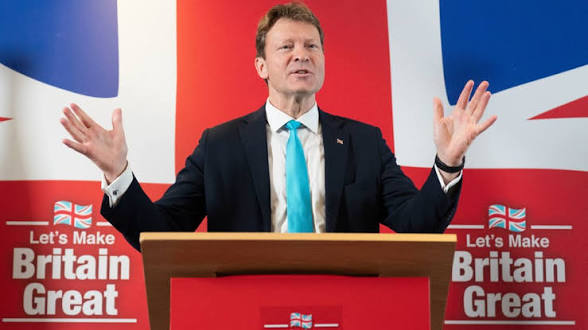
Reform UK deputy leader Richard Tice also criticised the photograph.
Tice described the post as wrong and called Putin a murderous dictator.
His reaction was notable because Reform UK has generally been associated with stronger political support for Trump.
Nevertheless, Tice made clear that disagreement with the American president was necessary when important international principles were involved.
These reactions suggest that opposition to Trump’s friendly language about Putin is not limited to one political party.
The Shenzhen summit raises concerns across Europe
The meeting in Shenzhen provides important context for understanding the latest diplomatic dispute.
Trump, Putin and Chinese President Xi Jinping held talks during a major gathering in China.
The three leaders discussed international relations and presented a four-point declaration covering issues such as United Nations reform, energy supplies, international legal institutions and nuclear proliferation.
Trump described the discussions as historic.
However, European leaders were concerned about being left outside important conversations involving the future of international security.
A separate gathering in Berlin brought together countries supporting Ukraine, including Britain and other European partners.
The contrast between the two meetings was politically significant.
While Trump was publicly engaging with Putin and Xi, European governments were trying to demonstrate continued solidarity with Kyiv.
The situation revived comparisons with the 1945 Yalta Conference, when major powers discussed the post-war international order.
Those comparisons are controversial because Ukraine and other European countries fear that powerful states could make decisions affecting smaller nations without their participation.
Ukraine’s position remains clear: its future should not be decided through negotiations conducted without Ukrainian involvement.
Why Trump’s relationship with Putin matters to Ukraine
Ukraine is at the centre of the disagreement.
Since Russia launched its full-scale invasion in February 2022, Kyiv has depended heavily on Western military, financial and diplomatic support.
The United States has been one of Ukraine’s most influential international partners.
American assistance has included military equipment, intelligence cooperation and financial support.
European governments have also increased their contributions.
Therefore, any indication that Washington might reduce its commitment attracts immediate attention.
Trump’s friendly language towards Putin has raised questions about whether personal diplomacy could influence American policy towards the war.
For Ukraine, the concern is not simply whether Trump likes Putin.
The more important issue is whether negotiations will protect Ukrainian sovereignty, territorial integrity and long-term security.
A peace agreement that leaves Ukraine vulnerable to another invasion could create further instability.
European leaders therefore want meaningful involvement in any settlement.
They also want clear guarantees that Russia cannot use negotiations to secure military or political advantages without addressing the consequences of its invasion.
UK government insists Britain will not soften its position
The British government now faces a difficult diplomatic balancing act.
The United States remains one of Britain’s most important allies. Intelligence sharing, military cooperation, trade and NATO commitments make the relationship essential to British national security.
However, maintaining a close relationship with Washington does not mean accepting every statement made by the American president.
Falconer’s comments suggest that the government wants to communicate its disagreement directly while avoiding an unnecessary breakdown in relations.
He made clear that Burnham regularly discusses Ukraine with Trump.
This approach allows Britain to maintain diplomatic channels while continuing to defend Kyiv.
The government also wants to demonstrate that British foreign policy is not determined by Washington’s changing political priorities.
For London, supporting Ukraine remains a matter of European security and international law.
Russia’s war continues to complicate peace efforts
Despite renewed international discussions, there is no confirmed comprehensive peace agreement.
Putin continues to defend Russia’s military objectives, while Ukraine maintains that its sovereignty cannot be compromised.
The Shenzhen summit therefore raises an important question: can direct negotiations between powerful leaders produce a lasting settlement?
Trump believes that personal diplomacy can help bring opposing sides together.
However, European governments remain concerned about the terms of any potential agreement.
They argue that peace cannot simply mean stopping the fighting temporarily.
A sustainable settlement must address Ukraine’s security and prevent further Russian aggression.
There are also concerns about the consequences of reducing international support before a credible agreement is reached.
If Ukraine loses financial or military assistance during negotiations, its position could become weaker.
This could give Moscow additional leverage.
For Britain, maintaining support for Kyiv is therefore an important part of ensuring that diplomacy produces meaningful results.
Defence Secretary reinforces Britain’s support for Kyiv
Britain’s position has also been reinforced by Defence Secretary Wes Streeting.
During a visit to Kyiv, Streeting described Putin as a cold-blooded killer and emphasised that Russia was responsible for the invasion.
He also stressed that there could be no decisions about Europe’s future without European participation.
His message highlighted an important concern among Britain’s allies.
European countries will face many of the consequences of any settlement involving Ukraine. Therefore, they believe they must have a meaningful role in negotiations.
Britain wants to ensure that Ukraine is not pressured into accepting an agreement that threatens its independence.
Streeting’s comments also demonstrate that Britain’s position involves more than public criticism.
The government wants continued cooperation with Ukraine and stronger coordination among its European partners.
Could the disagreement damage UK-US relations?
The latest controversy could create additional pressure on an already complicated relationship.
Britain and the United States share extensive defence and intelligence partnerships. Their cooperation is important to NATO, European security and international stability.
However, disagreements over Russia and Ukraine could become increasingly difficult to manage.
The British government wants Washington to remain involved in supporting Ukraine.
Trump, meanwhile, has repeatedly argued that ending the war should be a major priority.
These objectives are not necessarily incompatible.
Both countries could support negotiations while disagreeing over the methods and conditions required to achieve peace.
The challenge is finding common ground.
A serious diplomatic breakdown would benefit neither country.
The United States needs reliable European partners, while Britain benefits from American military and diplomatic support.
Consequently, Falconer’s criticism should be understood as a strong disagreement over foreign policy rather than an announcement that Britain intends to abandon its relationship with Washington.
Nevertheless, the controversy highlights the growing differences between the two governments.
Why NATO allies are watching Trump’s comments
NATO members are closely watching how the American president approaches Putin.
The United States remains the alliance’s most powerful military member. Its commitment is essential to NATO’s collective defence arrangements.
European governments therefore want reassurance that Washington will continue to take Russian aggression seriously.
If Moscow believes Western unity is weakening, it could become more confident in pursuing its objectives.
That possibility worries countries located close to Russia.
For nations such as Poland and the Baltic states, the conflict in Ukraine is directly connected to their own security concerns.
They fear that a weak settlement could encourage further territorial aggression.
Britain also has a significant role in European security.
Its military capabilities, intelligence partnerships and support for Ukraine make it an important NATO member.
The government’s criticism of Trump’s photograph therefore reflects broader concerns about alliance unity.
Trump’s diplomatic strategy faces difficult questions
Trump’s approach to Putin raises important questions about the relationship between personal diplomacy and national security.
Supporters of direct engagement argue that leaders must communicate with adversaries to prevent conflicts from escalating.
They believe refusing to speak with opponents can reduce opportunities for negotiation.
This argument has some merit.
Diplomacy often requires communication between governments that disagree on fundamental issues.
However, critics argue that engagement must be supported by clear conditions and realistic expectations.
They warn that friendly gestures should not replace accountability.
Putin’s government remains responsible for Russia’s actions in Ukraine. A photograph or public statement cannot change that reality.
There is also a difference between maintaining diplomatic communication and publicly describing an opposing leader as a friend.
The latter can create political problems for allies who continue to support Ukraine.
Trump’s challenge will be demonstrating that his personal relationship with Putin can contribute to peace without weakening Ukraine’s position.
What happens next in the UK-US diplomatic dispute?
The immediate controversy may eventually fade, but the underlying disagreements are unlikely to disappear quickly.
British officials will continue communicating their concerns to Washington.
Falconer has already made clear that Burnham regularly discusses the Ukraine conflict with Trump.
Meanwhile, European governments will continue working together to support Kyiv and influence future negotiations.
Several developments will be particularly important to watch.
First, the future of American support for Ukraine. Any major change in military or financial assistance could influence the balance of the conflict.
Second, Russia’s response to diplomatic pressure. Putin’s willingness to accept meaningful negotiations will be a major test of Trump’s approach.
Third, European involvement in peace negotiations. Britain and its partners want guarantees that their security concerns will be considered.
Finally, NATO unity. The alliance will need to maintain a clear position on Russian aggression despite differences between individual leaders.
These issues will determine whether the latest diplomatic controversy becomes a temporary disagreement or part of a much larger political divide.
Conclusion: Britain sends a clear message to Trump over Putin
The UK-US diplomatic clash has exposed growing concerns about Donald Trump’s friendly approach towards Vladimir Putin.
British European relations minister Hamish Falconer delivered an unmistakable response, describing the Russian president as a butcher and insisting that he is not a friend of the United Kingdom.
His comments reflect Britain’s continued support for Ukraine and its opposition to Russia’s invasion.
The reaction from Conservative and Reform UK politicians also demonstrates that Trump’s public display of friendship with Putin has attracted criticism across the British political spectrum.
However, Britain is not seeking to abandon its relationship with the United States.
Instead, the government wants to maintain close cooperation while making its disagreement over Russia unmistakably clear.
The biggest question now is whether Trump’s personal diplomacy can produce meaningful progress towards peace without weakening Ukraine’s position.
For Britain and its European allies, any lasting agreement must protect Ukrainian sovereignty and prevent further aggression.
The coming weeks could reveal whether Washington and its European partners can maintain a united approach despite their growing differences over Putin.
Frequently Asked Questions (FAQs)
1. Why is Britain criticising Donald Trump over Putin?
Britain is criticising Trump’s public description of Vladimir Putin as his friend. British officials believe the language is inappropriate given Russia’s invasion of Ukraine and the continuing suffering caused by the war.
2. Who called Vladimir Putin a butcher?
UK European relations minister Hamish Falconer described Putin as a butcher during an appearance on Sky News’ Sunday Morning with Michael Gove on November 22, 2026.
3. What did Donald Trump say about Putin?
Trump described Putin as his friend during their meeting in Shenzhen, China. He later shared a photograph of the two leaders on Truth Social with the caption “My friend”.
4. What is Prime Minister Andy Burnham’s position?
According to Falconer, Burnham regularly discusses Ukraine with Trump and communicates Britain’s strong opposition to Russia’s invasion.
5. Did other British politicians criticise Trump’s Putin photograph?
Yes. Conservative deputy leader Alex Burghart expressed sadness about the photograph, while Reform UK deputy leader Richard Tice called it wrong and described Putin as a murderous dictator.
6. Why is the Shenzhen summit controversial?
The summit brought Trump, Putin and Chinese President Xi Jinping together for discussions about international relations. European governments expressed concern about their limited involvement in discussions affecting Ukraine and European security.
7. Does Britain still support Ukraine?
Yes. British officials continue to support Ukraine’s sovereignty and oppose Russia’s invasion. Defence Secretary Wes Streeting also reinforced Britain’s position during his visit to Kyiv.
8. Could the dispute damage relations between Britain and America?
The disagreement could increase diplomatic tensions. However, both countries have strong defence, intelligence and economic partnerships that remain important to their national interests.
9. Why does Trump’s relationship with Putin matter to NATO?
The United States plays a central role in NATO’s military capabilities and collective defence. European allies want reassurance that Washington will continue opposing Russian aggression.
10. Will Trump and Putin reach a peace agreement?
There is no confirmed comprehensive peace agreement. Although diplomatic discussions continue, major disagreements over Ukraine’s territory, security and sovereignty remain unresolved.
How useful was this post?
Click on a star to rate it!
Average rating 0 / 5. Vote count: 0
No votes so far! Be the first to rate this post.
About the Author

usa5911.com
Administrator
Hi, I’m Gurdeep Singh, a professional content writer from India with over 3 years of experience in the field. I specialize in covering U.S. politics, delivering timely and engaging content tailored specifically for an American audience. Along with my dedicated team, we track and report on all the latest political trends, news, and in-depth analysis shaping the United States today. Our goal is to provide clear, factual, and compelling content that keeps readers informed and engaged with the ever-changing political landscape.