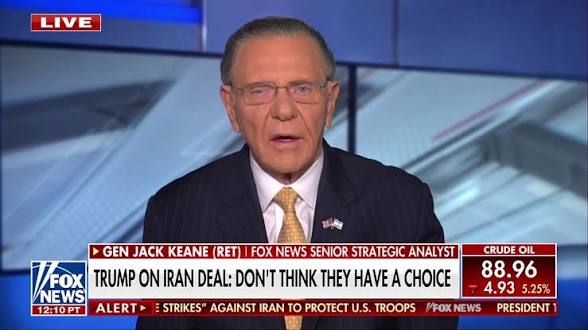
Trump made the remarks during an interview with Fox News host Sean Hannity on Monday, November 2, 2026. He suggested that the United States had the military capability to attack the facility whenever necessary. At the same time, he indicated that Washington still preferred a diplomatic agreement if one could prevent further conflict.
The warning comes during an already tense period in the Middle East. American and Iranian officials remain involved in difficult negotiations, while military activity continues around the strategically important Strait of Hormuz.
Pickaxe Mountain has become an important part of the debate because intelligence officials and nuclear experts have raised concerns about the underground complex. Its location near Iran’s Natanz nuclear facility and its heavily protected tunnels have attracted growing international attention.
Trump’s comments also followed limited American defensive strikes against Iranian targets on Qeshm Island. These developments have raised an important question: Is Washington preparing another military operation, or is the president using military pressure to push Iran toward a nuclear agreement?
Trump Says US Could Strike Pickaxe Mountain Within One Hour
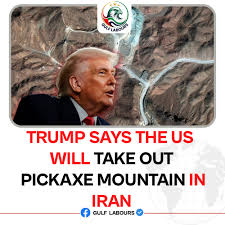
Trump’s latest warning focused on the speed with which American forces could potentially carry out another operation against Iran.
During his interview with Sean Hannity, Trump said:
“We might have to go after Pickaxe, but that’s not a big deal. We can do it. And literally we can do that in one hour. Okay? As soon as we want, at any time we want.”
The statement delivered a clear message to Tehran. Trump wanted Iranian leaders to understand that the United States was keeping the underground facility under observation and had not removed military action from consideration.
However, his remarks did not announce a confirmed strike or establish a one-hour deadline for Iran to respond.
Instead, the president described what he claimed was the American military’s ability to act quickly if Washington decided that further action was necessary.
According to ABC News, Trump also downplayed the possibility of an immediate return to large-scale fighting. Nevertheless, he maintained that Pickaxe Mountain could remain a potential target.
This distinction matters because a military capability statement is not the same as an official attack order.
For Iran, however, the warning creates additional pressure at a time when negotiations remain uncertain.
What Is Pickaxe Mountain and Why Does It Matter?
The site has attracted international attention because of its extensive underground construction and potential connection to Iran’s nuclear activities.
Unlike facilities built above ground, deeply buried installations can be difficult to reach using conventional military weapons.
The facility is particularly significant because experts believe its underground tunnels could provide protection for sensitive equipment and potentially support nuclear-related activities.
According to reporting by the Associated Press, the complex covers approximately 2.7 square kilometres and may extend around 80 to 100 metres underground, possibly deeper.
Its location near Natanz makes it an important concern for governments monitoring Iran’s nuclear program.
However, important questions remain unanswered.
The International Atomic Energy Agency (IAEA) has not inspected the underground complex. Therefore, its exact contents and current activities have not been independently established.
This uncertainty is one reason Pickaxe Mountain has become such a sensitive subject in discussions between Washington and Tehran.
Why the Underground Facility Is Difficult to Target
One of the biggest challenges surrounding Pickaxe Mountain is its underground construction.
Military planners must consider how deeply the facility is buried, the strength of the surrounding rock and the possible locations of important equipment.
The United States possesses specialised weapons designed to penetrate hardened underground structures. One example is the GBU-57 Massive Ordnance Penetrator, commonly known as a bunker-buster bomb.
According to the Associated Press, the weapon can penetrate at least 60 metres (200 feet) of earth before detonating, based on US military information.
However, that does not guarantee the destruction of every underground installation.
Pickaxe Mountain may be buried even deeper. Its surrounding granite and reinforced construction could make a successful attack particularly difficult.
Military experts would also need accurate intelligence about the facility’s internal layout. Without that information, even a powerful strike might fail to destroy every important component.
This explains why the site has attracted so much attention from American defence planners.
A successful operation would require more than simply dropping powerful bombs. It would require reliable intelligence, careful planning and an assessment of the potential consequences.
The United States has not publicly demonstrated that it can completely destroy the entire underground complex.
Iran’s Nuclear Programme Remains at the Centre of the Dispute
The growing dispute over Pickaxe Mountain is closely connected to Iran’s nuclear programme.
For years, Western governments have expressed concern about Tehran’s uranium enrichment activities. They fear that Iran could eventually develop the capability to produce nuclear weapons.
Iran, however, has repeatedly maintained that its nuclear programme is peaceful.
The disagreement has created decades of diplomatic tension, economic sanctions and international negotiations.
Uranium enrichment is an important part of the controversy.
Iran previously enriched uranium to 60% purity. This is significantly above the level generally needed for civilian nuclear power, although it is below the approximately 90% enrichment associated with weapons-grade uranium.
The distinction is important.
Enriched uranium does not automatically mean that a country has produced a nuclear weapon. Additional technical steps would be necessary to develop a functioning device.
The Associated Press reported that Iran was not known to have restarted enrichment following earlier attacks on its nuclear facilities. Its remaining stockpile was believed to be at previously bombed enrichment sites.
However, questions about the location of nuclear materials and the future purpose of Pickaxe Mountain remain unresolved.
AP News+1
Could Iran Be Moving Nuclear Equipment Underground?
One major concern is whether Iran could use Pickaxe Mountain to protect important nuclear equipment from future attacks.
Experts believe the complex could potentially accommodate uranium enrichment activities and centrifuge manufacturing.
Centrifuges are essential machines used to increase the concentration of uranium isotopes. Large groups of centrifuges can operate together in specialised facilities.
Moving such equipment into a deeply buried installation could make it harder for foreign militaries to attack.
However, there is an important limitation to the available evidence.
Satellite images can reveal construction activity, tunnel entrances, roads and security arrangements. They cannot independently establish exactly what equipment is operating underground.
The Center for Strategic and International Studies (CSIS) analysed satellite imagery showing increased construction activity at Pickaxe Mountain during 2026.
Its analysis identified changes involving tunnel entrances, road networks and reinforcement around access areas.
Nevertheless, CSIS said its assessment could neither confirm nor disprove claims that Iran had moved uranium enrichment centrifuges into the facility.
Therefore, claims about the exact contents of Pickaxe Mountain should be treated cautiously.
CSIS+1
Recent US Strikes on Qeshm Island Increase Tensions
The island is located in the Strait of Hormuz, one of the world’s most strategically important waterways.
According to ABC News, two American officials described the strikes as defensive operations.
The reported military action followed an incident involving an Iranian missile and a US aircraft in the Strait of Hormuz.
Iran’s Islamic Revolutionary Guard Corps (IRGC) has an important military presence in the region. Its activities around the waterway have become a major concern for Washington.
The United States said the operation targeted threats to American forces. The reported destruction of an Iranian surface-to-air missile launcher demonstrated that military tensions remained high despite ongoing diplomatic efforts.
However, officials characterised the operation as limited and defensive rather than the beginning of a renewed large-scale bombing campaign.
ABC News+1
The timing is significant.
Trump’s Pickaxe Mountain comments suggest that Washington continues to consider additional targets beyond the immediate military situation around the Strait of Hormuz.
At the same time, the president has not ruled out negotiations.
Trump Says He Still Prefers a Deal With Iran
Despite his aggressive warning, Trump also indicated that he would prefer a diplomatic solution.
During the Fox News interview, he suggested that an agreement could prevent further military action and save lives.
His position reflects two different approaches to the Iranian nuclear dispute.
First, the administration wants to maintain military pressure. Second, it wants Tehran to accept an agreement that addresses American concerns about nuclear weapons.
Trump has suggested that Iran wants a deal. However, Washington remains uncertain about whether Tehran will accept the conditions necessary to end the confrontation.
According to Iran International, Trump said renewed fighting could happen if Iran failed to reach an agreement with the United States.
He also said that he would rather make a deal and avoid additional casualties.
Iran International+1
This combination of military threats and diplomatic messaging is important.
A government may use military pressure to strengthen its negotiating position. However, the same pressure can also make negotiations more difficult.
Iranian officials may view the warning as evidence that Washington is not negotiating in good faith.
Consequently, both countries face a difficult decision.
They must determine whether further negotiations can produce an agreement or whether the military confrontation will intensify.
Iran Signals It Is Prepared for Another Conflict
Tehran has also delivered strong messages in response to the continuing tensions.
Iranian Parliament Speaker Mohammad Bagher Ghalibaf said on Tuesday that Iran remained prepared for military confrontation while continuing to participate in negotiations.
He described Iran’s military and defensive readiness as being at its highest level.
Ghalibaf also argued that Washington had the responsibility to prevent a return to war.
His comments were reported by ABC News as negotiations continued.
The statements suggest that Iran is attempting to communicate two messages simultaneously.
The first is that it remains willing to negotiate.
The second is that it does not intend to appear weak in the face of American military pressure.
ABC News
For Washington, this creates another challenge.
A diplomatic agreement would require both sides to make difficult decisions. However, military threats and public statements about readiness can reduce the space available for compromise.
Iran could also consider additional military measures if it believes American operations threaten its national security.
That possibility makes the situation around the Strait of Hormuz especially sensitive.
Why the Strait of Hormuz Matters to the United States
It is a critical route for international energy shipments.
Large quantities of oil and other energy products pass through the region. Any serious disruption could affect global markets, transportation costs and fuel prices.
This is why the United States and other international powers closely monitor military developments around the waterway.
A confrontation between American and Iranian forces could create risks for commercial shipping.
It could also affect countries that depend on energy supplies moving through the Gulf.
The ongoing dispute is therefore not limited to Washington and Tehran.
Other Middle Eastern governments, European countries and major Asian economies have an interest in preventing further escalation.
If military operations expand, the consequences could reach far beyond the immediate battlefield.
For ordinary consumers, higher energy prices could become one of the most visible consequences of a prolonged crisis.
This economic dimension may also influence Trump’s decisions.
A major conflict could create additional pressure on American households and businesses at a time when energy prices and economic conditions remain politically important.
Could the United States Launch Another Attack?
The possibility of another American military operation remains an important question.
Trump’s latest comments show that the administration has not ruled out targeting Iran’s remaining nuclear infrastructure.
However, there is no publicly confirmed order to attack Pickaxe Mountain.
Several factors could influence the president’s decision.
1. Iran’s response during negotiations
Washington will likely monitor Tehran’s response to diplomatic proposals.
If negotiations produce meaningful progress, the administration may decide that further military action is unnecessary.
However, a breakdown in negotiations could increase the possibility of renewed strikes.
2. Intelligence about Pickaxe Mountain
American officials would need reliable information about the facility.
They would need to understand whether nuclear equipment is present and whether the site poses an immediate concern.
Satellite imagery and intelligence assessments can help, but they do not reveal everything happening underground.
3. Military effectiveness
Destroying a deeply buried facility presents a significant technical challenge.
Even advanced bunker-buster weapons may not guarantee complete destruction.
American planners would need to consider whether an operation could achieve its intended objectives.
4. Regional consequences
An attack could trigger retaliation from Iran.
That response could threaten American military personnel, regional partners and commercial shipping.
Consequently, military planners would need to assess the wider consequences before any operation.
These considerations explain why Trump’s one-hour statement should not be interpreted as proof that an attack is imminent.
Could Another Attack Affect Global Oil Prices?
The possibility of renewed US-Iran fighting could create uncertainty in international energy markets.
The Strait of Hormuz is particularly important because of its role in transporting oil from the Persian Gulf.
If Iran retaliates against American military operations, the security of commercial shipping could become a major concern.
Even without a complete closure of the waterway, increased risks could raise shipping insurance costs and transportation expenses.
Oil markets often react to expectations of supply disruptions.
Therefore, even the threat of further military action could influence energy prices.
Countries across Asia are particularly sensitive to developments in the region because many rely on energy supplies transported through the Gulf.
India is also closely affected by developments in the Middle East because of its dependence on imported energy.
A prolonged confrontation could increase economic pressure on countries that purchase oil from international markets.
However, it is important to distinguish between a possible market reaction and a confirmed price increase.
The actual impact would depend on the scale of military operations, shipping conditions and the duration of any disruption.
What Happens Next in the US-Iran Standoff?
The next few days could be important for determining the direction of the confrontation.
Trump has made it clear that Pickaxe Mountain remains a possible target. Nevertheless, he has also expressed a preference for reaching an agreement.
Iranian officials, meanwhile, continue to describe their military forces as prepared for another confrontation.
The two countries therefore face a difficult diplomatic situation.
A successful agreement could reduce the immediate risk of further attacks. It could also create a framework for addressing concerns about Iran’s nuclear activities.
However, failed negotiations could increase military pressure.
International observers will likely focus on several developments:
Whether Washington and Tehran resume meaningful diplomatic discussions.
Whether Iran provides additional information about its nuclear programme.
Whether international inspectors receive access to important nuclear facilities.
Whether American forces conduct further operations in the Persian Gulf.
Whether Iran responds to the latest American military warnings.
The future of Pickaxe Mountain will remain an important part of these discussions.
For now, the United States has signalled that it retains the option of military action, while Iran continues to insist that it is prepared to defend itself.
Conclusion: Trump’s One-Hour Warning Raises the Stakes
Trump’s latest warning about Pickaxe Mountain has added another layer of uncertainty to the already tense relationship between the United States and Iran.
His statement that American forces could strike the facility within one hour sends a strong message to Tehran. It also highlights the importance Washington attaches to preventing Iran from developing nuclear weapons.
However, the underground facility remains poorly understood. Its exact contents have not been independently verified, and international inspectors have not been able to examine the site.
The president has also indicated that he would prefer a diplomatic agreement over another military operation.
That leaves two possible paths: renewed negotiations or another dangerous escalation.
For now, the world will be watching Washington and Tehran closely. Whether Trump’s warning becomes another negotiating tactic or a step toward military action remains uncertain.
Frequently Asked Questions (FAQs)
1. What is Pickaxe Mountain in Iran?
Pickaxe Mountain, also known as Kuh-e Kolang Gaz La, is a deeply buried underground complex near Iran’s Natanz nuclear facility. Experts believe it could potentially support uranium enrichment and centrifuge manufacturing.
2. Why did Trump warn Iran about Pickaxe Mountain?
Trump warned Iran because the United States remains concerned about Tehran’s nuclear programme. He said Washington might need to target the underground facility to prevent Iran from developing nuclear weapons.
3. What does Trump’s one-hour warning mean?
Trump claimed that the United States could strike Pickaxe Mountain within one hour whenever necessary. However, he did not announce a one-hour ultimatum or confirm an immediate attack.
4. Is Pickaxe Mountain a nuclear weapons facility?
Its exact contents have not been independently established. Experts believe it could accommodate nuclear-related activities, but the IAEA has not inspected the underground complex.
5. Can American bombs destroy Pickaxe Mountain?
The United States possesses powerful bunker-buster weapons designed to penetrate underground structures. However, the facility’s depth and reinforced construction could make complete destruction difficult.
6. Has the United States attacked Pickaxe Mountain?
There is no confirmed public report establishing that the United States has destroyed Pickaxe Mountain. The facility has remained an important potential target in Trump’s statements.
7. Does Trump want another war with Iran?
Trump has not ruled out further military action. However, he has also said that he would prefer a diplomatic agreement if it could prevent additional fighting and save lives.
8. Why is Iran’s nuclear programme controversial?
Western governments fear that Iran could develop nuclear weapons. Tehran maintains that its nuclear programme is peaceful and intended for civilian purposes.
9. Could the US-Iran conflict affect oil prices?
Yes. A prolonged confrontation could threaten shipping through the Strait of Hormuz, potentially disrupting energy supplies and increasing international oil prices.
10. What happens if Iran refuses an agreement?
Trump has warned that renewed fighting could occur if negotiations fail. However, the timing and possibility of further military operations remain uncertain.
About the Author