Philly DA DOJ Referral: Radical DA Larry Krasner, Federal Judge Referral, DOJ Investigation
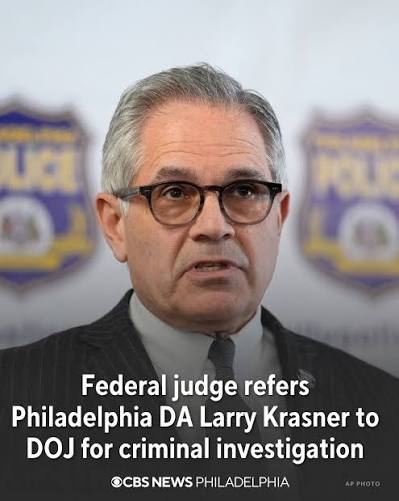
Philadelphia District Attorney Larry Krasner has been referred to the U.S. Department of Justice by a federal judge for a potential criminal investigation, creating a major new legal development surrounding the city’s top prosecutor.
The referral was issued by U.S. District Judge Paul S. Diamond on September 15, 2026. It followed hearings involving the Philadelphia District Attorney’s Office and the post-conviction case of Dennis Johnson, a man seeking to overturn his 2009 second-degree murder conviction.
Judge Diamond also removed Krasner and one of his senior prosecutors, Matthew Stiegler, from participating in the Johnson case. The judge said testimony and other evidence raised concerns about possible false statements, obstruction of justice and conspiracy. However, the referral itself is not a criminal conviction or a finding that Krasner committed a crime. It asks federal prosecutors to investigate the matter and determine whether further action is appropriate.
Krasner has rejected the judge’s conclusions and said he intends to appeal.
What Happened to Larry Krasner?
The controversy centers on the handling of Dennis Johnson’s post-conviction case.
Johnson was convicted in 2009 of second-degree murder in the killing of Kenyatta Smith. Years later, the Philadelphia District Attorney’s Office changed its position on Johnson’s case.
In 2022, Assistant District Attorney Jaclyn Mason filed a brief agreeing with Johnson’s lawyers that his trial attorney had provided ineffective assistance. The filing supported relief for Johnson and raised questions about the original conviction.
The case later became the subject of an evidentiary hearing before Judge Diamond.
During those proceedings, prosecutors and supervisors from the Philadelphia District Attorney’s Office gave testimony about how the case had been handled internally.
That testimony became central to Judge Diamond’s September 15 memorandum.
According to the judge, internal discussions within the District Attorney’s Office raised concerns about whether officials attempted to shift blame for problems in the case and whether court proceedings were given an inaccurate account of what had happened.
Federal Judge Refers Krasner to DOJ
The most significant development came when Judge Diamond referred the matter to the U.S. Attorney’s Office for investigation.
The judge said evidence presented during hearings had raised the possibility of criminal conduct involving Krasner and Stiegler.
Among the issues identified by the judge were potential perjury, obstruction of justice and conspiracy. The judge also disqualified Krasner and Stiegler from continuing to participate in Johnson’s case.
The referral does not automatically mean the DOJ will bring criminal charges.
The U.S. Attorney’s Office must determine what, if any, investigation should follow. Federal prosecutors had not publicly announced whether they would open a criminal investigation at the time of the latest reports.
That distinction is important.
A judicial referral is different from an indictment. An indictment would require a separate prosecutorial process, generally involving federal prosecutors and potentially a grand jury.
What Did Judge Diamond Say?
Judge Diamond’s memorandum described testimony from members of the Philadelphia District Attorney’s Office as raising serious concerns.
According to reporting on the memorandum, supervisors testified about internal efforts involving Mason and Stiegler. The judge said Krasner supported efforts that could have presented what he considered a false narrative to the court.
The judge also examined allegations that employees were warned about potential consequences if they disclosed certain internal discussions.
Diamond said those circumstances could potentially implicate obstruction of justice.
The judge separately questioned testimony from Stiegler and suggested that some of his statements were inconsistent or otherwise problematic. Those findings contributed to the decision to refer the matter to federal prosecutors.
It is important to emphasize that these are findings and allegations contained in a judicial memorandum, not a criminal conviction.
The DOJ investigation, if opened, would provide a separate process for determining whether federal criminal laws were violated.
Why Was the Case So Controversial?
One important issue was whether the District Attorney’s Office should continue handling the Johnson matter internally.
According to court reporting, several prosecutors and supervisors believed the case should be referred to the Pennsylvania Attorney General’s Office because of potential conflicts involving the DA’s Office.
The concerns included the internal disagreements surrounding the handling of the case and the role of senior officials.
Krasner opposed transferring the matter, according to testimony described in court documents. The judge’s memorandum said Krasner indicated that he needed to remain involved to protect his office.
Those disagreements eventually became part of the federal court’s examination of the case.
Who Is Matthew Stiegler?
Matthew Stiegler is a senior prosecutor in the Philadelphia District Attorney’s Office and was involved in the Johnson matter.
Judge Diamond’s referral included Stiegler along with Krasner.
The judge raised concerns about Stiegler’s conduct and testimony during the proceedings. Diamond also removed him from the Johnson case.
Stiegler did not immediately respond to requests for comment in some of the reporting surrounding the referral.
The legal implications for Stiegler, like those involving Krasner, remain unresolved unless federal prosecutors take further action.
Larry Krasner Responds to the Referral
Krasner has rejected Judge Diamond’s conclusions.
In a statement reported by multiple outlets, the Philadelphia district attorney said he “respectfully and vigorously” disagreed with the judge’s findings. He also indicated that he planned to appeal.
Krasner said he could not provide a detailed response while the case remained pending.
That response is significant because the judge’s memorandum does not represent the final resolution of the underlying allegations.
Any appeal could challenge the judge’s conclusions or procedural decisions.
Meanwhile, the federal referral gives prosecutors another avenue to examine the conduct described during the hearings.
What Is the DOJ Investigation?
The phrase “DOJ investigation” may suggest that a formal federal criminal case has already been opened. That is not necessarily the case.
The current development is a referral to federal prosecutors for investigation and appropriate action.
The U.S. Attorney’s Office in the Eastern District of Pennsylvania would have to review the referral and determine what action, if any, is warranted.
Possible steps in a federal investigation can include reviewing court records, interviewing witnesses and examining communications or other evidence.
However, no assumption should be made that charges will follow.
A referral is a request for prosecutorial review, not a prosecution itself.
What Crimes Did the Judge Mention?
Reports on Judge Diamond’s memorandum identify several potential offenses.
Perjury
Perjury generally involves knowingly making materially false statements under oath in circumstances covered by applicable law.
The judge raised concerns about testimony provided during the federal proceedings.
However, whether any individual committed perjury would ultimately be a matter for prosecutors and, if charges were filed, the courts.
Obstruction of Justice
The judge also raised the possibility of obstruction.
The concern involved allegations that employees were pressured or threatened in connection with information presented to the court.
Again, the referral does not establish criminal liability.
Federal prosecutors would have to determine whether the evidence meets the requirements of the relevant criminal statutes.
Conspiracy
The judge also identified a potential conspiracy theory based on alleged efforts to present a particular account of events to the court.
A conspiracy charge has specific legal requirements, including an agreement and the necessary criminal intent.
Those elements would need to be established by prosecutors if charges were ever pursued.
The Pennsylvania Supreme Court Connection
The latest controversy comes after separate criticism of the Philadelphia District Attorney’s Office concerning post-conviction cases.
The Philadelphia Inquirer reported that the Pennsylvania Supreme Court had previously criticized the office’s handling of certain murder appeals and said prosecutors had repeatedly misled courts in such matters. The state court subsequently required Pennsylvania prosecutors to review cases in which Krasner’s office supports overturning a conviction.
The current federal referral is separate from that state-court development.
However, both matters involve questions about how the Philadelphia District Attorney’s Office handles post-conviction litigation.
The Johnson case has therefore attracted heightened legal scrutiny.
What Happens to Dennis Johnson’s Case?
The underlying case involving Dennis Johnson remains unresolved.
Johnson has been seeking to overturn his 2009 second-degree murder conviction.
The federal court proceedings became focused not only on Johnson’s original conviction but also on the way the District Attorney’s Office handled its later position on the case.
Judge Diamond said the DA’s Office could continue handling the case, but Krasner and Stiegler could no longer participate.
That means the case can continue without the two officials directly overseeing it.
The eventual outcome of Johnson’s post-conviction petition remains a separate question from the DOJ referral.
Does the Referral Mean Larry Krasner Has Been Charged?
No.
The current reporting does not establish that Krasner has been federally charged.
The federal judge referred the matter to prosecutors for investigation.
This distinction is essential when discussing the Larry Krasner DOJ referral.
A criminal referral can lead to an investigation, but prosecutors must independently assess the evidence and applicable law.
If prosecutors ultimately decide there is insufficient evidence, no criminal charges may follow.
If prosecutors find sufficient evidence, they could pursue additional legal steps.
At present, those outcomes remain unresolved.
Why the Larry Krasner DOJ Referral Matters
The referral is significant because Krasner is Philadelphia’s elected district attorney and oversees one of Pennsylvania’s largest prosecutorial offices.
The allegations also emerged from a federal proceeding involving a murder conviction and a post-conviction challenge.
That combination places the dispute at the intersection of criminal justice, prosecutorial ethics and federal judicial oversight.
The case also illustrates the distinction between the authority of an elected prosecutor and the authority of a federal court.
Judge Diamond could remove Krasner from the individual case and refer concerns to federal prosecutors. However, the judge does not personally decide whether federal criminal charges should be filed.
That decision belongs to prosecutors.
What Happens Next?
Several developments could shape the case in the coming weeks and months.
First, federal prosecutors could review Judge Diamond’s referral and supporting material.
Second, Krasner could pursue an appeal of the judge’s findings or related rulings.
Third, additional testimony or documents could become relevant if federal prosecutors decide to investigate.
Fourth, the Johnson case itself must continue independently of the criminal referral.
These processes could take time.
There is currently no basis to assume that the referral will automatically result in prosecution.
Final Takeaway
The Larry Krasner DOJ referral is one of the most significant legal developments involving Philadelphia’s district attorney in 2026.
On September 15, U.S. District Judge Paul S. Diamond referred Krasner and senior prosecutor Matthew Stiegler to federal prosecutors after examining their handling of Dennis Johnson’s post-conviction case. The judge cited possible issues involving perjury, obstruction of justice and conspiracy.
Krasner strongly disputes the findings and has said he intends to appeal. The U.S. Attorney’s Office must independently decide whether to investigate further or take other action.
For now, the key fact is that a federal judicial referral has occurred, but no criminal conviction or federal charge against Krasner has been established by that referral.
The next major question is whether federal prosecutors will open a formal investigation and, if so, what conclusions they reach.
Frequently Asked Questions
What is the Larry Krasner DOJ referral?
The referral is a recommendation by U.S. District Judge Paul S. Diamond that federal prosecutors investigate Philadelphia District Attorney Larry Krasner over possible criminal conduct connected to the handling of Dennis Johnson’s post-conviction case.
Why was Larry Krasner referred to the DOJ?
Judge Diamond said evidence and testimony raised concerns about possible perjury, obstruction of justice and conspiracy involving Krasner and senior prosecutor Matthew Stiegler.
Has Larry Krasner been charged with a crime?
No. The referral itself is not a criminal charge or conviction. Federal prosecutors must independently decide whether further action is appropriate.
Who is Judge Paul Diamond?
Paul S. Diamond is a U.S. District Judge who presided over the federal proceedings involving Dennis Johnson’s effort to challenge his 2009 murder conviction.
What happened to Matthew Stiegler?
Judge Diamond also removed Stiegler from the Johnson case and included him in the referral to federal prosecutors.
Who is Dennis Johnson?
Dennis Johnson is a Philadelphia man convicted in 2009 of second-degree murder. His post-conviction effort to overturn the conviction became the subject of the federal proceedings that led to the referral.
Will the DOJ definitely prosecute Larry Krasner?
There is no indication that prosecution is automatic. Federal prosecutors must first evaluate the referral and evidence before deciding whether to take action.
Has Krasner responded?
Yes. Krasner has said he “respectfully and vigorously” disagrees with Judge Diamond’s findings and intends to appeal.
What happens next in the Johnson case?
Johnson’s case remains pending. Krasner and Stiegler have been removed from participating in the matter, while the District Attorney’s Office can continue handling the case through other prosecutors.
Is “radical DA” an official legal designation?
No. “Radical” is a political characterization used by some commentators and is not a legal designation applied by the federal court. The court’s referral concerns specific alleged conduct and potential legal violations.
How useful was this post?
Click on a star to rate it!
Average rating 0 / 5. Vote count: 0
No votes so far! Be the first to rate this post.
About the Author

usa5911.com
Administrator
Hi, I’m Gurdeep Singh, a professional content writer from India with over 3 years of experience in the field. I specialize in covering U.S. politics, delivering timely and engaging content tailored specifically for an American audience. Along with my dedicated team, we track and report on all the latest political trends, news, and in-depth analysis shaping the United States today. Our goal is to provide clear, factual, and compelling content that keeps readers informed and engaged with the ever-changing political landscape.