Trump Ballroom Appeal: Permit Fight, Luxury Plan, Legal Showdown
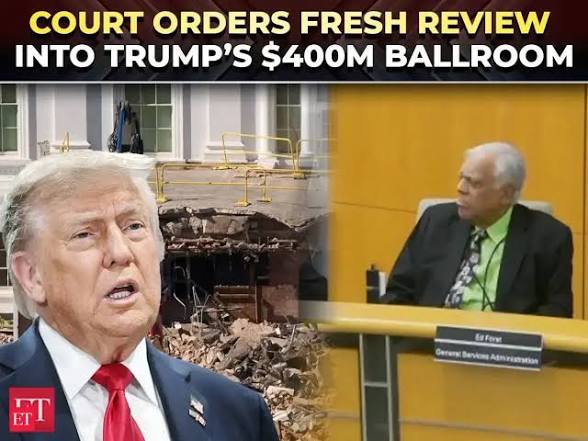
The legal fight over the controversial ballroom planned by Donald Trump has entered a new phase, turning into one of the most closely watched political and legal disputes in the United States. At the center of the debate is a massive luxury ballroom project planned on the grounds of the White House — a project critics say bypassed permits and congressional approval, while supporters describe it as a patriotic modernization effort.
The latest ruling by the U.S. Court of Appeals for the District of Columbia Circuit temporarily allows construction to move forward, setting the stage for a major legal showdown scheduled in the coming months. This appeal battle has sparked heated debate over executive authority, heritage protection, and government priorities.
Breaking Update: Appeals Court Allows Temporary Construction

Recent court decisions have dramatically reshaped the trajectory of the Trump ballroom project. A federal appeals panel ruled that construction could temporarily resume while legal challenges continue.
The ruling overturned earlier restrictions imposed by Richard Leon, who had halted most visible construction work. The judge previously argued that the project lacked proper congressional authorization and questioned whether national security claims justified the scale of construction.
However, the appeals court issued a stay, meaning construction can continue at least until the next major hearing scheduled for June 5.
This decision has been widely interpreted as a temporary victory for the Trump administration — but not the end of the legal battle.
The $400 Million Luxury Ballroom Plan
At the center of the controversy is an ambitious architectural proposal: a 90,000-square-foot ballroom estimated to cost around $400 million. The project is planned on land where the historic East Wing once stood.
The East Wing demolition sparked intense backlash from preservation groups and legal experts. Critics argue the removal of historic sections of the White House grounds was carried out without sufficient oversight.
Supporters of the project, including officials aligned with the Trump administration, maintain that the ballroom will modernize facilities and provide expanded capacity for official events.
According to public statements, the ballroom is intended to:
- Host state dinners and diplomatic receptions
- Improve large-scale event capacity
- Enhance security features
- Leave a lasting architectural legacy
The Trump administration has repeatedly emphasized that private donations — not taxpayer funds — will cover most construction costs, though security infrastructure may still require federal funding.
Permit Dispute: The Core of the Legal Battle
One of the central legal issues in the Trump ballroom appeal involves whether proper permits and approvals were secured before demolition and construction began.
The lawsuit filed by the National Trust for Historic Preservation alleges that the administration failed to obtain required congressional authorization and bypassed established federal review processes.
Legal experts say the case could establish precedent for future presidential construction authority.
Key permit issues include:
- Lack of congressional authorization
- Environmental review requirements
- Compliance with historic preservation laws
- Oversight from federal planning agencies
Opponents argue that without clear authorization, the project risks violating constitutional checks and balances.
Judge Leon’s Ruling and the Legal Turning Point
The original legal turning point came when Judge Richard Leon issued a major ruling halting above-ground construction.
In his decision, Leon criticized what he described as a “brazen” interpretation of national security rules, rejecting claims that the entire ballroom project qualified as essential defense infrastructure.
However, he allowed certain underground construction to continue, particularly parts tied to security enhancements such as bunker systems.
The ruling intensified political tensions and forced the administration to file an immediate appeal — leading to the latest decision allowing construction to temporarily resume.
Political Reactions: Supporters vs Critics
The Trump ballroom appeal has sparked fierce reactions across the political spectrum.
Supporters describe the ballroom as:
- A long-overdue modernization
- A privately funded national asset
- A project that enhances diplomatic capabilities
Critics, however, have framed the project differently.
Opponents argue the ballroom represents:
- Misplaced priorities during economic challenges
- Excessive spending on luxury infrastructure
- A threat to historic preservation traditions
Polling data indicates that a majority of Americans oppose replacing historic structures with a luxury ballroom, reflecting widespread public skepticism.
National Security Argument: Strategic or Symbolic?
One of the most controversial aspects of the Trump ballroom appeal is the use of national security as justification for construction.
Government lawyers argued that halting construction could leave vulnerable infrastructure exposed and disrupt planned security upgrades.
However, Judge Leon rejected this argument, ruling that national security cannot override legal authorization requirements.
This disagreement highlights a major legal question:
How far can executive authority extend when national security is invoked?
The answer could have implications far beyond this single project.
Architectural Vision and Design Debate
Beyond legal battles, the ballroom project has also sparked heated architectural debates.
The proposed design includes:
- A grand ballroom capable of hosting large diplomatic events
- Advanced structural reinforcement
- New underground facilities
- Modern security integration
However, architects and preservationists have raised concerns about design elements, including symmetry disruptions and potential impact on historic landscapes.
These debates have further fueled controversy around the project’s long-term impact.
The Role of Private Donors
A key talking point in the Trump ballroom appeal involves funding sources.
According to official statements, corporate donors have pledged substantial funding to support construction.
Some reports suggest contributions from major corporations helped finance parts of the project — a factor that has raised ethical questions about influence and transparency.
Critics warn that private funding of presidential infrastructure could create potential conflicts of interest.
Supporters counter that such donations reduce taxpayer burden.
The June 5 Hearing: A Critical Moment Ahead
The next major milestone in the Trump ballroom appeal is the scheduled hearing set for June 5.
Legal analysts believe this hearing will determine whether:
- Construction continues
- The project is halted permanently
- Congress must formally approve the plan
- New regulatory reviews are required
The decision could reshape presidential authority and set nationwide legal precedent.
Economic and Cultural Impact
Beyond politics and law, the ballroom project has raised questions about broader economic and cultural consequences.
Supporters argue that:
- Construction generates jobs
- Modern facilities boost diplomatic capabilities
- Upgrades enhance long-term national infrastructure
Opponents warn that:
- Historic preservation risks irreversible damage
- Public trust in government procedures may weaken
- Costs could escalate beyond initial estimates
These concerns underscore why the Trump ballroom appeal remains a high-profile national issue.
Public Opinion and Media Attention
The Trump ballroom legal fight has received extensive media coverage and public debate.
Public reaction has been divided, with strong opinions emerging across political and ideological lines.
Some commentators view the project as a symbol of ambition and modernization.
Others see it as a controversial legacy project that prioritizes prestige over public needs.
Regardless of opinion, the case has become one of the most talked-about political construction disputes in modern U.S. history.
Historical Context: Why the East Wing Matters
The demolition of the East Wing was among the most controversial moments in the ballroom project timeline.
Historically, the East Wing has served multiple roles, including:
- Office space
- Reception areas
- Logistics coordination
- Visitor management
Removing parts of this historic structure triggered preservation lawsuits and sparked emotional public reactions.
Preservationists argue that once historic structures are removed, they cannot be restored — making decisions irreversible.
Legal Precedent: Why This Case Matters Nationwide
Legal experts believe the Trump ballroom appeal could shape future presidential powers.
Key legal questions include:
- Can presidents alter federal landmarks without congressional approval?
- How should private funding be regulated?
- What limits exist on executive authority?
The answers to these questions may influence government projects for decades.
Possible Outcomes of the Trump Ballroom Appeal
Several potential outcomes remain on the table.
Scenario 1: Project Continues
If courts rule in favor of the administration, construction may proceed without interruption.
Scenario 2: Project Halted
Courts could permanently block the project until congressional approval is granted.
Scenario 3: Conditional Approval
The most likely scenario involves additional regulatory oversight and partial project modifications.
Each outcome carries significant legal and political implications.
Global Attention and Diplomatic Symbolism
The ballroom project has drawn attention beyond the United States.
Diplomatic analysts say expanded facilities could enhance international hosting capabilities.
However, critics warn that controversy surrounding construction may overshadow diplomatic advantages.
This balance between prestige and perception remains central to ongoing debates.
The Future of the Trump Ballroom Project
As legal battles continue, the Trump ballroom appeal remains unresolved.
Construction is currently allowed to proceed temporarily, but the outcome of the June hearing could dramatically change the project’s future.
Until then, the ballroom stands as both:
- A symbol of ambition
- A focal point of legal controversy
The coming months will likely determine whether the project becomes a permanent architectural landmark — or a halted dream.
FAQs: Trump Ballroom Appeal
What is the Trump ballroom appeal about?
The Trump ballroom appeal concerns legal disputes over construction of a large luxury ballroom at the White House, focusing on permits, authorization, and preservation laws.
Why was construction initially halted?
A federal judge ruled that above-ground construction lacked congressional approval and did not qualify as a national security necessity.
Why did the appeals court allow construction?
The appeals court temporarily allowed construction to continue while reviewing legal challenges in a future hearing.
Who filed the lawsuit against the ballroom project?
The National Trust for Historic Preservation filed the lawsuit challenging the legality of the project.
How much does the ballroom project cost?
The estimated cost is approximately $400 million, with most funding expected from private donors.
When is the next major hearing?
The next major hearing in the Trump ballroom appeal is scheduled for June 5, which could determine the project’s future.
8
How useful was this post?
Click on a star to rate it!
Average rating 0 / 5. Vote count: 0
No votes so far! Be the first to rate this post.
About the Author

usa5911.com
Administrator
Hi, I’m Gurdeep Singh, a professional content writer from India with over 3 years of experience in the field. I specialize in covering U.S. politics, delivering timely and engaging content tailored specifically for an American audience. Along with my dedicated team, we track and report on all the latest political trends, news, and in-depth analysis shaping the United States today. Our goal is to provide clear, factual, and compelling content that keeps readers informed and engaged with the ever-changing political landscape.