Thom Tillis Move: Senate Battle, Key Vote, GOP Strategy
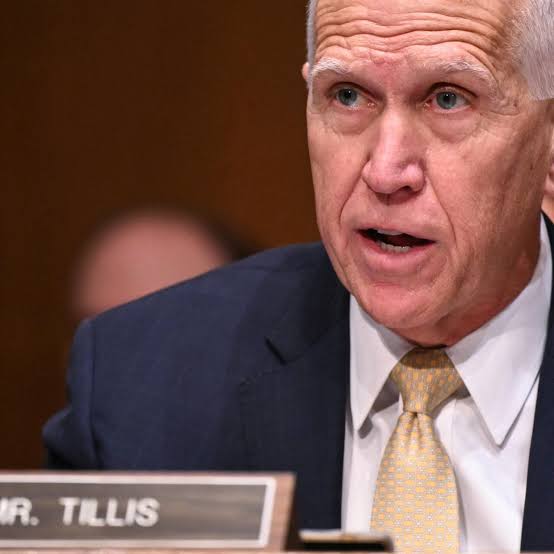
The political spotlight in Washington has turned sharply toward Thom Tillis following a decisive move that could reshape the direction of the U.S. Senate and influence the broader Republican strategy ahead of a crucial political cycle. His decision to support a high-profile Federal Reserve nomination has not only resolved a major stalemate but also ignited debate among lawmakers, economists, and party leaders.
At the center of this unfolding Senate battle is the nomination of Kevin Warsh to lead the Federal Reserve, replacing current chair Jerome Powell. Tillis had previously blocked the nomination due to concerns surrounding an ongoing Justice Department investigation. Now that the probe has been closed, his shift has cleared the path for a vote that could influence financial markets and political strategy nationwide.
This move represents more than a routine Senate vote—it reflects shifting alliances, strategic recalculations within the GOP, and the growing importance of key swing votes in a narrowly divided chamber.
Who Is Thom Tillis?
To understand the significance of this move, it is essential to examine the political background of Senator Thom Tillis and his role in the Republican Party.
Born in Jacksonville, Florida, Tillis rose through the ranks of North Carolina politics before winning election to the U.S. Senate in 2014. Prior to his Senate tenure, he served as Speaker of the North Carolina House of Representatives from 2011 to 2015.
Over the years, Tillis has built a reputation as a pragmatic Republican willing to cross party lines on certain issues. His support for bipartisan legislation, including measures related to gun safety and marriage equality, earned both praise and criticism from different factions within his party.
That reputation has made him one of the most influential swing figures within Senate Republican circles. In a chamber where margins are tight, even a single senator’s decision can determine the fate of major legislation or nominations.
The Key Vote That Changed the Senate Landscape
The turning point came when Tillis announced that he would support advancing Kevin Warsh’s nomination to lead the Federal Reserve. This announcement removed one of the final obstacles to confirmation, setting the stage for committee approval and a full Senate vote.
Initially, Tillis had withheld support due to a Justice Department investigation into Federal Reserve renovation costs linked to Jerome Powell’s testimony. Once the investigation was closed and transferred to the Federal Reserve inspector general, Tillis indicated his concerns had been resolved.
The timing of this decision proved crucial. Powell’s term is scheduled to end in mid-May, leaving limited time for lawmakers to confirm a successor. Tillis’s support effectively accelerated the process and signaled unity among Republican leadership.
Political observers quickly recognized the importance of this shift. Without Tillis’s vote, the nomination risked stalling indefinitely, potentially triggering financial uncertainty and political backlash.
GOP Strategy Behind the Move
Republican leaders viewed Tillis’s decision as a turning point in their broader strategy to maintain influence over economic policy. The Federal Reserve plays a critical role in setting interest rates, controlling inflation, and stabilizing financial markets.
President Donald Trump nominated Kevin Warsh as part of an effort to reshape monetary policy and encourage economic growth. Warsh has pledged to maintain Federal Reserve independence while also supporting policy changes aimed at addressing inflation and market stability.
Within GOP circles, the nomination became a test of party unity. Several Republicans feared that prolonged disagreement would weaken their credibility ahead of upcoming elections. By shifting his stance, Tillis helped unify the party and restore momentum to its economic agenda.
Strategically, the move also signaled that Senate Republicans are prepared to move swiftly when opportunities arise. With narrow margins in committees, every vote counts—making Tillis’s support a decisive factor.
Senate Battle Intensifies
Although Tillis’s decision cleared a major hurdle, the battle surrounding the nomination is far from over. Senate Democrats, led by figures such as Elizabeth Warren, have expressed strong opposition to Warsh’s nomination.
Democratic leaders argue that confirming Warsh could compromise the independence of the Federal Reserve. They point to concerns about political pressure from the executive branch and warn that central bank decisions must remain free from partisan influence.
The Senate Banking Committee is expected to play a pivotal role in shaping the outcome. With Republicans holding only a slim majority, the vote margin remains tight. Even minor shifts in support could alter the final result.
Political analysts describe this moment as one of the most consequential confirmation battles in recent years. The outcome will likely shape the direction of U.S. economic policy for years to come.
The Broader Political Context
Tillis’s move comes amid significant political changes within the Republican Party and the broader Senate landscape.
Notably, Tillis has announced that he will not seek re-election in the 2026 Senate race. His decision followed internal party tensions and criticism from conservative factions after he voted against major legislation supported by Republican leadership.
The upcoming Senate race in North Carolina has already drawn national attention, with both parties viewing it as a key battleground. Republican nominee Michael Whatley and Democratic nominee Roy Cooper are preparing for what analysts predict will be a highly competitive election.
This broader context adds urgency to Tillis’s actions. As a retiring senator, he faces fewer electoral constraints, giving him more freedom to cast decisive votes based on policy considerations rather than campaign strategy.
Economic Implications of the Vote
The potential confirmation of Kevin Warsh carries significant economic implications. The Federal Reserve influences nearly every aspect of the U.S. economy—from mortgage rates to employment trends.
Markets closely monitor Federal Reserve leadership transitions, as policy shifts can affect investment decisions worldwide. Analysts expect that Warsh’s leadership style may emphasize tighter coordination with fiscal authorities and a renewed focus on controlling inflation.
For businesses and consumers alike, the outcome of this confirmation battle could determine borrowing costs and economic growth patterns in the years ahead.
Financial institutions have already begun adjusting expectations based on the likelihood of Warsh’s confirmation. This highlights the powerful ripple effects of seemingly procedural Senate votes.
Why This Vote Matters Politically
Beyond economics, Tillis’s move has significant political implications. It demonstrates how individual senators can shape national outcomes—even in an era dominated by party politics.
Historically, pivotal Senate votes have altered the trajectory of major policies. Tillis’s decision fits within this pattern, reinforcing the idea that leadership often hinges on timing and strategy.
Republican leaders are expected to use this moment as a messaging opportunity, emphasizing unity and decisive action. Meanwhile, Democrats are likely to highlight concerns about transparency and independence within federal institutions.
This political dynamic ensures that the debate will extend far beyond the Senate chamber.
Republican Unity and Internal Debate
Despite outward signs of unity, internal debates continue within Republican ranks. Some conservatives initially criticized Tillis for delaying the nomination process, arguing that hesitation risked weakening party credibility.
Others defended his stance, noting that oversight of federal investigations is a core Senate responsibility. By waiting until the Justice Department closed its probe, Tillis positioned himself as a guardian of institutional integrity.
Such debates reflect broader ideological tensions within the GOP—particularly between pragmatic lawmakers and more hardline conservatives.
In many ways, Tillis’s move represents a compromise between these competing factions.
Democratic Response and Opposition Strategy
Democratic senators have responded forcefully to the unfolding developments. Their strategy centers on highlighting potential risks associated with Warsh’s leadership and emphasizing the importance of Federal Reserve independence.
Senators argue that confirmation decisions should be based on long-term stability rather than short-term political gains. This messaging resonates with voters who prioritize economic security and institutional trust.
Public hearings are expected to feature intense questioning and scrutiny of Warsh’s policy positions. Such debates often shape public perception and influence undecided lawmakers.
As a result, the Senate battle remains highly unpredictable.
The Role of Senate Committees
The Senate Banking Committee plays a crucial role in determining whether nominations reach the full Senate floor.
With Republicans holding a narrow majority, committee votes often reflect intense negotiations behind closed doors. Tillis’s membership on key committees gives him added influence over the legislative process.
Observers expect committee hearings to focus heavily on financial oversight, regulatory policy, and economic forecasting.
These discussions will ultimately determine whether the nomination proceeds smoothly or encounters additional delays.
Public Reaction and Media Coverage
Media coverage of Tillis’s move has been extensive, reflecting the broader significance of the nomination battle.
Financial analysts, political commentators, and public interest groups have weighed in on the implications of the decision. Many describe it as a turning point that restored momentum to the confirmation process.
Public reaction has been mixed. Some voters applaud Tillis for prioritizing transparency, while others criticize the prolonged delay.
Such reactions underscore the polarized nature of modern American politics.
What Happens Next?
The next steps in this Senate battle are clear but complex. The Banking Committee will vote on whether to advance the nomination to the full Senate.
If approved, lawmakers will then debate the nomination on the Senate floor. Final confirmation would mark the culmination of months of political maneuvering.
Should unexpected opposition arise, however, the timeline could shift dramatically.
Political analysts caution that last-minute developments remain possible.
Long-Term Impact on GOP Strategy
Tillis’s decision is likely to shape Republican strategy well beyond the current nomination battle.
Party leaders view the episode as evidence that coordinated action can overcome procedural roadblocks. They may adopt similar strategies in future legislative battles.
Additionally, the move reinforces the importance of maintaining unity within narrow majorities.
In an era of closely divided government, strategic voting decisions often determine political outcomes.
FAQs
1. Who is Thom Tillis?
Thom Tillis is a Republican U.S. senator from North Carolina who has served since 2015 and previously led the North Carolina House of Representatives.
2. What key vote did Thom Tillis make?
He decided to support advancing Kevin Warsh’s nomination as Federal Reserve chair after previously blocking it.
3. Why was this vote important?
The vote cleared a major obstacle to confirming a new Federal Reserve leader and influenced economic policy direction.
4. What concerns delayed the vote initially?
Tillis wanted a Justice Department investigation into Federal Reserve renovation costs to be completed before moving forward.
5. Will Thom Tillis run for re-election?
No, Tillis announced that he will not seek re-election in 2026.
6. What happens next in the Senate?
The nomination proceeds through committee review and then moves to a full Senate vote if approved.
Conclusion: A Defining Political Moment
The move by Senator Thom Tillis marks a defining moment in the ongoing Senate battle over Federal Reserve leadership. By shifting his position and supporting the nomination, he reshaped the political landscape and highlighted the importance of strategic decision-making in modern governance.
As lawmakers prepare for upcoming votes and elections, the consequences of this decision will likely reverberate across Washington and beyond. Whether viewed as a pragmatic compromise or a bold political maneuver, Tillis’s action underscores a fundamental truth: in the Senate, even a single vote can change the course of history.
How useful was this post?
Click on a star to rate it!
Average rating 0 / 5. Vote count: 0
No votes so far! Be the first to rate this post.
About the Author

usa5911.com
Administrator
Hi, I’m Gurdeep Singh, a professional content writer from India with over 3 years of experience in the field. I specialize in covering U.S. politics, delivering timely and engaging content tailored specifically for an American audience. Along with my dedicated team, we track and report on all the latest political trends, news, and in-depth analysis shaping the United States today. Our goal is to provide clear, factual, and compelling content that keeps readers informed and engaged with the ever-changing political landscape.